4 min walk
Angel of Independence
- Must see · Heritage site
- Historic site
Activity · Mexico City
Paseo de la Reforma is a wide avenue that runs diagonally across the heart of Mexico City. It was designed for Emperor Maximilian by Ferdinand von Rosenzweig during the Second Mexican Empire, modelled on the great boulevards of Europe such as Vienna's Ringstraße and the Champs-Élysées, to link the National Palace with the imperial residence, Chapultepec Castle. First named Paseo de la Emperatriz in honour of Empress Carlota, it was renamed by the Restored Republic after La Reforma. Today it is about 14.7 km long.
Checked 2026-11-10 · Source
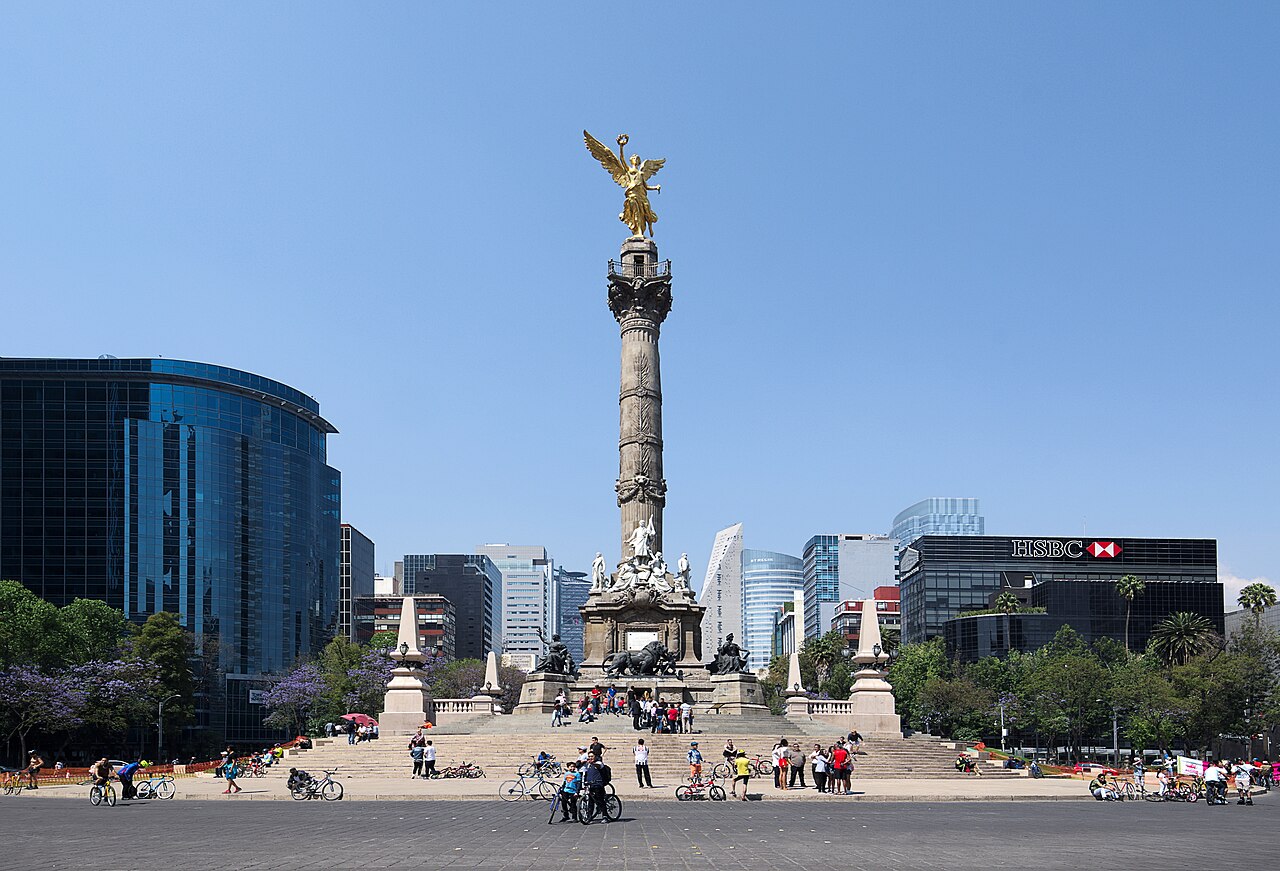
Today Reforma is lined with tourist attractions, luxury restaurants and hotels, office buildings and public art exhibitions, and it is home to many of Mexico's tallest buildings, such as the Torre Mayor. Its most prominent monuments stand in the centres of the main roundabouts: Columbus, Cuauhtémoc and the Monument to Independence, El Ángel (1910), the most famous of them; the Angel roundabout is an icon of the city and the main place where national football victories are celebrated. Many parades, such as Mexico City Pride, pass along the avenue.
Checked 2026-11-10 · Source
The Monument to Independence, El Ángel (1910), in the centre of one of its main roundabouts.
To link the National Palace with the imperial residence, Chapultepec Castle, under Emperor Maximilian.
Loading the interactive map…
The interactive map could not be loaded.
Last updated:
Source: OpenStreetMap contributors ·