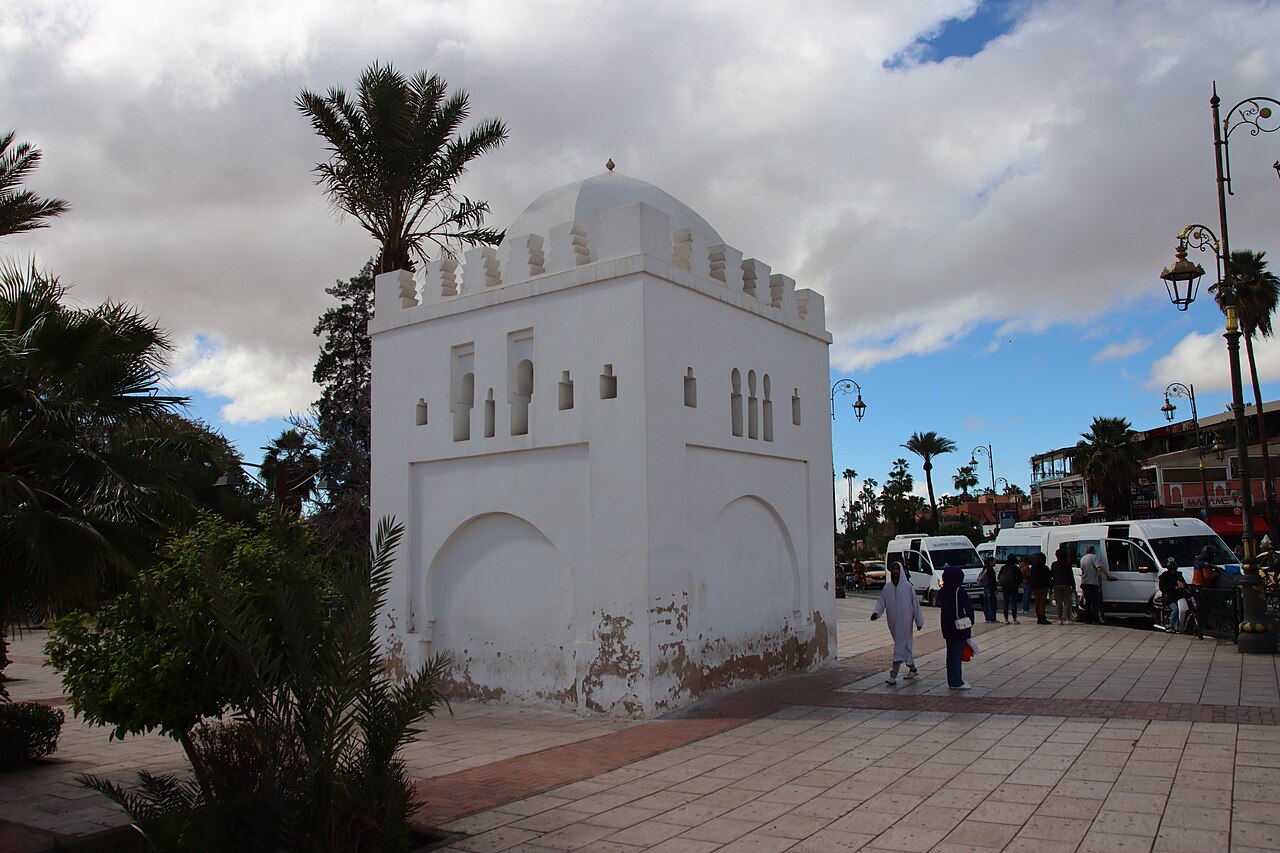
4 min walk
Koubba of Fatima Zohra
- Must see
- Historic monument
Language · 11 published
Historic monument · Marrakesh
Reviewed by Elena Voss · Roavina Travel Editor
Bab Laksour is a historic gate in the rose-coloured ramparts of Marrakesh’s ancient medina. It is both a piece of defensive architecture and a working entrance into the old city. The gate belongs to the urban fabric rather than a separate museum compound, so its importance is best understood while walking through the surrounding streets. Its broad arch, fortified mass, and position between outer roads and the medina make it a useful visual introduction to Marrakesh’s historic centre. Treat the visit as a short architectural stop within a longer walk, with time to notice how residents, shoppers, craftsmen, and visitors share the same threshold.
Checked 2026-08-26 · Source
Bab Laksour is experienced from the street. There is no described exhibition interior or ticketed monument zone inside the gate. The main attraction is the passage itself: the heavy masonry, the arched opening, and the changing view between the outer approach and the dense medina beyond. Once through the arch, you enter narrow derbs, small shops, workshops, homes, and busy everyday routes. The gate is therefore a threshold rather than a building filled with displays. Pause at the edge where you can do so without interrupting movement, then continue into the surrounding quarter to connect the structure with the living city it serves.
Checked 2026-08-26 · Source
Allow about ten to fifteen minutes for a focused stop at Bab Laksour. That gives you time to pass beneath the arch, look back at the rampart, observe the changing street scene, and take a few respectful photographs. Many visitors spend less than five minutes because the gate lies on a walking route and functions as a practical entrance. The surrounding medina can occupy several hours, so place the gate at the beginning, middle, or end of a broader walk. Its value comes from the transition it creates, not from the length of time spent standing beside it.
Checked 2026-08-26 · Source
Bab Laksour has no described visitor schedule because it functions as part of the public street network. Morning brings a lively start to medina activity, with deliveries and shop openings shaping the streets around the entrance. Midday can feel hotter and busier, especially during summer. Late afternoon gives the ramparts warmer light and can make a longer medina walk more comfortable. Evening changes the atmosphere again as lighting and crowd patterns shift. During Ramadan, daily rhythms across Marrakesh may differ from a normal travel day, so plan with flexibility and allow extra time for the surrounding streets.
Checked 2026-08-26 · Source
Passing through Bab Laksour is described as free because the gate is public urban infrastructure rather than a ticketed attraction. There is no described ticket office, entrance barrier, or separate monument admission point. You can include it naturally in a medina walk without setting aside money for access to the gate itself. Tours that use the entrance may have their own prices, but those belong to the wider experience rather than the threshold. Keep the focus on the architecture and the transition into the old city, and be clear about any paid assistance offered nearby before accepting it.
Checked 2026-08-26 · Source
The practical way to reach Bab Laksour is on foot. It sits on a route linking the outer areas of Marrakesh with the medina, and the gate works well as a waypoint during a walk toward the old city. From the direction of Jemaa el-Fnaa, continue through the historic centre and use the ramparts and the gate opening as visual references. Cars do not belong deep inside the narrow medina network, so arrange any vehicle drop-off outside the pedestrian passages and complete the approach walking. Once inside, keep your route oriented by major gates, squares, and distinctive streets.
Checked 2026-08-26 · Source
Bab Laksour is a working thoroughfare, so leave room for people moving in both directions. The approach and nearby derbs may include uneven paving, narrow passages, and light vehicle traffic. Keep bags secure in crowded moments and avoid stopping directly beneath the busiest part of the arch. The medina’s compact layout can make navigation confusing, particularly when several streets look alike. Unwanted offers of help may occur near a prominent entrance; a brief, firm refusal is enough. Remember that homes and businesses surround the route, so keep voices moderate and give residents space as you explore.
Checked 2026-08-26 · Source
The gate offers strong photographs through shape and movement. Frame the arch against the rose-coloured rampart, or stand to one side and capture the contrast between solid masonry and the flow of people entering the medina. Early or late light can bring out texture in the wall while reducing the harshness of midday sun. Do not block the passage with a tripod or extended group. Photograph people with discretion, especially residents and workers who are simply using the gate. The most effective images often show Bab Laksour in context, with the street continuing beyond it rather than treating the structure as an isolated façade.
Checked 2026-08-26 · Source
Bab Laksour serves as a working entrance and passage through Marrakesh’s historic medina, while also offering a concise example of the city’s fortified urban architecture.
The gate is described as public infrastructure, so passing through it does not require a separate admission ticket.
Reach Bab Laksour on foot as part of a walk through Marrakesh’s medina. The surrounding narrow streets are better suited to pedestrians than cars.
A focused stop takes about ten to fifteen minutes, while the surrounding medina can support a much longer walking visit.
Photograph the arched opening, rose-coloured ramparts, and the movement of the medina street beyond it, while keeping the passage clear and treating people respectfully.
Watch for uneven paving, narrow passages, light vehicle traffic, crowding, and the possibility of becoming disoriented in the medina’s dense street network.
Loading the interactive map…
The interactive map could not be loaded.
Last updated:
Source: OpenStreetMap contributors ·