
2 min walk
Koutoubia Gardens
- Must see
- Nature site
Language · 11 published
Place of worship · Marrakesh
Mosquée de la Koutoubia جامع الكتبية
Reviewed by Elena Voss · Roavina Travel Editor
Read from the OpenStreetMap access tags; anything not listed has no tag recorded.
Set the group type to family in the planner and the day window contracts to about three quarters of a solo day.
This place is a Place of worship. It was established in 1147. It was built in the Moorish architecture style. It carries the Moroccan cultural heritage heritage designation.
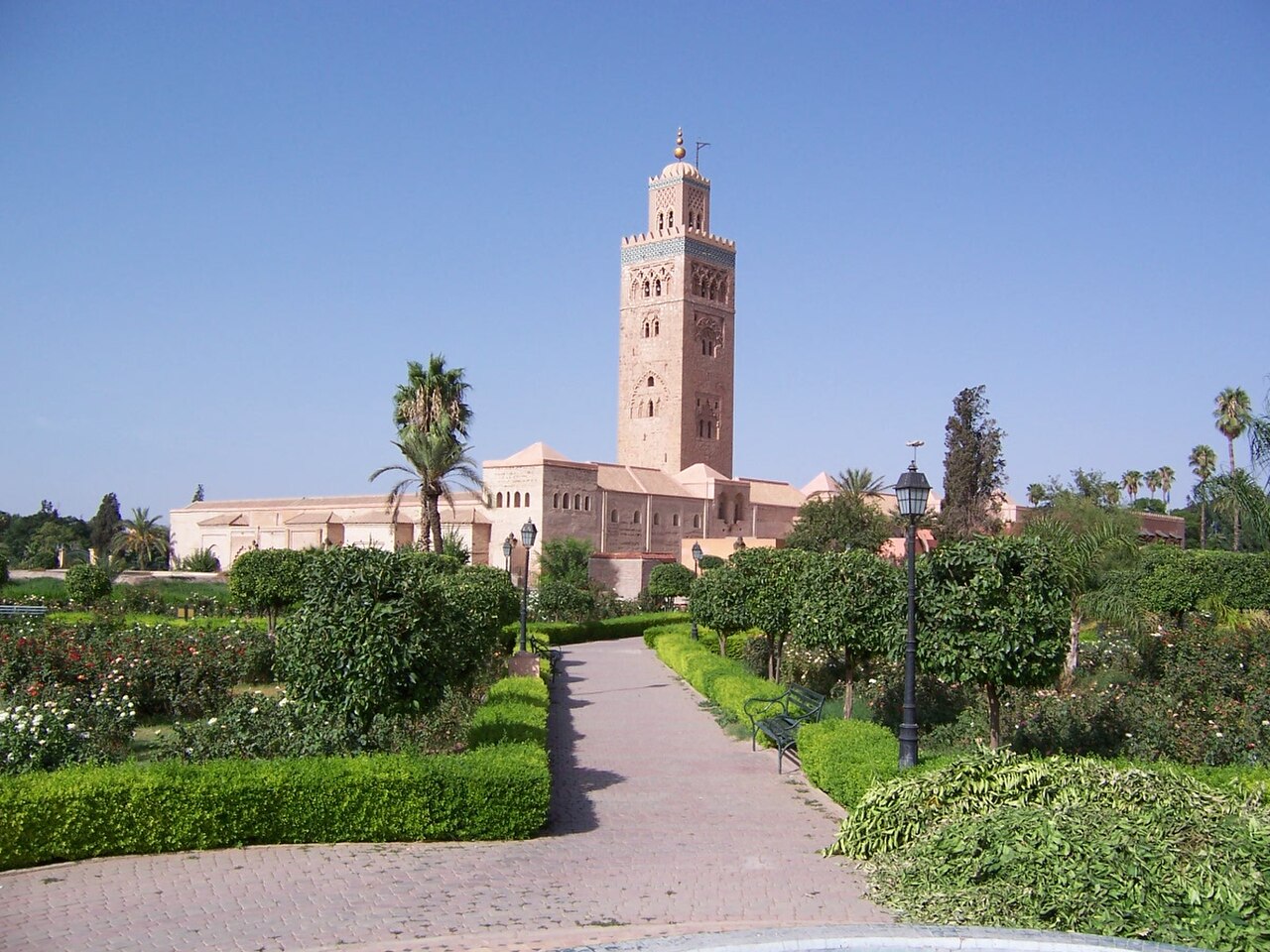
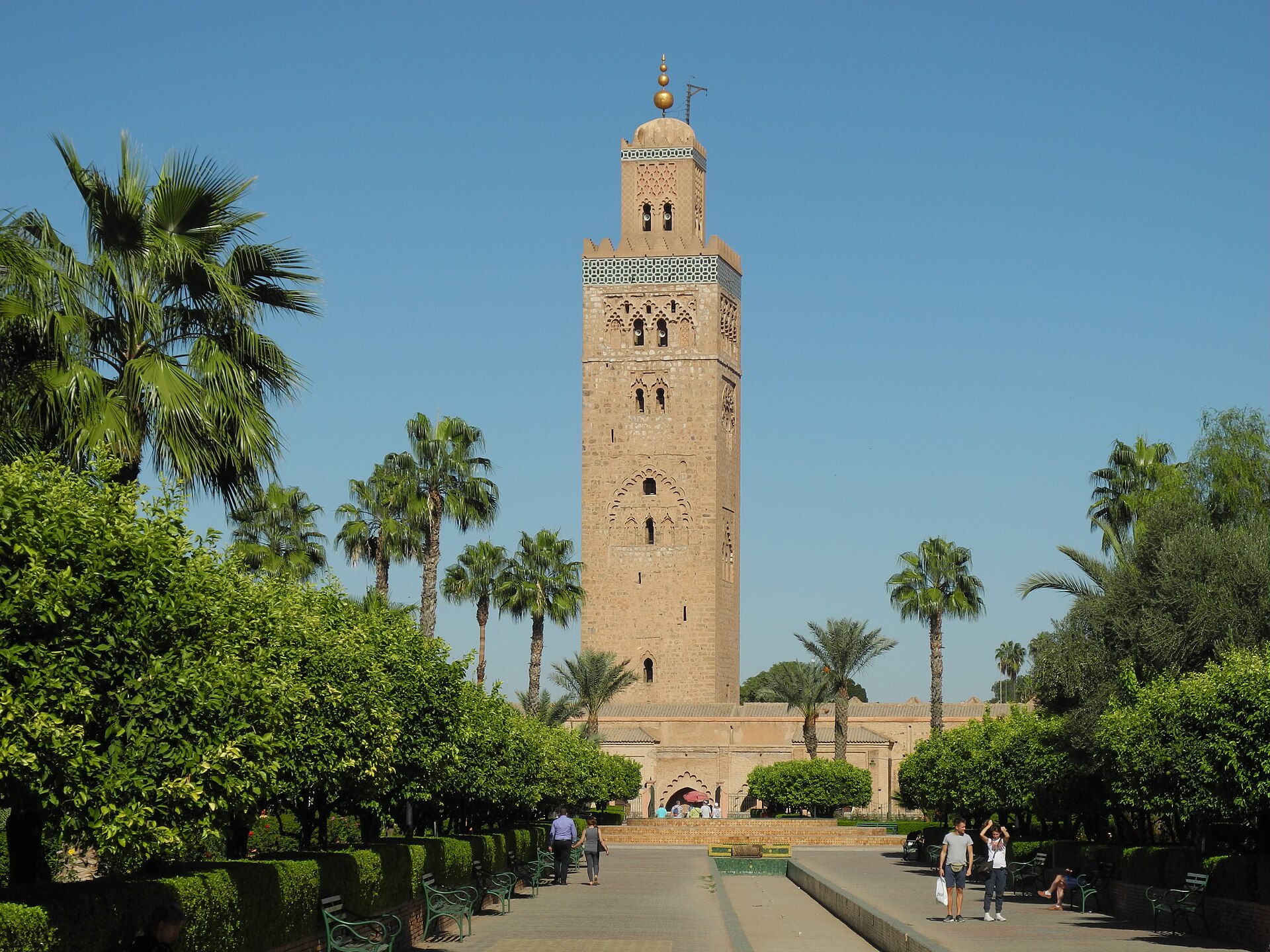
The Koutoubia Mosque, known locally as Mosquée Koutoubia, stands as Marrakesh's most prominent landmark. Its Almohad minaret dominates the city skyline and serves as the key architectural reference point for Marrakesh. The structure dates to the Almohad period and represents one of the most celebrated examples of Moorish architecture in North Africa. The mosque takes its name from the Arabic word for booksellers, referencing the manuscript merchants who once traded nearby. Prayer hall: five daily prayers at the official Marrakech prayer times, plus Friday prayer. Exterior and surrounding public gardens: accessible at all times.
Checked 2026-08-31 · Source
The interior of the Koutoubia Mosque is not accessible to non-Muslim visitors, consistent with standard practice at functioning mosques throughout Morocco. The main features visible from the exterior include the celebrated minaret with its distinctive proportions and decorative stonework. The mosque complex includes prayer halls, courtyards, and ablution facilities serving the faithful. The surrounding gardens and plaza areas offer public space where visitors may appreciate the scale and setting of the monument. Free: no ticket is required to view the mosque from the surrounding public streets and gardens. General tourist admission to the prayer hall is not offered; interior access is reserved for Muslim worshippers.
Checked 2026-08-31 · Source
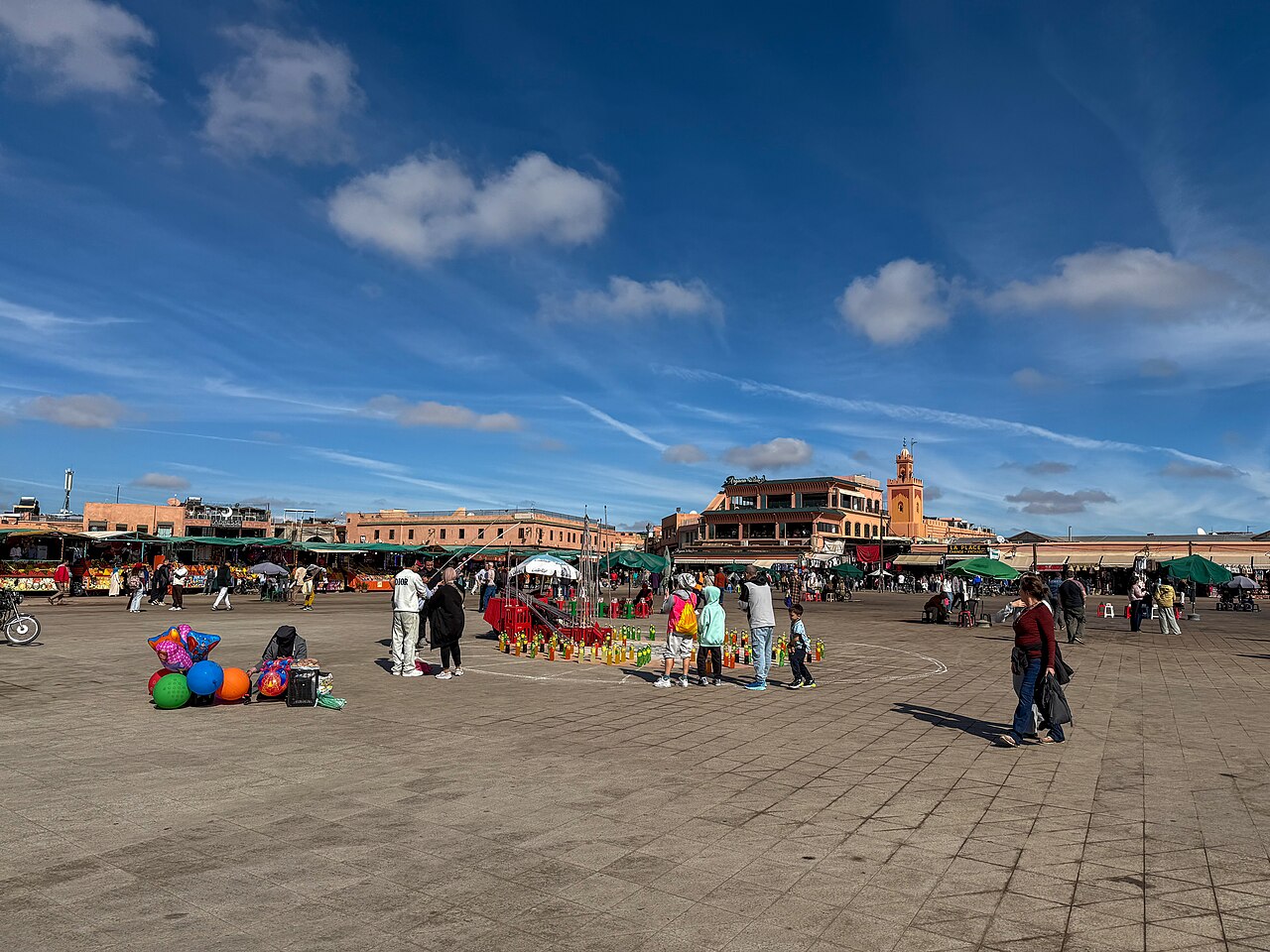
A visit to the Koutoubia Mosque typically requires between thirty minutes and one hour for most travellers. This duration allows time to walk around the exterior, observe the minaret from multiple angles, and appreciate the monument within its urban context. The mosque sits near the Jemaa el-Fnaa square, and many visitors combine their stop here with exploration of the adjacent medina quarters. The surrounding gardens permit a measured pace for those wishing to sit and contemplate the structure.
Checked 2026-08-31 · Source
The exterior of the Koutoubia Mosque may be viewed at any time of day, though visitors should exercise heightened sensitivity during the five daily prayer periods when the call to prayer sounds and worshippers gather. Early morning and late afternoon light offer favourable conditions for exterior observation and photography. Prayer hall: five daily prayers at the official Marrakech prayer times, plus Friday prayer. Exterior and surrounding public gardens: accessible at all times. The practical public visitor area is the exterior setting, including the surrounding gardens and plaza. The prayer hall is not a general visitor space, so step-free tourist access to the interior is unavailable.
Checked 2026-08-31 · Source
No admission fee applies to viewing the Koutoubia Mosque from the exterior public spaces and surrounding gardens. The mosque does not offer ticketed entry for non-Muslim visitors, as interior access is restricted to Muslim worshippers. Independent exploration requires no expenditure. Free: no ticket is required to view the mosque from the surrounding public streets and gardens. General tourist admission to the prayer hall is not offered; interior access is reserved for Muslim worshippers. The practical public visitor area is the exterior setting, including the surrounding gardens and plaza. The prayer hall is not a general visitor space, so step-free tourist access to the interior is unavailable.
Checked 2026-08-31 · Source
The Koutoubia Mosque occupies a central position in Marrakesh, immediately southwest of the Jemaa el-Fnaa square. Most visitors reach the area on foot from within the medina or from the square itself. Taxis and calèches horse-drawn carriages serve the Jemaa el-Fnaa vicinity. The official address is 40 Rue Ibn Khaldoun, immediately southwest of Jemaa el-Fna. Marrakech City Tour’s named Historical Route serves Jemaa el-Fna; alight there and walk toward the visible minaret. The route uses hop-on/hop-off buses with a wheelchair place, low rear floor and boarding ramp. The prayer hall is not a general visitor space, so step-free tourist access to the interior is unavailable.
Checked 2026-08-31 · Source
Visitors must respect that the Koutoubia Mosque remains an active religious site, not a tourist attraction with public interior access. Appropriate dress and restrained behaviour are expected in the immediate vicinity. Persistent unofficial guides represent a common irritation near the monument and the adjacent square; polite but firm refusal is generally effective. The practical public visitor area is the exterior setting, including the surrounding gardens and plaza. The official description identifies a ramp inside the 77-metre minaret leading upward; this is an architectural feature, not a step-free public visitor route.
Checked 2026-08-31 · Source
Photography of the Koutoubia Mosque exterior is permitted and widely practised from the public gardens and surrounding streets. The minaret offers exceptional photographic interest due to its symmetrical proportions and prominent position against the sky. The golden hour shortly after sunrise and before sunset produces warm light on the stonework. Night photography is possible when the minaret is illuminated. Tripod use in busy pedestrian areas may attract attention and should be conducted with awareness of surrounding foot traffic. Yes. Morocco’s Ministry of Habous lists Al Koutoubia among the country’s mosques open for prayer, with five daily prayers and the Friday service.
Checked 2026-08-31 · Source
Yes. Morocco’s Ministry of Habous lists Al Koutoubia among the country’s mosques open for prayer, with five daily prayers and the Friday service.
The square-based minaret is 77 metres high and measures 12.8 metres along each side at its base.
The first mosque was inaugurated in 1157; a second sanctuary and the minaret followed in 1158 under the Almohad ruler Abd al-Mu’min.
It stands in the southwestern part of the Medina, near Jemaa el-Fna and surrounded by gardens.
Its minaret became an architectural model associated with Seville’s Giralda and Rabat’s Hassan Tower.
The current mosque has 17 aisles running perpendicular to the qibla wall, a wider central aisle, a five-domed qibla transept and eight lateral doors.
Loading the interactive map…
The interactive map could not be loaded.
Last updated:
Source: OpenStreetMap contributors, Wikidata ·