
1 min walk
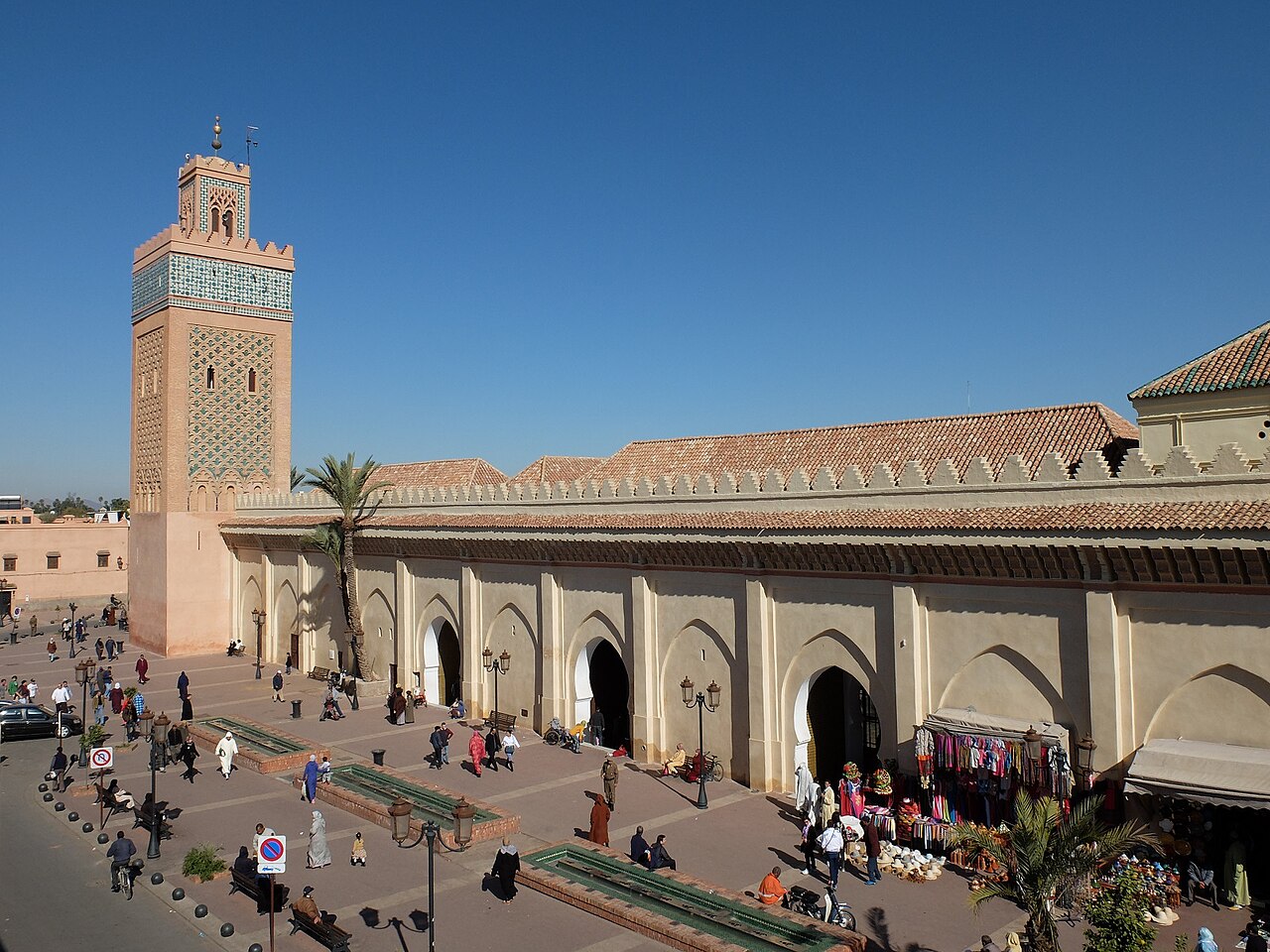
Al-Mansour Mosque
- Must see · Heritage site
- Place of worship
Language · 11 published
Museum · Marrakesh
Tombeaux Saadiens ضريح السعديين
Reviewed by Elena Voss · Roavina Travel Editor

| Monday | 09:00 – 17:00 |
|---|---|
| Tuesday | 09:00 – 17:00 |
| Wednesday | 09:00 – 17:00 |
| Thursday | 09:00 – 17:00 |
| Friday | 09:00 – 17:00 |
| Saturday | 09:00 – 17:00 |
| Sunday | 09:00 – 17:00 |
Checked 2026-08-31 · Source
Read from the OpenStreetMap access tags; anything not listed has no tag recorded.
Set the group type to family in the planner and the day window contracts to about three quarters of a solo day.
This place is a Museum. It carries the Moroccan cultural heritage heritage designation.
The Saadian Tombs constitute a royal necropolis in Marrakesh, Morocco, associated with the Saadian dynasty that ruled from 1549 to 1659. The complex contains the mausoleums of Saadian sultan Ahmad al-Mansur and members of his family. Sealed and hidden for centuries, the site was rediscovered in 1917 through aerial photography. Daily 09:00–17:00. The Ministry of Culture ticket portal lists visiting hours of 09:00–17:00; Marrakech’s official tourism body states that the monument opens daily, so there is no weekly closure day.
Checked 2026-08-31 · Source
The necropolis comprises two main mausoleums and numerous individual tombs arranged across gardens. The Chamber of the Twelve Columns stands as the most elaborate space, featuring imported Italian Carrara marble, intricate stucco work, gilded cedar ceilings, and zellige tile decoration. The Hall of the Three Niches contains additional royal burials. Over one hundred tombs occupy the gardens, marked by simple headstones. The Ministry of Culture ticket portal lists visiting hours of 09:00–17:00; Marrakech’s official tourism body states that the monument opens daily, so there is no weekly closure day.
Checked 2026-08-31 · Source
Visitors typically allocate between forty-five minutes and ninety minutes for a complete visit to the Saadian Tombs. The compact nature of the site permits efficient viewing of both mausoleum interiors and the exterior garden spaces containing additional burials. Crowding conditions vary considerably throughout the day and may substantially extend the time required. The narrow passages and small chambers within the mausoleums create bottlenecks during peak visitation periods. Adult foreign visitor: 100 MAD. Adult Moroccan or resident: 30 MAD. Moroccan visitors receive free admission every Friday and on the first day of national and religious holidays.
Checked 2026-08-31 · Source
Visitors should consult current official sources or local tourism offices before planning arrival. The enclosed mausoleum chambers become uncomfortably warm during midday periods, particularly in summer months, making morning visits preferable for thermal comfort. The site experiences substantial crowding during conventional tourism hours, with queue formation common at entry. Daily 09:00–17:00. The entrance passage is narrow and uneven, with several steps and no ramp. The garden courtyard is flatter, but wheelchair and stroller access remains difficult. They are a royal funerary complex situated north of Marrakesh’s Almohad Kasbah.
Checked 2026-08-31 · Source
The Saadian Tombs operate under official management and require paid admission for entry. Visitors should anticipate that pricing structures may distinguish between domestic and international visitors, following patterns common at Moroccan heritage sites. Combination tickets with other Marrakesh monuments may be available. Payment methods and currency accepted should be verified in advance. Adult foreign visitor: 100 MAD. Adult Moroccan or resident: 30 MAD. Moroccan visitors receive free admission every Friday and on the first day of national and religious holidays. The entrance passage is narrow and uneven, with several steps and no ramp.
Checked 2026-08-31 · Source
The Saadian Tombs occupy a location within the Kasbah quarter of Marrakesh's medina, near the Moulay El Yazid Mosque. Access on foot from Jemaa el-Fnaa square requires approximately fifteen to twenty minutes of walking through medina streets. The surrounding neighborhood contains additional historical points of interest. ALSA operates Marrakesh’s urban bus network; the official tourism guide lists a 4 MAD single fare. For the final approach, enter the Kasbah around Bab Agnaou and continue along Rue de la Kasbah. The tombs’ entrance is beside Kasbah Mosque, to the right of the mosque’s main gate. Bus, taxi and horse-drawn carriage are listed arrival options for the Kasbah, with the final approach through the medina made on foot.
Checked 2026-08-31 · Source
The narrow doorways and passages within the mausoleums create physical constraints that challenge visitors with mobility limitations or claustrophobic tendencies. Uneven flooring surfaces and changes in level between chambers present trip hazards requiring attention. The site lacks climate control, producing hot and humid conditions in enclosed spaces. Queue management at entry may be informal, with potential for confusion about admission procedures. The entrance passage is narrow and uneven, with several steps and no ramp. They are a royal funerary complex situated north of Marrakesh’s Almohad Kasbah.
Checked 2026-08-31 · Source
Photography conditions within the Saadian Tombs present technical challenges due to low natural light in mausoleum interiors and restrictions on artificial lighting or flash equipment. The decorative surfaces of marble, stucco, and gilded wood reward patient photographic attention but require appropriate camera settings or stabilization. Tripod use is typically restricted. The contrast between bright exterior gardens and dim interior chambers complicates exposure decisions. Visitors should observe posted regulations regarding photography and refrain from disruptive behavior. Sultan Abdallah al-Ghalib established it in 1557 to house the tomb of his father, Muhammad al-Shaykh, founder of the Saadian dynasty.
Checked 2026-08-31 · Source
They are a royal funerary complex situated north of Marrakesh’s Almohad Kasbah.
Sultan Abdallah al-Ghalib established it in 1557 to house the tomb of his father, Muhammad al-Shaykh, founder of the Saadian dynasty.
Sultan Ahmad al-Mansur expanded and decorated it after burying his mother, Lalla Messaouda, there in 1591.
The first section contains the Hall of the Mihrab, the Hall of Twelve Columns and the Hall of Three Niches.
The second section is known as the Koubba Lalla Messaouda.
Yes. It contains the tomb of the Alaouite sultan Moulay al-Yazid, who died in 1792.
Loading the interactive map…
The interactive map could not be loaded.

Last updated:
Source: OpenStreetMap contributors, Wikidata ·