
4 min walk
Church of St Nicholas
- Must see · Heritage site
- Place of worship
Language · 11 published
Historic monument · Amsterdam
Centraal Station
Reviewed by Elena Voss · Roavina Travel Editor
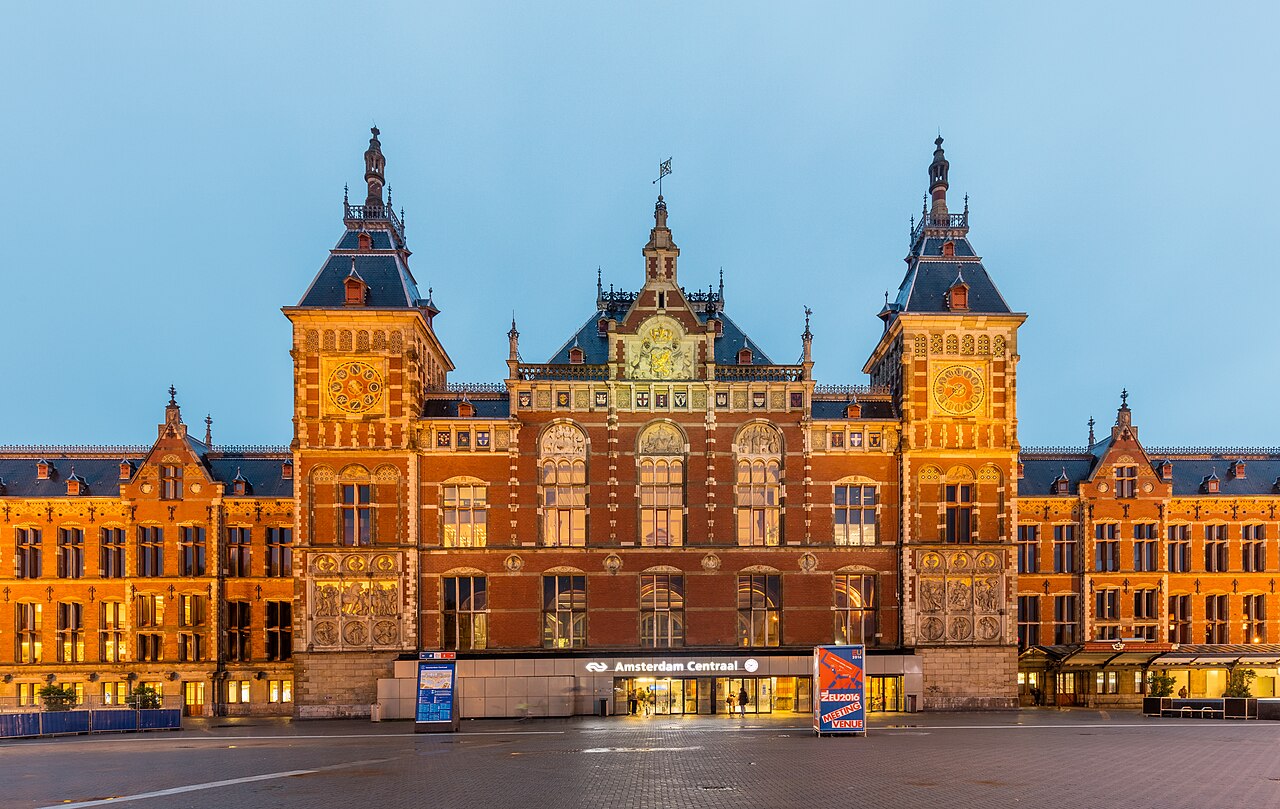
It opened in 1889. It was built in the Gothic Revival style. It was designed by Pierre Cuypers. It carries the Rijksmonument heritage designation. It is run by Nederlandse Spoorwegen.
Amsterdam Central station is the city’s principal railway gateway, set between Amsterdam’s historic centre and the IJ waterfront. Its nineteenth-century station building is a landmark, yet its main importance is practical: trains, urban transport, pedestrian routes and waterfront connections meet here. The station is a working interchange and orientation point rather than a conventional museum or attraction. Arriving here places you among platforms, concourses, cyclists, trams and walkers, with the old centre immediately beyond the station approaches. Its architecture gives the arrival a strong sense of place, while the constant movement explains why the building feels like part of the city’s infrastructure.
Checked 2026-08-26 · Source
The complex contains railway platforms, passenger concourses, ticketing areas and connections to Amsterdam’s urban transport network. Underground links serve the metro, while the surrounding approaches connect with trams, buses, cycle routes and pedestrian streets. Ferry piers beside the station provide crossings over the IJ to Amsterdam-Noord. Shops and food outlets form part of the station environment, although they are separate businesses rather than one station-wide service. For orientation, think in layers: rail platforms at the core, city transport around and below them, and the waterfront immediately beyond. This arrangement is why a short change can involve several levels and directions.
Checked 2026-08-26 · Source
The time needed at Amsterdam Central station depends on whether you are arriving, departing or changing modes. A simple arrival may require only a walk through the concourse, while a train-to-metro, tram, bus or ferry connection adds wayfinding and walking. Allow extra margin for luggage, children, reduced mobility or a tight connection. If the station begins your itinerary, include time to find the city-centre exit and orient yourself before setting off. Its useful duration is determined by your journey, not by sightseeing alone. A transfer involving the waterfront or an unfamiliar platform deserves more time than a direct walk out.
Checked 2026-08-26 · Source
Choose when to pass through Amsterdam Central station according to the connection you need and your comfort with crowds. Commuter periods and busy tourist arrivals can make the concourses, entrances and surrounding streets especially active. Midday may feel easier for an unhurried orientation, while an early or late journey depends on the onward timetable. No operator-sourced station-wide opening schedule was supplied, so this guide does not claim continuous public access or specific hours. The waterfront and approaches also become busier as cycling and pedestrian movement increases. Plan around your actual transport need rather than treating the station as a venue with a recommended visiting hour.
Checked 2026-08-26 · Source
No operator-sourced admission tariff was supplied for Amsterdam Central station, and the station is described here as a transport interchange rather than a ticketed attraction. Travel tickets are separate: rail, metro, tram, bus and ferry journeys may each follow their own fare and validation rules. Do not confuse the cost of continuing a journey with general admission to the station itself; a transfer and a sightseeing visit are different uses of the building. The station can be part of a paid journey without having a general visitor admission ticket. Plan any transport purchase around the specific service you intend to use.
Checked 2026-08-26 · Source
Amsterdam Central station is a citywide interchange reached directly by rail and connected locally by metro, trams and buses. Pedestrian approaches lead toward the historic centre, while cycle routes bring riders into the station area. Ferry piers beside the building connect across the IJ to Amsterdam-Noord, and taxis use designated areas around the station. Choose the approach that matches your onward mode: the waterfront, city-centre and public-transport sides serve different movements. Its central position makes it a practical meeting point before continuing into nearby districts on foot. Identify your next mode before leaving the building, because the station has several distinct approaches.
Checked 2026-08-26 · Source
Expect a busy transport setting rather than a quiet sightseeing venue. Watch for bicycles and trams around the approaches, keep belongings secure in crowded areas, and follow signs before choosing a platform or exit. Luggage can make crossings and changes of level slower. Stay clear of platform edges and follow staff instructions in operational areas. If continuing by ferry, use the marked route to the pier and take care near the waterfront. Leave practical margin when a missed connection would affect the rest of your day. Crowded circulation is part of the station experience, so pause beside the main flow when checking directions or regrouping.
Checked 2026-08-26 · Source
The exterior offers distinct viewpoints of the historic façade, the IJ-facing side, the city-centre approaches and the movement around the interchange. Waterfront views show the station in relation to Amsterdam-Noord, while street-level angles emphasize its position beside the old centre. Inside, keep photography subordinate to passenger movement and operational safety. Do not obstruct entrances, stairs, platforms or connecting routes, and be considerate when other travellers enter the frame. A wider waterfront composition presents the station as both architecture and a working gateway. The contrast between the detailed building exterior and the constant movement around it gives photographs a clear sense of place.
Checked 2026-08-26 · Source
It is Amsterdam’s principal railway gateway and an interchange for trains, metro, trams, buses, pedestrian routes and ferries beside the IJ.
No operator-sourced admission price was supplied for the station as an interchange. Any rail or local-transport fare is a separate travel cost for the journey you choose.
Ferry piers beside the station provide connections across the IJ to Amsterdam-Noord. Follow signs toward the waterfront piers.
Allow time for the transfer you are making, with extra margin for luggage, children, reduced mobility or a tight connection. Crossing the complex can take longer than expected.
Yes. The station stands beside Amsterdam’s historic centre, with pedestrian routes leading from the building toward central streets and nearby districts.
Exterior views are available from the façade, city-centre approaches and IJ waterfront. Inside, keep clear of passenger routes and platforms, respect operational safety and avoid obstructing other travellers.
Loading the interactive map…
The interactive map could not be loaded.
Last updated:
Source: OpenStreetMap contributors, Wikidata ·