
3 min walk
Sexmuseum Amsterdam
- Must see
- Museum
Language · 11 published
Historic monument · Amsterdam
Reviewed by Elena Voss · Roavina Travel Editor
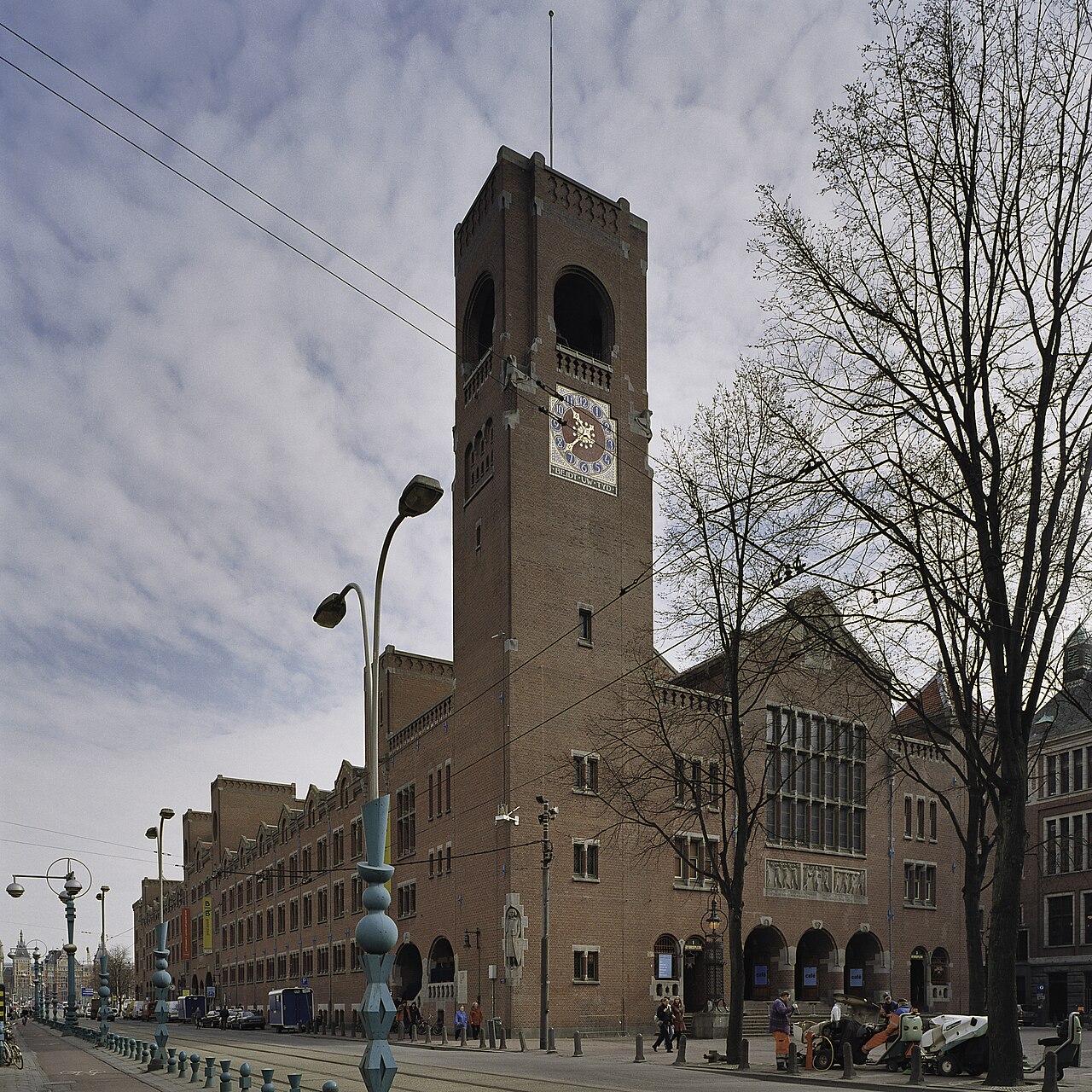
This place is a Attraction. It opened in 1903. It was built in the modern architecture style. It was designed by Hendrik Petrus Berlage. It is built of brick. It carries the Rijksmonument heritage designation.
Beurs van Berlage is a former exchange building on Damrak beside Beursplein in central Amsterdam. Hendrik Petrus Berlage designed it, and construction was completed in 1903. Its red-brick façades, carefully arranged massing and prominent tower make it a distinctive example of Dutch modern architecture. The building began as a commodity exchange and later accommodated stock-trading activity, which ended in 1998. It now operates mainly as a venue for conferences, concerts, exhibitions and other events, giving it the character of a working historic venue rather than a conventional museum.
Checked 2026-08-26 · Source
The interior contains substantial halls and rooms created for the building's original commercial role and adapted for modern events. People attending a conference, concert or exhibition may encounter former trading spaces, surviving structural features and decorative details associated with Berlage's design. The interior experience depends on the event layout and the areas opened by its organiser, so one occasion may reveal more of the building than another. The tower is a particularly memorable exterior element, but it is not a dependable independent viewpoint. The contrast between preserved architectural volume and changing event layouts is central to the building's appeal.
Checked 2026-08-26 · Source
There is no single standard duration because time spent inside follows the event you attend. A concert or exhibition may occupy several hours, while a conference can fill most or all of a day. If you are seeing the building only from outside, allow about fifteen to thirty minutes for the main frontage and tower. Travellers who want to photograph the façades, Beursplein setting and Damrak surroundings more carefully may prefer around forty-five minutes. These exterior timings describe a streetside visit, not access to the venue's event spaces.
Checked 2026-08-26 · Source
The most reliable way to experience the interior is to align a visit with a scheduled public event held at Beurs van Berlage. The building is primarily an events venue, and the areas available to visitors depend on the programme and its arrangements. The exterior can be viewed from surrounding public streets and Beursplein at any time. The Damrak frontage is busiest during the main daytime sightseeing period, while an evening event can give the building a different atmosphere as visitors arrive and leave. A flexible itinerary works well when the interior is not the sole purpose of the stop.
Checked 2026-08-26 · Source
No standalone admission price is recorded for Beurs van Berlage. The building hosts conferences, concerts, exhibitions and private functions, so entry arrangements belong to the particular programme rather than to one universal monument or museum ticket. Some functions may be intended for delegates, invited guests or event attendees. Visitors planning an interior experience should use the arrangements attached to the selected event. A traveller making only an exterior stop can see the façades from public streets and squares without treating the building as a separately priced museum visit.
Checked 2026-08-26 · Source
Beurs van Berlage stands at Damrak 243, where Damrak meets Beursplein, a short walk south of Amsterdam Central Station. The walk from the station takes approximately five minutes along Damrak. Tram connections are available near Central Station and Dam. Visitors approaching from Nieuwmarkt or the Red Light District can walk to the building in roughly ten to fifteen minutes. The surrounding centre is easy to explore on foot, while nearby cycle parking can be busy. Canal-tour piers operate in the adjacent central area, making the venue straightforward to combine with other city-centre stops.
Checked 2026-08-26 · Source
Its primary role as an events venue means the areas available inside can be restricted to a particular programme or group of attendees. The Damrak and Beursplein area is heavily trafficked, with crowded pavements, bicycles and busy movement through the historic centre. Take care with belongings in dense visitor flows. Tower access should be treated as dependent on the occasion rather than as a regularly available climb. If no suitable event is part of your plans, treat Beurs van Berlage as an exterior architectural stop and allow extra space around event arrival and departure periods.
Checked 2026-08-26 · Source
The exterior is easy to photograph from Beursplein, Damrak and the surrounding public streets. The red-brick façades and tower provide a strong wide composition, while entrance details and masonry reward closer framing. Conditions change with daylight direction and activity around the square, so a quieter image may require patience rather than a different viewpoint. Interior photography is governed by the event organiser and can be restricted at concerts, conferences or private functions. Respect requests from staff and avoid photographing people attending closed events without permission. Looking across the square can help include the building's full vertical profile without standing in busy doorway flows.
Checked 2026-08-26 · Source
The building is chiefly used for scheduled conferences, concerts, exhibitions and other events, so interior access follows the arrangements of the occasion. You can view the exterior from public streets and Beursplein.
No. Stock-trading activity at the building ended in 1998. The historic structure now serves mainly as a venue for conferences, concerts, exhibitions and other events.
Dutch architect Hendrik Petrus Berlage designed the building, which was completed in 1903. Its red-brick architecture and tower make it a notable landmark in central Amsterdam.
Tower access is tied to particular events or special openings. There is no regular independent tower-visit schedule, so do not plan on climbing it as part of an ordinary exterior stop.
Amsterdam Central Station is approximately five minutes away on foot, south along Damrak. Tram services also operate near Central Station and Dam, both convenient points for reaching the venue.
Food service can be arranged for particular events, but it should be treated as event-specific rather than assumed during an exterior stop or a general visit to the venue.
Loading the interactive map…
The interactive map could not be loaded.
Last updated:
Source: OpenStreetMap contributors, Wikidata ·