
2 min walk
Anne Frank House
- Must see
- Museum
Language · 11 published
Museum · Amsterdam
Reviewed by Elena Voss · Roavina Travel Editor
| Monday | 10:00 – 18:00 |
|---|---|
| Tuesday | 10:00 – 18:00 |
| Wednesday | 10:00 – 18:00 |
| Thursday | 10:00 – 18:00 |
| Friday | 10:00 – 18:00 |
| Saturday | 10:00 – 18:00 |
| Sunday | 10:00 – 18:00 |
Parsed from OpenStreetMap opening hours on 2026-09-09.
This place is a Museum. It opened in 2004.
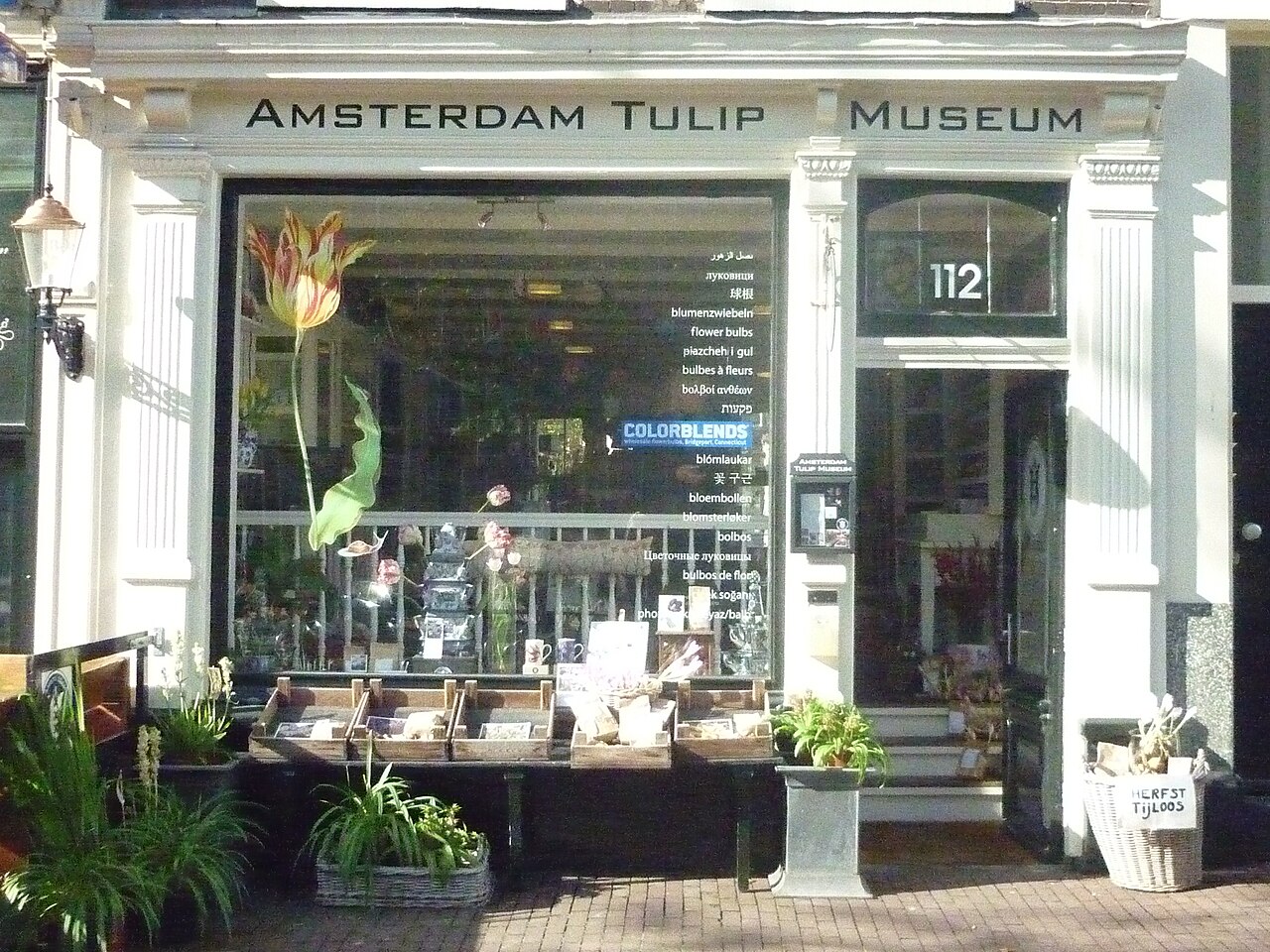
The Amsterdam Tulip Museum is a specialist museum in Amsterdam’s Jordaan district devoted to the tulip’s historical and cultural importance in the Netherlands. Its distinctive subject is the relationship between a flower, horticulture, trade and national imagery. Rather than functioning as a broad city museum, it offers a concentrated introduction to why tulips became so closely associated with Dutch identity. The museum is especially relevant to visitors who want historical context alongside Amsterdam’s canals, gardens and flower culture. Its compact scale makes it a natural cultural stop during a Jordaan walk. The Amsterdam Tulip Museum is a small museum in Amsterdam dedicated to the history and cultural significance of tulips in the Netherlands. The museum's compact scale and focused historical content may engage older children with existing interest in flowers or economics. Younger visitors might find limited interactive elements compared to larger family-oriented attractions.
Checked 2026-08-26 · Source
The museum’s story follows tulips from their origins beyond western Europe through their development in Ottoman gardens and later Dutch cultivation. A central theme is tulip mania, the seventeenth-century episode when speculation drove bulb prices to extraordinary levels before the market collapsed. The subject also connects botanical change with commercial practice: growing, propagating, trading and displaying the flower. Expect a compact, idea-led exhibition rather than extensive galleries. Its interest lies in showing how tulips moved from a luxury commodity to a familiar part of Dutch horticultural and cultural life.
Checked 2026-08-26 · Source
Plan the Amsterdam Tulip Museum as a short, focused visit. Around thirty minutes suits travelers making a quick stop and reading selectively. Allow up to an hour if horticultural history, tulip cultivation, botanical illustration or seventeenth-century commerce interests you and you want to take in the explanatory material carefully. The compact format makes the museum easy to combine with a longer Jordaan itinerary, including canal walks and nearby cultural sights. Its value is concentrated in the subject and interpretation, so attentive reading matters more than extended wandering through a large building.
Checked 2026-08-26 · Source
The museum provides an indoor way to explore tulip history in any season, while spring offers a useful contrast with living flowers and horticultural displays elsewhere in the Netherlands. Choose it when you want historical context during a day that already includes the Jordaan. The neighborhood can be busy at popular times, and a quieter period may make a small exhibition more comfortable. Spring is particularly fitting for pairing the museum’s historical perspective with the seasonal tulip landscapes associated with the country, although the museum’s appeal is not dependent on outdoor bloom conditions.
Checked 2026-08-26 · Source
No operator or responsible public-body source in the available material verifies the museum’s admission price, concessions, payment arrangements or reservation requirements. The canals and streets around the Jordaan can be explored independently, but that does not establish the museum’s admission policy. Treat the museum as a separate cultural stop and use only its own visitor information for any ticket decision. Its compact size does not by itself indicate whether entry is free, paid, discounted or subject to booking.
Checked 2026-08-26 · Source
The Amsterdam Tulip Museum is in the Jordaan, a historic neighborhood west of Amsterdam’s central canal belt. The supplied location places it within a district that is practical to approach on foot, by bicycle or by Amsterdam public transport. Walking from the central area can form part of a canal-side route through characteristic streets and bridges. Cycling fits the city’s everyday travel pattern, but visitors should use marked lanes where available and watch for bicycle traffic when crossing. Nearby Jordaan attractions make a combined outing efficient.
Checked 2026-08-26 · Source
The Jordaan involves narrow streets, bridges, busy cycle traffic and canal edges that require ordinary urban awareness. Because the museum is compact, several visitors arriving together may reduce circulation and viewing comfort. Leave flexibility if you are linking this stop with another timed attraction, since the approach through the neighborhood is part of the outing. The specialized subject rewards visitors prepared to read explanatory material, while travelers expecting extensive galleries or large-scale installations may find the physical setting more limited than the historical theme.
Checked 2026-08-26 · Source
No photography policy is recorded in the available place information. Inside the exhibition, follow any signs and staff directions concerning cameras, flash or recording. Even where personal photography is permitted, avoid flash and keep equipment from obstructing the compact circulation space. The museum’s experience is primarily interpretive, so reading and looking carefully will give the visit more value than photographing everything. Visitors should also respect other viewers by keeping cameras quiet, brief and unobtrusive in the small exhibition environment.
Checked 2026-08-26 · Source
It can suit older children interested in flowers, history or unusual stories about money and trade. The focused subject and compact format may be easier for families to manage than a large museum, while younger children may prefer a more interactive attraction.
The available place information does not establish whether the museum operates a shop or sells bulbs and floral products. Flower markets and specialist vendors elsewhere in Amsterdam are separate places and do not provide evidence about this museum’s retail offering.
The available place information does not record wheelchair access or other accessibility amenities for this museum. Do not infer accessibility from its location or compact scale; visitors who need specific arrangements should use the operator’s information before relying on the visit.
They serve different purposes. Keukenhof is associated with seasonal outdoor garden displays, while the Amsterdam Tulip Museum is an indoor, history-focused stop about the flower’s cultural and commercial story. A traveler interested in tulips may find the two complementary rather than interchangeable.
The available place information does not establish whether staff-led or audio tours are offered. The museum’s focused subject can be explored independently, but tour availability should not be inferred from the compact exhibition format.
The available place information does not verify whether the museum participates in the Netherlands Museumkaart programme.
Loading the interactive map…
The interactive map could not be loaded.
Last updated:
Source: OpenStreetMap contributors, Wikidata ·