.jpg)
2 min walk
Amsterdam Dungeon
- High
- Historic monument
Language · 11 published
Place of worship · Amsterdam
Reviewed by Elena Voss · Roavina Travel Editor
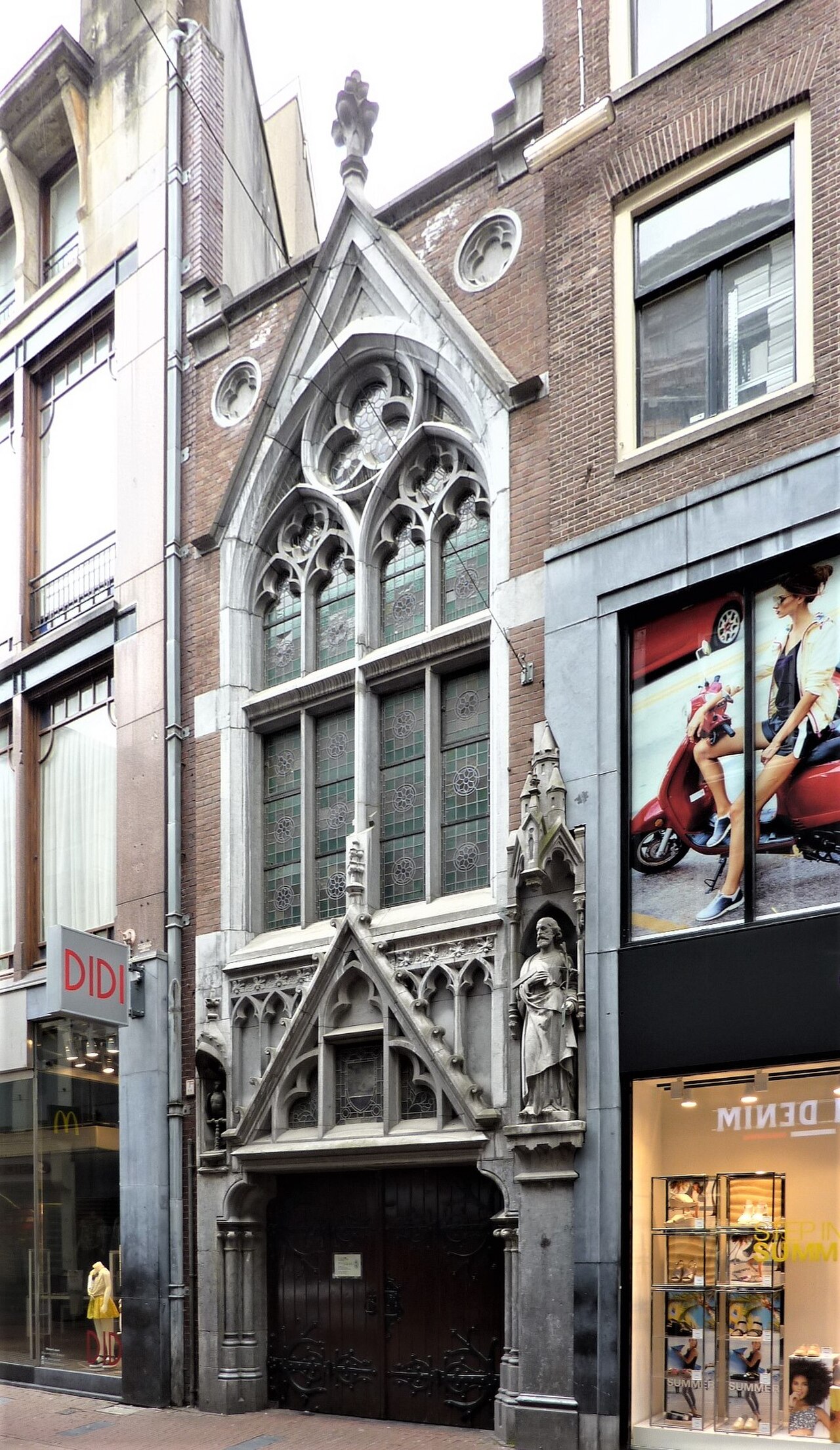
This place is a Place of worship. It was established in 1848. It was designed by Gerrit Moele. It carries the Rijksmonument heritage designation.
De Papegaai is a historic hidden church located in central Amsterdam. The local name translates to "The Parrot" in English. This clandestine Catholic church was constructed during the Dutch Republic when public Catholic worship was prohibited. The building represents an important example of the schuilkerken, or hidden churches, that characterized religious life in Amsterdam during periods of official restriction. Its discreet exterior concealed sacred interior spaces from public view. De Papegaai is an actual displayed stop in Amsterdam, and the useful visit depends on the specific setting and conditions found on arrival. Keep the plan flexible and verify current practical details before travel.
Checked 2026-08-26
The interior of De Papegaai contains elements typical of hidden church architecture adapted for worship under constrained circumstances. Visitors may observe the compact spatial arrangement necessitated by its concealed function. The building's modest scale reflects the practical requirements of maintaining a low profile during its period of operation. Architectural details from its historical construction period may be present, though specific interior features are not recorded in the available sources. The atmosphere conveys the historical tension between religious practice and civic regulation.
Checked 2026-08-26
A visit to De Papegaai requires limited time due to its compact dimensions as a hidden church structure. Visitors typically spend between fifteen and thirty minutes exploring the interior space. The small scale of schuilkerken buildings means there are no extensive grounds or multiple chambers to traverse. Those with particular interest in Dutch religious history or concealed church architecture may wish to allocate additional time for contemplation. The site suits brief visits integrated into broader walking tours of central Amsterdam. De Papegaai is an actual displayed stop in Amsterdam, and the useful visit depends on the specific setting and conditions found on arrival. Keep the plan flexible and verify current practical details before travel.
Checked 2026-08-26
Visitors should verify current accessibility before planning their trip, as hidden churches in Amsterdam may have restricted opening schedules or require advance arrangement. The building's status as a heritage site rather than active regular tourist venue suggests limited public access. Seasonal variations in opening patterns are common for such historic religious properties. Contacting relevant heritage authorities or local tourist information services is advisable to confirm whether De Papegaai currently accepts visitors and under what conditions. Check the operator's own site for the travel date before relying on a schedule or fare.
Checked 2026-08-26
Entry fees for small historic religious sites in Amsterdam vary considerably, with some maintaining free access and others charging modest amounts for maintenance. Group visits may involve different arrangements than individual entry. Visitors should not assume standard museum pricing applies to this specialized heritage property. Any required donations or suggested contributions would be determined by current management. Verification of actual costs must be obtained directly from authoritative sources before visiting, as online information may be outdated or speculative. Check the operator's own site for the travel date before relying on a schedule or fare.
Checked 2026-08-26
De Papegaai occupies a central location in Amsterdam's historic core, accessible by walking from numerous landmarks. The dense canal ring area where it sits is well served by public transportation including trams and buses. Cycling represents a common local approach to reaching central destinations. Pedestrian navigation through Amsterdam's compact medieval street pattern is generally straightforward. Visitors should consult current maps for precise routing, as the discreet nature of hidden churches can make them challenging to locate without preparation. Nearby parking is extremely limited.
Checked 2026-08-26
Visitors must respect that De Papegaai remains fundamentally a religious heritage site rather than conventional tourist attraction. Appropriate demeanor and dress are expected. The entrance may be unmarked or difficult to identify, consistent with its historical function of concealment. Interior spaces may lack modern amenities such as climate control or accessibility accommodations typical of larger museums. Photography restrictions may apply. The building's age suggests uneven flooring and narrow passages. Visitors should verify whether advance booking is required rather than assuming spontaneous entry is possible.
Checked 2026-08-26
Photography policies at De Papegaai are not specified in available sources. Many historic religious sites in Amsterdam impose restrictions on interior photography, particularly flash photography that may damage sensitive materials. Visitors should observe posted guidelines or inquire with any staff present before capturing images. The compact interior space may limit photographic angles regardless of permission status. Respect for the site's sacred character should guide behavior. Exterior photography from public thoroughfares generally presents fewer concerns, though sensitivity to neighboring residential properties remains appropriate in this central neighborhood.
Checked 2026-08-26
Current opening arrangements are not confirmed in available sources. Visitors must verify accessibility directly before visiting.
No reliable pricing information is available. Check the operator's own site for the travel date before relying on a schedule or fare.
The name translates to "The Parrot" in English, referring to this historic hidden church.
Photography policies are not recorded. Visitors should ask for guidance on arrival and respect any restrictions.
The discreet entrance reflects its history as a concealed church. Detailed current location guidance is not recorded; consult updated maps.
Accessibility features are not recorded in available sources. Historic hidden churches typically present physical challenges for mobility-impaired visitors.
Loading the interactive map…
The interactive map could not be loaded.
Last updated:
Source: OpenStreetMap contributors, Wikidata ·