.JPG)

1 min walk
National Holocaust Museum
- Must see
- Museum
Language · 11 published
Museum · Amsterdam
Reviewed by Elena Voss · Roavina Travel Editor
| Monday | 10:00 – 17:00 |
|---|---|
| Tuesday | 10:00 – 17:00 |
| Wednesday | 10:00 – 17:00 |
| Thursday | 10:00 – 17:00 |
| Friday | 10:00 – 17:00 |
| Saturday | 10:00 – 17:00 |
| Sunday | 10:00 – 17:00 |
Parsed from OpenStreetMap opening hours on 2026-09-09.
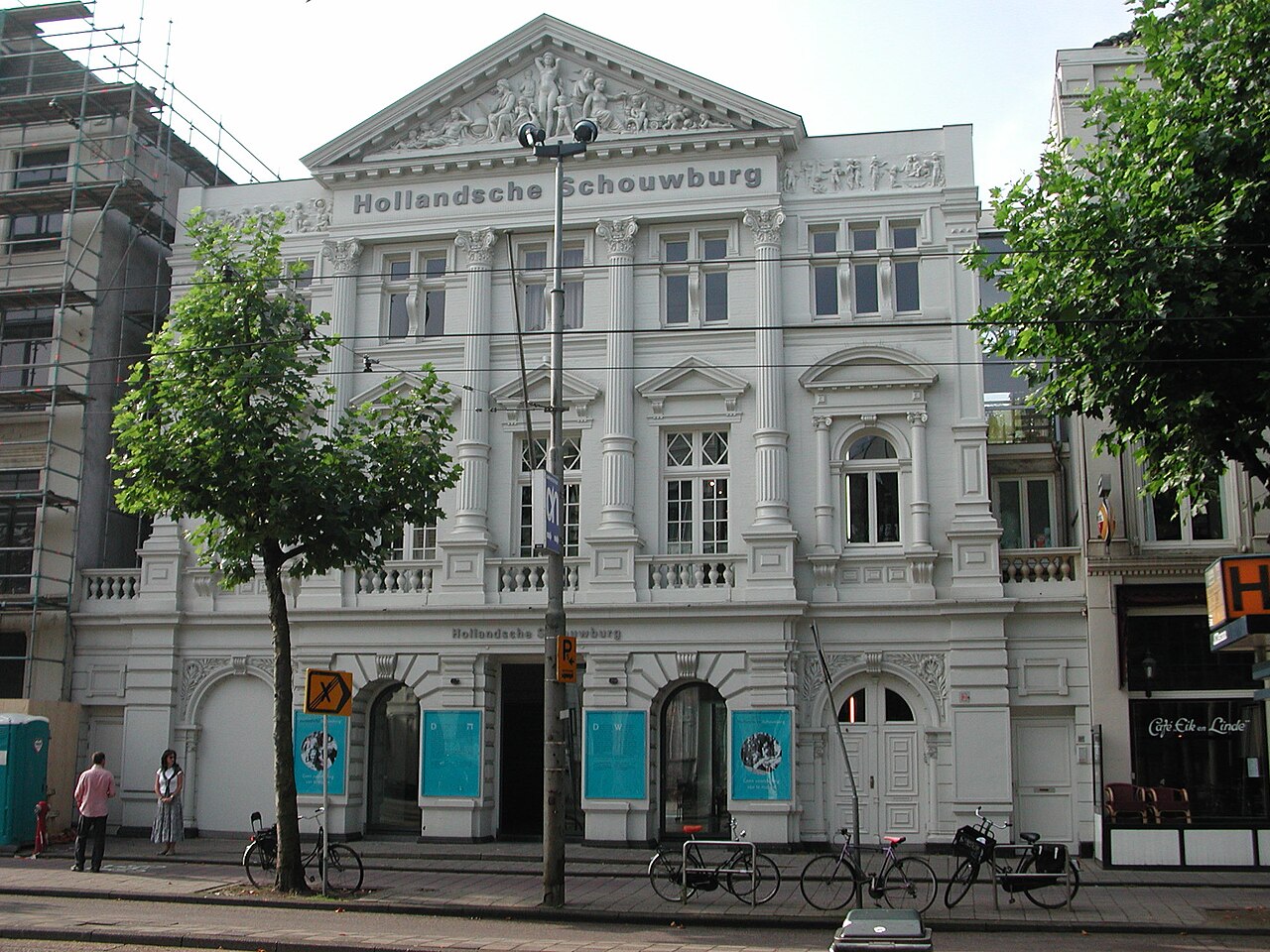
This place is a Museum. It opened in 1962. It was built in the Neoclassical architecture style. It was designed by Cornelis Antonius Bombach. It carries the Rijksmonument heritage designation.
Hollandsche Schouwburg is a former theatre in Amsterdam’s Plantage district and now a place of Holocaust remembrance. Opened as a theatre in 1892, the building was later used during the German occupation as a deportation centre for Jewish people. Its meaning today comes from that transformation: the site connects an entertainment venue from Amsterdam’s past with the history of persecution, deportation and loss in the Netherlands. Come for a focused memorial visit, not for a performance or a conventional theatre experience. The setting is significant because an ordinary public building was turned into part of the machinery of persecution. No. The building ceased operating as a theatre during the Second World War when it was repurposed as a deportation centre. It now functions exclusively as a memorial and museum.
Checked 2026-08-26 · Source
The memorial includes spaces that explain the building’s theatrical history and its wartime role as a holding place before deportation. Displays use historical photographs, documents and contextual information to help visitors understand what happened there. A memorial hall and a wall commemorating victims form the emotional centre of the visit, while a courtyard monument adds another point for quiet reflection. The interior is arranged for remembrance and learning rather than entertainment. Read the historical material at your own pace, allowing time to move from factual explanation to the personal scale of the people represented by the memorial.
Checked 2026-08-26 · Source
Allow roughly 45 minutes to 90 minutes for a visit, depending on how closely you read the displays and how much time you spend in the memorial spaces. A shorter visit can still give you the basic historical context, while a slower visit leaves room for photographs, documents and reflection. School groups or organised visits may follow a different pace. Because the subject is emotionally demanding, the right length is personal; you do not need to hurry through the building to make it fit neatly into a sightseeing schedule.
Checked 2026-08-26 · Source
Plan Hollandsche Schouwburg as a deliberate stop within a visit to the Plantage district, rather than as a quick attraction between unrelated sights. The neighbourhood can be combined naturally with other cultural and Jewish heritage locations, including Artis Zoo and the Portuguese Synagogue. Amsterdam’s weather is changeable, so allow for rain when walking or cycling between places. The most suitable time is when you can give the memorial your attention and leave space afterwards to process what you have seen. Treat the visit as reflective cultural history, not light entertainment.
Checked 2026-08-26 · Source
No admission price, donation requirement, group-booking arrangement or educational booking detail is stated for this visit. Plan without assuming that entry is free or paid, and do not include an unverified fare in your travel budget. The memorial can still be paired with nearby Plantage sights, but keep the practical ticket decision separate from the historical value of the visit. Its importance does not depend on a conventional attraction-ticket experience.
Checked 2026-08-26 · Source
Hollandsche Schouwburg stands in Amsterdam’s Plantage district, east of the historic city centre. The area is served by trams and buses, and it is also practical to reach by bicycle. From Amsterdam Centraal Station, walking takes approximately 20 to 30 minutes through the historic centre. Artis Zoo and the Portuguese Synagogue are useful nearby landmarks when orienting yourself in the neighbourhood. The district’s combination of cultural institutions, residential streets and cycle routes makes the final approach part of a wider Plantage walk.
Checked 2026-08-26 · Source
This is a Holocaust memorial, and the subject matter includes persecution, deportation and genocide. Some visitors may find the historical material distressing; adults should prepare younger visitors for that context and remain available to talk afterwards. The building’s exterior may look like an ordinary historic property, so its significance becomes clearer inside the memorial spaces. Stay alert around nearby streets and cycle routes when arriving or leaving. Give yourself enough time for a quiet transition after the visit instead of treating the site as just another stop on a tightly packed route.
Checked 2026-08-26 · Source
In memorial and exhibition areas, follow any signs or instructions given on site and keep the atmosphere respectful. Avoid allowing photography to distract from the names, documents and testimony presented in the building. The exterior can be photographed from public space subject to normal local rules, but interior permissions should not be assumed. If you are unsure in a particular room, ask staff or put the camera away and continue the visit without it. A quiet, attentive approach suits this site better than treating it as a backdrop for photographs.
Checked 2026-08-26 · Source
No. It is a former theatre that became a deportation centre during the Second World War and now serves as a memorial and museum.
Guided tours and current educational programming are not described as part of the visit.
Step-free access and visitor accessibility facilities are not described for Hollandsche Schouwburg.
Children can be included in a visit, but adults should be prepared to explain that the memorial addresses Holocaust history, persecution and genocide, which may be disturbing for younger visitors.
The Plantage district includes other significant Jewish heritage locations, including the Portuguese Synagogue and the Jewish Museum, described as being within walking distance.
A research facility, archive or public research service is not described for Hollandsche Schouwburg.
Loading the interactive map…
The interactive map could not be loaded.
Last updated:
Source: OpenStreetMap contributors, Wikidata ·