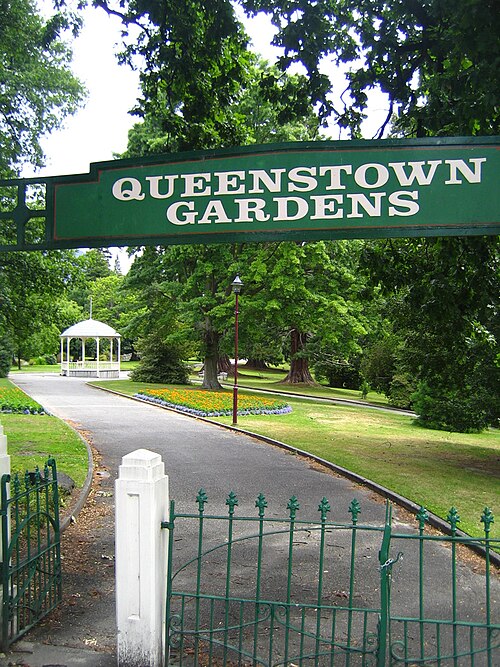
Queenstown Gardens
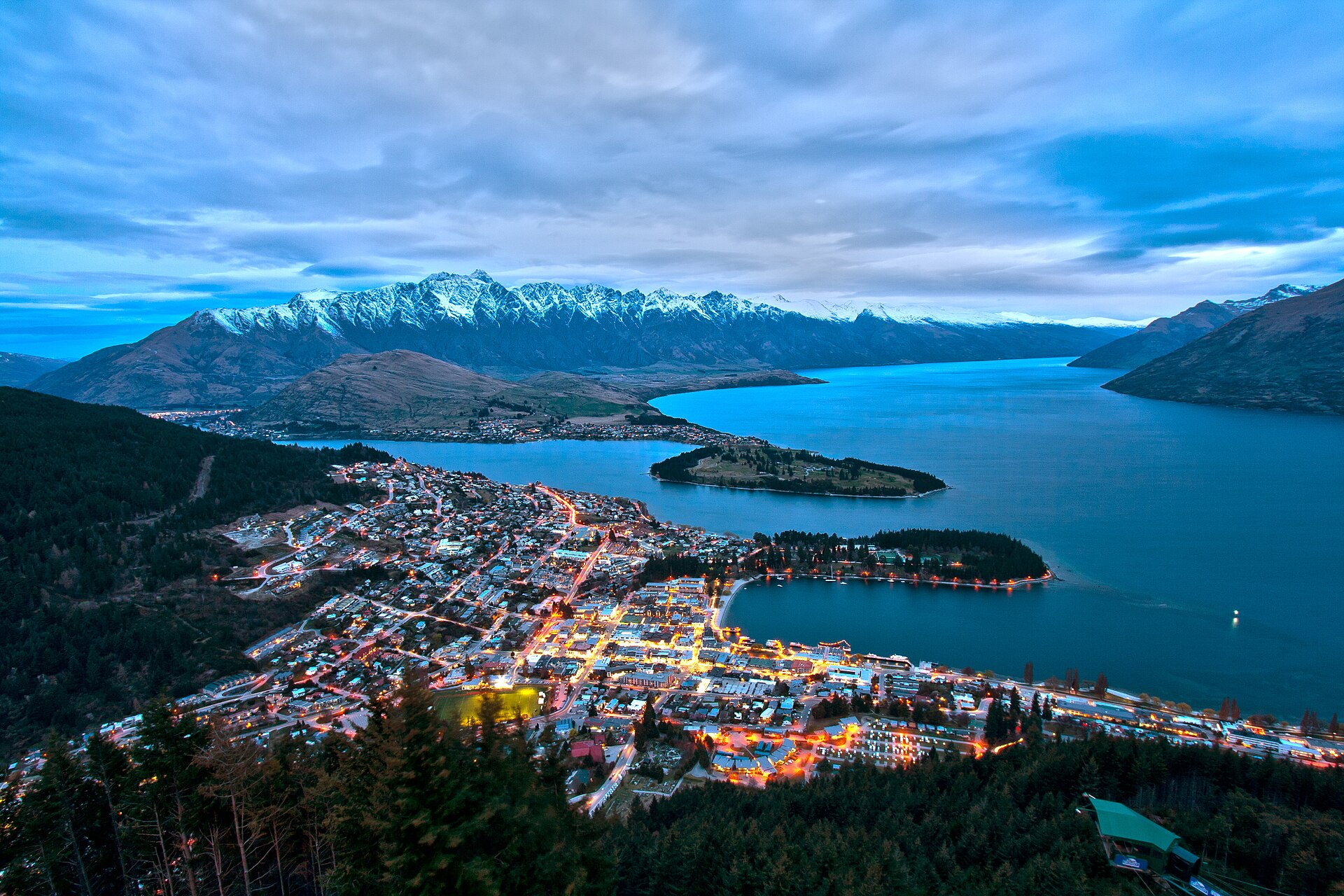
Queenstown Gardens is a public park situated on a peninsula extending into Lake Wakatipu, adjacent to the central town area of Queenstown, New Zealand.
- High
- Nature site
- Queenstown
Country guide
New Zealand runs more than 1,600 kilometres along a north-north-east axis, and its 5,355,150 people as of August 2026 are spread across 263,310 km2 of it. There...
Photograph · Michal Klajban · CC BY-SA 4.0
Reviewed by Elena Voss · Roavina Travel Editor
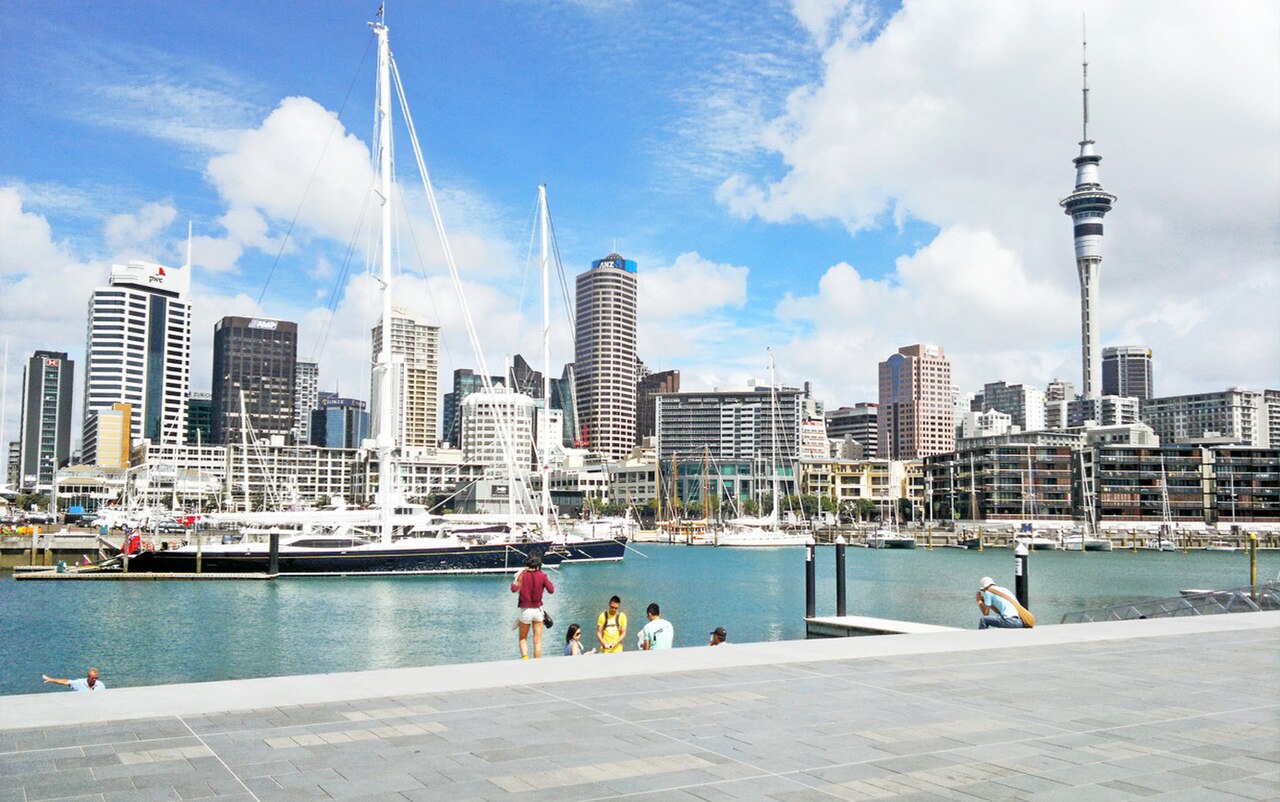
New Zealand runs more than 1,600 kilometres along a north-north-east axis, and its 5,355,150 people as of August 2026 are spread across 263,310 km2 of it. There are two main islands and over 700 smaller ones; the Cook Strait between the big two is 22 kilometres across at its narrowest. Auckland is the largest city and where most visitors land, Wellington is the capital and the crossing point south. The South Island carries the Southern Alps, raised by tectonic uplift and volcanism, and its road distances are consistently longer than the map makes them look.
Checked 2026-08-25
Every city catalogued in this country so far, ranked by how much there is to see.
Photograph · ChewyPineapple · CC BY-SA 3.0
Photograph · Lawrence Murray from Perth, Australia · CC BY 2.0
Ranked by importance — sitelinks, pageviews and heritage status, not editor preference.
64 places match
Category
Typical visit duration
Interests
Queenstown Gardens is a public park situated on a peninsula extending into Lake Wakatipu, adjacent to the central town area of Queenstown, New Zealand.
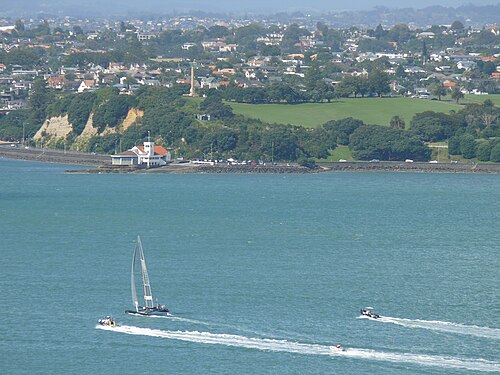
Western Springs Lakeside Park
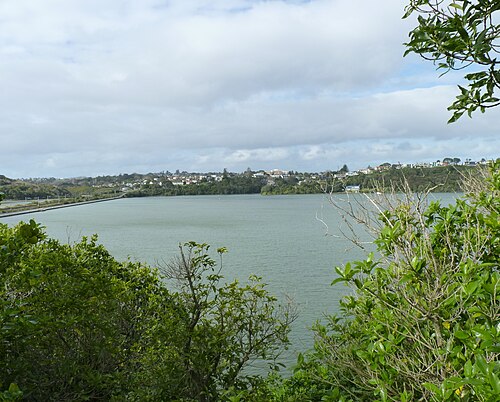
Western Springs Lakeside Park is a public park in Auckland, New Zealand, centred on a natural spring-fed lake.
ASB Waterfront Theatre is a performing arts venue located in Auckland's Wynyard Quarter waterfront precinct. The theatre opened as a purpose-built home for Auckland Theatre Company, the city's largest professional theatre company.
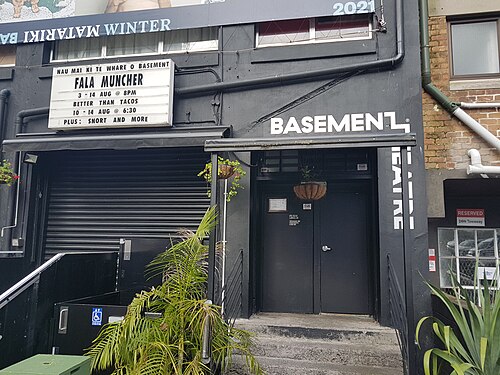
Basement Theatre
Basement Theatre is an independent performing arts venue located in Auckland's central city. Established as a hub for contemporary theatre and live performance, it occupies a distinctive underground space that has become synonymous with experimental and emerging New Zealand work.
Michael Joseph Savage Memorial
The Michael Joseph Savage Memorial commemorates New Zealand's first Labour Prime Minister, who served from 1935 until his death in 1940.
Bob's Peak is a prominent hilltop vantage point overlooking Queenstown and Lake Wakatipu in New Zealand's South Island. The peak forms part of the Ben Lomond massif and rises directly behind the Queenstown town centre.
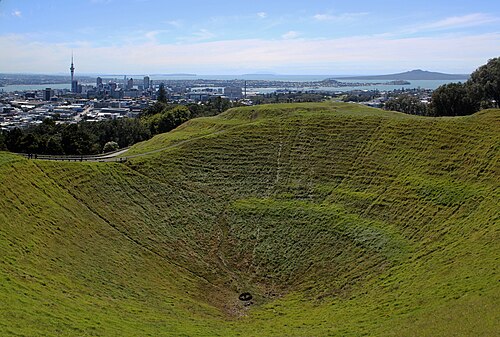
Maungakiekie / One Tree Hill is a volcanic cone and culturally significant Auckland landmark. The principal reason to include it is the summit landscape, broad views, and the historic volcanic setting.
Stony Batter Historic Reserve is a coastal defence site on Waiheke Island in the Hauraki Gulf. Constructed during World War II, it formed part of New Zealand's network of fortifications designed to protect Auckland from naval attack.
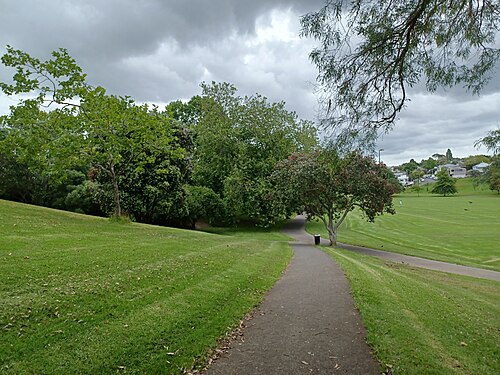
Grey Lynn Park is a public park in the Grey Lynn suburb of Auckland, New Zealand. It is maintained by Auckland Council and listed on the council's official parks directory.
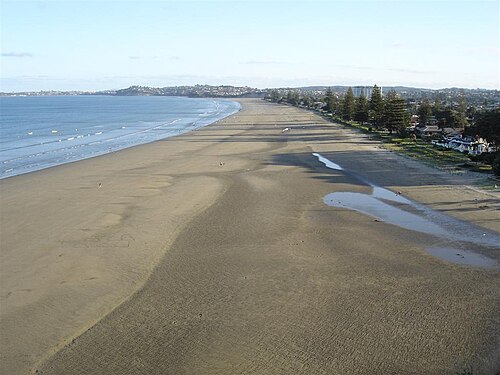
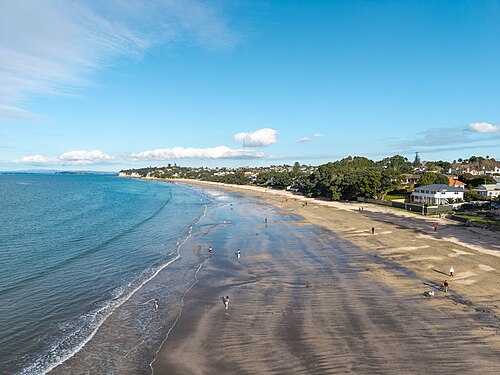
Orewa Beach is a long east-facing beach on Auckland’s Hibiscus Coast, around forty kilometres north of the central city.
Takapuna Beach is a sandy coastal area on Auckland's North Shore, facing the Hauraki Gulf. It serves as a recreational beach for swimming, walking, and general leisure activities.
Waiwera Beach is a coastal stop north of Auckland, beside the small settlement of Waiwera and close to the area’s long association with geothermal bathing.
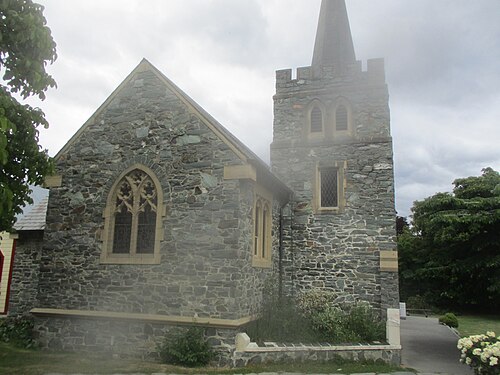
St Peter's Anglican Church
St Peter's Anglican Church is a place of worship in Queenstown, New Zealand, and an identifiable part of the town's community and architectural setting.
Commercial Bay is a central-city retail and dining complex. The principal reason to include it is its interior public spaces, food venues, shops, and downtown connections.
Earnslaw Park is a public green space in Queenstown, offering an open-air pause within the town’s busy visitor area.
Glenorchy Waterfront Reserve is a scenic public reserve situated at the northern end of Lake Wakatipu in Glenorchy, a small settlement near Queenstown.
Glenorchy Wharf is a historic waterfront structure located at the northern end of Lake Wakatipu, approximately 45 kilometres from Queenstown township.
Jack's Point is a scenic headland and lakeside area south of central Queenstown. It looks across Lake Wakatipu towards the Remarkables and combines open high-country landscape with nearby residential and recreational development.
Jardine Park is a public park in Queenstown, New Zealand. It adds an outdoor, community-focused stop to a destination better known for lake activities, mountain scenery and adventure sports.
Karekare Beach is a wild black-sand beach on Auckland's west coast, located approximately 35 kilometres from the city centre. It sits within the Waitākere Ranges and forms part of the broader Te Henga coastal area.
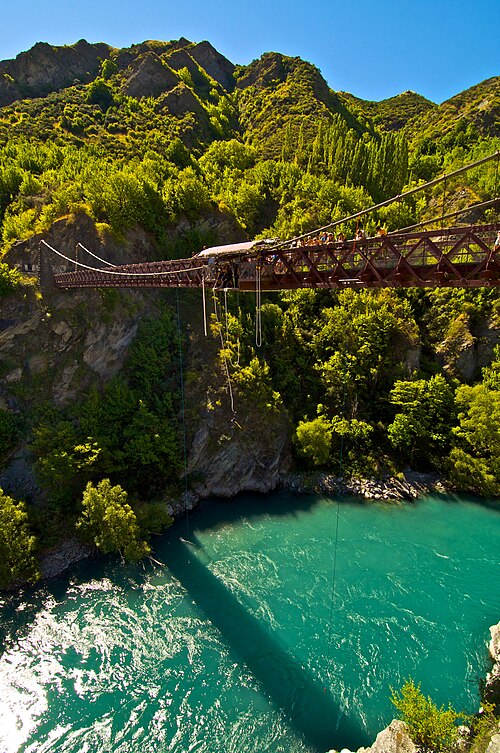
Kawarau Bridge Bungy is a bungee-jumping attraction at the historic Kawarau Bridge near Queenstown. The suspension bridge spans the Kawarau River gorge and provides the setting for a purpose-built adventure activity.
Maungawhau / Mount Eden is Auckland's highest volcanic cone and one of the ancestral Tūpuna Maunga of Tāmaki Makaurau.
Onetangi Beach is a coastal destination on Waiheke Island, part of the Auckland region. The beach stretches along the northern coast of the island, facing the Hauraki Gulf.
Ōrākei Basin is a tidal estuary located in the Auckland suburb of Ōrākei, on New Zealand's North Island. It forms part of the Waitematā Harbour system and represents a significant geological feature resulting from volcanic and marine processes.
Paradise is a rural locality near Queenstown, valued for its pastoral scenery, natural vegetation and mountain outlooks. It offers a strong contrast with the busy town centre: roads, farmland and open country replace concentrated shops and visitor buildings.
Two weeks is a sensible minimum for a limited North-and-South-Island combination; ten days is better spent on one island. Auckland works as the largest gateway and Queenstown as a southern base, but scenic roads and ferry or flight transitions make ambitious mileage deceptive.
Immigration New Zealand determines whether a traveller needs a Visitor Visa, an NZeTA or another permission. Verify the passport, purpose and arrival declaration requirements on its official service before departure; airline check-in is not the place to discover a missing authority.
Domestic flights link major regions, the Cook Strait ferry joins the islands, and coaches, rental cars or selected scenic trains cover ground routes. Driving is on the left, and rural journey estimates should allow for one-lane bridges, weather and viewpoint stops.
December to February suits many summer itineraries, while ski travel targets winter and shoulder seasons can be quieter. Alpine weather changes quickly in every season, so plan around the principal hike, pass or ferry rather than relying on one forecast for both islands.
New Zealand uses the New Zealand dollar. Cards are routine in towns, but a backup method is prudent for remote fuel, small operators or service outages; confirm whether accommodation, ferry and activity prices include booking or card charges.
Dial 111 for police, fire or ambulance; the electrical standard is Type I at 230 V. Treated public tap supplies are recorded as safe, while huts and remote sources need their own posted guidance; carry current road and weather information on long drives.