.jpg)

4 min walk
Fish Souk (Market)
- Must see
- Market
Language · 11 published
Museum · Muscat
متحف بيت البرندة
Reviewed by Elena Voss · Roavina Travel Editor
| Monday | 09:00 – 18:00 |
|---|---|
| Tuesday | 09:00 – 18:00 |
| Wednesday | 09:00 – 18:00 |
| Thursday | 09:00 – 18:00 |
| Friday | Closed |
| Saturday | 09:00 – 18:00 |
| Sunday | 09:00 – 18:00 |
Closed to visitors between 13:00 – 16:00
Checked 2026-08-31 · Source
Read from the OpenStreetMap access tags; anything not listed has no tag recorded.
Set the group type to family in the planner and the day window contracts to about three quarters of a solo day.
This place is a Museum. It opened in 2006.
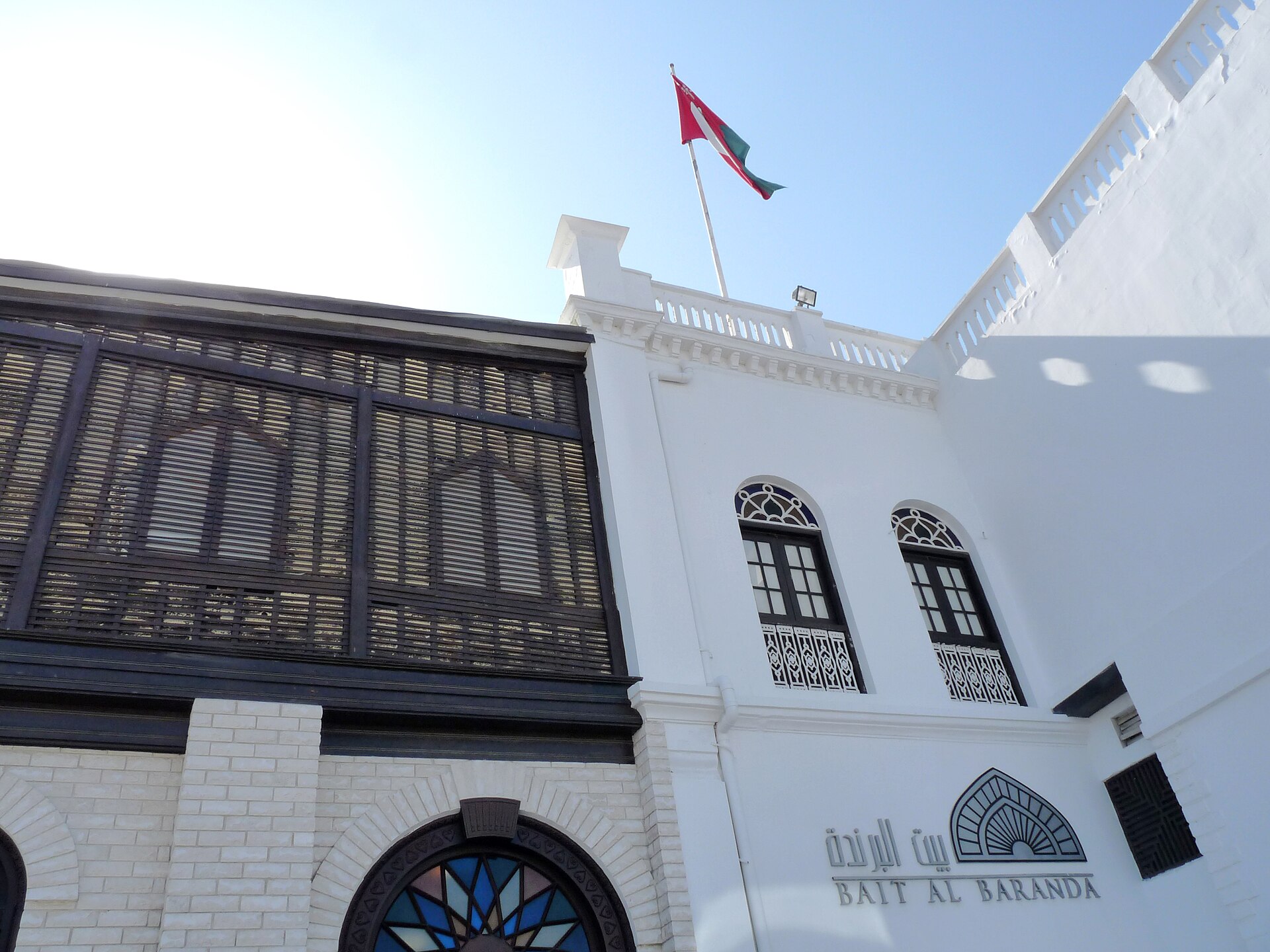
Bait Al Baranda Museum, locally known as Bayt al-Baranda, is a cultural institution in Muscat, Oman. Housed in a historic building, the museum presents aspects of Omani heritage and history to visitors. The structure itself represents traditional architectural elements characteristic of the region. The museum serves as one of several cultural attractions within Oman's capital city, contributing to the preservation and presentation of national identity. Its location in Muscat places it within reach of visitors exploring the city's historical and cultural offerings. Saturday–Thursday 09:00–13:00 and 16:00–18:00; closed Friday and official holidays. Its galleries trace Muscat from geological events more than 100 million years ago through successive settlements and historical periods to the modern city.
Checked 2026-08-31 · Source
The museum contains exhibitions related to Omani history and cultural development. Displays reportedly include historical photographs, documents, and artifacts illustrating the country's progression through various periods. Traditional crafts and regional customs feature among the presented materials. The collection aims to educate visitors about Oman's social and political evolution. Visitors should anticipate a focus on heritage interpretation rather than extensive collections of fine art or antiquities. The museum closes between 13:00 and 16:00 on operating days. General adult admission is OMR 1.
Checked 2026-08-31 · Source
Visitor duration at Bait Al Baranda Museum typically ranges from forty-five minutes to two hours depending on individual interest levels and thoroughness of examination. Casual visitors may complete a circuit more quickly, while those deeply engaged with historical documentation and photographic archives could extend their stay. Visitors combining this attraction with other Muscat cultural sites should allocate accordingly. No guided tour duration specifications are recorded. Personal pacing determines appropriate time investment, with reading-intensive exhibits potentially extending the experience for interested parties. General adult admission is OMR 1.
Checked 2026-08-31 · Source
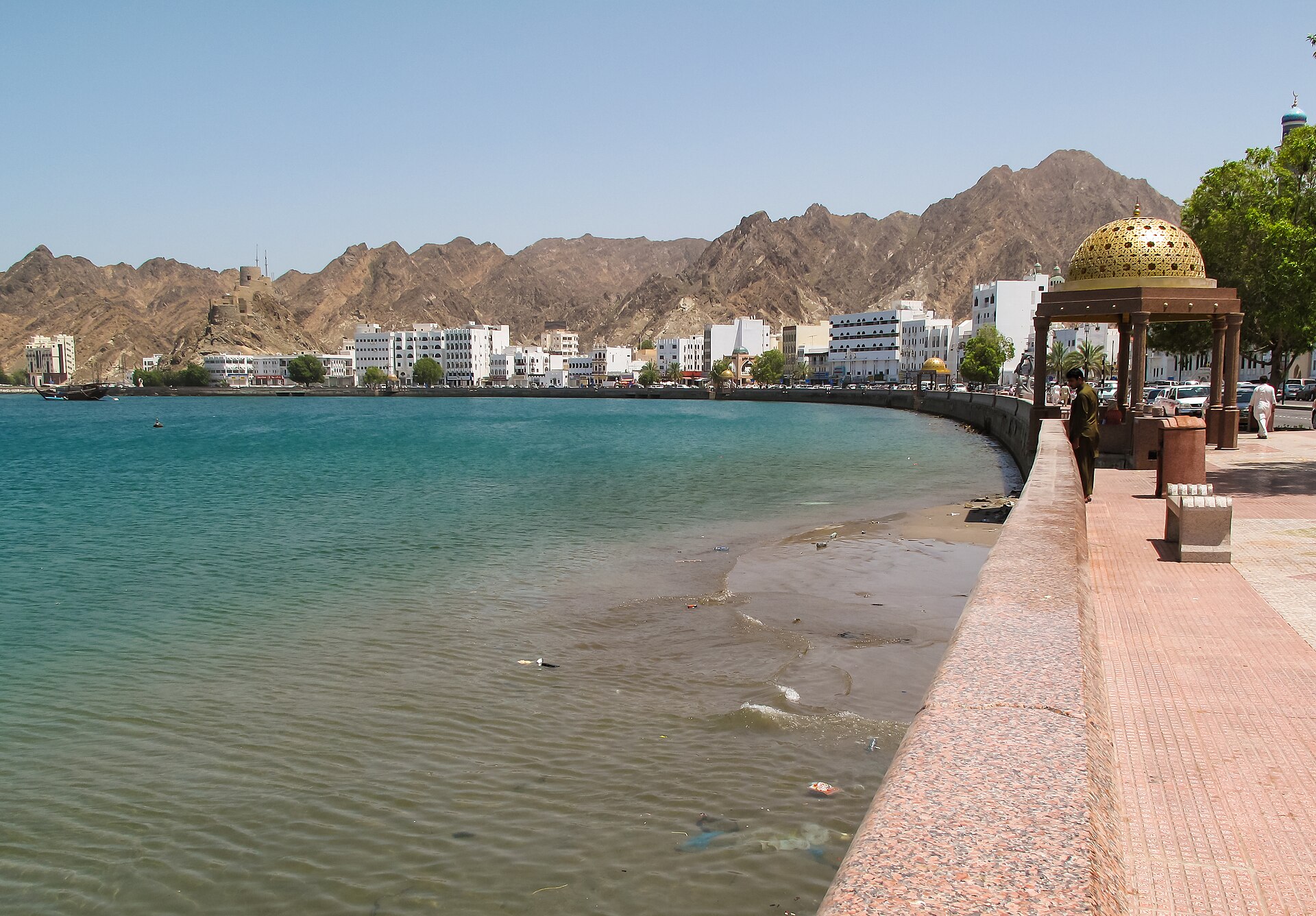
Visitors must independently verify current opening schedules before planning attendance. Seasonal considerations for Muscat include winter months offering milder temperatures for walking between attractions, though museum interiors provide climate-controlled environments regardless of exterior conditions. Ramadan periods may affect operational patterns across Omani institutions, though specific impacts on this museum are unverified. Saturday–Thursday 09:00–13:00 and 16:00–18:00; closed Friday and official holidays. Mwasalat Route 4 connects Ruwi Bus Station with Al Alam Palace. Use the named Fish Market stop; the museum is on Al Mina Street between Sultan Qaboos Port and Muttrah Corniche, approximately 300 metres from the port and 150 metres from the coastal road.
Checked 2026-08-31 · Source
Potential combination tickets with other Muscat museums are unverified. Visitors should carry sufficient Omani rials for anticipated entry costs while awaiting confirmed pricing. Group rate availability is unknown. Budget-conscious travelers should prepare for variable scenarios. Direct inquiry to museum management or consultation with official Oman tourism resources provides the only reliable path to current financial requirements for visitation. General adult admission is OMR 1. The approach from the drop-off point is flat and smooth, with the entrance less than 20 metres away. Entrance access uses a portable ramp rather than a permanent level entrance.
Checked 2026-08-31 · Source
Bait Al Baranda Museum occupies a location within Muscat's urban fabric, accessible by various transportation modes common to Omani cities. Private vehicle or taxi services represent typical visitor approaches, with parking availability unverified. Ride-hailing applications operate in Muscat and could facilitate access. Mwasalat Route 4 connects Ruwi Bus Station with Al Alam Palace. Use the named Fish Market stop; the museum is on Al Mina Street between Sultan Qaboos Port and Muttrah Corniche, approximately 300 metres from the port and 150 metres from the coastal road. Entrance access uses a portable ramp rather than a permanent level entrance.
Checked 2026-08-31 · Source
Visitors should verify operational status before traveling, as unannounced closures or modified hours may occur without widespread notification. Language considerations apply, with exhibit information potentially presented in Arabic and English, though full bilingual coverage is unguaranteed. Photography policies within exhibition spaces require clarification on arrival. Climate preparation for exterior walking portions remains advisable despite interior air conditioning. The approach from the drop-off point is flat and smooth, with the entrance less than 20 metres away. Internal doors are reported as 75–90 centimetres wide. A bathroom is too narrow for independent wheelchair use.
Checked 2026-08-31 · Source
Flash photography potentially damages light-sensitive artifacts and is commonly prohibited in museum environments. Tripod and professional equipment use typically requires advance permission across institutional venues. Selfie sticks may face restrictions in confined spaces. Visitors seeking to photograph exhibits for personal documentation or social sharing should inquire upon entry regarding permitted zones and techniques. Commercial photography almost certainly requires formal authorization from museum administration. A bathroom is too narrow for independent wheelchair use.
Checked 2026-08-31 · Source
Its galleries trace Muscat from geological events more than 100 million years ago through successive settlements and historical periods to the modern city.
The restored building officially reopened as a museum and visitor centre in December 2006.
Merchant Nasib bin Mohammed commissioned the house in the late nineteenth century as a second residence, giving rise to the earlier names Bait Nasib and Bait Al Nusaib.
The American Mission rented it from 1909 to 1933; the British Council later adapted rooms as classrooms, a library and offices; an engineering consultancy occupied it from 1984 to 1989.
The displays combine historical photographs, documents, maps and paintings with interactive questions, audiovisual media and galleries devoted to subjects including geology, maritime trade and traditional arts.
Muscat Municipality uses the museum for annual children's summer workshops, educational programmes and art exhibitions; activities have included recycling, clay work, puppet-making, paper art, map-reading and Islamic architecture.
Loading the interactive map…
The interactive map could not be loaded.
Last updated:
Source: OpenStreetMap contributors, Wikidata ·