
27 min walk
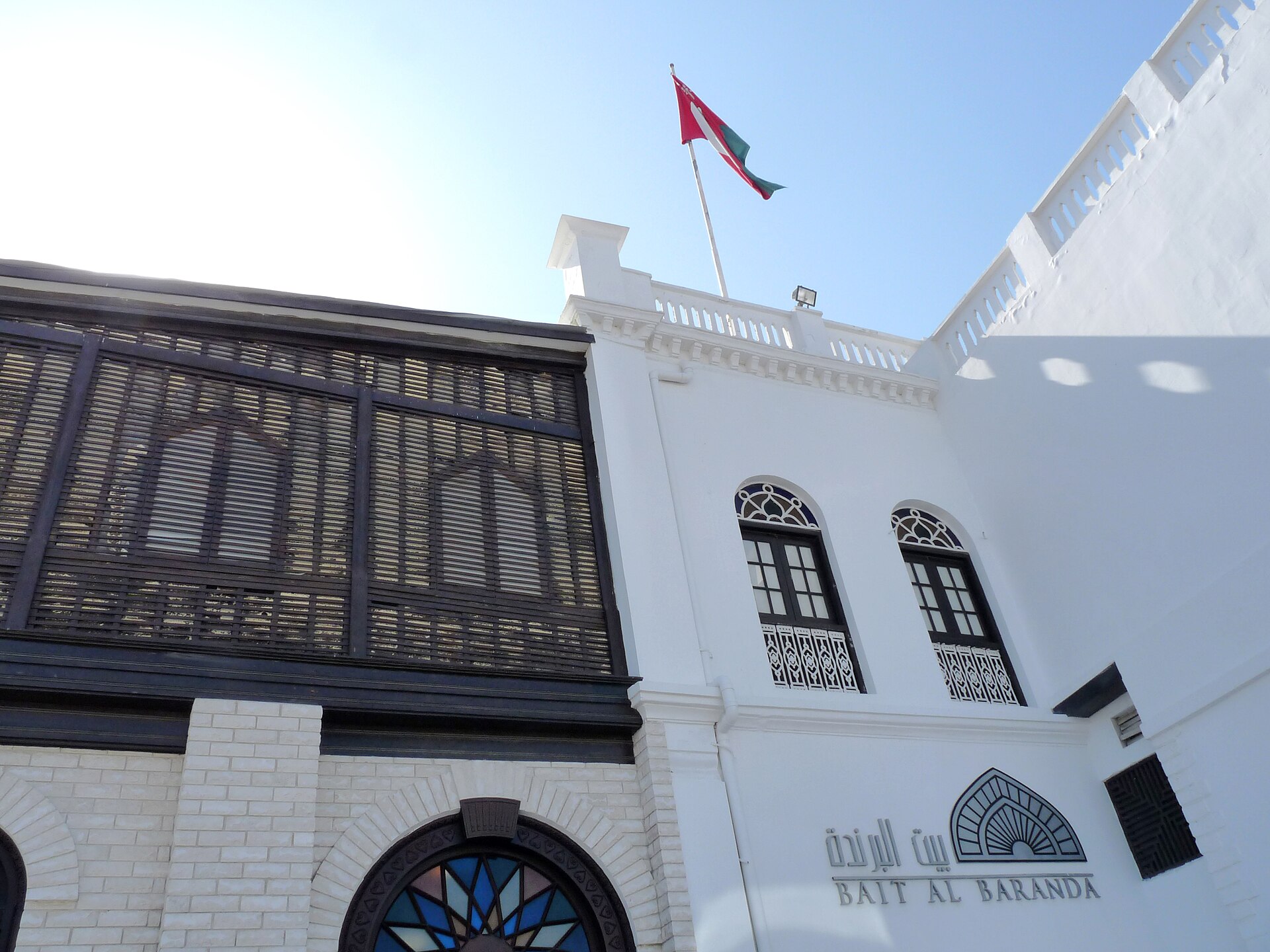
Bait al-Baranda Museum
- Must see
- Museum
Language · 11 published
Museum · Muscat
Reviewed by Elena Voss · Roavina Travel Editor

Read from the OpenStreetMap access tags; anything not listed has no tag recorded.
Set the group type to family in the planner and the day window contracts to about three quarters of a solo day.
This place is a Museum. It was established in 1992.
The Sultan's Armed Forces Museum is a military museum in Muscat, Oman. Its local name is Matḥaf Quwwāt as-Sulṭān al-Musallaḥa. The museum occupies a historic fort building and presents the military history of Oman. It is operated under the auspices of the Sultan's Armed Forces. The institution serves as a repository for weapons, uniforms, vehicles, and documents related to Oman's military heritage. The museum's setting within a former defensive structure adds architectural significance to its collections. Closed daily; no visiting hours during maintenance.
Checked 2026-08-31 · Source
The museum contains military artifacts spanning Oman's armed forces history. Exhibits include weaponry, military uniforms, medals, and historical documents. Vehicles and equipment used by Oman's military are displayed. The collections illustrate the development of the Sultan's Armed Forces from earlier periods through contemporary times. The fort structure itself contributes to the visitor experience. The museum's holdings reflect Oman's strategic position and military engagements. Visitors should anticipate a focus on material culture of military service. The museum closed to visitors on 17 December 2023 for modernization and maintenance. Reopening is due to be announced after the work is completed.
Checked 2026-08-31 · Source
The duration of a visit to the Sultan's Armed Forces Museum depends on individual interest in military history and museum collections. Visitors with strong engagement in defense heritage may spend extended periods examining artifacts. Casual visitors typically require less time. The museum's scale within the fort structure suggests moderate time requirements. Visitors should allocate sufficient time for unhurried examination. Peak heat conditions in Muscat may influence comfortable pacing. Visitor admission is unavailable while the museum remains temporarily closed; no current general-admission ticket is being sold.
Checked 2026-08-31 · Source
Visitors must verify current operating times through direct contact with the institution or official tourism channels before planning attendance. Muscat's climate features extremely hot summers, making cooler months potentially more comfortable for travel generally. Seasonal considerations for outdoor movement between locations apply. Ramadan and other observances may affect accessibility of public institutions in Oman. Closed daily; no visiting hours during maintenance. Mwasalat Route 4 runs between Ruwi Bus Station and Al Alam Palace and names Hayy Bait al Falaj as a stop. From central Ruwi, board Route 4 toward Al Alam Palace and alight at Hayy Bait al Falaj for the museum area.
Checked 2026-08-31 · Source
Payment methods accepted are not indicated. Online booking availability through referenced platforms exists but specific terms are not extracted here. Visitors must verify current fee structures directly with the museum or through official tourism authorities. Budget planning should incorporate uncertainty pending confirmation. Visitor admission is unavailable while the museum remains temporarily closed; no current general-admission ticket is being sold. A wheelchair-accessible entrance is reported. Accessible parking and wheelchair-accessible restrooms are reported. No. The museum has been temporarily closed for modernization and maintenance since 17 December 2023. The museum occupies Bait Al-Falaj Fort in Muscat’s Bait Al Falaj area.
Checked 2026-08-31 · Source
The museum is located in Muscat, Oman's capital. Muscat's road network connects major districts; private vehicle or taxi services represent common transport modes. The museum's position within a historic fort may affect parking or approach routes. Ride-hailing applications operate in Muscat. Mwasalat Route 4 runs between Ruwi Bus Station and Al Alam Palace and names Hayy Bait al Falaj as a stop. From central Ruwi, board Route 4 toward Al Alam Palace and alight at Hayy Bait al Falaj for the museum area. Accessible parking and wheelchair-accessible restrooms are reported.
Checked 2026-08-31 · Source
Oman's climate demands hydration and sun protection for any outdoor movement. Conservative dress standards apply in Omani cultural institutions. Photography restrictions may exist within specific exhibit areas; signage or staff guidance should be observed. Security screening is probable at a military-affiliated facility. Children require supervision near displayed equipment. No specific hazards are documented, but standard museum precautions apply. A wheelchair-accessible entrance is reported. No. The museum has been temporarily closed for modernization and maintenance since 17 December 2023. The museum occupies Bait Al-Falaj Fort in Muscat’s Bait Al Falaj area.
Checked 2026-08-31 · Source
Military institutions commonly impose restrictions on image capture, particularly of sensitive equipment or operational details. Flash photography may be prohibited to protect artifacts. Drone operation would be inadvisable near military-affiliated premises. Social media posting of any permitted images should respect institutional dignity. Staff instructions regarding photography must be followed without dispute. Specific no-photography zones may be designated within the museum. The museum occupies Bait Al-Falaj Fort in Muscat’s Bait Al Falaj area. The fort was built in 1845 during the reign of Sayyid Said bin Sultan.
Checked 2026-08-31 · Source
No. The museum has been temporarily closed for modernization and maintenance since 17 December 2023.
The museum occupies Bait Al-Falaj Fort in Muscat’s Bait Al Falaj area.
The fort was built in 1845 during the reign of Sayyid Said bin Sultan.
The museum officially opened on 11 December 1988.
Its galleries trace Oman’s military history from the pre-Islamic period through the modern Renaissance era.
Indoor collections include weapons, uniforms, photographs, documents, manuscripts and defence systems; the outdoor exhibition includes military vehicles, tanks, aircraft and ships.
Loading the interactive map…
The interactive map could not be loaded.

Last updated:
Source: OpenStreetMap contributors, Wikidata ·