
2 min walk
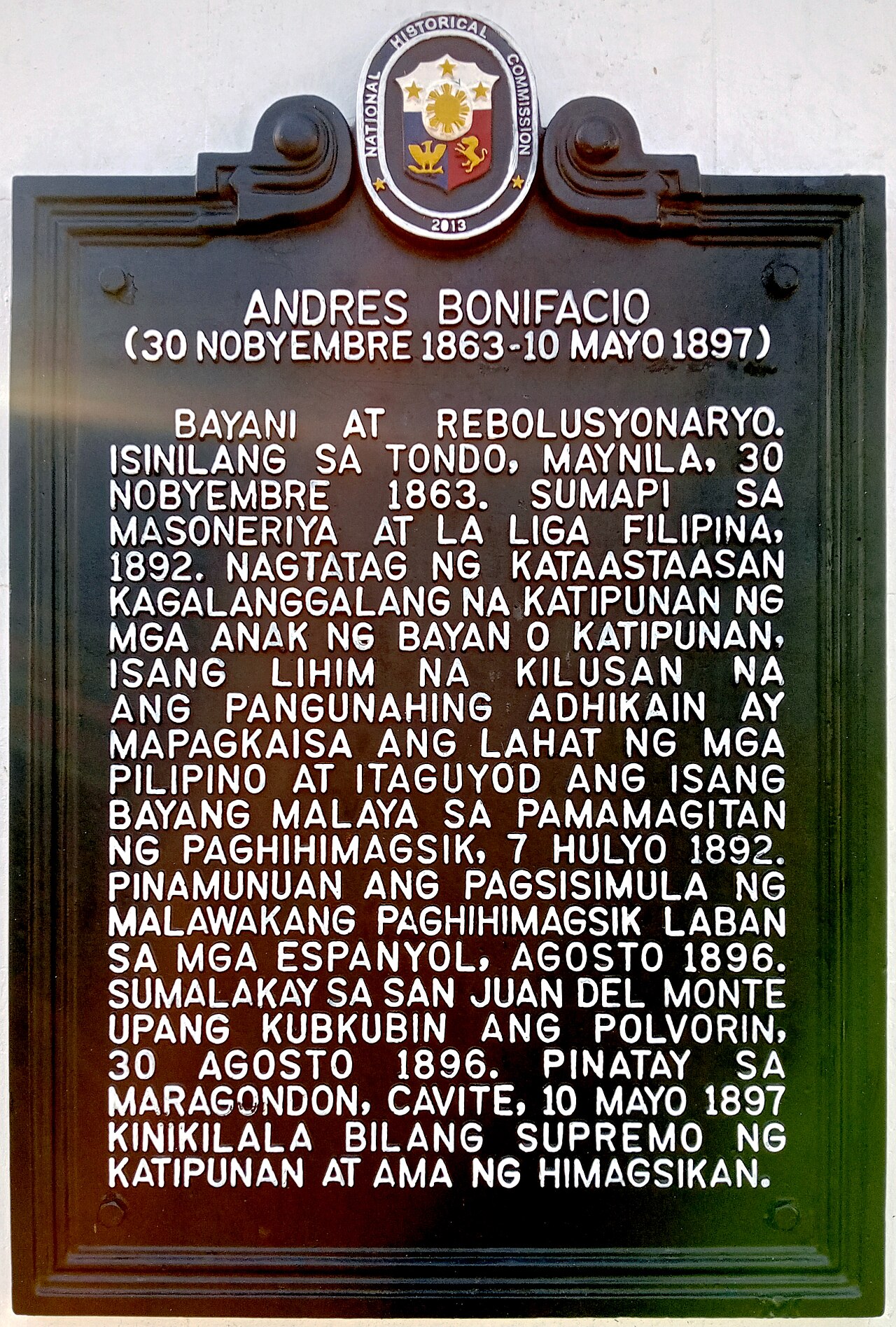
Andres Bonifacio historical marker
- Notable
- Historic monument
Language · 11 published
Historic monument · Cebu City
Reviewed by Elena Voss · Roavina Travel Editor

| Monday | 08:00 – 19:00 |
|---|---|
| Tuesday | 08:00 – 19:00 |
| Wednesday | 08:00 – 19:00 |
| Thursday | 08:00 – 19:00 |
| Friday | 08:00 – 19:00 |
| Saturday | 08:00 – 19:00 |
| Sunday | 08:00 – 19:00 |
Checked 2026-08-31 · Source
Read from the OpenStreetMap access tags; anything not listed has no tag recorded.
Set the group type to family in the planner and the day window contracts to about three quarters of a solo day.
This place is a Attraction. It was established in 1565.
Fort San Pedro is a military defence structure in Cebu City, the Philippines. The National Museum of the Philippines operates the site as the National Museum of the Philippines Cebu, one of its regional museums. The fort represents Spanish colonial military architecture and serves as a historical landmark within the urban core of Cebu. The structure has undergone various phases of construction and modification since its establishment. The site holds institutional recognition through national museum status. Daily 08:00–19:00.
Checked 2026-08-31 · Source
The National Museum of the Philippines Cebu occupies the fort premises, displaying collections relevant to regional heritage. Exhibits cover archaeological finds, ethnographic materials, and historical artefacts connected to Cebu and the central Visayas. The fort structure itself comprises stone walls, bastions, and an enclosed courtyard. Interior spaces include galleries within converted historical chambers. The National Museum of the Philippines manages curation and presentation standards. Visitors should consult the National Museum of the Philippines Cebu directly for current display information before planning.
Checked 2026-08-31 · Source
Visitor duration at Fort San Pedro varies considerably based on individual engagement with museum exhibits and the historical structure. Casual observers typically complete a circuit of the walls and courtyard in a brief period. Those examining museum displays thoroughly require additional time. Photography, reading exhibit labels, and resting in the courtyard extend visits. Visitors should allocate flexible timeframes, particularly if combining the fort with adjacent heritage sites in central Cebu City. PHP 50 general admission (about EUR 0.75 using the BSP August 2026 PHP/EUR average); tickets are paid for at the fort cashier.
Checked 2026-08-31 · Source
Cebu City experiences tropical climate conditions throughout the year with distinct wet and dry seasons. Dry season months generally offer more favourable conditions for outdoor exploration of the fort's open areas and walls. Rainy season visits require preparedness for sudden precipitation. The fort's stone surfaces become slippery when wet, affecting mobility. Daily 08:00–19:00. Use Plaza Independencia as the arrival landmark. The entrance is on A. Pigafetta Street, beside Plaza Independencia and near Cebu Port; visitors arriving at the port can approach through the Plaza Independencia area. For a door-to-door arrival, give the driver “Fort San Pedro, A. Pigafetta Street.”.
Checked 2026-08-31 · Source
Admission arrangements for Fort San Pedro and the National Museum of the Philippines Cebu are managed under national museum policies. Visitors should confirm current entry requirements, any identification needs, and special category provisions directly with museum administration. Group visit protocols, if applicable, remain unverified. PHP 50 general admission (about EUR 0.75 using the BSP August 2026 PHP/EUR average); tickets are paid for at the fort cashier. The courtyard and ground-level visitor areas provide the step-free portion of the visit. The upper bastions and wall walk are reached by stairs and are not step-free.
Checked 2026-08-31 · Source
Fort San Pedro occupies a central location in Cebu City near the port area and adjacent to Plaza Independencia. The site sits within established urban infrastructure with multiple access routes. Public utility vehicles including jeepneys serve surrounding streets, though specific route numbers require local verification. Use Plaza Independencia as the arrival landmark. The entrance is on A. Pigafetta Street, beside Plaza Independencia and near Cebu Port; visitors arriving at the port can approach through the Plaza Independencia area. For a door-to-door arrival, give the driver “Fort San Pedro, A. Pigafetta Street.”.
Checked 2026-08-31 · Source
The fort's historic stone construction presents uneven surfaces, steps, and elevated wall walkways requiring appropriate footwear and mobility caution. Open areas lack shade coverage, creating sun exposure risks during midday visits. Hydration preparation is advisable. The structure's age means some surfaces may be worn or weathered. Crowding conditions vary unpredictably. Visitors should secure personal belongings in tourist-frequented areas. The courtyard and ground-level visitor areas provide the step-free portion of the visit. It is Cebu’s oldest Spanish fort and the oldest triangular bastion fort in the Philippines. Construction began in 1565, and Cebu City’s official history records the fortification date as 1738.
Checked 2026-08-31 · Source
The fort's distinctive bastioned silhouette and stone walls offer architectural photography opportunities against sky backgrounds. Interior courtyard perspectives capture the geometric layout of colonial military design. Museum gallery photography may be restricted according to National Museum of the Philippines policies protecting exhibited materials. Visitors should observe signage and staff direction regarding camera use in specific zones. Natural lighting conditions shift throughout the day, affecting wall texture visibility and shadow patterns. Early morning and late afternoon potentially provide favourable illumination for exterior documentation. Construction began in 1565, and Cebu City’s official history records the fortification date as 1738.
Checked 2026-08-31 · Source
It is Cebu’s oldest Spanish fort and the oldest triangular bastion fort in the Philippines.
Construction began in 1565, and Cebu City’s official history records the fortification date as 1738.
The fort contains a museum, a souvenir shop, historic walkways and exhibits including Spanish documents, sculptures and paintings.
The National Historical Commission registry names them La Concepcion, San Ignacio de Loyola and San Miguel–Powder Magazine.
The official address is A. Pigafetta Street, Cebu City 6000, beside Plaza Independencia.
The Philippine Department of Tourism lists (+63) 32 256 2284.
Loading the interactive map…
The interactive map could not be loaded.
Last updated:
Source: OpenStreetMap contributors, Wikidata ·