

5 min walk
Cebu Metropolitan Cathedral
- Must see
- Place of worship
Language · 11 published
Historic monument · Cebu City
Reviewed by Elena Voss · Roavina Travel Editor
| Monday | 00:00 – 23:59 |
|---|---|
| Tuesday | 00:00 – 23:59 |
| Wednesday | 00:00 – 23:59 |
| Thursday | 00:00 – 23:59 |
| Friday | 00:00 – 23:59 |
| Saturday | 00:00 – 23:59 |
| Sunday | 00:00 – 23:59 |
Checked 2026-08-31 · Source
Read from the OpenStreetMap access tags; anything not listed has no tag recorded.
Set the group type to family in the planner and the day window contracts to about three quarters of a solo day.
Colon Street is the oldest named street in the Philippines, established during the Spanish colonial period. It serves as the central spine of Cebu's historic commercial core, running through the downtown district of Cebu City. The street has functioned as a primary trading and commercial artery for centuries, evolving from its colonial origins into a dense urban corridor. Daily, 24 hours. Colon Street is an ungated public street with no weekly visitor closure day. Event-specific traffic controls can temporarily restrict vehicles without creating attraction opening hours. Free. Colon Street is a public street and requires no admission ticket or entry fee.
Checked 2026-08-31 · Source
The street and its immediate vicinity contain a dense concentration of commercial establishments including retail shops, public markets, street vendors, and various service businesses. Historical structures from earlier periods exist among more contemporary constructions, though no comprehensive heritage inventory is publicly documented. The Carbon Market, one of Cebu's major public markets, lies in proximity. The area functions as a working commercial district rather than a curated tourist destination. Colon Street is an ungated public street with no weekly visitor closure day. Event-specific traffic controls can temporarily restrict vehicles without creating attraction opening hours.
Checked 2026-08-31 · Source
A thorough traversal of Colon Street on foot requires approximately twenty to forty minutes depending on walking pace and whether one deviates into adjacent streets or market areas. Visitors seeking to absorb the commercial atmosphere, observe street activity, or explore connecting lanes and nearby Carbon Market should allocate one to two hours. Extended visits may suit those with specific shopping purposes or interest in urban documentation. Free. Colon Street is a public street and requires no admission ticket or entry fee.
Checked 2026-08-31 · Source
Colon Street operates as a public thoroughfare and commercial zone without formal visitor access controls. Individual businesses maintain independent operating schedules. The street experiences typical urban patterns with daytime commercial activity and reduced evening presence in certain sections. Weather considerations apply as with all outdoor urban environments in Cebu. Daily, 24 hours. The visit follows street-level public sidewalks rather than an internal visitor route. Central Cebu pedestrian infrastructure includes sidewalks and at-grade crossings. The attraction remains an active road corridor, so road crossings and narrow or occupied sections can limit continuous wheelchair access.
Checked 2026-08-31 · Source
No admission fee or ticketing system applies to Colon Street as a public road. Access is unrestricted. Individual shops, markets, and services set their own pricing. No consolidated visitor pass or heritage trail ticket exists. Visitors should anticipate standard commercial transactions for any purchases. Free. Colon Street is a public street and requires no admission ticket or entry fee. The visit follows street-level public sidewalks rather than an internal visitor route. Central Cebu pedestrian infrastructure includes sidewalks and at-grade crossings. The attraction remains an active road corridor, so road crossings and narrow or occupied sections can limit continuous wheelchair access.
Checked 2026-08-31 · Source
Colon Street runs through downtown Cebu City and is accessible by multiple transport modes. Jeepneys, buses, and taxis serve the corridor and surrounding streets. The street intersects with other major downtown roads. Walking from nearby downtown accommodations is feasible for those already in the central district. Public utility jeepneys serve the downtown corridor. Cebu City Transportation Office routing identifies routes 03B, 13B and 62C using Junquera Street, Colon Street and Mabini Street; routes 04B, 04D, 04E, 04H, 14D, 17B and 17D also use Colon Street in the published downtown routing. Useful arrival junctions include Junquera, Mabini, Pelaez and Leon Kilat streets.
Checked 2026-08-31 · Source
The downtown commercial environment requires standard urban vigilance. Street density, traffic mixing, and variable sidewalk conditions demand attention. The area's character as a working commercial district rather than managed tourist zone means infrastructure conditions differ from curated heritage or leisure destinations. Visitors should observe local patterns regarding personal belongings, negotiate transactions clearly, and assess crowd dynamics independently. The visit follows street-level public sidewalks rather than an internal visitor route. The attraction remains an active road corridor, so road crossings and narrow or occupied sections can limit continuous wheelchair access.
Checked 2026-08-31 · Source
Photography of street scenes and commercial activity is generally possible in public spaces, though sensitivity to individuals and private business premises is advisable. No designated viewpoints, protected sightlines, or photography infrastructure exists. The visual character combines commercial signage, street-level activity, and architectural layering from multiple periods. Lighting conditions vary significantly between open sections and building-shaded areas. Drone operation would fall under national aviation regulations and local restrictions not specific to this street. The Cebu City Government and the National Historical Commission identify Colon Street as the oldest street in the Philippines.
Checked 2026-08-31 · Source
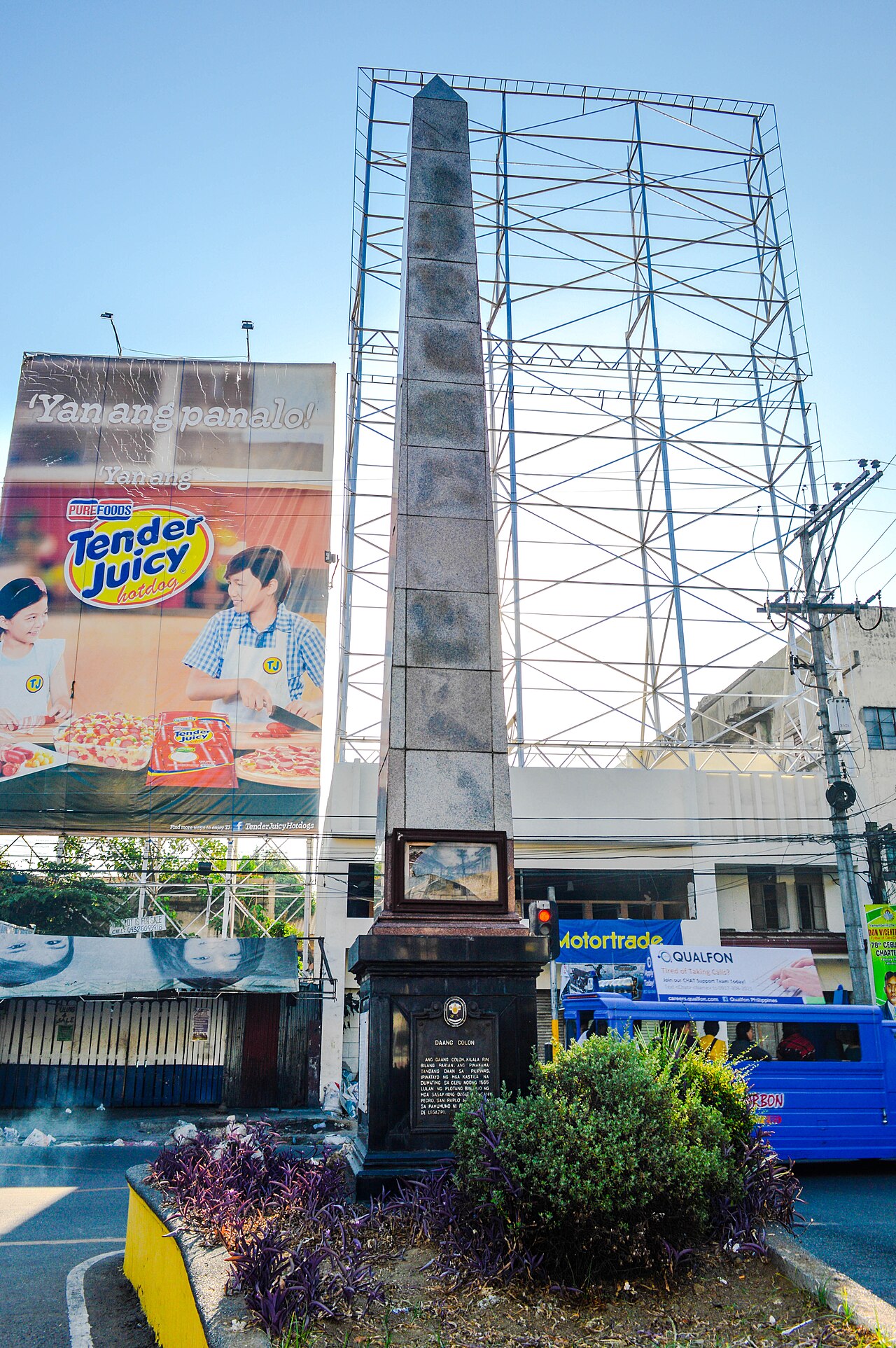
The Cebu City Government and the National Historical Commission identify Colon Street as the oldest street in the Philippines.
The official historical marker dates the street to the Spanish arrival in Cebu in 1565.
The historical marker attributes its construction to the Spaniards who arrived under Miguel López de Legazpi aboard the San Pedro, San Pablo and San Juan.
Yes. The National Historical Commission’s marker records Colon Street as also known as the Parian.
Yes. Its Level II historical marker was installed by the Philippines Historical Committee on 16 October 1961.
The Cebu provincial government describes it as a historic street lined with shops and active trade.
Loading the interactive map…
The interactive map could not be loaded.

Last updated:
Source: OpenStreetMap contributors ·