2 min walk
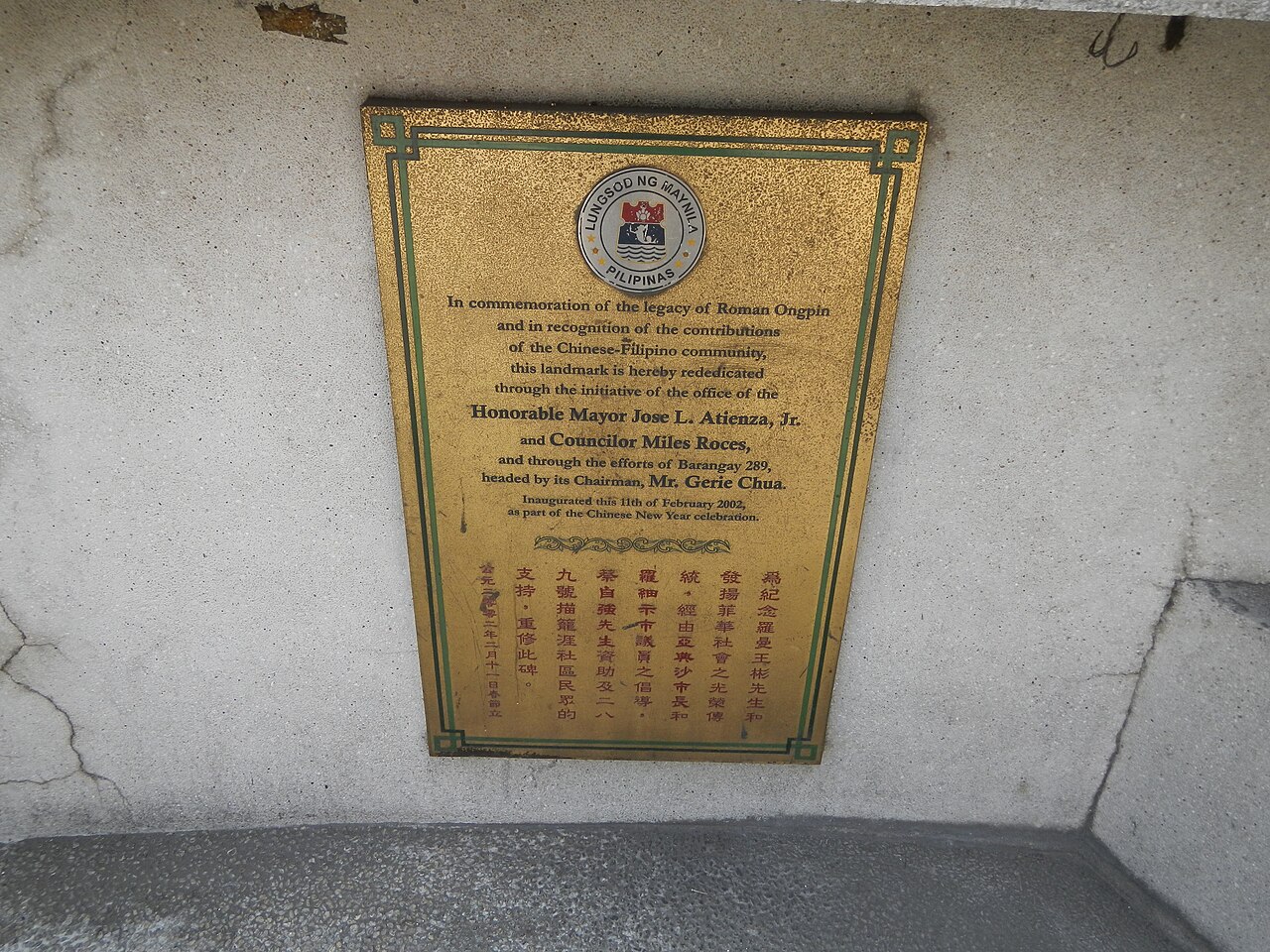
Don Roman Ongpin Monument
- Notable
- Historic monument
Language · 11 published
Activity · Manila
Reviewed by Elena Voss · Roavina Travel Editor

| Monday | 00:00 – 23:59 |
|---|---|
| Tuesday | 00:00 – 23:59 |
| Wednesday | 00:00 – 23:59 |
| Thursday | 00:00 – 23:59 |
| Friday | 00:00 – 23:59 |
| Saturday | 00:00 – 23:59 |
| Sunday | 00:00 – 23:59 |
Checked 2026-08-31 · Source
Read from the OpenStreetMap access tags; anything not listed has no tag recorded.
Set the group type to family in the planner and the day window contracts to about three quarters of a solo day.
Binondo is Manila’s historic Chinatown and a dense commercial district with roots reaching back to its establishment in 1594. Its appeal comes from a living neighbourhood rather than a single enclosed attraction. Chinese Filipino commerce, religious buildings, food traditions, market activity, and layered streetscapes shape the experience. Walkers move through busy blocks, arcades, market lanes, and shopfronts where daily trade continues alongside heritage landmarks. Binondo belongs naturally in a Manila itinerary focused on food, history, and street life. Binondo is a historic district in Manila, widely recognised as the world's oldest Chinatown, established in 1594. The area functions as a commercial and cultural quarter where Chinese Filipino enterprise has operated for centuries. Its identity derives from mercantile traditions, religious institutions, and food culture rather than single monument attractions. The district spans multiple blocks with a dense network of streets, market lanes, and arcades. The district functions as normal commercial urban space with standard precautions applicable. Dense conditions require awareness of belongings and surroundings.
Checked 2026-08-26 · Source
A Binondo walk can include Binondo Church, Buddhist temples, traditional apothecaries, bakeries, restaurants, dry-goods shops, and busy commercial streets. Heritage buildings survive among newer structures, creating a layered view of Manila’s past and present. The district is working urban space, so food stalls, deliveries, traffic, worship, and shopping share the same narrow streets. Divisoria market lies nearby and extends the commercial atmosphere. Leave room for spontaneous food and shop discoveries rather than expecting a curated museum circuit. The district contains Roman Catholic churches of colonial foundation, including Binondo Church, alongside Buddhist temples and traditional apothecaries.
Checked 2026-08-26 · Source
Allow two to three hours for a principal walking circuit without a long meal. Add sixty to ninety minutes for restaurant dining, and more time if you explore side lanes, market edges, churches, temples, bakeries, or shops. Morning is useful for a clearer walk before the busiest commercial periods. A slower route with frequent food stops can occupy much of a day. Binondo also rewards shorter repeat visits, especially when you want to focus separately on architecture, worship, or cuisine.
Checked 2026-08-26 · Source
Binondo is active from early market hours through evening restaurant service, with each business following its own rhythm. Chinese New Year brings especially intense crowds and a highly festive atmosphere. Dry-season months generally make extended street walking more comfortable, while rain between June and November can slow movement and leave surfaces wet. Weekday and weekend patterns differ because the district serves both commerce and visitors. Start early for more manageable lanes, or visit later when restaurants and food streets become livelier.
Checked 2026-08-26 · Source
Binondo has no district-wide admission ticket. Streets and market areas function as public urban space, while churches and temples may welcome visitors without a standard entrance charge. Restaurants, bakeries, shops, and market vendors set their own prices. Carrying cash is useful because it remains common in many transactions. Think of the visit as a food and walking experience with ordinary purchases, not as a packaged attraction with one fixed cost. A meal and small snacks will form the main planned expense.
Checked 2026-08-26 · Source
Binondo occupies the north bank of the Pasig River opposite Intramuros. Carriedo and Doroteo Jose light-rail stations provide access followed by a walk through the surrounding streets. Walking from Intramuros is possible across Jones Bridge. Recto Avenue and Rizal Avenue define important edges, but road journeys can be slow because of congestion. Parking is difficult in the dense street network. Use a combination of rail and walking when practical, and plan the final approach as part of the neighbourhood experience.
Checked 2026-08-26 · Source
Expect close contact between pedestrians, vehicles, deliveries, and vendors. Narrow or obstructed sidewalks, uneven surfaces, open drainage, and crowded crossings demand careful footing. Secure phones, wallets, and bags in busy lanes. Manila’s tropical heat makes water, light clothing, and regular pauses valuable. Food conditions differ between vendors, bakeries, and restaurants, so choose places that suit your comfort. Keep emergency details accessible, and allow extra time because congestion can affect both road travel and help reaching another district.
Checked 2026-08-26 · Source
Binondo is strongest for candid street scenes built from signage, shopfronts, market movement, religious details, and layered architecture. Morning light can reach the east-west streets before activity becomes most crowded. The river-facing edges add wider urban context, while narrow lanes reward close framing and patient observation. Ask before photographing inside religious buildings or commercial premises, and avoid blocking customers, worshippers, vendors, or traffic. Crowds make tripods awkward. Respectful, mobile photography suits the district better than elaborate setups.
Checked 2026-08-26 · Source
Binondo is Manila’s historic Chinatown, known for Chinese Filipino commerce, food culture, religious buildings, and lively streets.
Allow two to three hours for walking, plus sixty to ninety minutes if you include a sit-down meal.
Yes. The districts face each other across the Pasig River and can be linked on foot via Jones Bridge.
Use the Carriedo or Doroteo Jose light-rail stations and continue on foot, or walk from Intramuros across Jones Bridge.
No district-wide ticket exists. Costs come from meals, snacks, shopping, and any individual services you choose.
Look for dense signage, market activity, bakeries, religious details, shopfronts, and the contrast between historic and newer buildings.
Loading the interactive map…
The interactive map could not be loaded.
Last updated:
Source: OpenStreetMap contributors, Wikidata ·