

2 min walk
Plaza Yuchengco
- High
- Historic monument
Language · 11 published
Activity · Manila
Reviewed by Elena Voss · Roavina Travel Editor
| Monday | 00:00 – 23:59 |
|---|---|
| Tuesday | 00:00 – 23:59 |
| Wednesday | 00:00 – 23:59 |
| Thursday | 00:00 – 23:59 |
| Friday | 00:00 – 23:59 |
| Saturday | 00:00 – 23:59 |
| Sunday | 00:00 – 23:59 |
Checked 2026-08-31 · Source
Read from the OpenStreetMap access tags; anything not listed has no tag recorded.
Set the group type to family in the planner and the day window contracts to about three quarters of a solo day.
It is built of reinforced concrete.
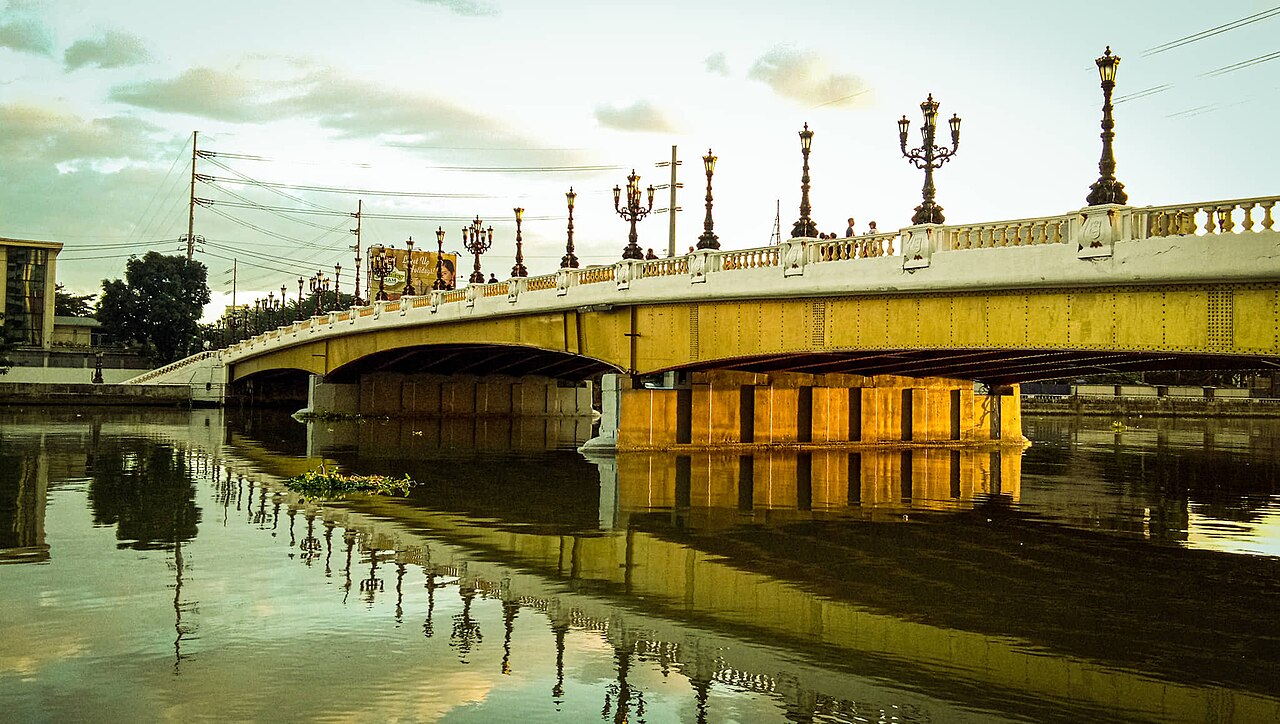
Jones Bridge is a historic road and pedestrian crossing over the Pasig River in Manila. It links Binondo with Intramuros and carries visitors between two of the city’s most important historic areas. The present bridge is associated with a neoclassical design, ornamental lampposts, and decorative details. It is both working infrastructure and a recognizable landmark, best understood as part of a wider walk through old Manila rather than as an enclosed attraction. Jones Bridge is a historic bridge spanning the Pasig River in Manila, Philippines. Originally constructed during the Spanish colonial period and later rebuilt, it connects the districts of Binondo and Intramuros. The bridge has undergone several reconstructions, most notably after World War II damage. Its current neoclassical design features ornamental lampposts and decorative elements. The structure serves as both a functional river crossing and a recognizable landmark within the broader Metro Manila area, contributing to the city's layered architectural heritage and tourism infrastructure. The bridge operates continuously as public infrastructure. However, visitors should exercise personal judgment regarding safety conditions during late-night hours, as surrounding district activity decreases and lighting may be inconsistent.
Checked 2026-08-26 · Source
Jones Bridge has no interior rooms or exhibition galleries. The experience consists of the open roadway, pedestrian paths, ornamental architecture, Pasig River views, and changing perspectives toward Binondo and Intramuros. From the span, visitors can connect directly with commercial streets, churches, markets, walls, and heritage buildings on both sides. The bridge’s value comes from movement and context: crossing it places two distinct Manila landscapes within one short walk. Jones Bridge itself contains no enclosed interior spaces or visitor facilities. The crossing consists of open roadways and pedestrian walkways with ornamental architectural details visible from the span. The surrounding area includes the Pasig River corridor, with Binondo's commercial streets to one side and Intramuros's historic walls to the other. Nearby attractions accessible from the bridge include churches, markets, and heritage structures in both districts. The bridge functions purely as infrastructure; visitors experience it externally while traversing between these significant cultural zones of old Manila.
Checked 2026-08-26 · Source
Walking across Jones Bridge usually takes about five to ten minutes at a moderate pace. Add another ten minutes or so for river views, lampposts, architectural details, and photographs. The bridge becomes more rewarding when combined with a longer route through Intramuros and Binondo. Allocate several hours for those districts if you want churches, markets, food streets, walls, and other heritage sites alongside the crossing.
Checked 2026-08-26 · Source
Jones Bridge is public infrastructure and can be crossed throughout the day. Daylight gives the clearest view of the neoclassical details and river corridor. Manila’s heat, sudden rain, and busy traffic shape the comfort of the walk. Evening can bring a different atmosphere around Intramuros and Binondo, but the bridge remains a working route rather than a controlled visitor venue. Morning and late afternoon are practical periods for a slower crossing.
Checked 2026-08-26 · Source
Crossing Jones Bridge is free because the structure functions as a public road and pedestrian connection. There is no bridge admission procedure or ticketed entry point. Nearby museums, churches, guided experiences, and other attractions in Intramuros or Binondo may have their own charges. Build the bridge into a walking route without setting aside an entrance budget for the crossing itself.
Checked 2026-08-26 · Source
Jones Bridge connects the Binondo and Intramuros sides of the Pasig River. Arrive from either district on foot, or use jeepneys, buses, LRT connections, taxis, and ride-hailing services to reach the surrounding streets. The bridge has no dedicated visitor parking. Approaches pass through busy urban areas, and the narrow streets of Binondo and Intramuros can make the final walk slower than the map distance suggests.
Checked 2026-08-26 · Source
Vehicles and pedestrians share the bridge, so remain alert to motorcycles, jeepneys, and other traffic while crossing. Rain can make the surface slippery. Crowded conditions call for ordinary care with phones, bags, and wallets. After dark, activity and lighting vary along the surrounding streets. Keep clear of traffic lanes, respect any maintenance notices, and remember that Jones Bridge remains a working transport link rather than a pedestrian-only promenade.
Checked 2026-08-26 · Source
Photograph the neoclassical details, ornamental lampposts, Pasig River, and the visual transition between Binondo and Intramuros. Open viewpoints allow compositions that include the water, bridge structure, and historic districts together. Morning and late afternoon light can soften the façades and reduce harsh contrast. Use a compact handheld setup when the bridge is busy, and position yourself without obstructing pedestrians or entering the traffic path.
Checked 2026-08-26 · Source
Yes. Jones Bridge has pedestrian access and connects Binondo with Intramuros across the Pasig River.
Yes. The bridge carries vehicles and pedestrians, including motorcycles and jeepneys, so walkers need to stay alert while crossing.
A normal crossing takes about five to ten minutes, with additional time useful for river views and architectural photography.
Yes. Crossing the bridge is free because it is public transport infrastructure. Nearby attractions may charge separately.
Jones Bridge connects Binondo on one side of the Pasig River with Intramuros on the other.
The main subjects are the neoclassical bridge details, ornamental lampposts, Pasig River views, Binondo streets, and Intramuros landmarks.
Loading the interactive map…
The interactive map could not be loaded.

Last updated:
Source: OpenStreetMap contributors, Wikidata ·