_E911a_03.jpg)

2 min walk
Memorare historical marker (Andres Bonifacio)
- Notable
- Historic monument
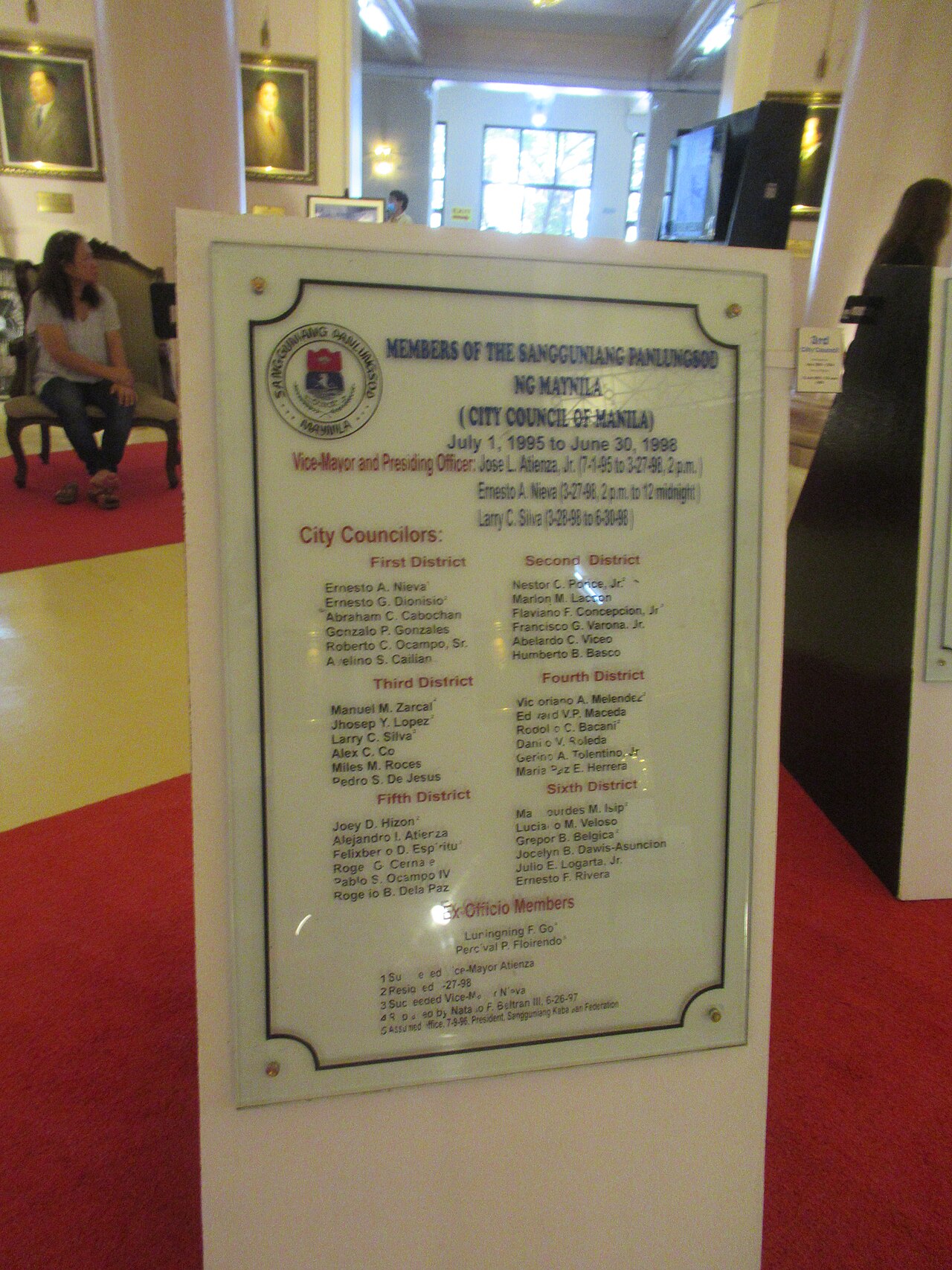
Historic monument · Manila
| Monday | Closed |
|---|---|
| Tuesday | 10:00 – 15:00 |
| Wednesday | 10:00 – 15:00 |
| Thursday | 10:00 – 15:00 |
| Friday | 10:00 – 15:00 |
| Saturday | 10:00 – 15:00 |
| Sunday | 10:00 – 15:00 |
Checked 2026-08-31 · Source
| Per person | ₱100.00 |
|---|
Checked 2026-08-31 · Source
Read from the OpenStreetMap access tags; anything not listed has no tag recorded.
Set the group type to family in the planner and the day window contracts to about three quarters of a solo day.
Manila City Hall Clock Tower is a prominent civic landmark within the Manila City Hall complex. The tower belongs to the city’s administrative centre and contributes a recognisable vertical feature to the urban landscape of the Philippine capital. It is best visited as an exterior architectural stop rather than as a conventional museum or attraction with a long indoor programme. The surrounding government district gives the clock tower its context: this is a working civic environment, where public administration and everyday Manila movement continue around the landmark. Include it in a city-centre walking route with other nearby cultural sights.
Checked 2026-08-26 · Source
The clock tower forms part of the Manila City Hall building, whose interior is dedicated primarily to government offices, administrative departments and civic functions. Visitors should focus on the tower’s visible architecture and relationship with the wider city hall complex rather than expecting galleries, displays or a public observation deck. The clock mechanism and structural elements are part of the building’s working infrastructure. This distinction matters when planning the stop: the interest lies in recognising a civic building component from appropriate public viewpoints, not in following a museum-style interior route.
Checked 2026-08-26 · Source
A short exterior visit is enough for most travellers. Allow a few minutes to observe the tower, place it within the larger city hall complex and take photographs from suitable public viewpoints. Visitors with an interest in civic architecture may stay longer to study the tower’s proportions and its position within Manila’s busy streetscape. Because the landmark has no extended visitor circuit, pair it with nearby destinations rather than assigning it the centre of a full day. Its strength is as a compact urban landmark that adds architectural variety to a wider itinerary.
Checked 2026-08-26 · Source
Daylight provides the clearest view of the tower and the city hall complex, especially when you want to photograph the building’s height and urban setting. Manila’s central streets can be hot, crowded and noisy, so a shorter daytime stop may be more comfortable than a long pause at the perimeter. Weekday activity reflects the building’s role as a working government centre, while quieter surroundings may be found outside the busiest office periods. Keep the visit flexible and allow space for surrounding traffic, pedestrians and civic activity.
Checked 2026-08-26 · Source
Viewing the clock tower from public areas is an exterior landmark experience, not a standard paid museum visit. Plan to appreciate the tower’s civic architecture without expecting a ticket desk, exhibition route or dedicated tourist facilities. The building’s administrative purpose should guide your expectations: any interior movement is connected with government operations rather than ordinary sightseeing. For itinerary planning, treat the clock tower as a brief public-street stop and combine it with other central Manila attractions that offer longer visits or structured cultural experiences.
Checked 2026-08-26 · Source
Manila City Hall is in the Ermita district near the intersection of Taft Avenue and Padre Burgos Avenue. The central location is served by jeepneys, buses, taxis and ride-hailing services. LRT-1’s United Nations Avenue station provides a rail connection for reaching the area, followed by walking through central Manila. Traffic and pedestrian congestion can be heavy, particularly along the main roads, so allow additional time for the final approach. Use the tower as a visual landmark once nearby, while keeping clear of entrances, security areas and active administrative circulation.
Checked 2026-08-26 · Source
Manila City Hall is an active government facility, so visitors should behave as they would around any working civic building. Security personnel, administrative activity and civic gatherings may shape the atmosphere around the perimeter. Stay in public areas, avoid obstructing entrances and follow instructions from officials. The surrounding roads can be busy, with dense pedestrian movement and passing vehicles. Keep belongings secure and choose a safe position for viewing. This landmark is most enjoyable when treated as part of Manila’s civic landscape rather than as a recreational site designed for unrestricted exploration.
Checked 2026-08-26 · Source
The clock tower’s height, civic setting and relationship with the Manila City Hall complex are the main photographic opportunities. A wide-angle lens can help include the full structure when nearby streets limit distance. Morning and late-afternoon daylight may give the facade more readable contrast, while surrounding roads and pedestrians can provide scale. Photograph from public thoroughfares, keep clear of traffic and avoid extended activity near controlled areas. Security personnel may question photography around a government building, so remain courteous and comply with reasonable instructions while keeping the visit brief.
Checked 2026-08-26 · Source
It is a prominent clock tower forming part of the Manila City Hall complex, best visited as an exterior civic and architectural landmark.
The tower belongs to an active government complex, so the practical sightseeing experience is exterior viewing rather than a museum-style interior visit.
A few minutes is enough for exterior observation and photographs; visitors interested in civic architecture may stay longer before continuing to nearby sights.
The area is served by jeepneys, buses, taxis and ride-hailing services, with LRT-1’s United Nations Avenue station providing a nearby rail connection.
Use public viewpoints, keep clear of traffic and entrances, and remain courteous if security personnel ask about photography around the government complex.
The tower is in central Manila’s Ermita district near Taft Avenue and Padre Burgos Avenue, making it suitable for combination with other city-centre sights.
Loading the interactive map…
The interactive map could not be loaded.
Last updated:
Source: OpenStreetMap contributors ·