Belém Tower
Torre de Belém
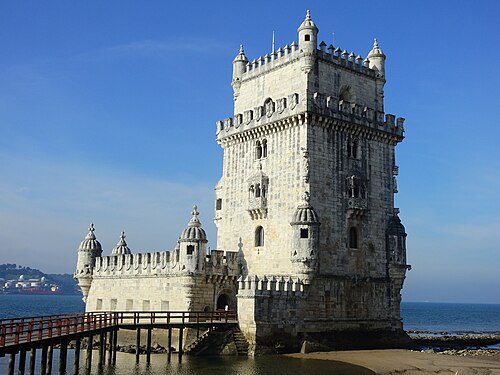
Belém Tower is a fortified tower located on the bank of the Tagus River in the Belém district of Lisbon. The Portuguese name is Torre de Belém.
- Must see
- Historic monument
- Lisbon
Language · 11 published
Country guide
Portugal fits 11.4 million people into 92,225 square kilometres on the western edge of Iberia, plus the Madeira and Azores archipelagos far out in the Atlantic. Sea does much of the work: internal waters and territorial sea together account for two-fifths of the country's territory. On the mainland the difference that matters runs north to south — Porto and the Douro valley are granite, green and wine, Lisbon sits mid-coast on its estuary, and the Algarve at the bottom is dry, low and built for summer. The whole mainland can be driven in a day, which is why most visits combine two cities rather than choose one.
Reviewed by Elena Voss · Roavina Travel Editor
Every city catalogued in this country so far, ranked by how much there is to see.
Photograph · Lacobrigo · CC BY-SA 4.0
Ranked by importance — sitelinks, pageviews and heritage status, not editor preference.
48 places match
Category
Typical visit duration
Interests
Torre de Belém
Belém Tower is a fortified tower located on the bank of the Tagus River in the Belém district of Lisbon. The Portuguese name is Torre de Belém.
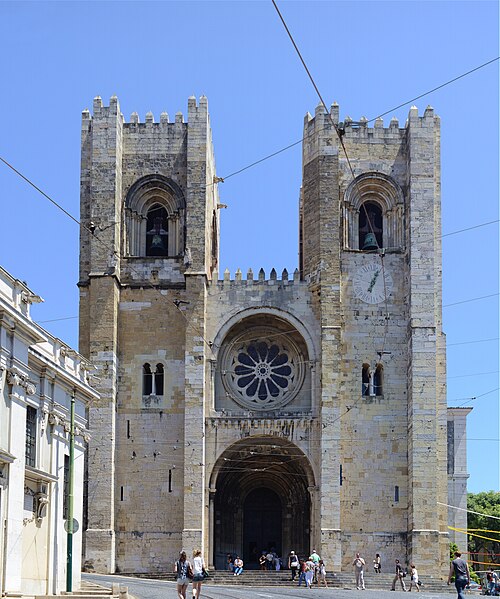
Sé de Lisboa
Sé de Lisboa is the cathedral of the Portuguese capital and the oldest church in it.
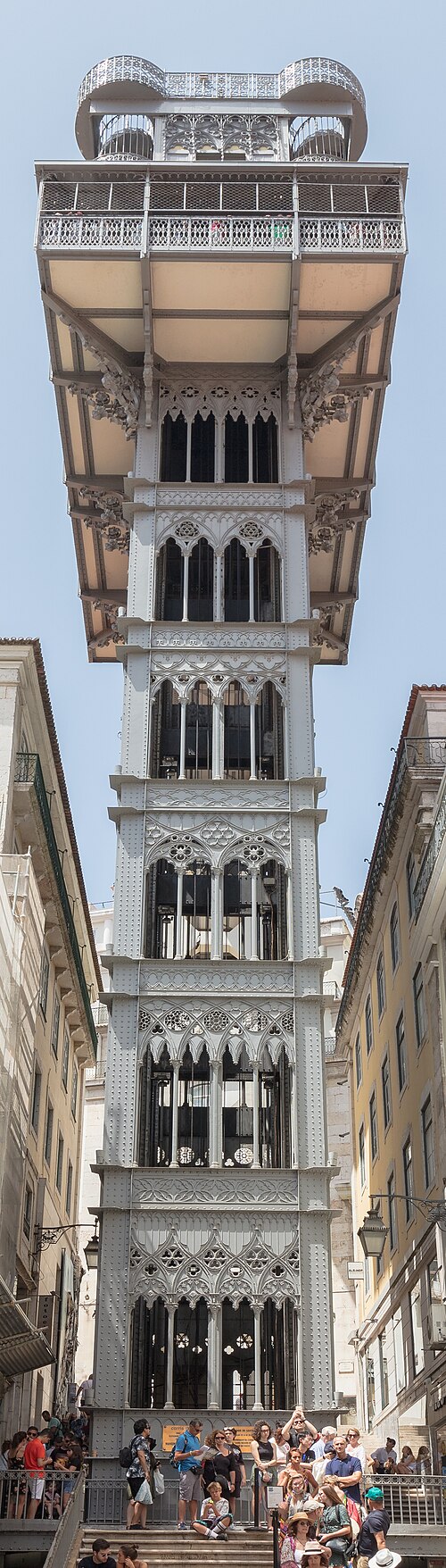
Elevador de Santa Justa
The Santa Justa Lift, known locally as Elevador de Santa Justa, is a historic elevator connecting the lower streets of Baixa with the higher Largo do Carmo.
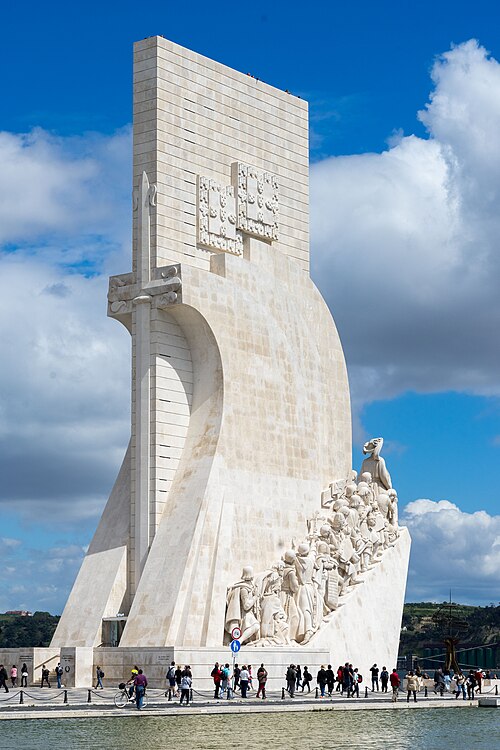
Padrão dos Descobrimentos stands on the Belém waterfront as a 56-metre wedge of concrete and rose-tinted Leiria stone, shaped like a caravel putting out into the Tagus.
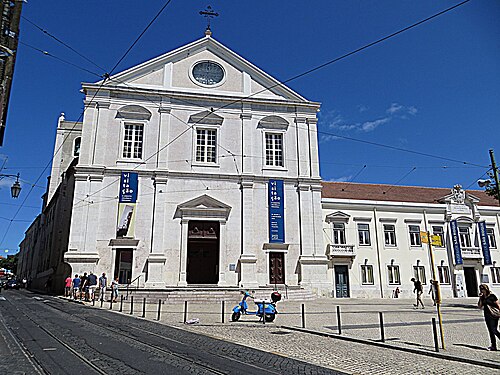
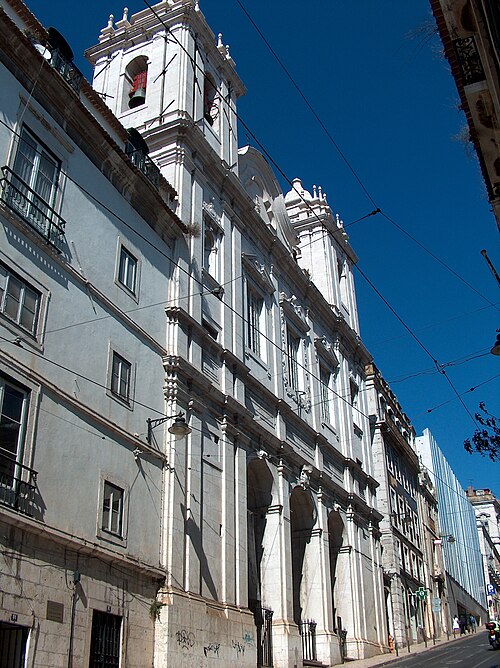
Igreja de São Roque is a Catholic church in Lisbon's Bairro Alto district. The Jesuits built this place of worship, and it served as their Portuguese headquarters.
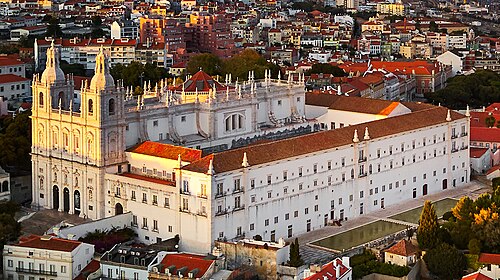
Igreja de São Vicente de Fora
Mosteiro de São Vicente de Fora is a major monastery and church complex above Alfama. The operator traces the foundation to Portugal’s first king, Afonso Henriques, after the 1147 conquest of Lisbon; the present monumental complex reflects later rebuilding.
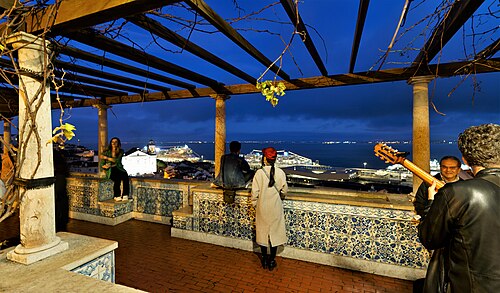
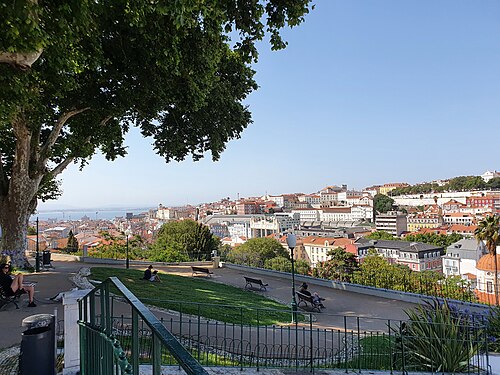
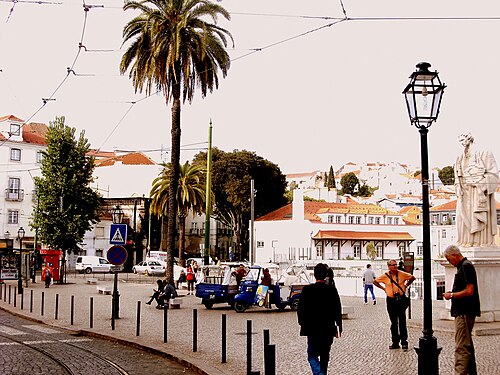
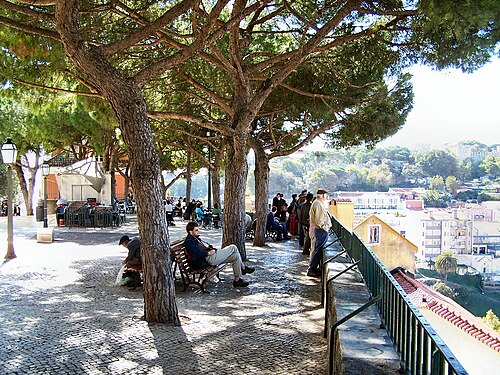
Miradouro de Santa Luzia is a scenic overlook in Lisbon's historic Alfama district. This elevated terrace offers views over the Tagus River and the red-tiled rooftops of the old city.
Praça Dom Pedro IV
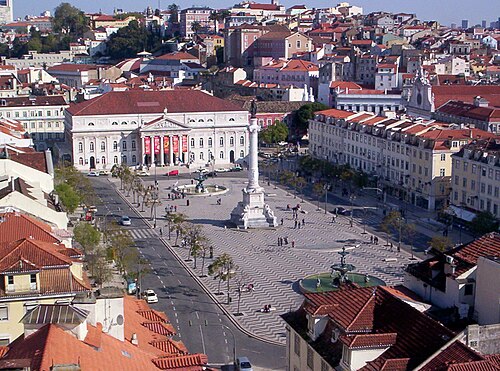
Rossio Square, known locally as Praça Dom Pedro IV, stands as one of Lisbon's most emblematic public spaces in the Baixa district.
Basílica da Estrela
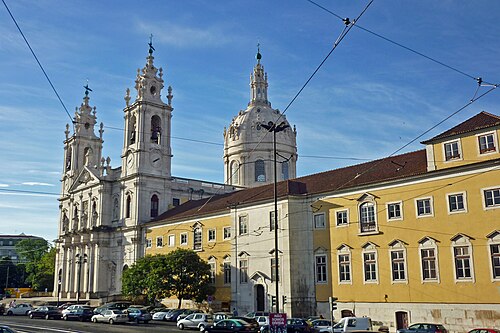
The Estrela Basilica, known locally as Basílica da Estrela, is a prominent religious monument in Lisbon. This neoclassical basilica stands as a significant landmark in the Estrela district.
Estufa Fria
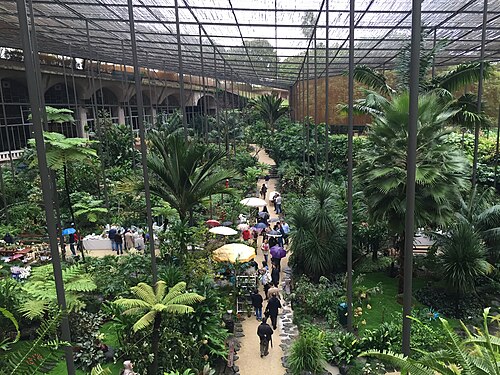
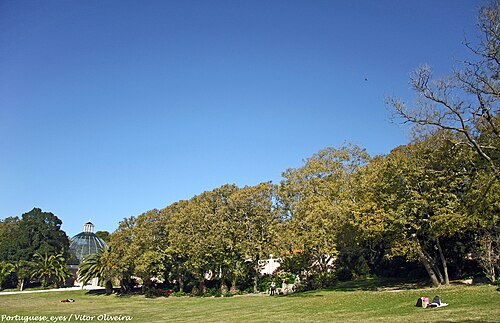
Estufa Fria de Lisboa, locally known as Estufa Fria, is a greenhouse garden located in Lisbon, Portugal. The name translates to Cold Greenhouse, distinguishing it from heated glasshouse structures.
Jardim Botânico de Lisboa is a botanical garden in Lisbon, Portugal. Established in the 19th century, it serves as a scientific and educational institution focused on plant conservation and research.
Jardim Botânico da Ajuda is a historic botanical garden in the Ajuda district of Lisbon. Established in the 18th century, it ranks among Portugal's oldest botanical gardens.
Jardim Botânico Tropical is a specialised Lisbon garden devoted to tropical and subtropical vegetation, with an identity shaped by Portugal’s botanical interest in overseas territories.
Jardim da Estrela is a public garden in Lisbon's Estrela parish, near the Basílica da Estrela.
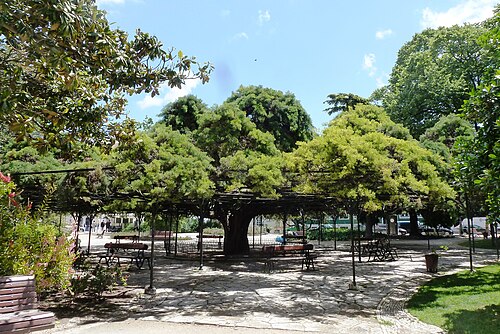
Jardim do Príncipe Real is a public garden in Lisbon, Portugal, situated in the Príncipe Real district. The garden occupies a sloped terrace and features a distinctive large cedar tree at its centre, which has become a notable visual landmark.
Jardim do Torel is an elevated public garden in central Lisbon, combining greenery with views across the surrounding city. Its hillside position gives the visit a viewpoint character as well as the calmer rhythm of an urban park.
Jardim da Cerca da Graça is a public garden situated in the Graça district of Lisbon, Portugal. The garden occupies a hillside position offering elevated views over the city and the Tagus River.
Parque Eduardo VII
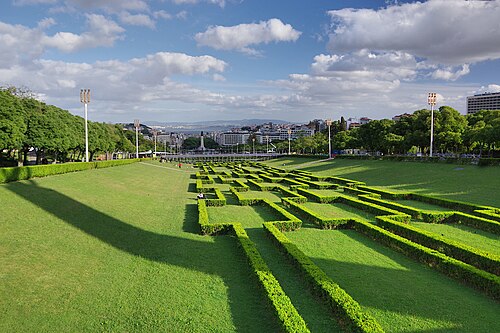
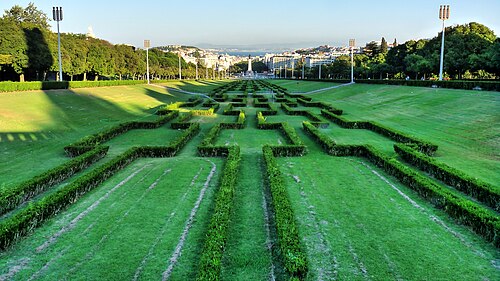
Parque Eduardo VII is a major public park in Lisbon, Portugal, named after King Edward VII of the United Kingdom who visited in 1903.
Parque Florestal de Monsanto
Monsanto Forest Park, also called Parque Florestal de Monsanto, is a large urban forest within Lisbon. It gives travelers a wooded alternative to the city's plazas, historic streets, and formal gardens.
Jardim Gulbenkian
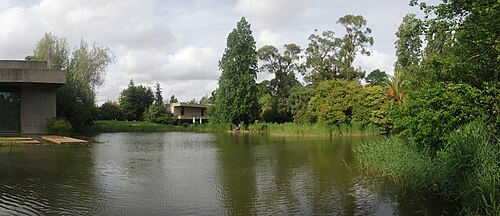
Gulbenkian Park, known locally as Jardim Gulbenkian, is a landscaped green space in Lisbon associated with the Calouste Gulbenkian Foundation. The park serves as a public garden and cultural setting, complementing the foundation's museum and concert hall complex.
Miradouro das Portas do Sol is one of Lisbon’s classic viewpoints, set above the historic Alfama district. From its terrace, the city falls toward the Tagus, with tiled roofs, church domes, and layered hills forming the panorama.
Miradouro Nossa Senhora do Monte is a viewpoint located in Lisbon's Graça district. Positioned on one of the city's highest hills, it offers panoramic vistas across the Portuguese capital.
Miradouro Sophia de Mello Breyner Andresen
Miradouro da Graça, officially named Miradouro Sophia de Mello Breyner Andresen, is a scenic viewpoint in Lisbon. It honors the Portuguese poet Sophia de Mello Breyner Andresen.
Miradouro de Santa Catarina is an open public viewpoint in Lisbon overlooking the Tagus River and the city. The terrace is a social meeting place where residents and visitors pause, sit, talk, and watch activity on the water.
Miradouro do Parque Eduardo VII is a viewpoint situated at the northern end of Parque Eduardo VII in Lisbon, Portugal.
Miradouro Panorâmico do Monsanto is a panoramic viewpoint located within Monsanto Forest Park in Lisbon. The structure was formerly a restaurant and now serves as an elevated observation platform.
Miradouro Amoreiras 360º Panoramic View
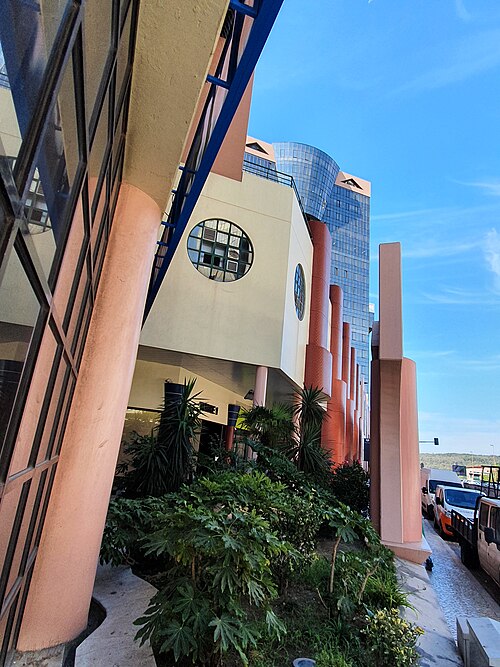
Miradouro Amoreiras 360º Panoramic View is a rooftop observation deck in Lisbon, Portugal. Located atop the Amoreiras Shopping Center, it offers visitors an elevated vantage point over the Portuguese capital.
Feira da Ladra
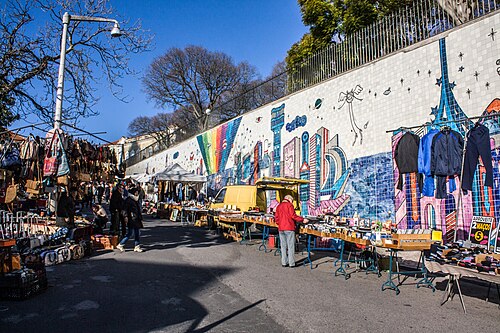
Feira da Ladra is a historic flea market in Lisbon, Portugal. Its name translates roughly to Thieves Market or Market of the Thieves, though its origins and exact naming history are not fully documented.
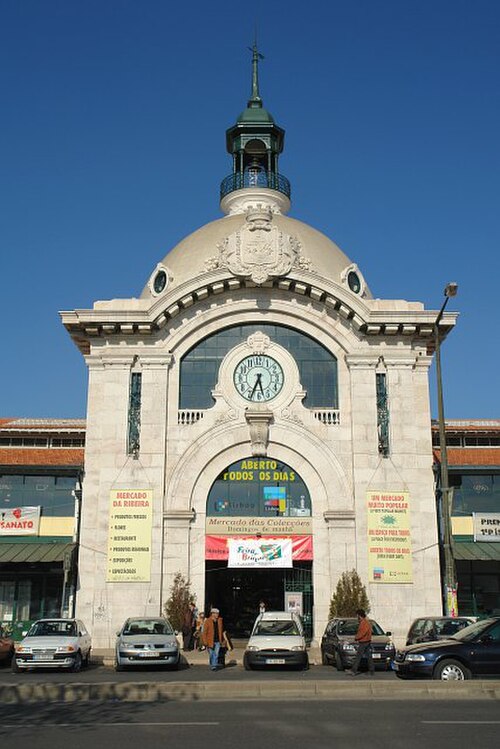
Mercado da Ribeira is a historic market hall in Lisbon, located in the Cais do Sodré district near the Tagus River. Established in the late nineteenth century, it has served as a central food market for the city.
Mercado de Santa Clara
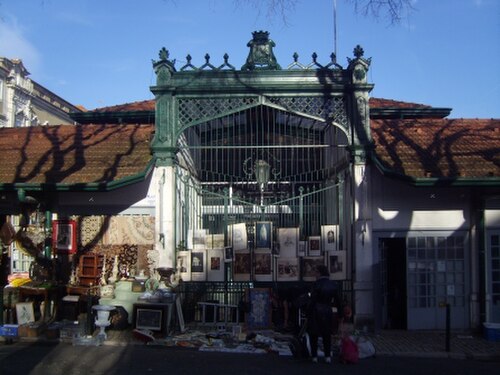
Mercado de Santa Clara is a historic market in Lisbon's Alfama district, situated near the National Pantheon and São Vicente de Fora monastery.
Livraria Bertrand - Chiado
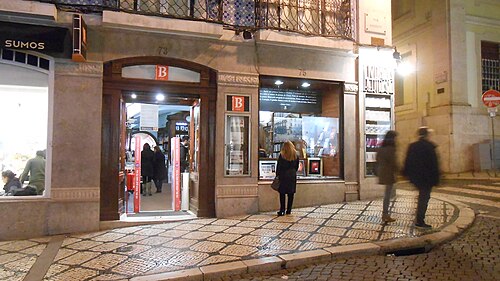
Livraria Bertrand is a historic bookshop located in Lisbon's Chiado district. It holds a Guinness World Record as the oldest operating bookshop in the world, with origins dating to 1732.
Igreja da Graça
Igreja da Graça is a historic church situated in the Graça district of Lisbon, Portugal. The church belongs to the Order of Augustinian Hermits and occupies a prominent position on one of Lisbon's hills, offering commanding views across the city.
Igreja de São Brás e de Santa Luzia
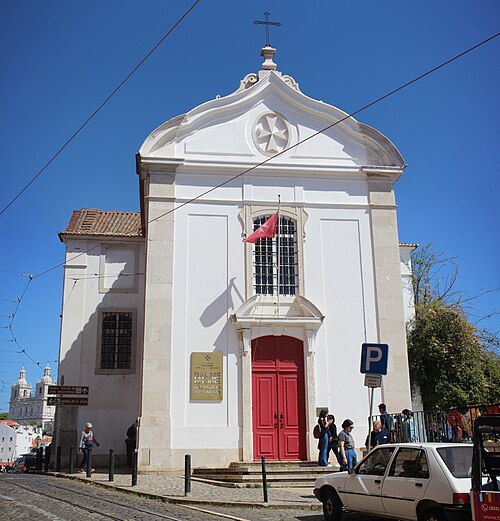
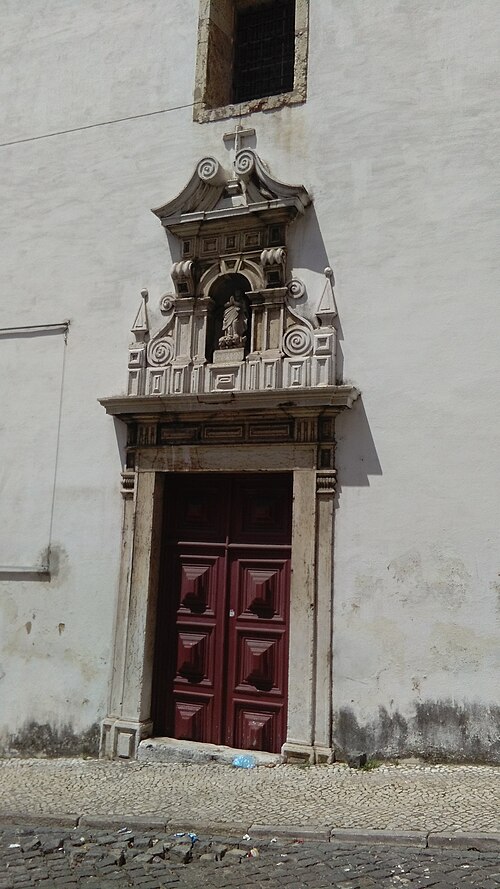
Igreja de Santa Luzia, locally known as Igreja de São Brás e de Santa Luzia, stands as a historic church in Lisbon's Alfama district. The building reflects Portuguese religious architecture with its prominent position overlooking the city.
Igreja da Conceição Velha
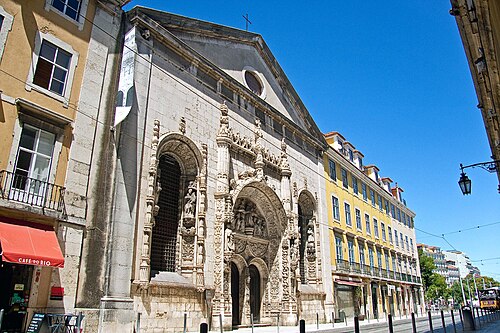
The Church of Nossa Senhora da Conceição Velha, known locally as Igreja da Conceição Velha, stands in Lisbon's Baixa district.
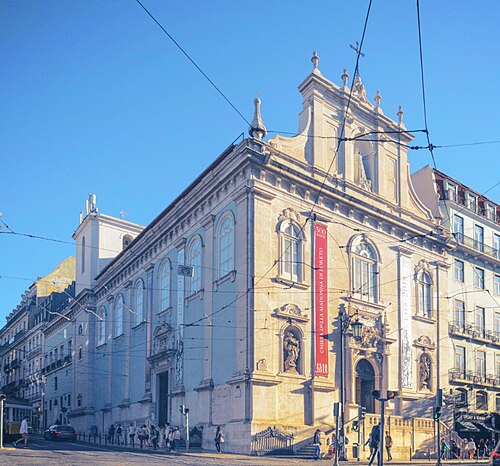
Igreja de Santa Catarina is a historic Catholic church in Lisbon’s Santa Catarina area, within the Misericórdia civil parish. The church remains a place of worship for the local Catholic community and contributes to the architectural character of central Lisbon.
Igreja do Loreto
Igreja de Nossa Senhora do Loreto, also called Igreja do Loreto, is a Catholic church in Lisbon. The building belongs to the religious and architectural landscape of Portugal’s capital and continues to function as a place of worship.
Convento dos Cardais is a convent in Lisbon and part of the city’s broad religious heritage. A convent is a place shaped by religious community life, residence, worship, and the architectural needs of that community.
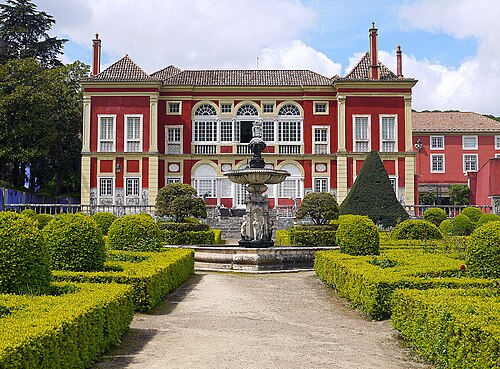
Palácio Fronteira
The Palace of the Marquises of Fronteira is a seventeenth-century aristocratic estate in Lisbon. It remains a private family residence while opening selected areas to visitors.
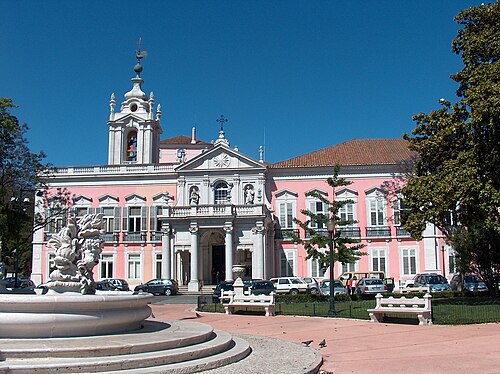
Palácio das Necessidades
Necessidades Palace, or Palácio das Necessidades, is an eighteenth-century palace in Lisbon's Estrela district. It is the headquarters of Portugal's Ministry of Foreign Affairs, so its importance is governmental and architectural rather than museum-based.
Tapada das Necessidades is a historic park and garden in Lisbon, Portugal. The name translates roughly to Park of Needs or Necessities. It occupies grounds historically associated with the Necessidades Palace, which served as a royal and later presidential residence.
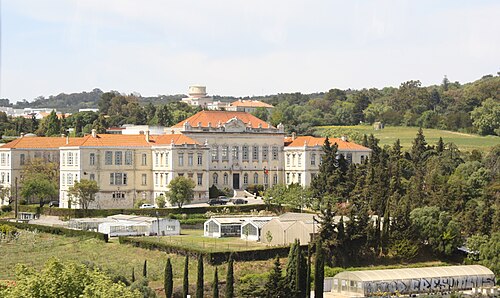
Tapada da Ajuda is a historic parkland on the western edge of Lisbon, Portugal. The area forms part of the Ajuda royal complex and has served as grounds associated with the nearby Palace of Ajuda.
Teatro Nacional Dona Maria II
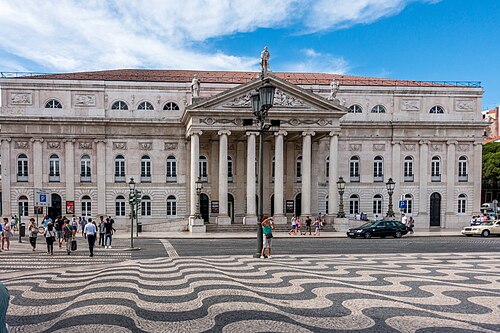
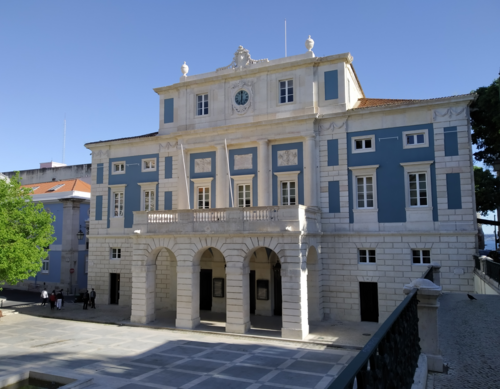
Teatro Nacional D. Maria II is Lisbon’s national theatre on Rossio Square, in the Baixa district. Its formal Portuguese name honours Queen Maria II, and the neoclassical façade gives the north side of the square a strong architectural focus.
Teatro Nacional de São Carlos is Lisbon’s national opera house, standing in the Chiado district among the city’s historic streets. Founded in the late eighteenth century, it remains a major Portuguese venue for opera, ballet, classical music and orchestral performance.
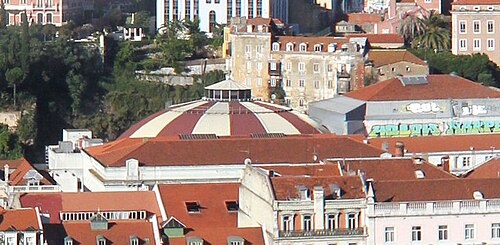
Coliseu dos Recreios is a historic entertainment venue in Lisbon, Portugal. Established in the late nineteenth century, it functions primarily as a theatre and concert hall.
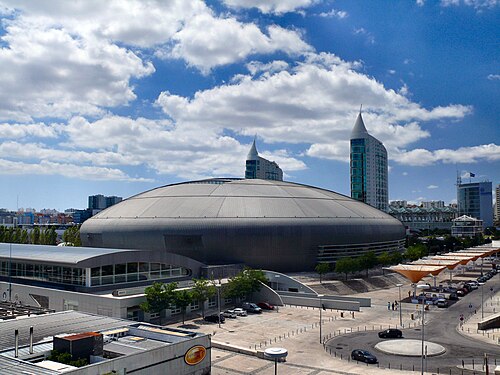
MEO Arena is a multi-purpose indoor arena in Lisbon, Portugal. The venue serves as a major entertainment and sports complex within the city, hosting concerts, sporting events, and large-scale performances.
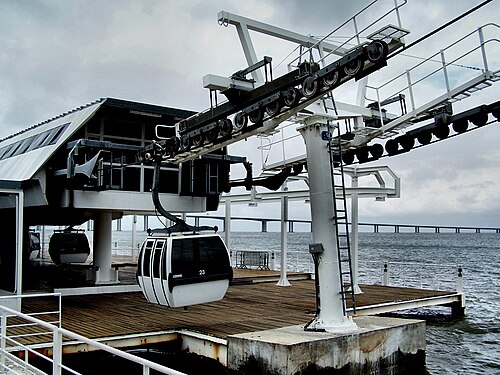
Teleférico do Parque das Nações is an aerial cable car crossing Lisbon’s modern Parque das Nações district. Enclosed gondolas travel above the former Expo 98 waterfront, giving passengers a moving view of the Tagus, landscaped public spaces, and contemporary buildings.
Ribeira das Naus is an open riverside promenade beside the Tagus in central Lisbon. Its name recalls the shipyards that once occupied this waterfront, linking the modern public space with Portugal’s maritime past.
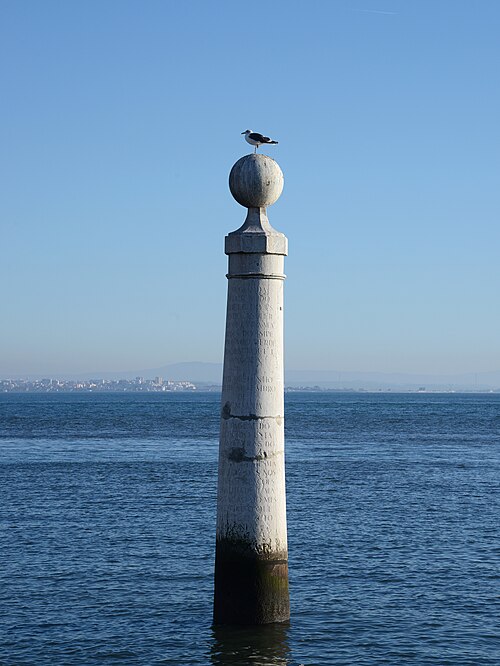
Cais das Colunas is a historic quay on the Tagus riverfront in Lisbon, Portugal. Its name derives from two distinctive columns that frame a ceremonial landing stage.
Source: OpenStreetMap contributors, Wikidata ·
Eight to twelve days allows four days in Lisbon, two or three in Porto, and one carefully chosen extension. The Algarve requires a regional stay, while Madeira and the Azores require flights and separate weather planning.
Portugal is in the Schengen Area, but passport and visa rules depend on nationality and route. Verify the current requirement through the Portuguese foreign ministry's official visa portal.
Lisbon and Porto anchor the mainland rail corridor, with Faro serving the Algarve by air and rail. Regional buses and rental cars fill rural gaps, and Lisbon and Porto use separate urban fare systems.
April to June and September to October broadly suit Lisbon, Porto, and the mainland corridor. Madeira, the Azores, and the Algarve have distinct weather and transport considerations that need their own check.
Portugal uses the euro (EUR). Keep a small euro reserve for individual businesses or rural stops and verify the charged currency before accepting a card conversion.
Portugal's emergency number is 112. Expect a 230 V electrical supply with Type C and F outlets. Tap-water status remains Not recorded in this dataset; seek destination-specific guidance instead of inferring safety.