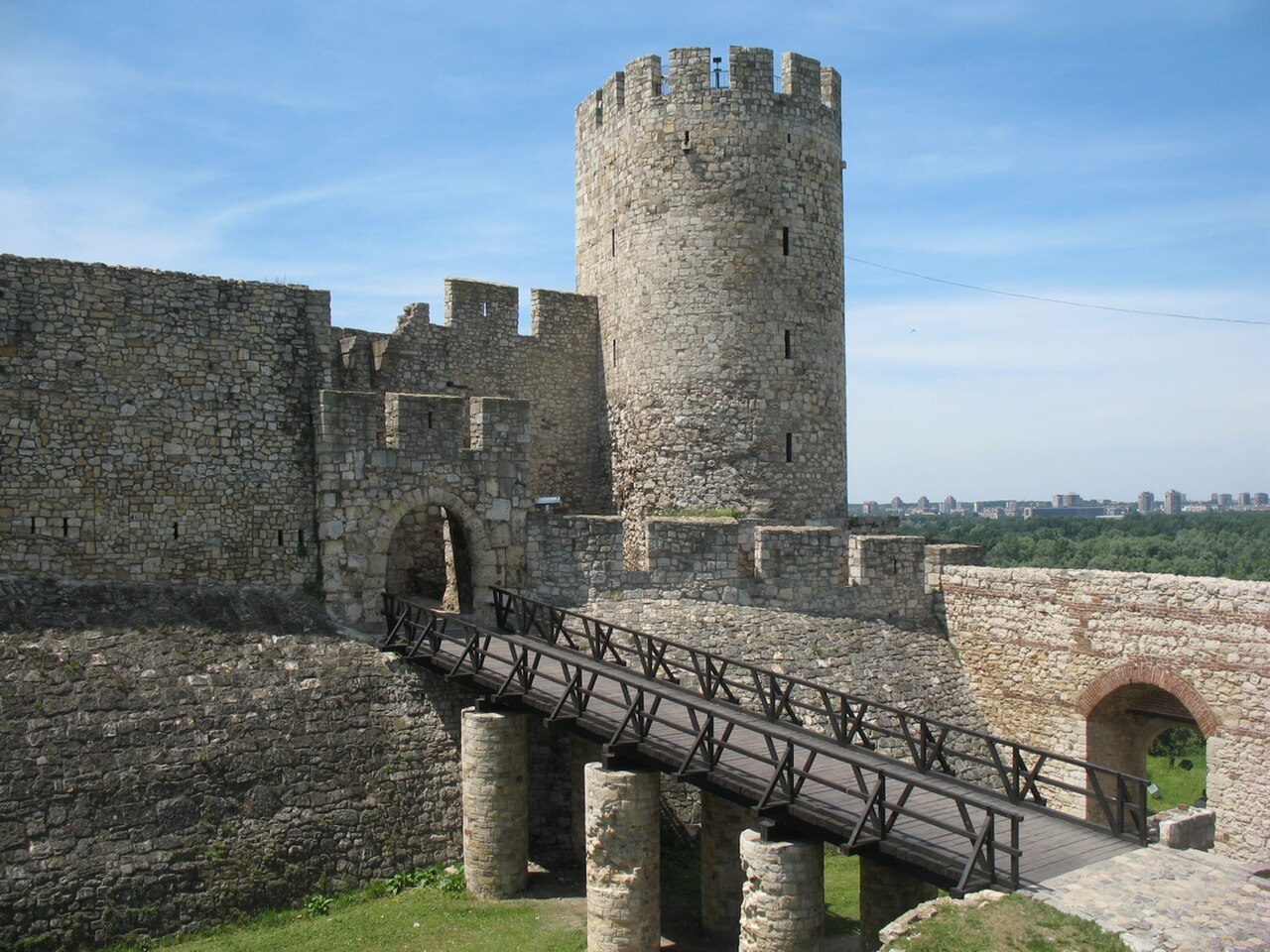
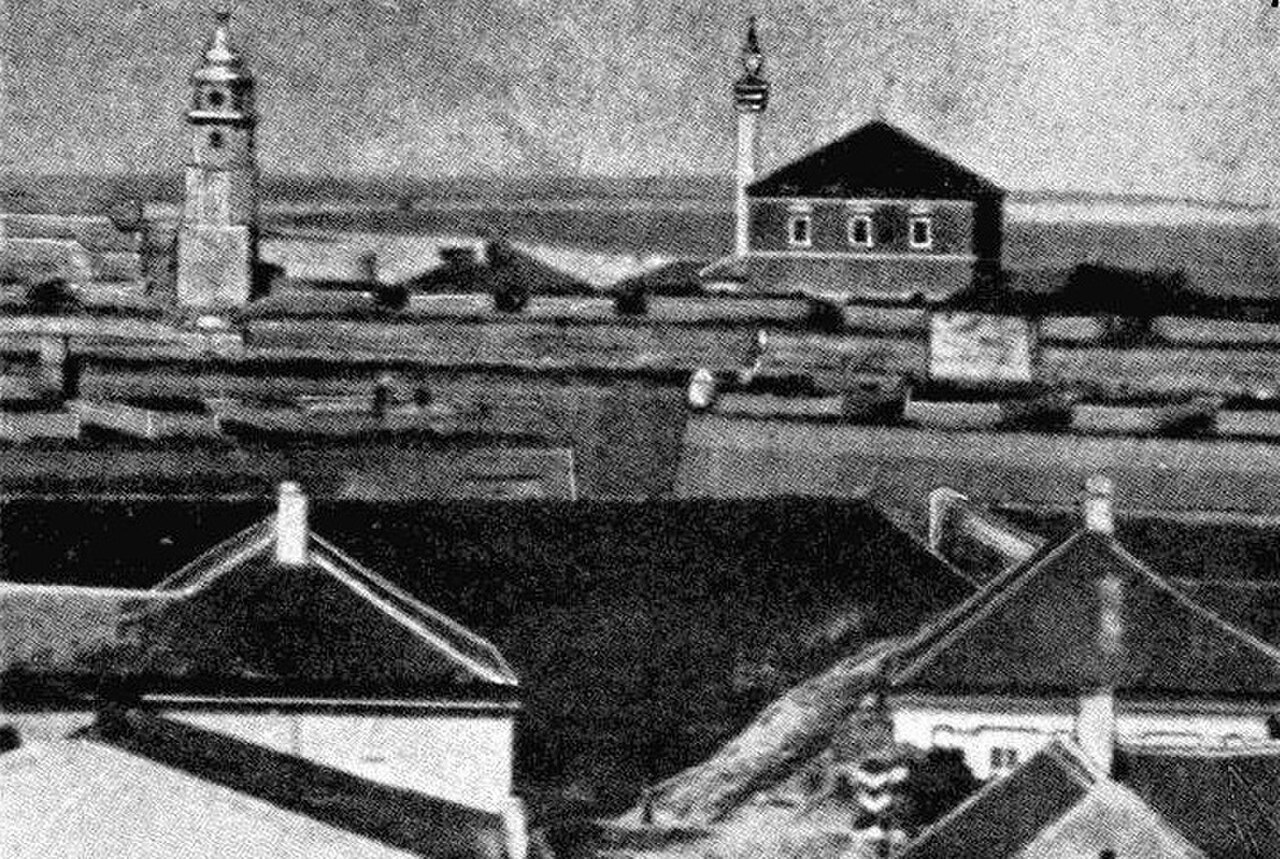
Belgrade Fortress is a historic complex rather than a single enclosed building: its Upper Town and Lower Town occupy about 57 hectares within Kalemegdan Park, on the ridge above the confluence of the Sava and Danube. The site began with Celtic fortification and became the permanent camp of Roman legion IV Flaviae in the 2nd century CE. Later walls, gates and military structures explain why the visit feels like a landscape of successive cities, not one monument. Its location also makes the fortress Belgrade’s clearest meeting point between urban history, river scenery and public parkland.
The Upper Town contains Damad Ali Pasha’s Tomb, Despot Stefan’s Tower and the Roman Well; the Lower Town leads to Ružica Church, the Saint Petka Chapel and Nebojša Tower, now a museum. The Roman Well is a particularly memorable stop, but its name is misleading: the operator dates it to the first half of the 18th century. Forty-four Serbian-English information boards explain the complex, with Braille on overview boards, and the audio guide covers 39 points in roughly 90 minutes. The arrangement rewards a deliberate route: begin with the gates and Upper Town, then descend only when you have time for the lower monuments.
Allow about three hours for a meaningful first visit. Spend roughly 90 minutes crossing Kalemegdan Park and the Upper Town, then reserve time for the Lower Town and its churches, tower and riverside setting. The lower section is quieter but involves a steep descent and the climb back, so it takes longer than its map distance suggests. If you only have an hour, prioritise the Upper Town, the Victor viewpoint and the main gates. Three hours also leaves room to read the information boards instead of treating the fortress as a quick viewpoint stop.
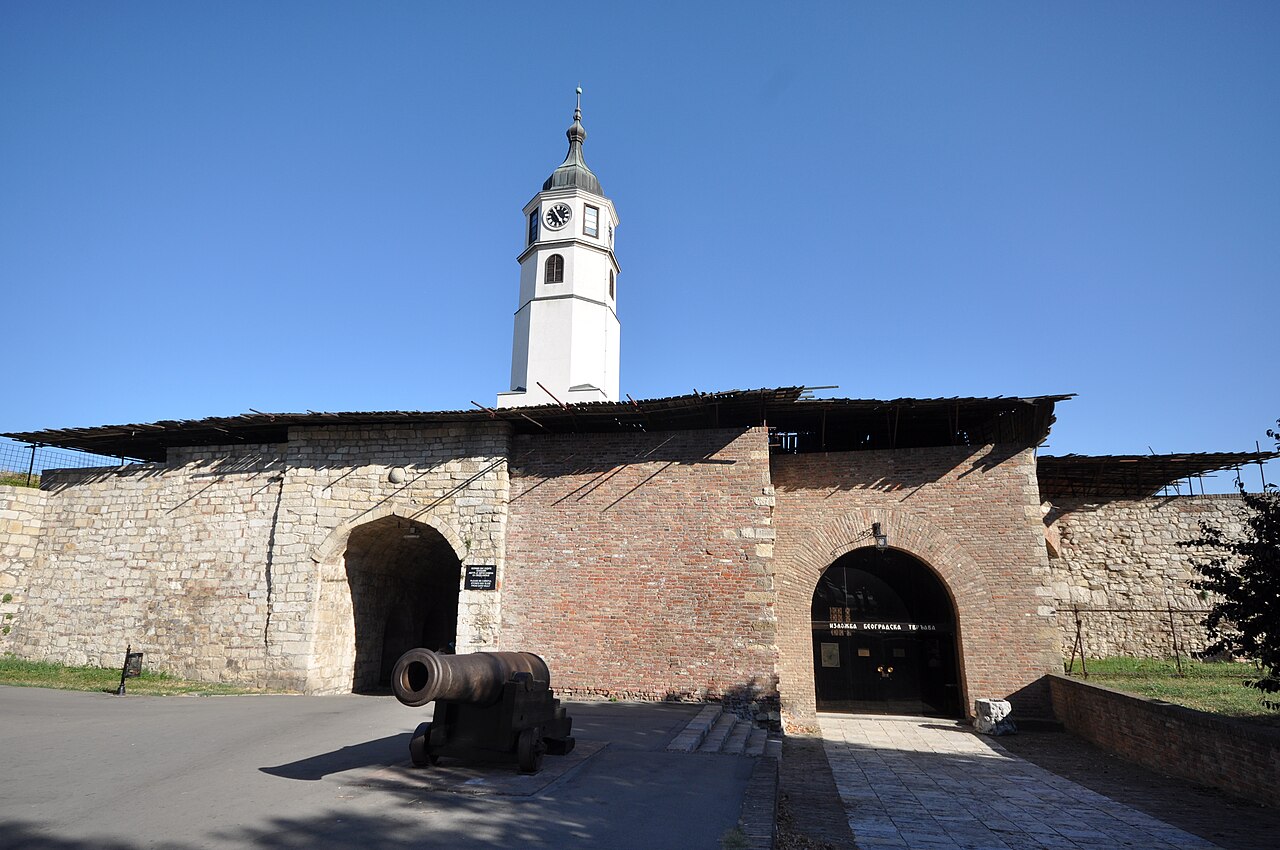
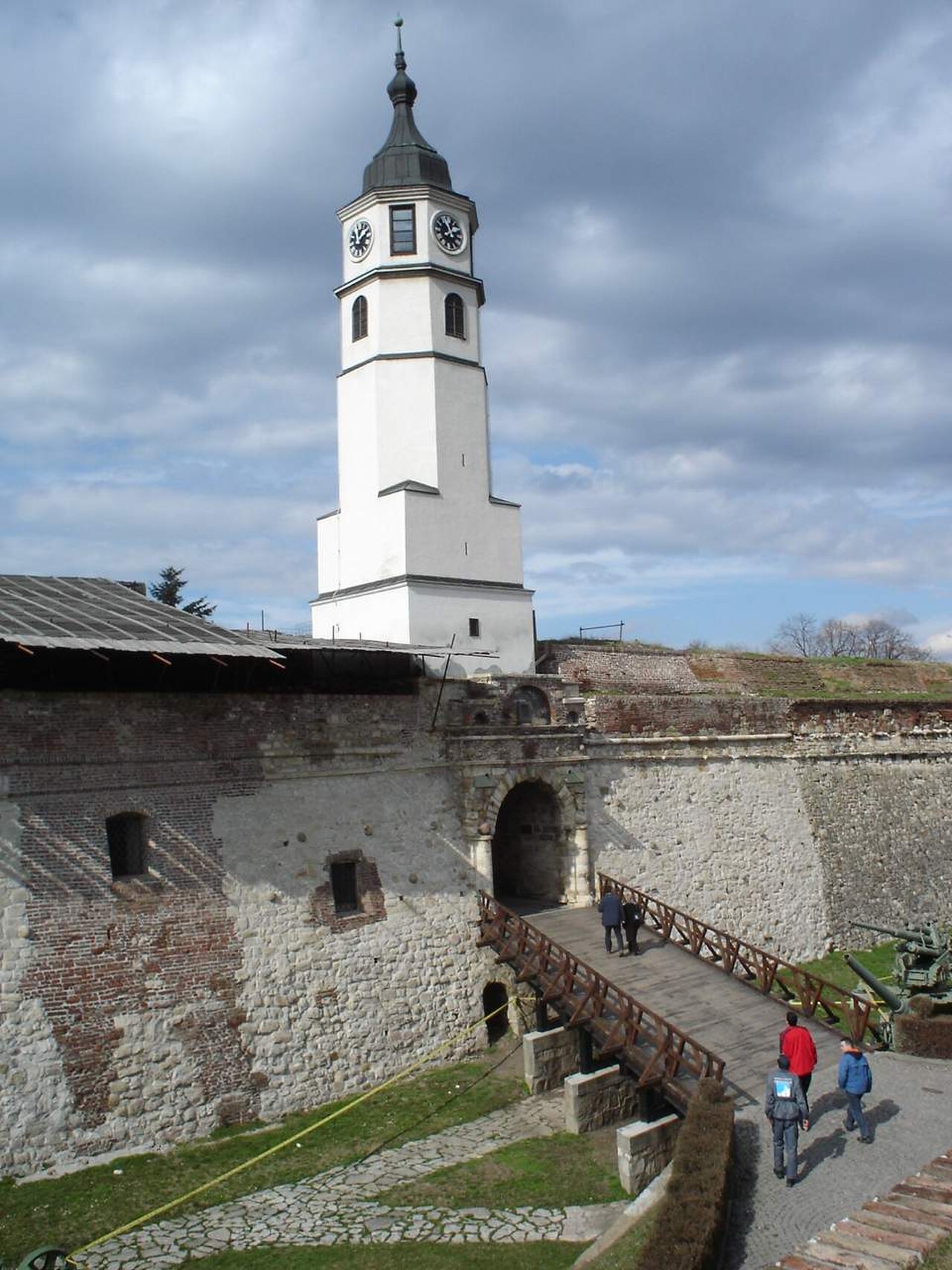
The open grounds are best approached in daylight, especially if you plan to descend into the Lower Town. Near sunset, the viewpoint beside the Victor looks across the Sava–Danube confluence towards New Belgrade and fills with visitors. Winter ice can make paths hazardous. Operator-listed ticketed facilities run from 1 April to 30 September, generally Tuesday–Sunday, 11:00–19:00; Nebojša Tower follows Wednesday–Sunday, 11:00–19:00. The Sahat Gate gallery and shop use Tuesday–Sunday, 11:00–19:00. Arriving earlier gives you more comfortable footing and time to cross between the two towns before the evening crowds gather around the panorama.
Entry to the outdoor fortress grounds and Kalemegdan Park is free. The operator records separate per-person admission for selected interiors: Military Bunker 120 RSD, Roman Well 170 RSD, Nebojša Tower 270 RSD, Big Gunpowder Warehouse 270 RSD and Casemates 400 RSD. Sahat Gate gallery and souvenir shop have free entry. These are separate attractions within the wider complex, so a free walk through the fortress does not include every museum or interior visit. Plan the paid stops around their opening days, because the outdoor grounds remain a different, freely accessible part of the experience.
The main pedestrian approach starts at Republic Square: follow Knez Mihailova Street through the centre, then continue to the Kalemegdan gate; the walk takes about ten minutes. Tram 5 serves the Kalemegdan / Donji grad terminus on the Lower Town side. Because the complex spreads across Kalemegdan Park, the Upper Town and the Lower Town, arriving at the upper gate and arriving by tram do not put you at the same internal route. The pedestrian approach is especially straightforward for visitors already in central Belgrade, while tram 5 is useful when the Lower Town is your first target.
Expect slopes, uneven ground, gates and stair routes between the park, Upper Town and Lower Town. The descent into the Lower Town can be steep, and the return climb is demanding; winter ice increases the risk. The Roman Well is a 35-metre-deep interior reached by a 212-step spiral staircase, so it is unsuitable for visitors uncomfortable with enclosed spaces or long stairways. Ramps and flat paths provide step-free access to parts of the complex, but not every route or interior is step-free. Check the route before committing to the lower descent, and do not mistake limited step-free access for a fully accessible circuit.
For the classic panorama, stand beside the Victor near sunset and frame the Sava flowing into the Danube, with Great War Island and New Belgrade beyond. The statue is elevated on its column, so a portrait of the Victor and a river photograph work best as separate compositions. To show the fortress’s scale, walk down towards the Danube quay and photograph the Lower Town walls from below; from the ridge, the walls and slopes are easy to underestimate. The Great Kalemegdan Staircase is another useful viewpoint, linking the elevated park setting with the broad river prospect and the city beyond.
Nothing non-essential is set before you choose, in regions where consent is required. If you decline, ads still appear and analytics is switched off entirely.