
2 min walk · Vračar
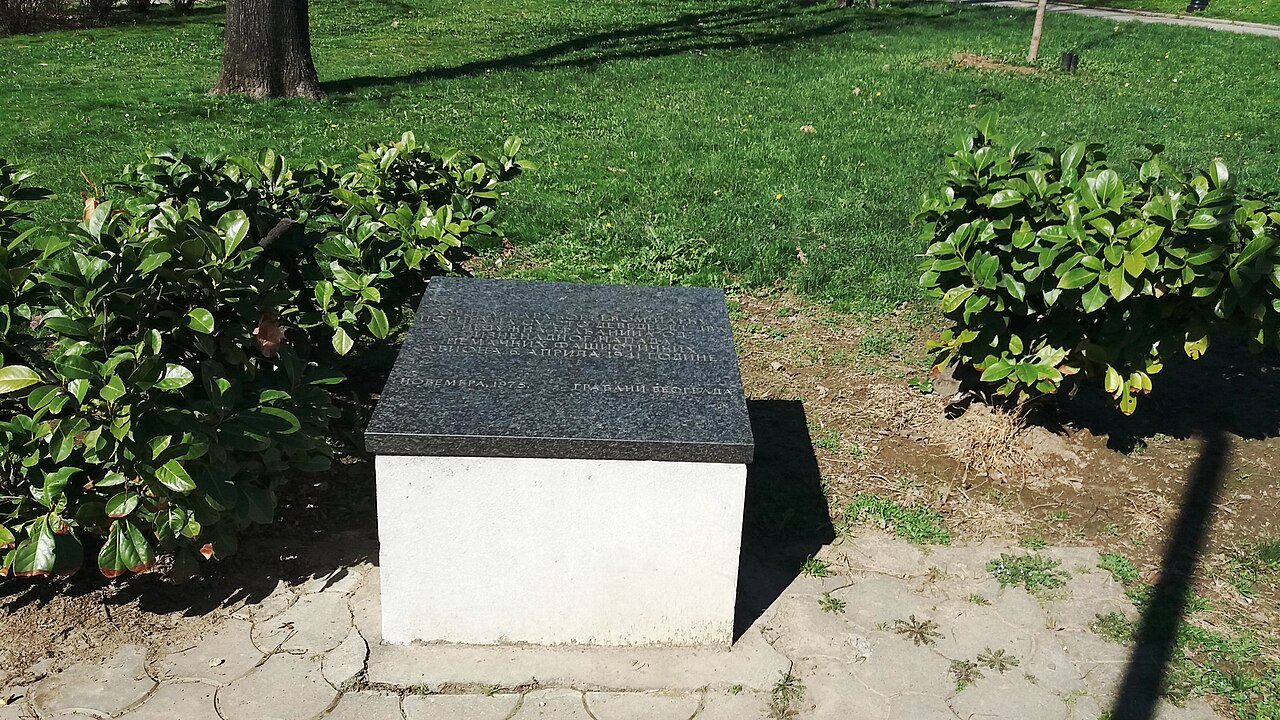
A memorial for 192 killed Belgraders
- High
- Historic monument
Language · 11 published
Historic monument · Vračar, Belgrade
Споменик Карађорђу
Reviewed by Elena Voss · Roavina Travel Editor
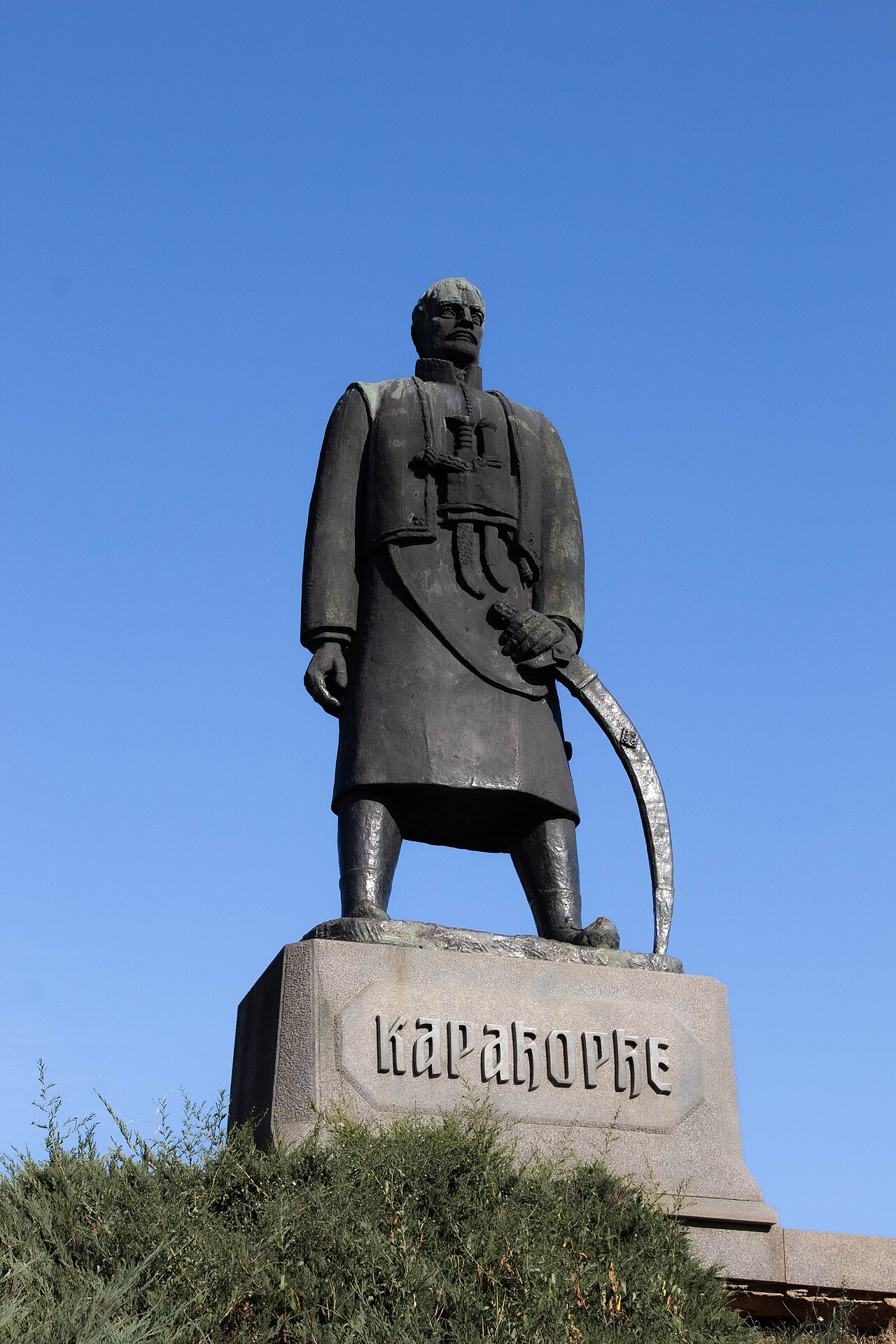
This place is a Memorial. It was established in 1979. It carries the Monument of Culture heritage designation.
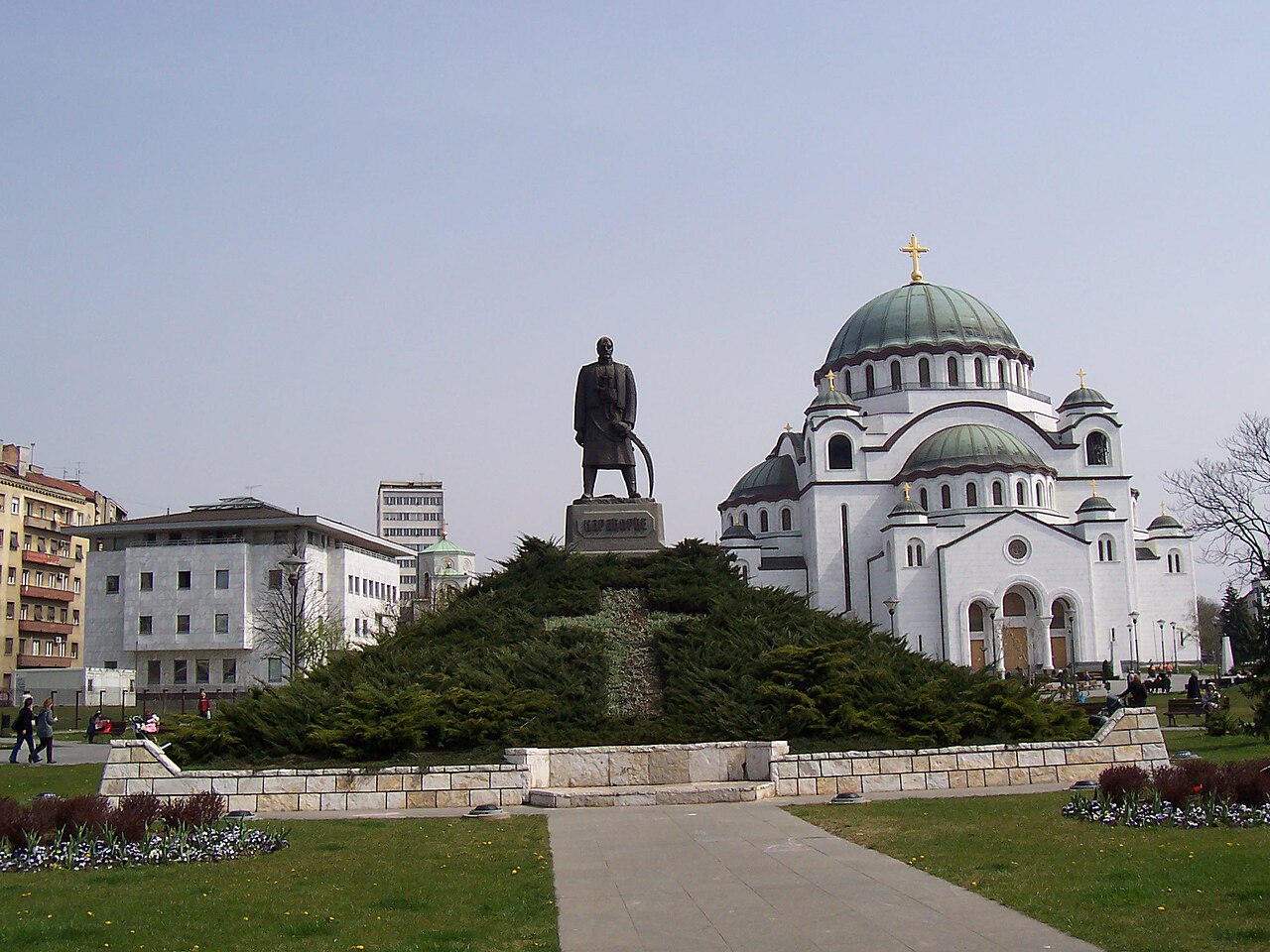
Karađorđe Monument is a 1979 memorial to Karađorđe Petrović, leader of the First Serbian Uprising. It stands on Belgrade’s Svetosavski Plateau, beside Karađorđev Park and near the Church of Saint Sava and the National Library of Serbia. This outdoor civic sculpture is not an enclosed attraction: its historical subject, elevated position and relationship with Vračar’s landmark group give the stop its character. Visitors can encounter a national memorial while moving through a working urban neighbourhood, then continue through the park or towards the plateau’s larger religious and cultural landmarks. The monument is therefore best understood as a concentrated historical landmark within a broader public landscape, rather than as a museum visit.
Checked 2026-09-02 · Source
The memorial has no interior rooms, galleries or exhibition route. Its entire focus is a single 3.2-metre bronze figure of Karađorđe Petrović on a natural-granite pedestal. The sculpture was made from a model by Sreten Stojanović. Since the work is viewed from surrounding public space, walk around it to compare the figure’s silhouette, stance and scale against the pedestal and open plateau. Karađorđev Park and nearby institutional landmarks provide context, but the monument itself remains one concentrated sculptural subject rather than a collection of displays. Its setting lets visitors read the sculpture together with the surrounding civic geography.
Checked 2026-09-02 · Source
Allow about 15 to 30 minutes for a focused stop. That is enough time to inspect the bronze figure, view the natural-granite pedestal from different angles and take photographs without hurrying. Plan longer if the monument forms part of a walk through Karađorđev Park or a route linking the Svetosavski Plateau with the Church of Saint Sava and the National Library of Serbia. Because this is one outdoor memorial rather than a museum, your pace and interest in its sculpture and historical setting determine the final duration. A longer pause makes sense when the surrounding landmarks are part of the same outing.
Checked 2026-09-02 · Source
Daylight is the most useful time for seeing the bronze modelling, granite pedestal and relationship between the sculpture and the plateau. Morning or late afternoon may make an outdoor walk more comfortable, while rain, snow or slippery ground can make the sloping approach less pleasant. The memorial also fits naturally into a daytime circuit of Karađorđev Park, the Church of Saint Sava and the National Library of Serbia. These are visit-planning considerations for an open-air monument, not a published schedule or closure claim. Changing light can also alter how strongly the bronze stands out against the elevated surroundings.
Checked 2026-09-02 · Source
No admission amount or operator-confirmed free-entry policy is recorded for Karađorđe Monument. Treat it as a landmark encountered in open public space during a walk, and keep separate visits to the Church of Saint Sava, the National Library of Serbia or another nearby institution distinct because those places may have their own access arrangements. This guide therefore assigns no ticket price and does not describe a formal ticketing system for the monument. The monument’s outdoor character makes it easy to include in a self-guided neighbourhood route without turning the stop into a timed attraction visit.
Checked 2026-09-02 · Source
Use the named Karađorđev Park public-transport stop as the arrival reference. City bus and tram services there include lines 8, 10, 14, 18N, 30, 31, 33, 39, 42, 47, 48, 59 and 78. Karađorđev Park is also a BG Voz railway station. From the stop or station, continue towards the Svetosavski Plateau; the monument is near the Church of Saint Sava and the National Library of Serbia. The approach combines paved park areas with sloping ground, so expect a walk rather than a level-platform arrival. Use the nearby landmarks as orientation points during the final part of the route.
Checked 2026-09-02 · Source
The elevated setting and sloping approach are the main practical considerations. Routes through the park may combine paved areas with gradients, so visitors using mobility aids should assess the final approach on arrival. Wear suitable footwear in unsettled weather, keep public paths clear and do not climb the pedestal. The monument is a civic sculpture in an open setting, not an enclosed venue with a controlled visitor route. Treat the surrounding area respectfully as a public memorial while moving between the plateau and nearby landmarks. Weather can affect comfort underfoot even when the monument itself remains visible from the public approach.
Checked 2026-09-02 · Source
The open plateau offers room for both contextual and close photographs. Start with a wider frame showing the 3.2-metre bronze figure, natural-granite pedestal and elevated setting, then move around the surrounding paths for a more direct portrait. Karađorđev Park and the nearby Church of Saint Sava area can supply context without overwhelming the memorial. Daylight reveals the bronze modelling clearly, while softer overcast light can reduce harsh contrast. Keep the pedestal and public space undisturbed while composing images. A low, distant viewpoint can emphasise the monument’s height, whereas a closer side angle better records the sculptural profile.
Checked 2026-09-02 · Source
Karađorđe Monument stands on Belgrade’s Svetosavski Plateau, near Karađorđev Park, the Church of Saint Sava and the National Library of Serbia.
The monument was erected in 1979 to mark the 175th anniversary of the First Serbian Uprising.
The bronze figure was made from a model by sculptor Sreten Stojanović.
The bronze sculpture is 3.2 metres tall.
The figure is bronze and stands on a natural-granite pedestal.
It honours Karađorđe Petrović, leader of the First Serbian Uprising and one of the major figures in Serbian history.
Loading the interactive map…
The interactive map could not be loaded.
Last updated:
Source: OpenStreetMap contributors, Wikidata ·