
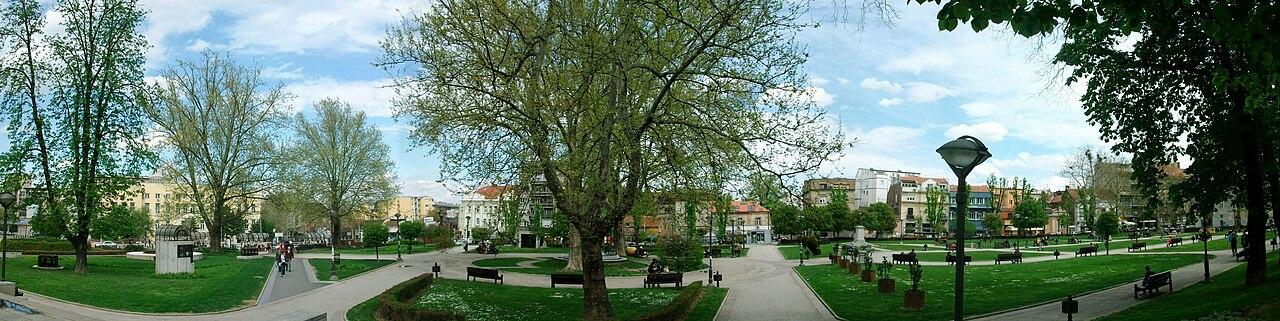
2 min walk · Zvezdara
Park Cirila i Metodija
- High
- Nature site
Historic monument · Zvezdara, Belgrade
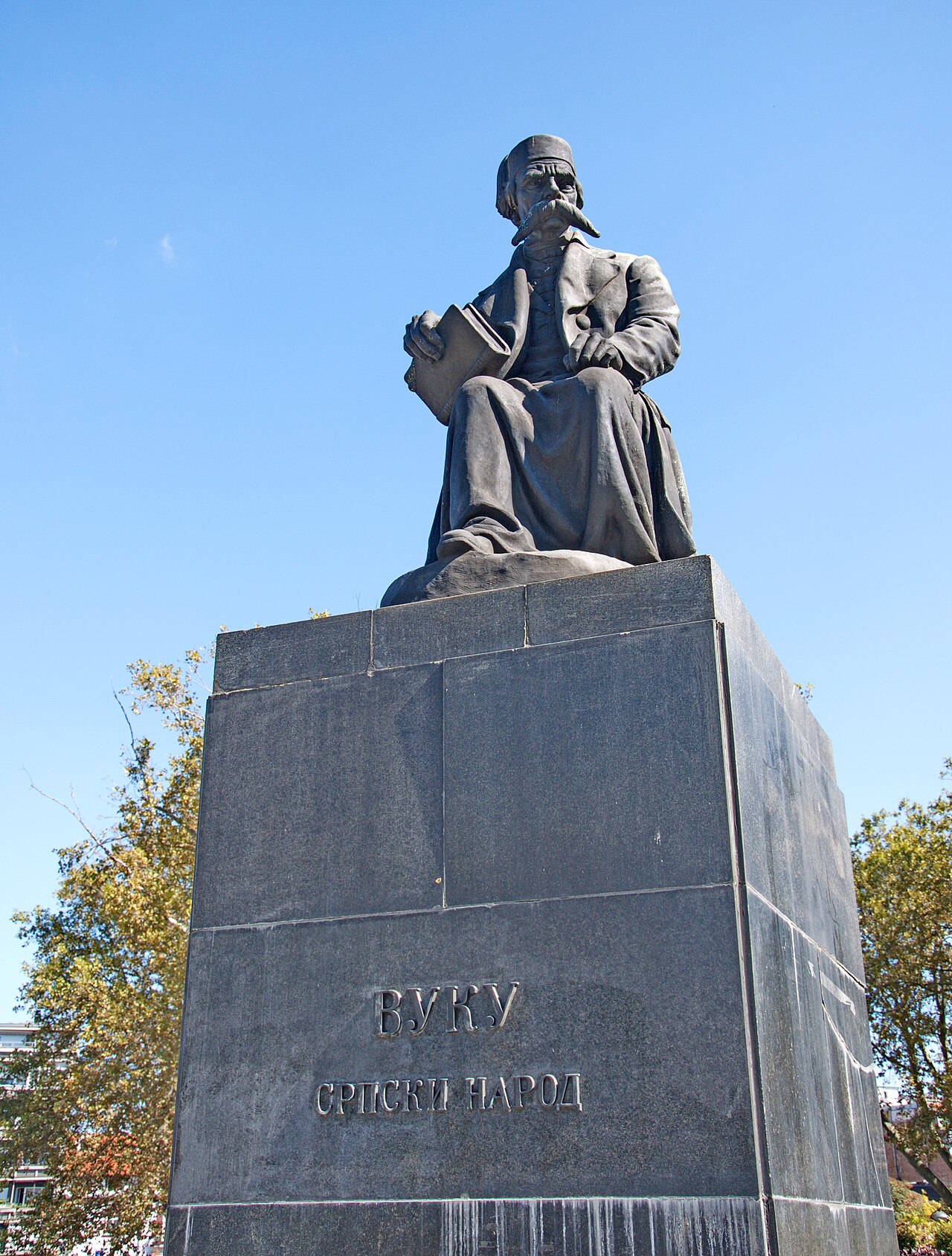
Споменик Вуку Караџићу
The Monument to Vuk Karadžić is a seated bronze memorial in Ćirilo i Metodije Park, at the meeting point of Ruzveltova, Bulevar kralja Aleksandra and Kraljice Marije. Its subject, Vuk Stefanović Karadžić, was a major reformer of Serbian language and Cyrillic writing. Sculptor Đorđe Jovanović created the work, which was ceremonially unveiled in 1937 to mark 150 years since Vuk’s birth. The park setting gives this literary memorial an everyday urban presence: it is encountered among trees, paths and city movement rather than inside a museum or ceremonial hall. Its location makes the monument a useful landmark for understanding how Belgrade places cultural memory within active neighbourhood life.
Checked 2026-09-02 · Source
There is no enclosed interior to tour; the monument itself is the focal point. The seated bronze figure holds a book in his right hand, a detail associated with enlightenment and learning. Walk around the sculpture to observe the posture, clothing and modelling from different angles. Ćirilo i Metodije Park supplies the immediate setting, with an asphalted main alley and benches mentioned in the city’s park description. The nearby junction also explains why this cultural landmark feels woven into ordinary Belgrade life rather than separated from it. The contrast between the still figure and the surrounding traffic is part of the site’s character.
Checked 2026-09-02 · Source
Plan roughly 15 to 25 minutes for the memorial itself: approach the sculpture, circle the seated figure, study the book and take photographs. If you want to use a bench or pause in the park, allow an additional 10 to 20 minutes. This is a compact stop that fits naturally between other Belgrade activities, especially when your route already passes Vukov spomenik. Readers interested in Serbian cultural history may stay longer to connect the monument’s subject with the surrounding neighbourhood and its busy public spaces. A short visit is enough for the sculpture, while a slower pause helps you notice its relationship with the park.
Checked 2026-09-02 · Source
Plan for daylight if you want to inspect the bronze surface, the book and the park surroundings comfortably. The location remains an active city junction, with traffic and pedestrians shaping the atmosphere. A morning or afternoon visit is useful for seeing the sculpture clearly and judging the approaches through the park; choose a quieter moment when you want more time for close observation. Bright daylight also makes it easier to distinguish the monument from the busy roads around Ćirilo i Metodije Park and to frame the figure without losing its urban context.
Checked 2026-09-02 · Source
The visit is an outdoor viewing experience centred on the monument in the park. There is no enclosed exhibition or scheduled presentation described for the sculpture, so the stop consists of approaching the seated bronze figure, looking closely at its details and taking in the surrounding public space. It works well as a spontaneous cultural pause during a walk through this part of Belgrade. The monument can be combined with time in Ćirilo i Metodije Park, where benches and the main alley extend the visit beyond the sculpture itself.
Checked 2026-09-02 · Source
The monument stands in Ćirilo i Metodije Park at the junction of Ruzveltova, Bulevar kralja Aleksandra and Kraljice Marije. Use the Vukov spomenik public-transport stop as your navigation reference. The City of Belgrade lists bus 6A serving Vukov spomenik, while the city transport authority lists bus 66 terminating there. From the stop, orient yourself by the three major roads and enter the park. Because this is a busy junction, build in time for safe crossings and follow pedestrian signals. The junction is a stronger landmark than the monument’s exact position within the greenery.
Checked 2026-09-02 · Source
Traffic is the main feature to manage: the memorial sits beside major roads, so noise, turning vehicles and crossings are part of the experience. Keep children close and use marked crossings. Give yourself room to stop without blocking park users or pedestrians approaching the junction.
Checked 2026-09-02 · Source
The outdoor setting offers clear opportunities to photograph the seated bronze figure from several sides. Include the book in Vuk’s right hand as a defining detail, then step back to place the monument against Ćirilo i Metodije Park and the surrounding road junction. Daylight helps reveal the sculpture’s surface and silhouette. Use the park paths and benches without blocking pedestrians, and keep away from the carriageway when seeking a wider composition. The junction’s movement can add useful urban context to a photograph. A closer frame emphasises Vuk’s expression and scholarly pose; a wider frame shows the memorial’s place in the city.
Checked 2026-09-02 · Source
It stands in Ćirilo i Metodije Park at the junction of Ruzveltova, Bulevar kralja Aleksandra and Kraljice Marije.
It commemorates Vuk Stefanović Karadžić, a major reformer of Serbian language and Cyrillic writing.
The sculptor was Đorđe Jovanović.
It was ceremonially unveiled in 1937, marking 150 years since Vuk Karadžić’s birth.
The seated bronze figure holds a book in his right hand, symbolising enlightenment and learning.
It commemorates Vuk Stefanović Karadžić, whose work shaped Serbian language and Cyrillic writing.
Loading the interactive map…
The interactive map could not be loaded.
Last updated:
Source: OpenStreetMap contributors, Wikidata ·