
2 min walk · Savski Venac
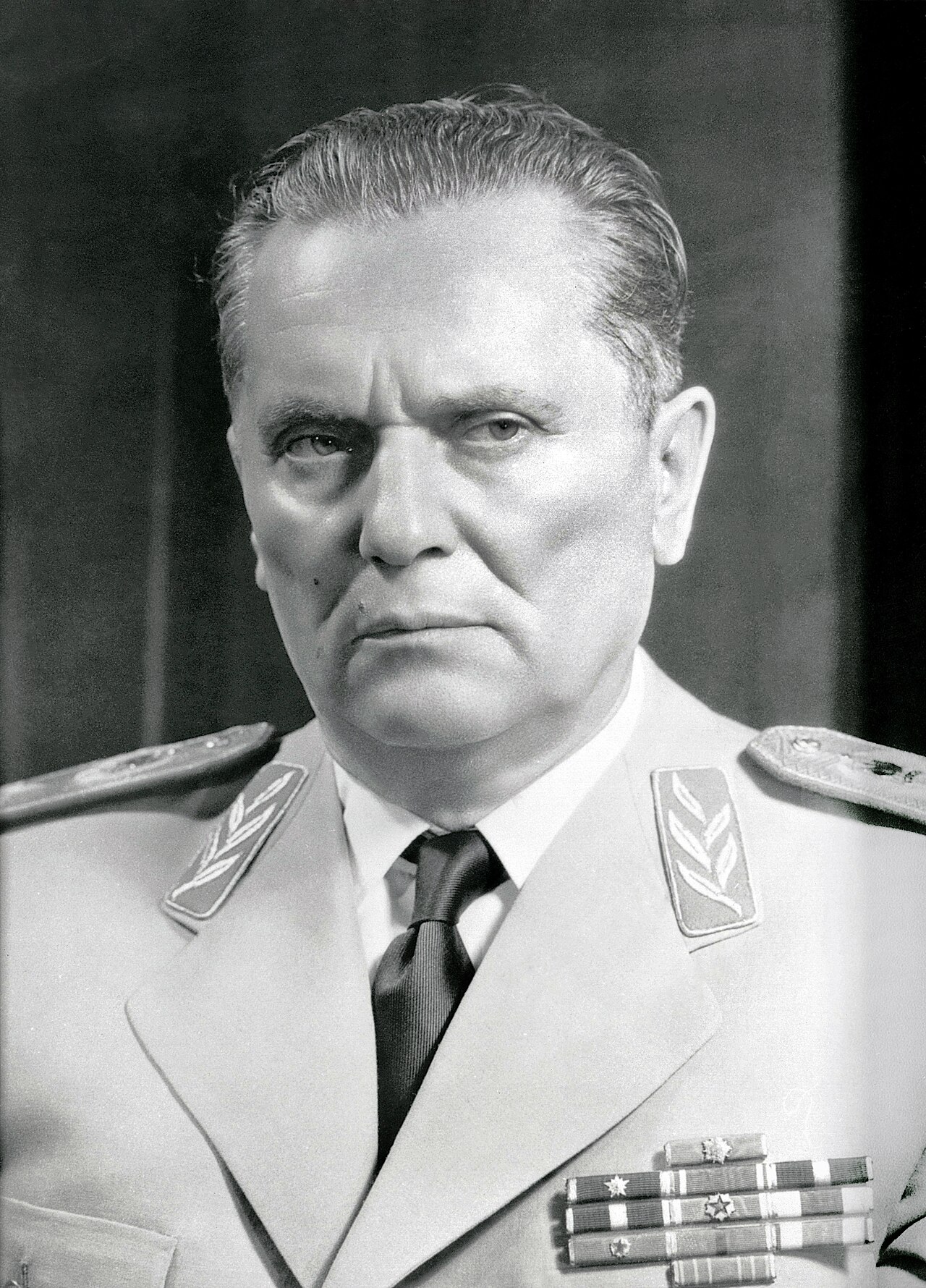
Josip Broz Tito
- High
- Historic monument
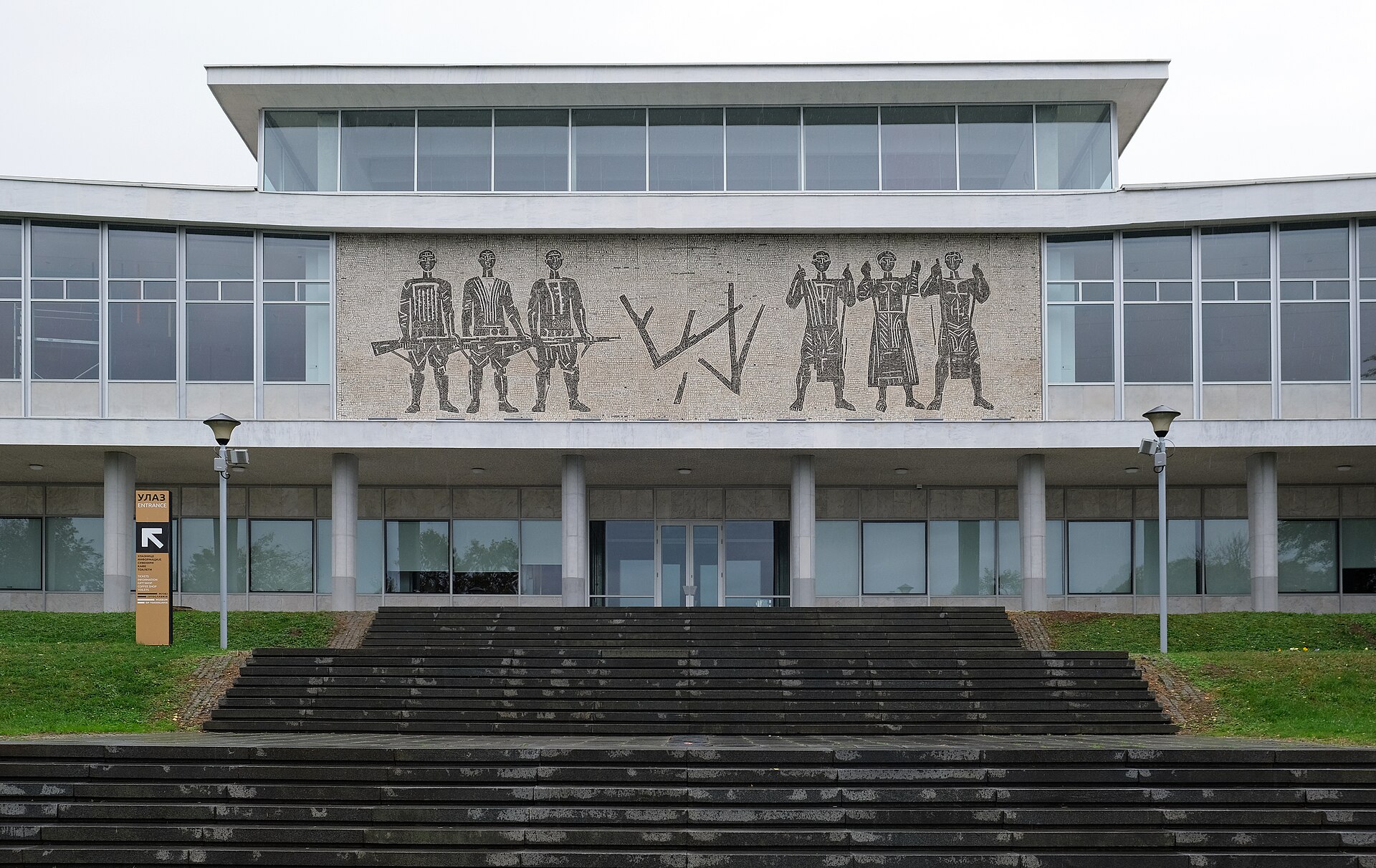
Museum · Savski Venac, Belgrade
Музеј Југославије
Closed today, Monday. Next open Tuesday at 10:00 — the planner will not place a stop here on a Monday.
Plan around it| Monday | Closed |
|---|---|
| Tuesday | 10:00 – 18:00 |
| Wednesday | 10:00 – 18:00 |
| Thursday | 10:00 – 18:00 |
| Friday | 10:00 – 18:00 |
| Saturday | 10:00 – 18:00 |
| Sunday | 10:00 – 18:00 |
Checked 2026-08-31 · Source
| Per person | RSD 800 |
|---|
Checked 2026-08-31 · Source
Read from the OpenStreetMap access tags; anything not listed has no tag recorded.
Set the group type to family in the planner and the day window contracts to about three quarters of a solo day.
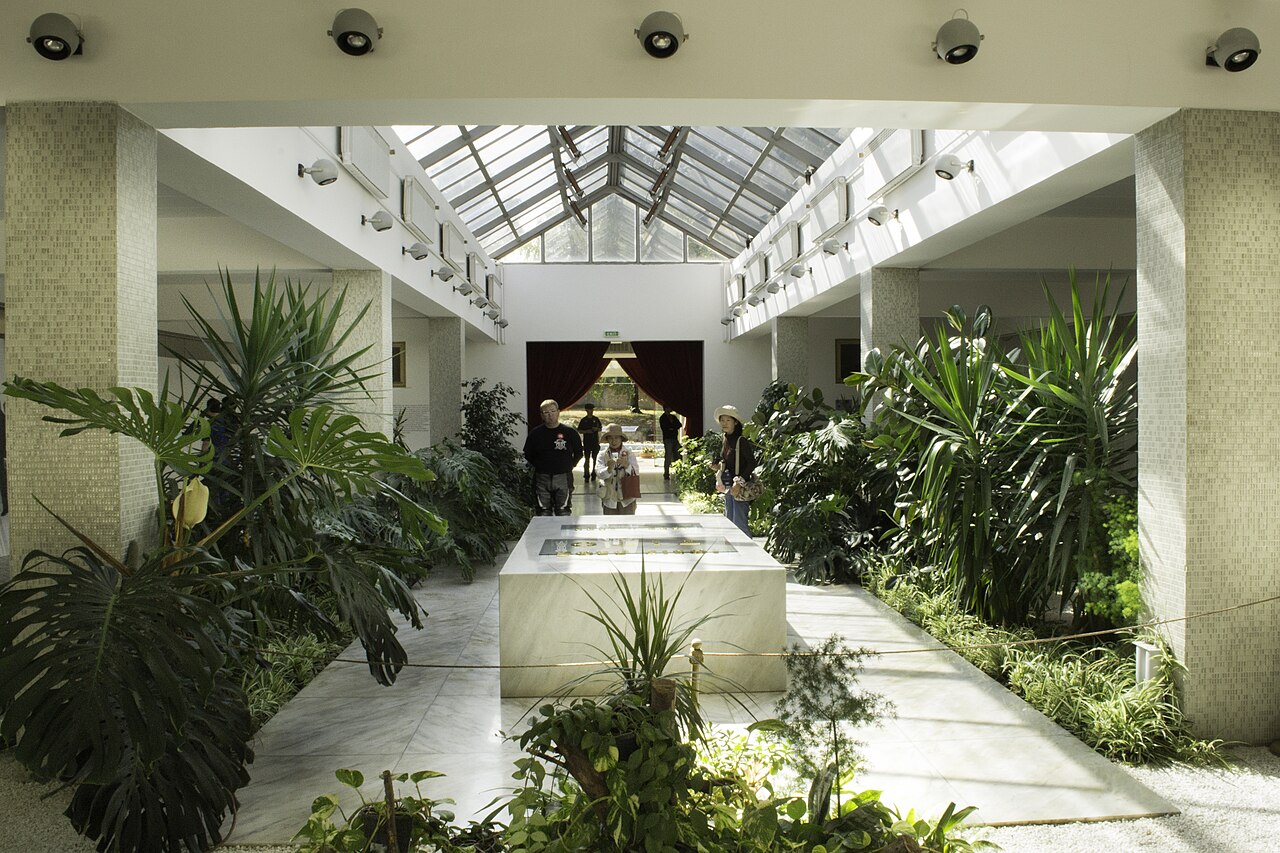
Museum of Yugoslav History is the former name of a Dedinje complex now officially called the Museum of Yugoslavia. Its identity is tied to three visitor buildings named on the museum map: the May 25 Museum, the Old Museum, and the House of Flowers. The last contains Josip Broz Tito’s tomb, making this both a historical museum and a memorial site. The collections approach Yugoslavia through objects connected with Tito’s public life, political legacy, and the country’s former civic culture. You are not entering a general Balkan history museum, but a complex organised around one state, its leader, and the memory built around them.
Checked 2026-09-02 · Source
The Old Museum and the May 25 Museum provide the exhibition context, while the House of Flowers is the memorial heart of the complex. A defining collection is the štafeta mladosti, or Youth Relay batons: thousands were sent by factories, schools, army units, and other groups across Yugoslavia for Tito’s official birthday ceremonies. In the House of Flowers, the tomb is accompanied by the desk and study associated with Tito. Temporary exhibitions add changing interpretations to the permanent material. The surrounding garden links the buildings and gives the complex its outdoor dimension.
Checked 2026-09-02 · Source
Allow about 90 minutes for a focused visit to the Old Museum and House of Flowers, with additional time if you want to examine the relay-baton displays closely or include a temporary exhibition. The batons reward patient viewing because their quantity and variety make the collection cumulative rather than dependent on one famous object. The House of Flowers is usually a shorter, quieter stop centred on the tomb, desk, and study before you continue into the garden. The recorded regular admission is RSD 800 per person.
Checked 2026-09-02 · Source
Tuesday to Sunday, 10:00–18:00, is the recorded visitor schedule; Monday is closed. Weekday mornings are useful if you prefer more time with the displays before organised groups build up later in the day. The indoor galleries make the museum workable in unsettled weather, although the garden is especially rewarding in spring and autumn. Leave time for the walk between buildings on the hillside. Regular Saturday guided tours begin at 11:00 in English and 12:00 in Serbian. Serbian Sign Language tours of the permanent exhibition can be arranged by email with the museum.
Checked 2026-09-02 · Source
The recorded regular admission is RSD 800 per person for the museum visit. The museum’s visitor information identifies free-admission occasions for individual visitors: the first Thursday of each month, Serbian national public holidays, and 4 and 25 May. Children under 10 are admitted free. Treat the ticket as access to a connected complex rather than a single compact gallery, because the route joins exhibition buildings, the House of Flowers, and the garden. Temporary exhibitions or special programmes may shape what is open within the complex.
Checked 2026-09-02 · Source
The museum is in Dedinje on Bulevar mira, south of central Belgrade, at Mihaila Mike Jankovića 6. It is outside a comfortable walk from Republic Square. Public transport reaches stops near the gate; during the temporary arrangement recorded on 31 August 2026, trolleybus line 40 was designated 40L through 4 September. Use the named Muzej Jugoslavije stop, numbered 275 or 276 according to direction. A taxi from Stari Grad takes about 15 minutes in ordinary traffic. The hillside setting means the final approach may involve slopes or steps.
Checked 2026-09-02 · Source
This is a hillside memorial complex, not a single-level museum hall. Expect outdoor movement between the May 25 Museum, the Old Museum, and the House of Flowers, with steps or uneven access possible along the route. Step-free access is recorded as limited and explicitly associated with the May 25 Museum rather than every building. The House of Flowers is a mausoleum containing Tito’s tomb, so visitors should expect a quieter atmosphere there than in the exhibition rooms. Programmes for people with disabilities are available on request.
Checked 2026-09-02 · Source
For photography, the relay-baton displays offer strong detail subjects: isolate individual batons, inscriptions, colours, or repeated motifs instead of trying to capture an entire densely packed case in one frame. Outside, the garden terraces create views across the hillside, with the House of Flowers roofline framed by Dedinje’s trees. Late afternoon gives softer light for exterior views. The House of Flowers is a memorial space, so keep the atmosphere in mind while photographing near the tomb and follow any posted museum restrictions. The contrast between ceremonial interiors and open terraces is the complex’s most distinctive visual pairing.
Checked 2026-09-02 · Source
The visitor map names the May 25 Museum, the Old Museum, and the House of Flowers.
Yes. Tito’s tomb is in the House of Flowers within the museum complex.
No. The institution changed its concept and official name to Museum of Yugoslavia in 2016.
Regular Saturday tours begin at 11:00 in English and 12:00 in Serbian.
Individual admission is free on the first Thursday of each month, on Serbian national public holidays, and on 4 and 25 May.
Children under 10 receive free admission.
Loading the interactive map…
The interactive map could not be loaded.
Last updated:
Source: OpenStreetMap contributors, Wikidata ·