
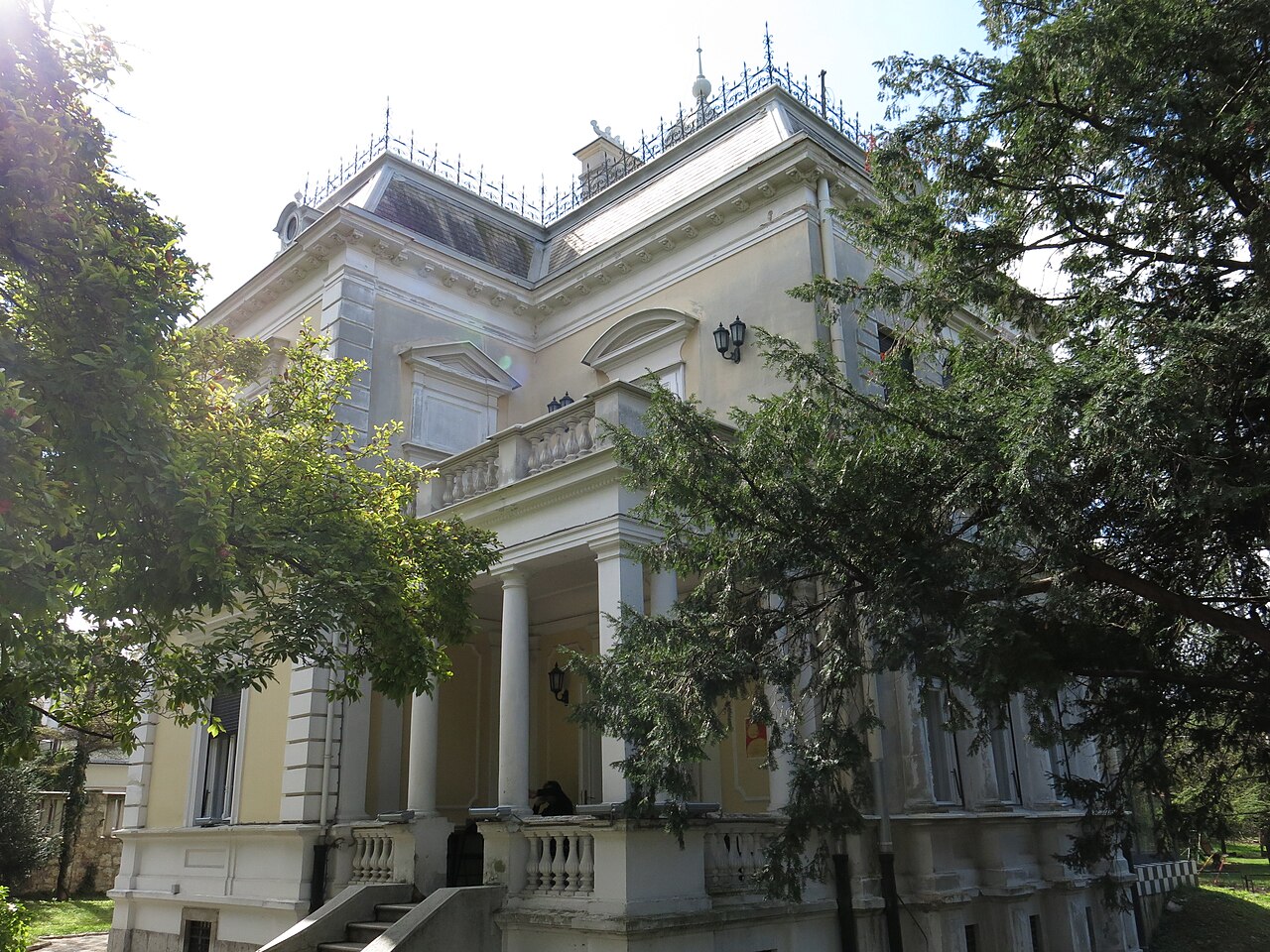
5 min walk · Savski Venac
House of King Peter I of Serbia
- High · Heritage site
- Museum
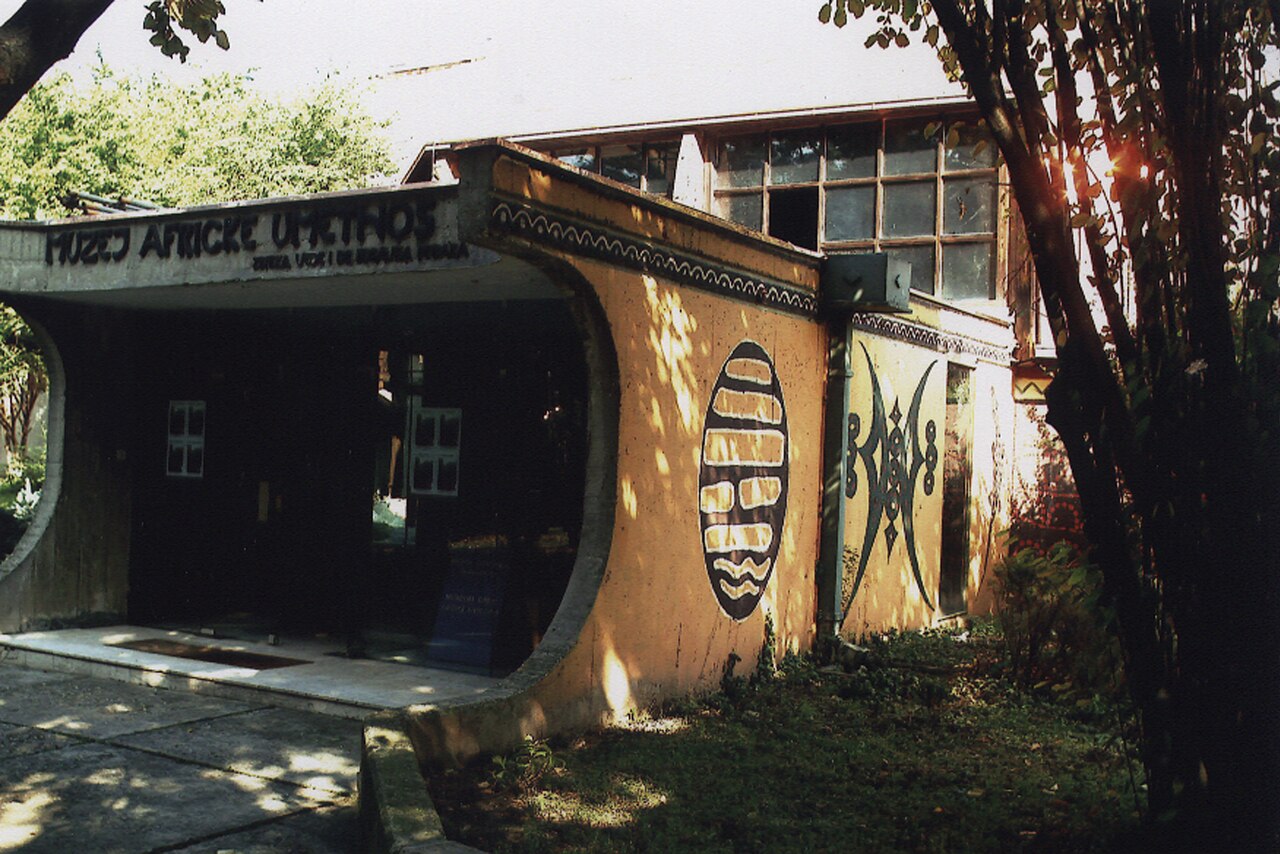
Museum · Savski Venac, Belgrade
Музеј афричке уметности
| Monday | 10:00 – 18:00 |
|---|---|
| Tuesday | 10:00 – 18:00 |
| Wednesday | 10:00 – 18:00 |
| Thursday | 10:00 – 18:00 |
| Friday | 10:00 – 18:00 |
| Saturday | 10:00 – 18:00 |
| Sunday | 10:00 – 18:00 |
Checked 2026-08-31 · Source
| Per person | RSD 300 |
|---|
Checked 2026-08-31 · Source
Read from the OpenStreetMap access tags; anything not listed has no tag recorded.
Set the group type to family in the planner and the day window contracts to about three quarters of a solo day.
The Museum of African Art occupies a villa at Andre Nikolića 14 in Senjak, on Topčider Hill, and is devoted entirely to African cultures and arts. It opened to the public in 1977 under the patronage of the Assembly of the City of Belgrade. The museum describes itself as the first and only institution in the region dedicated wholly to this subject. Its founding collection came from diplomat Zdravko Pečar and Veda Zagorac, whose years in West and Central Africa shaped the museum’s character. This history gives the visit a distinctly personal starting point: the collection was assembled through lived contact with African societies, then entrusted to Belgrade.
Checked 2026-09-02 · Source
The permanent display presents traditional arts from West African societies, with objects arranged by material and geographic provenance. Expect masks, wooden sculpture, textiles, musical instruments and everyday objects, alongside forms connected with ritual and community life. Represented cultures include the Bambara, Dogon, Marka, Malinke, Mosi, Bobo, Kissi, Baga, Dan, Gere, Senoufo, Baule and Ashanti. The collection forms part of several thousand traditional-art objects from countries across West, Central and East Africa. Looking at the objects by material helps visitors compare carving, weaving and other techniques across different communities instead of treating each object as an isolated curiosity.
Checked 2026-09-02 · Source
Allow about 45 minutes to one hour for the permanent display if you want time to look closely at the objects and follow their cultural and material context. The museum is compact enough for a focused visit, but the range of masks, figures, textiles and instruments rewards unhurried attention. Visitors who use the permanent-display audio guide may wish to allow extra time, especially when listening in Serbian, English, French or Italian. The guide can also be used online, making it possible to continue exploring the collection after leaving the galleries. A slower visit is worthwhile for first-time visitors unfamiliar with the objects’ functions.
Checked 2026-09-02 · Source
Because the displays are indoors, the museum is a practical stop in hot, cold or wet weather. Its Senjak setting also makes it useful as part of a south-west Belgrade day, although the residential street and hilltop location mean the journey is less direct than to central museums. Arriving earlier in the day leaves more flexibility for the permanent display and the audio guide, while the consistent daily schedule makes planning straightforward.
Checked 2026-09-02 · Source
General individual admission is 300 RSD per person. The recorded operator information gives this as the current entrance charge, so budget for a paid museum visit rather than expecting free entry. The museum’s permanent-display audio guide is available in Serbian, English, French and Italian, and can be used on site or online. The institution calls itself the first and only museum in the region devoted entirely to African cultures and arts. Visitors interested in a more guided interpretation should allow time to ask museum staff about available explanations, since the audio guide provides a particularly useful way to add context to the objects.
Checked 2026-09-02 · Source
The museum is at Andre Nikolića 14 on Topčider Hill in Senjak, south-west of central Belgrade. Bus 44 runs from Dunav stanica along Kneza Miloša Street; the supplied operator directions say to get off at the first stop after the Topčider roundabout, close to the museum. There is no metro in Belgrade. The address is on a residential hill street rather than directly beside a major tram or bus corridor, so allow time for the final approach. The route is best treated as a short onward walk from the bus stop, with the hilltop setting forming part of the museum’s quieter atmosphere.
Checked 2026-09-02 · Source
Visitors with visual impairments can use guiding paths, and tactile objects have audio descriptions and Braille labels. If these features are important to your visit, note the hilltop setting and check the route’s practical suitability before travelling. The museum is a villa-style venue, so access conditions may vary between spaces. The tactile objects are part of the museum’s interpretive approach, not merely a substitute for visual display, and can make the collection more accessible to visitors who want to understand form through touch and sound.
Checked 2026-09-02 · Source
The most useful visual focus is the relationship between material, shape and use: carved masks, wooden figures, textiles and instruments are presented as parts of traditional artistic cultures rather than isolated decorative objects. Take time with the arrangement by material and geographic provenance, and follow the permanent-display audio guide where a deeper interpretation is helpful. The displays are especially suited to attentive looking at texture and construction, so photography should remain secondary to reading the object information and respecting any instruction given by museum staff.
Checked 2026-09-02 · Source
It describes itself as the first and only museum in the region devoted entirely to the cultures and arts of Africa.
The museum opened to the public in 1977 under the patronage of the Assembly of the City of Belgrade.
It presents traditional arts from West African societies, with objects organized by material and geographic provenance.
Represented cultures include the Bambara, Dogon, Marka, Malinke, Mosi, Bobo, Kissi, Baga, Dan, Gere, Senoufo, Baule and Ashanti.
The permanent-display audio guide is available in Serbian, English, French and Italian and can be used in the museum or online.
The collection contains several thousand traditional-art objects from countries in West, Central and East Africa.
Loading the interactive map…
The interactive map could not be loaded.
Last updated:
Source: OpenStreetMap contributors, Wikidata ·