
2 min walk · Vračar
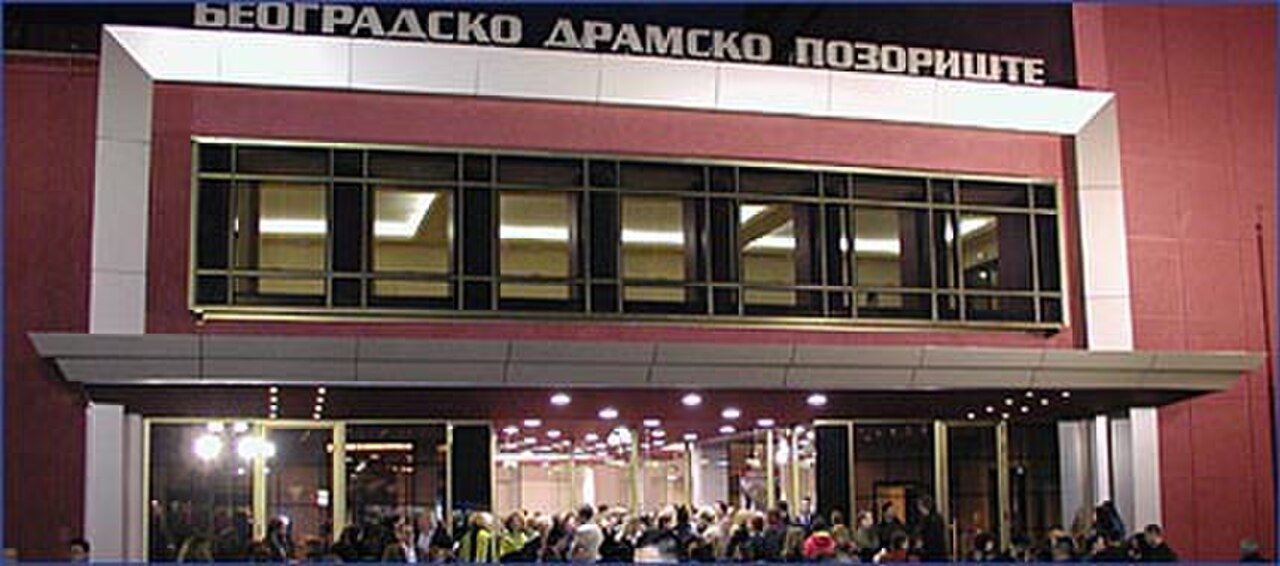
Belgrade Drama Theatre
- High
- Art and culture venue
Language · 11 published
Historic monument · Vračar, Belgrade
Возарев крст
Reviewed by Elena Voss · Roavina Travel Editor

This place is a Memorial. It was established in 1847. It carries the Monument of Culture heritage designation.
Vozarev Cross is a compact red artificial-stone monument set in a small urban park at the junction of Mileševska Street and Vojvode Šupljikca Street in Belgrade’s Vračar area. Its identity is closely tied to Crveni Krst, the surrounding neighbourhood whose name means Red Cross. The site is significant because it preserves a local landmark associated with Gligorije Vozarević and with the way a single monument shaped neighbourhood identity. It is an outdoor place encountered directly from the park, not an enclosed attraction with a reception desk or controlled visitor route. The cross is best understood as a piece of neighbourhood history embedded in an everyday city setting.
Checked 2026-09-02 · Source
The principal object is the cross itself, viewed from the surrounding public park. The original wooden cross was erected in 1847 by Gligorije Vozarević, a bookseller and printer, and was decorated with icons of the Holy Trinity and Saint George. After the wooden structure was damaged, it was replaced in 1933 by a cross made of red artificial stone. That replacement explains the name Crveni Krst. There are no indoor rooms, galleries, interpretation displays, café or separate collection at this small site; its interest lies in the monument’s history, material change and local setting. The change from painted wood to red artificial stone gives the landmark a visible historical story even during a short visit.
Checked 2026-09-02 · Source
Allow around 10 to 20 minutes for a focused stop at Vozarev Cross. The monument is small and outdoors, so the visit centres on reaching the park, viewing the cross from the available public-space approaches and taking in its connection with Vračar’s street pattern. Travellers interested in local history may pause longer to consider the 1847 origin, the 1933 replacement and the neighbourhood name. The cross works well as one short waypoint in a wider walk through Vračar rather than as a standalone half-day attraction. Extra time is useful for comparing a close view of the monument with the wider streetscape around the junction.
Checked 2026-09-02 · Source
No operator or responsible public-body opening schedule is recorded for Vozarev Cross. The cross stands outdoors in public park space, so this is best treated as a location-based landmark rather than a staffed venue with published sessions. Daylight is the practical choice for reading the form and seeing the red artificial stone clearly. Morning or late afternoon can make the small park setting easier to appreciate, while the surrounding streets remain part of an active urban neighbourhood. Plan the stop alongside other Vračar destinations according to your route. The character of the visit comes from seeing the monument in its local context, not from attending a scheduled programme.
Checked 2026-09-02 · Source
No operator or responsible public-body admission price is recorded for Vozarev Cross. Treat it as a brief landmark stop and bring any personal essentials needed for an outdoor visit. This practical description does not assign a free-admission tariff, because the available responsible-public-body information identifies the cross and its setting but does not publish a price or admission policy. It is therefore unsuitable for a ticketed-attraction budget calculation.
Checked 2026-09-02 · Source
Vozarev Cross stands in the park between Mileševska Street and Vojvode Šupljikca Street in Vračar. The City of Belgrade identifies Crveni krst Square as the terminus and turning point of bus line 83. A practical approach is to leave the bus at Crveni krst and walk towards the park, using the two intersecting streets as the final navigation reference. The landmark is not an indoor venue with a marked entrance, so orient yourself by the park and junction rather than by a reception building or gate. This approach makes the cross easy to combine with a neighbourhood walk through Vračar.
Checked 2026-09-02 · Source
The main practical limitation is the setting: a small outdoor monument in an urban park, without identified dedicated visitor facilities or tactile access features. Visitors should allow for ordinary park surfaces, kerbs and nearby street activity at the Mileševska–Vojvode Šupljikca junction. Keep the cross unobstructed, do not climb it, and respect pedestrians using the park. The monument’s small scale also means that careful observation of its material and position matters more than expecting a large attraction. Visitors who need fully step-free movement should treat access as limited, because the available descriptions do not identify tactile features or a purpose-built accessible route.
Checked 2026-09-02 · Source
Photography is best approached as a record of the monument and its neighbourhood setting. A close view can show the red artificial-stone material, while a wider frame can place Vozarev Cross between Mileševska Street and Vojvode Šupljikca Street and reveal the small park around it. Use daylight to separate the cross from the surrounding streetscape. A portrait and a contextual view are enough to document the stop well. Keep cameras or tripods clear of paths, avoid blocking park users, and do not climb the monument for a higher angle. The contrast between the red stone and ordinary Vračar surroundings is the most place-specific visual subject.
Checked 2026-09-02 · Source
The original Vozarev Cross was erected in 1847.
The original cross was erected by Gligorije Vozarević, a bookseller and printer.
The original wooden cross was decorated with icons of the Holy Trinity and Saint George.
The damaged wooden cross was replaced in 1933 by a cross made of red artificial stone.
The neighbourhood took its name from the red cross installed in 1933.
Yes. Vozarev Cross was designated a cultural monument in 1987.
Loading the interactive map…
The interactive map could not be loaded.

Last updated:
Source: OpenStreetMap contributors, Wikidata ·