

4 min walk
Raohe Night Market
- Must see
- Market
Language · 11 published
Place of worship · Taipei
松山慈祐宮
Reviewed by Elena Voss · Roavina Travel Editor
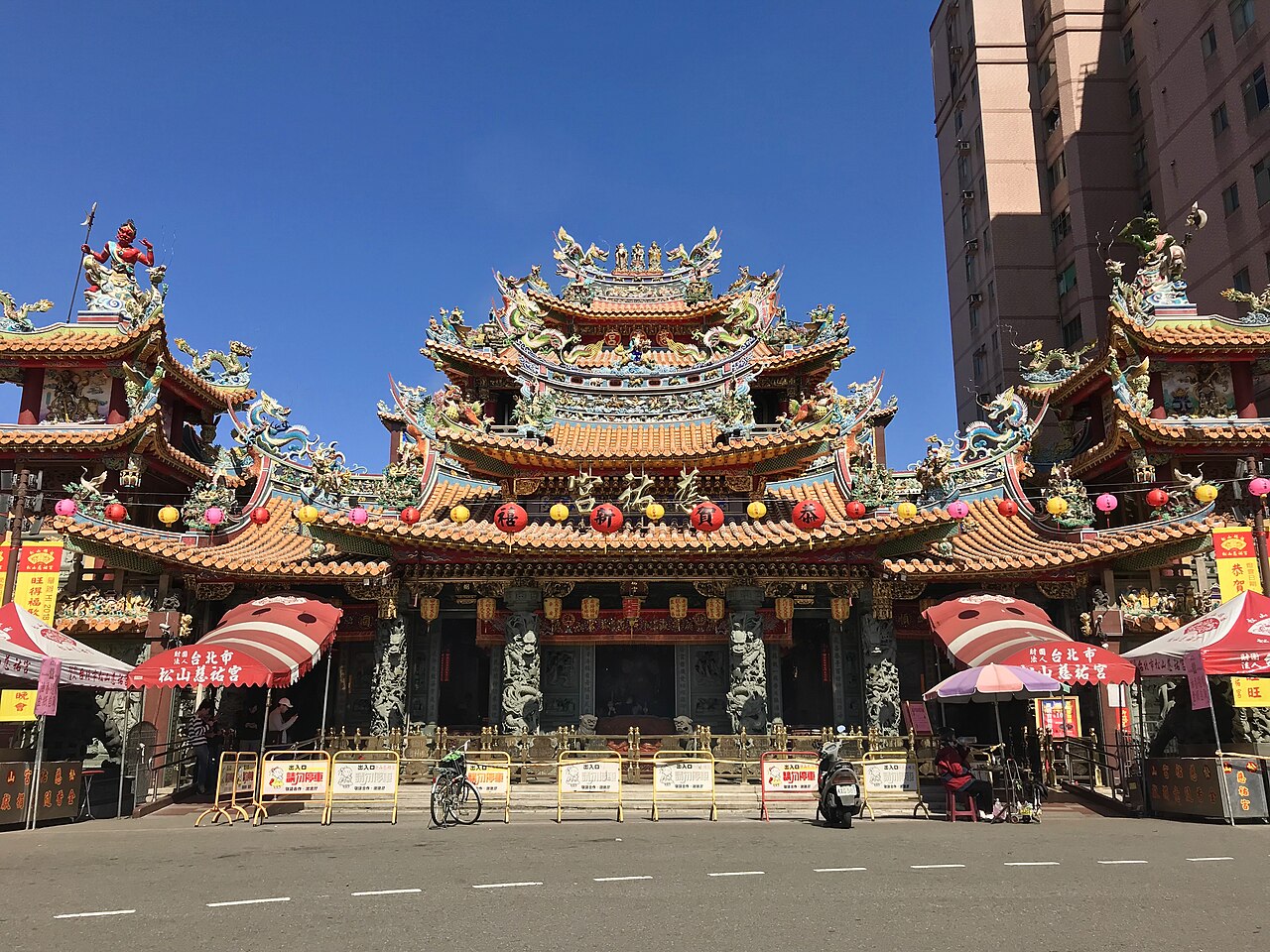
This place is a Place of worship. It was established in 1753.
Songshan Ciyou Temple, known locally as 松山慈祐宮, is an important religious site in Taipei’s Songshan district. Dedicated to Mazu, the sea goddess widely venerated in Taiwan, it offers travelers a close view of living temple culture within the urban cityscape. The visit is especially rewarding for people interested in worship, traditional architecture, decorative craft and the relationship between a neighborhood and its religious institution. Songshan Ciyou Temple, known locally as 松山慈祐宮, is a significant religious site in Taipei's Songshan district. The temple holds established standing in the city's official attraction inventory, confirming its relevance to visitors exploring Taipei. Dedicated to Mazu, the sea goddess widely venerated across Taiwan and coastal Chinese communities, the temple represents an enduring spiritual and cultural institution. Its documented presence in municipal records underscores its role as a meaningful destination for those seeking to understand local religious practice and community heritage within the urban fabric of Taiwan's capital. Yes, the temple is retained in the official city attraction inventory accessible through the primary tourism portal.
Checked 2026-08-26 · Source
The temple follows a traditional Taiwanese layout, with ornate decoration, carved wooden elements, painted surfaces and ceremonial objects supporting worship. The main hall centers on Mazu, with attendant deities arranged through the temple’s layered spaces. Incense burners, roof figures and ceramic details reward slow observation. Moving from outer courtyard through successive halls reveals changing views of the architecture, while the active devotional setting gives the visit a strong sense of place. The interior of Songshan Ciyou Temple follows traditional Taiwanese temple architecture, featuring ornate decorative elements characteristic of Mazu temples. Visitors encounter elaborately carved wooden structures, painted ceiling panels, and ceremonial implements used in religious observance. The main hall centers on the Mazu icon, surrounded by attendant deities in hierarchical arrangement. Incense burners receive continuous offerings from worshippers. Decorative roof figures and ceramic adornments exemplify craft traditions.
Checked 2026-08-26 · Source
Allow thirty minutes to one hour for a focused visit. That is enough time to make a circuit, study the carvings and roof decoration, and observe the temple’s atmosphere without rushing. Add time if you want to watch worship activity or read inscriptions closely. The compact site combines well with a longer walk through Songshan, turning a short temple stop into part of a half-day neighborhood exploration.
Checked 2026-08-26 · Source
Early morning and late afternoon can suit visitors who want to observe devotional activity in a more atmospheric setting. Weekends and major Mazu occasions can be busier, with more movement around the temple. Taipei’s hot, humid summers make shaded pauses valuable, while mild winters are comfortable for combining the temple with nearby streets. Visit with the expectation of encountering ordinary religious life, not a quiet exhibition arranged solely for tourists.
Checked 2026-08-26 · Source
The temple functions as a religious institution, so a normal visit is approached as entry for worship and cultural observation rather than as a museum ticket purchase. Voluntary donations may support maintenance and charitable activity. Carrying modest cash is useful if you wish to contribute, but the focus of the visit is the temple itself, its decoration and its devotional atmosphere. Any special activity should be treated separately from an ordinary walk-through visit.
Checked 2026-08-26 · Source
Songshan Ciyou Temple lies in Taipei’s Songshan district and connects naturally with the city’s MRT, bus, taxi and ride-hailing network. Songshan station on the Green Line provides access to the district, while the Songshan Airport station on the Wenhu Line offers another nearby connection. The urban setting makes a walking approach practical once you reach the neighborhood. Combine the temple with surrounding streets for a fuller sense of Songshan.
Checked 2026-08-26 · Source
Songshan Ciyou Temple is an active place of worship, so keep clear of offerings, queues and people engaged in prayer. Incense smoke may be noticeable, especially near burners. Wear clothing that covers shoulders and knees as a considerate choice. Festivals can make the site crowded, and surrounding city traffic requires attention when crossing streets. Courtyards may provide limited protection from sun and rain, so plan your comfort for outdoor movement.
Checked 2026-08-26 · Source
The temple offers rich subjects in its roof silhouettes, carved brackets, painted surfaces, ceramic ornaments and layered courtyards. Exterior views place the ornate architecture against Songshan’s urban setting. Indoors, keep a respectful distance from worshippers and devotional images, and avoid flash where it could disturb prayer. A compact camera is easier to use in busy halls. Photograph slowly and discreetly, allowing the religious activity to remain the priority.
Checked 2026-08-26 · Source
The temple is dedicated to Mazu, a sea goddess widely venerated across Taiwan.
Allow thirty minutes to one hour for a focused visit, or longer when combining it with Songshan walks.
Songshan station on Taipei’s Green Line provides access to the surrounding district.
Look for carved wood, painted surfaces, roof figures, ceramic ornaments and the temple’s progression of courtyards and halls.
Yes. Incense burners are part of the worship environment, and smoke may be noticeable near them.
Keep distance from worshippers, avoid disturbing prayer, use restraint indoors and treat devotional activity as the priority.
Loading the interactive map…
The interactive map could not be loaded.
Last updated:
Source: OpenStreetMap contributors, Wikidata ·