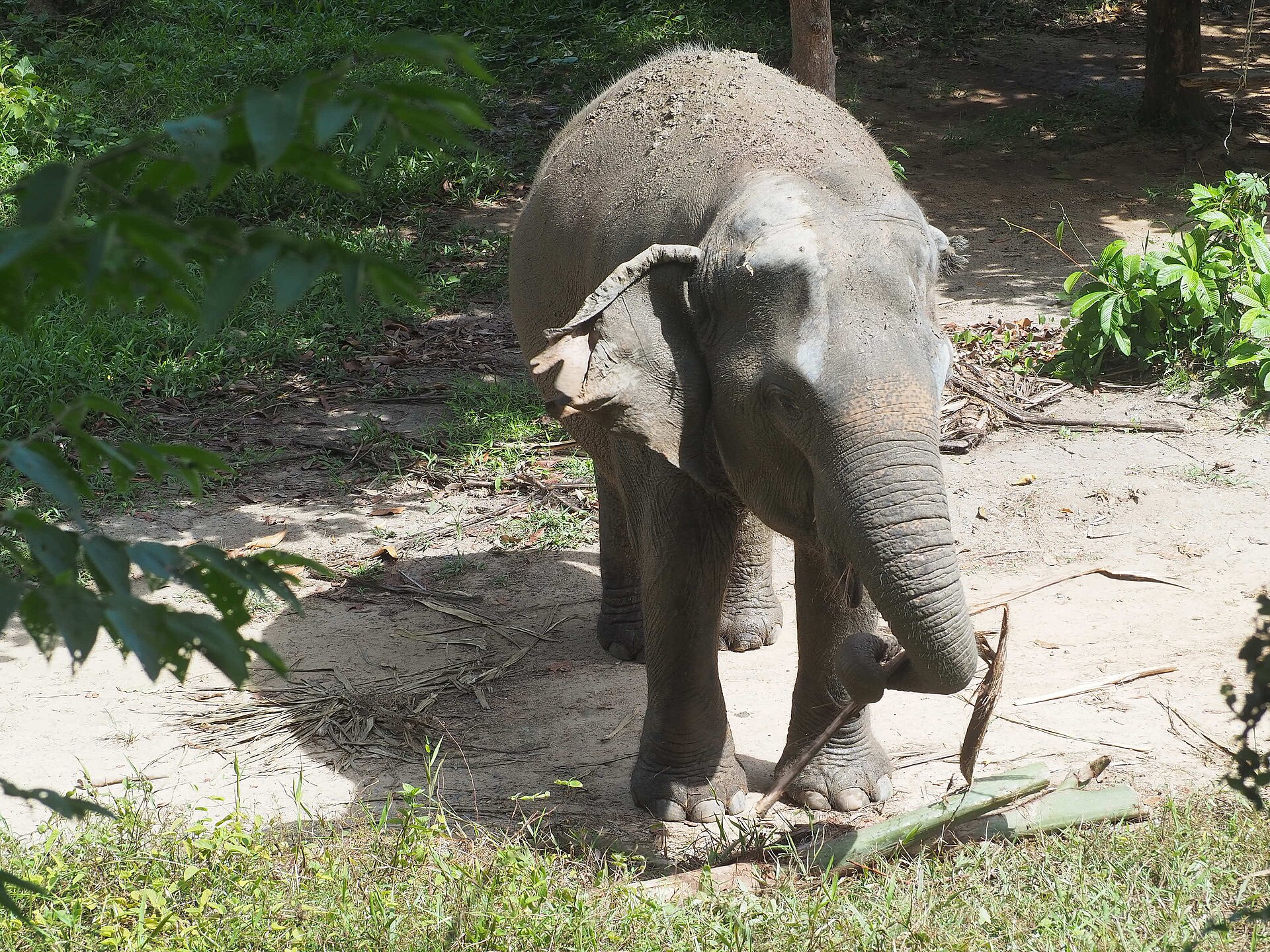
25 min walk
Phuket Elephant Sanctuary
- Must see
- Family attraction

Family attraction · Phuket
| Per person | THB 1,100.00 |
|---|
Checked 2026-08-31 · Source
Read from the OpenStreetMap access tags; anything not listed has no tag recorded.
Set the group type to family in the planner and the day window contracts to about three quarters of a solo day.
The Gibbon Rehabilitation Project is a conservation initiative in Phuket that rescues gibbons affected by illegal pet keeping and exploitation in tourism. Its work centres on rehabilitation, restoring natural behaviour and, where suitable, returning animals to protected forest habitats. The project also gives visitors an educational view of gibbon biology, the threats facing wild populations and responsible wildlife tourism. The visit is about conservation and animal welfare rather than close encounters or performances. The Gibbon Rehabilitation Project is a conservation initiative located in Phuket, Thailand, dedicated to rescuing and rehabilitating gibbons that have been illegally kept as pets or exploited in the tourism industry. The project works to restore these primates to natural wild behaviors with the ultimate goal of releasing them back into protected forest habitats. It serves as an educational facility where visitors can learn about gibbon conservation, the threats facing wild populations, and responsible wildlife tourism practices in Thailand and Southeast Asia. No. Direct human contact is intentionally minimized to preserve wild behaviors essential for successful rehabilitation and release. This policy distinguishes ethical conservation facilities from exploitative attractions.
Checked 2026-08-26 · Source
Visitors move through a conservation setting with gibbon enclosures at different stages of rehabilitation. Some animals receive medical care, while others practise survival skills in semi-wild conditions. Educational displays cover gibbon biology, behaviour and the illegal pet trade. Viewing takes place from designated areas, and human contact is kept to a minimum so the animals can retain behaviours needed for rehabilitation. The project’s interpretation connects what visitors see with wider conservation challenges in Thailand and Southeast Asia. The facility typically includes enclosures for gibbons at various stages of rehabilitation, from those undergoing medical treatment to individuals practicing survival skills in semi-wild conditions. Educational displays explain gibbon biology, behavior, and the illegal pet trade.
Checked 2026-08-26 · Source
Most visitors need about one to two hours. That gives enough time to observe the enclosures, read the educational material and speak with staff or volunteers about the project’s conservation work. Visitors with a strong interest in primatology or rehabilitation may want longer to absorb the displays carefully. The facility is compact, so the visit does not depend on covering a large site. It fits well into a Phuket day built around wildlife, forest and conservation experiences.
Checked 2026-08-26 · Source
Morning is a useful time for wildlife observation because tropical heat is lower and gibbons may be more active before midday. Phuket’s rainy season, roughly May to October, can bring sudden rain and less comfortable conditions around a forested site. Leave enough flexibility for the weather and the pace of reading and observation. The project’s conservation work takes priority over a visitor timetable, so the best experience is a quiet one that gives attention to the animals and interpretation.
Checked 2026-08-26 · Source
Bring Thai baht because conservation facilities may rely on cash for contributions or entry. Donations support practical work such as food, veterinary care and enclosure maintenance. Treat any guided activity as part of the project’s conservation context, with animal welfare taking precedence over entertainment. The meaningful cost of the visit is support for ethical rehabilitation.
Checked 2026-08-26 · Source
The project is in a forested part of Phuket rather than in the island’s main resort centres. A motorbike or car gives independent travellers flexibility, while hired transport from Phuket Town or west-coast areas can reach the site. Tuk-tuks and songthaew trucks may be arranged for hire, with the return journey planned at the same time. Accommodation providers and organised tours can also help with transport. GPS navigation is useful where rural roads and signage are less direct.
Checked 2026-08-26 · Source
Stay behind barriers, follow staff instructions and never feed or touch the gibbons. Direct contact interferes with the wild behaviours the project is trying to restore. Flash photography can disturb primates, and some viewing areas may impose further restrictions. Wear practical clothing for tropical forest conditions, protect yourself from sun and insects, and prepare for sudden rain. The ethical choice extends beyond this site: avoid attractions offering gibbon photographs, handling or performances, since those activities can support exploitation.
Checked 2026-08-26 · Source
Photograph from designated viewing areas and give the animals plenty of space. A telephoto lens is more appropriate than approaching an enclosure, and flash should not be used because it can distress gibbons. Forest vegetation creates natural green backgrounds, with softer light often found in the morning beneath the canopy. Do not make sounds or gestures to attract attention. Animal welfare matters more than a photograph, and staff instructions take priority wherever photography is restricted.
Checked 2026-08-26 · Source
No. Human contact is kept to a minimum to protect the natural behaviours needed for rehabilitation and possible release.
No. Some animals have lasting physical or psychological damage and need lifelong care instead of release.
The project focuses on rehabilitation, education and animal welfare, without direct-contact photo opportunities or performances.
Most visitors spend about one to two hours reading the displays, viewing the gibbons and discussing conservation work.
Do not touch, feed or deliberately attract the gibbons, and do not use flash where it could disturb the animals.
It aims to rehabilitate rescued gibbons and return suitable animals to protected forest habitats while educating visitors about wildlife exploitation.
Loading the interactive map…
The interactive map could not be loaded.

Last updated:
Source: OpenStreetMap contributors ·