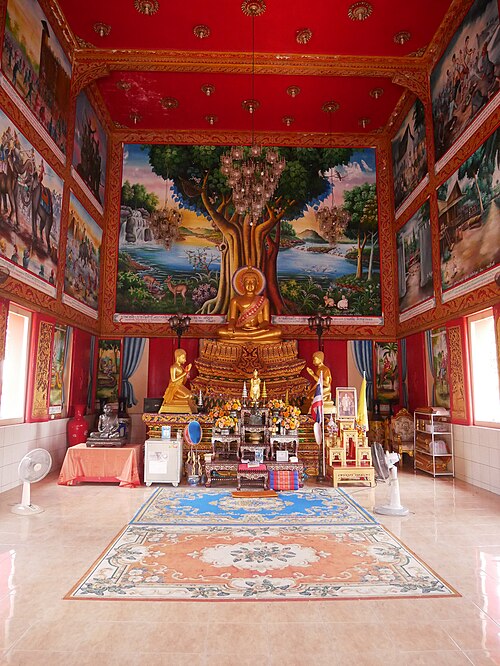
Old Phuket Town
เมืองเก่าภูเก็ต
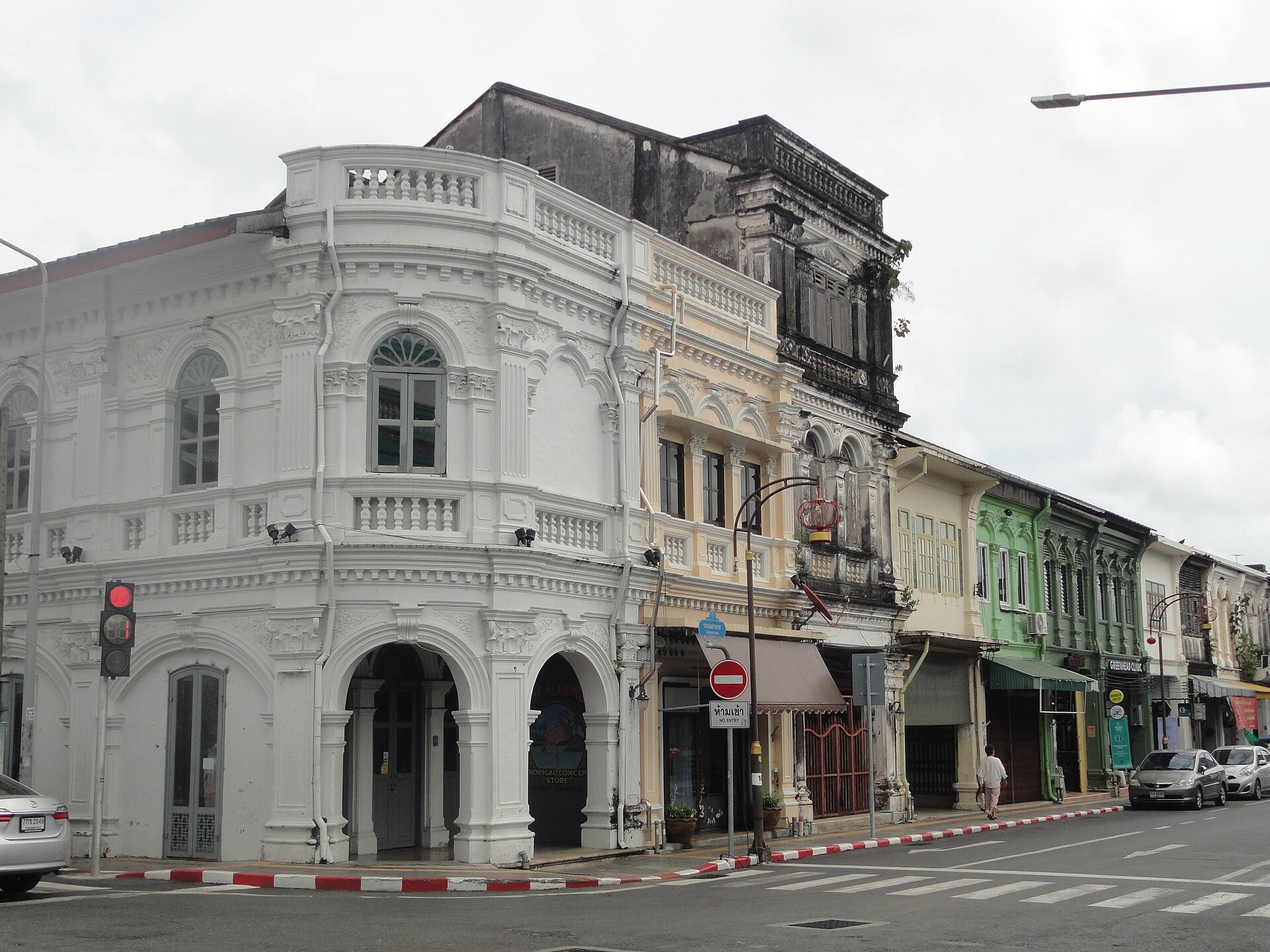
Old Phuket Town is Phuket's historic commercial quarter, where streets of Sino-European row houses show the island's trading and tin-mining past.
- Must see
- Historic monument
Language · 11 published
City guide · Thailand
Phuket is an island province rather than a single compact resort. Phuket Old Town sits inland on the southeast, major west-coast beaches form separate centres, and viewpoints, temples and marinas are spread across the island. Plan by coast and district: combine nearby beaches, reserve another block for the old town, and avoid repeated cross-island journeys through congested roads.
Reviewed by Elena Voss · Roavina Travel Editor
Set your days, your pace and the hours you actually want to be out. The planner works around closing days and travel time, and leaves room to eat.
Ranked by importance — sitelinks, pageviews and heritage status, not editor preference.
43 places match
Category
Typical visit duration
Interests
เมืองเก่าภูเก็ต
Old Phuket Town is Phuket's historic commercial quarter, where streets of Sino-European row houses show the island's trading and tin-mining past.
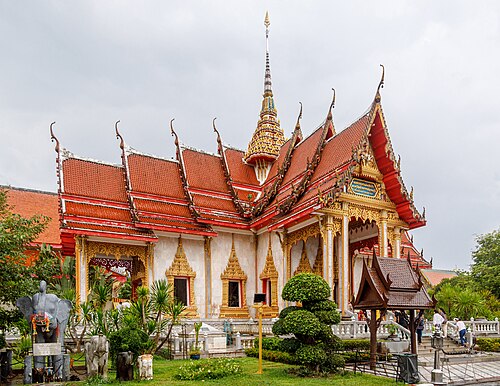
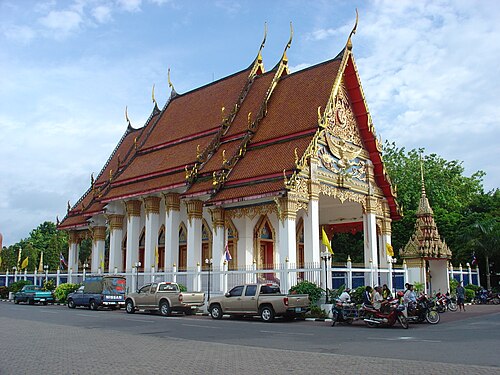
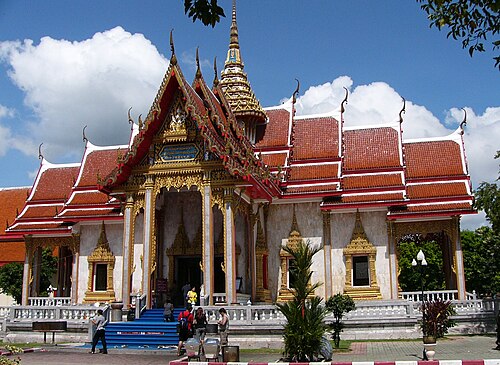
Wat Chalong is an active Buddhist temple complex in Phuket and one of the island’s most important religious landmarks.
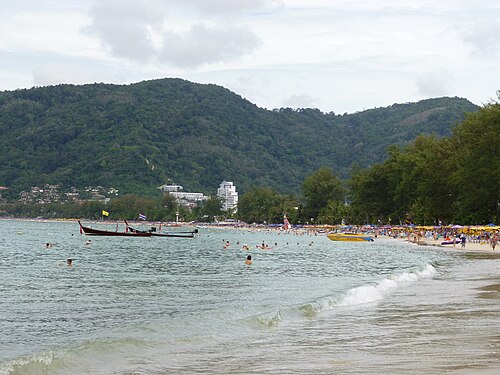
Patong Beach is a coastal area on the west side of Phuket island in southern Thailand. It represents one of the most internationally recognized beach destinations in the province, situated within the broader Phuket tourism region.
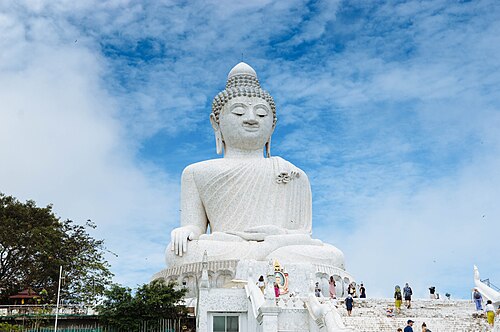
Phuket Big Buddha is a prominent religious landmark on Nakkerd Hill near Chalong in southern Phuket. The hilltop setting makes the statue visible from many parts of the island and gives the visit a strong sense of place.
แหลมพรหมเทพ
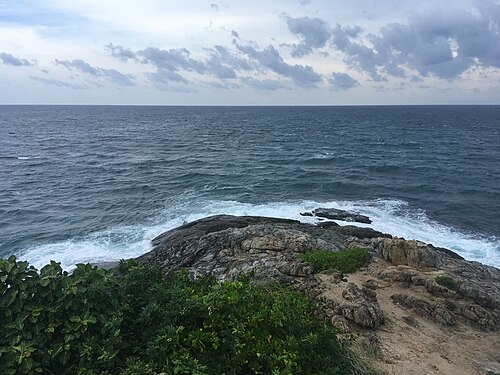
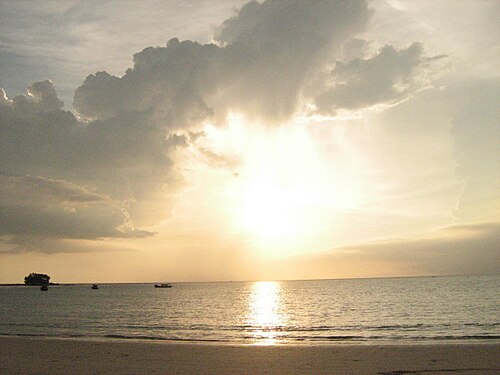
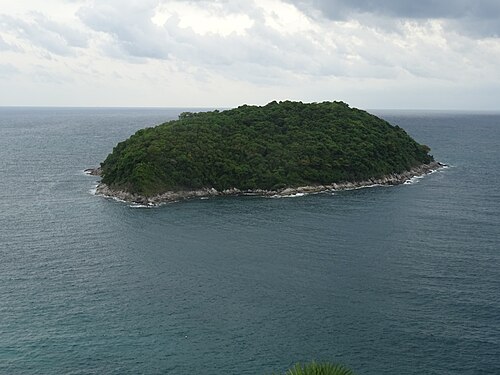
Promthep Cape is Phuket's celebrated southwestern headland and one of the island's defining sunset viewpoints. The rocky promontory reaches toward the Andaman Sea and opens broad views over the horizon.
หาดกะตะ
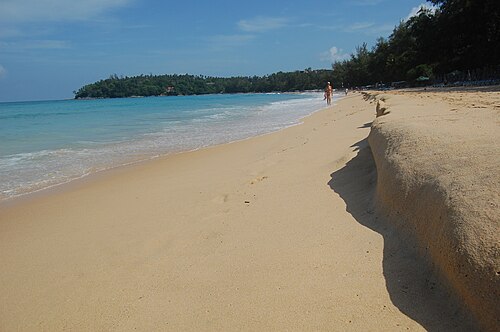
Kata Beach is a major west-coast beach on the island of Phuket, Thailand. It holds broad visitor recognition and functions as a distinct resort centre within the island's coastal tourism landscape.
หาดกะรน
Karon Beach is a broad sandy beach on Phuket's western shore, between Patong and Kata. Its spacious coastline suits travelers who want a substantial beach day with room for swimming, walking, relaxing, and watching the sunset.
Phuket Thai Hua School
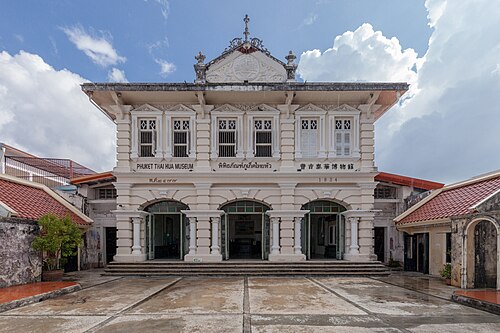
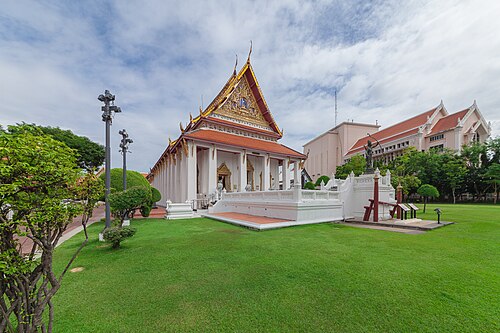
Phuket Thai Hua Museum occupies a historic Sino-Portuguese building in Phuket Old Town, Thailand. The structure reflects the island's tin-mining prosperity and Chinese immigrant heritage.
หาดในหาน
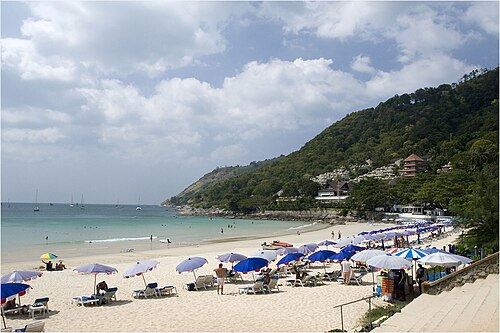
Nai Harn Beach is a substantial south-coast beach on Phuket, valued for swimming, shoreline time, and its established visitor setting.
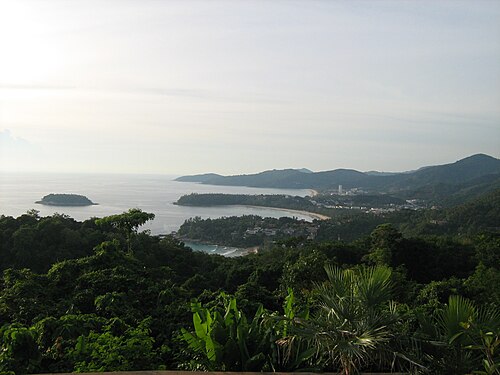
Karon Viewpoint is a roadside observation point on Phuket's southwestern coast. It offers a celebrated outlook over three adjacent bays: Kata Noi, Kata, and Karon.
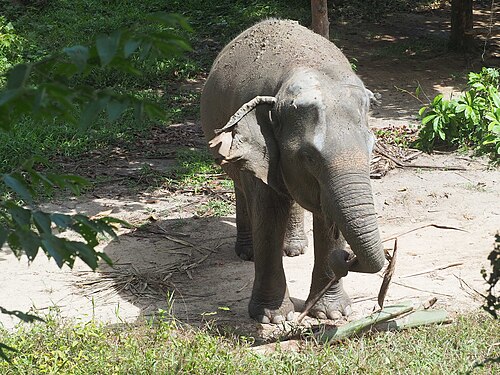
Phuket Elephant Sanctuary is an elephant welfare facility located on the island of Phuket, Thailand. It operates under a rescue and retirement model, providing habitat for elephants previously employed in logging, tourism rides, or street begging.
Sirinat National Park is a protected coastal area on Phuket's northwest shore. It encompasses approximately 90 square kilometers of marine and terrestrial zones, including Nai Yang, Nai Thon, and Mai Khao beaches.
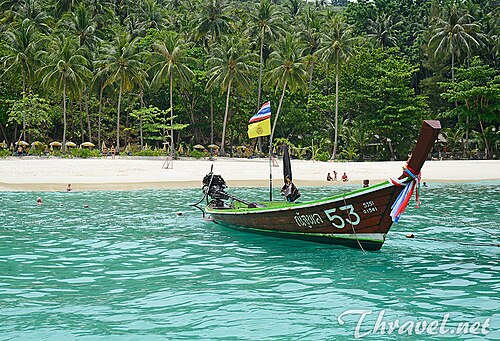
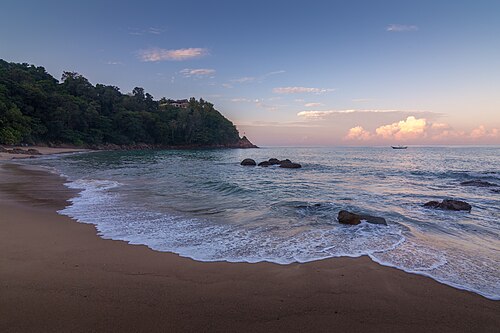
Freedom Beach is a secluded cove on Phuket’s west coast, south of Patong. Forested hills frame its white sandy shoreline, giving the beach a quieter and less commercial character than Phuket’s major resort beaches.
หาดบางเทา
Bang Tao Beach is a long beach on Phuket’s north-west coast, surrounded by a substantial resort district.
บ้านชินประชา
Chinpracha House stands as Phuket's best-preserved private Sino-colonial house museum, representing a core element of the old-town interior. This historic residence exemplifies the architectural fusion of Chinese and European colonial influences that characterises Phuket Town's heritage district.
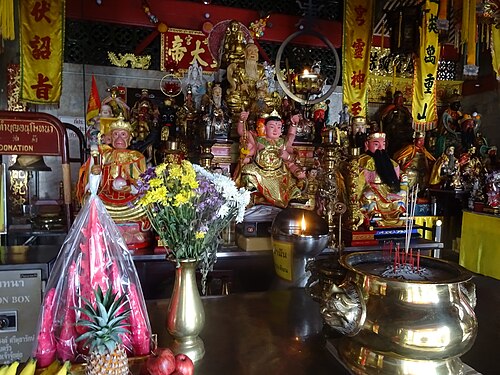
Jui Tui Shrine is a Chinese Taoist temple located in Phuket Town, Thailand.
The Gibbon Rehabilitation Project is a conservation initiative in Phuket that rescues gibbons affected by illegal pet keeping and exploitation in tourism. Its work centres on rehabilitation, restoring natural behaviour and, where suitable, returning animals to protected forest habitats.
สถานแสดงพันธุ์สัตว์น้ำภูเก็ต
Phuket Aquarium is a public marine-life institution at Cape Panwa on Phuket’s south-eastern coast. It is operated by the Phuket Marine Biological Center and combines public exhibits with the wider centre’s research and education role.
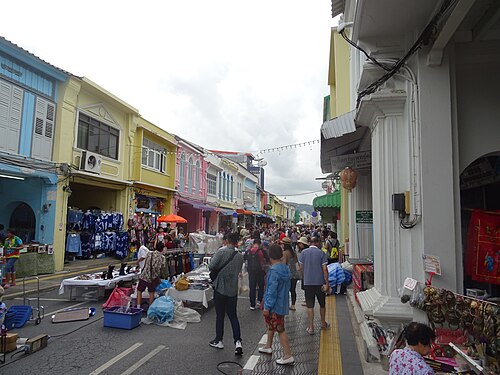
Sunday Walking Street Market is the old town's defining weekly market and a major visitor experience in Phuket. It occupies the historic Thalang Road area, transforming the street into a pedestrian zone filled with vendors and activity.
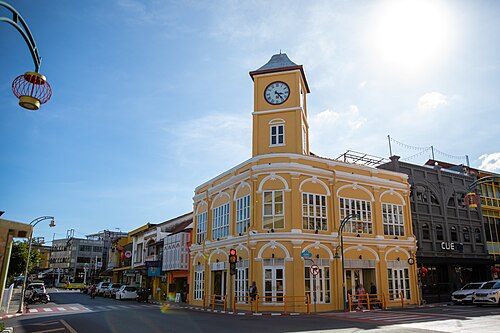
Soi Romanee is a narrow historic lane in Phuket Old Town, distinguished by its well-preserved Sino-Portuguese shophouse architecture.
Nai Yang Beach is a coastal area located on the northwestern shore of Phuket, Thailand. It sits within the Sirinat National Park boundaries, giving it a protected status compared to more developed beaches on the island.
หาดไม้ขาว
Mai Khao Beach is the longest beach on Phuket island, stretching along the northern coast. It forms part of the Sirinat National Park and serves as one of the most significant sea-turtle nesting sites in Thailand.
Rawai Beach
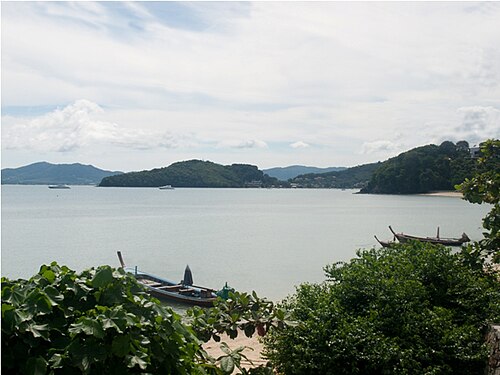
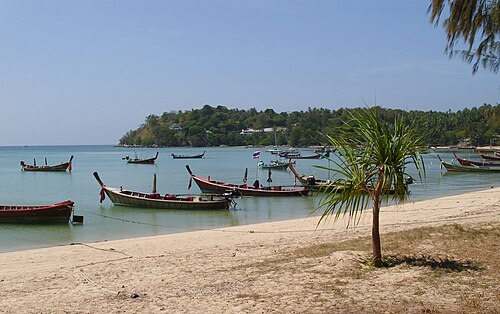
Rawai Beach is a working coastal settlement at the southern tip of Phuket. Fishing vessels and longtail boats gather along the east-facing shore, giving Rawai a maritime character different from Phuket’s western resort beaches.
หาดสุรินทร์
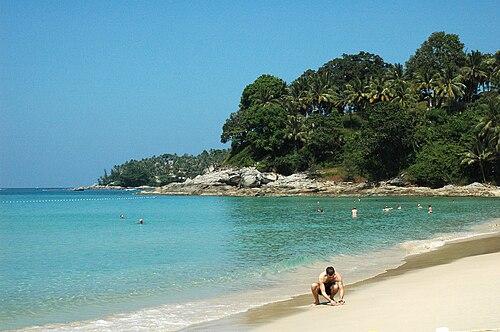
Surin Beach is a west-coast beach on Phuket’s Andaman Sea shore, north of Kamala Beach and south of Bang Tao Beach. Its curved bay combines sand, seawater, and coastal scenery.
พิพิธภัณฑสถานแห่งชาติ ถลาง
Thalang National Museum is a cultural institution in Phuket dedicated to preserving and presenting the island's history. Located near the site of the historic Battle of Thalang, the museum commemorates significant events in Phuket's past, including resistance against Burmese invasion.
Paradise Beach is a sandy coastal destination on Phuket’s Andaman Sea shore. The beach offers a compact setting for swimming, shoreline activity and time beside the water, within the wider beach landscape of southern Thailand.
Pansea Beach is a secluded cove on the western coast of Phuket, Thailand. It sits between Surin Beach to the south and Laem Singh Beach to the north, nestled against granite headlands.
Layan Beach is a coastal area located on the northwest coast of Phuket, Thailand. It sits near the southern end of Bang Tao Bay, adjacent to the more developed Laguna Phuket resort complex.
Banana Beach
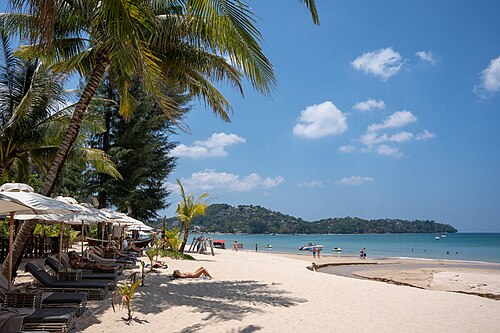
Banana Beach is a coastal area on Phuket's western shoreline. Its name refers to banana plants in the vicinity, while the place itself is defined by sand, tropical vegetation, and the Andaman Sea setting.
Hua Beach is a coastal access point on Phuket, Thailand’s largest island. The beach belongs to Phuket’s wider Andaman Sea landscape of sandy shores, tropical vegetation and inland hills.
Kalim Beach is a narrow, irregular coastal stretch between Patong and Kamala on Phuket’s west coast. Rocky headlands and small sandy coves give Kalim a different character from Patong’s long uninterrupted beach.
Merlin Beach is a west-coast shoreline on Phuket, set beside resort development and the island’s Andaman Sea coast.
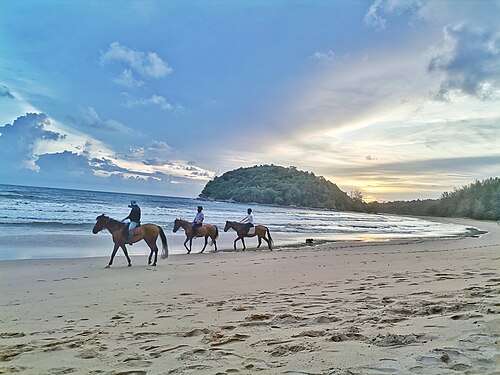
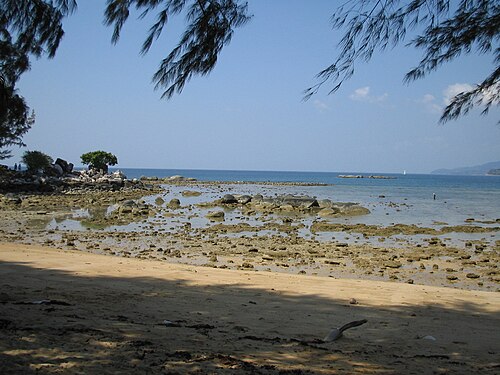
Nakalay Beach is a Phuket shoreline on the Andaman Sea, offering a coastal alternative to the island’s busiest resort beaches. It belongs in a west-coast day for travelers who want sand, tropical scenery, and time beside the water.
Windmill Viewpoint is an elevated coastal lookout on Phuket’s southwestern peninsula. Its defining feature is the group of large wind turbines rising above a broad Andaman Sea landscape.
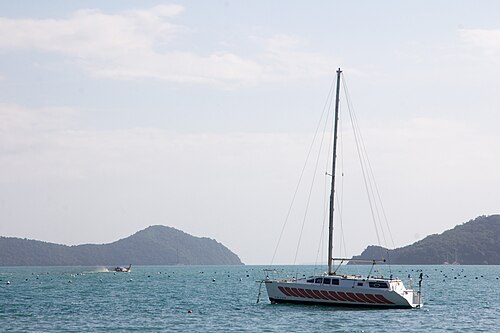
Ao Yon Beach is a southeastern Phuket shoreline on the Cape Panwa peninsula. Its sheltered setting, hillside backdrop, local boats, and quieter atmosphere make it a useful alternative to the island’s heavily developed west-coast beaches.
Panwa Beach is a coastal area on the southeastern side of Phuket Island, Thailand. It sits within Cape Panwa, a peninsula known for quieter shores compared to Phuket's busier western beaches.
Wat Phra Nang Sang is a Buddhist temple in Phuket, Thailand. It stands as one of the island's older religious sites, carrying historical significance within the province's cultural landscape.
วัดมงคลนิมิตร
Wat Mongkhon Nimit is a Buddhist temple in Phuket and an active place of worship for the local community. Visitors encounter a living religious environment rather than a conventional museum or commercial attraction.
Phuket Mining Museum is a visitor landmark located in Phuket, Thailand. The museum documents the island's tin mining heritage, which shaped Phuket's economy and culture for centuries.
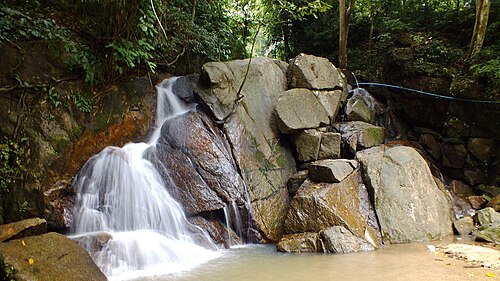
Kathu Waterfall is a natural waterfall in Kathu district, inland from Phuket’s better-known west-coast beaches. The site gives a Phuket day a forest setting, with falling water, tropical vegetation, rock and pools replacing the developed shoreline.
Phuket Wake Park is a cable-wakeboarding facility in Phuket, Thailand. An overhead cable system pulls riders across a purpose-built body of water, so the activity does not use a boat.
Karon Temple Market is an evening market in Phuket’s Karon area, set beside a Buddhist temple complex. Its appeal comes from the combination of market browsing, Thai street food and a religious-site setting.
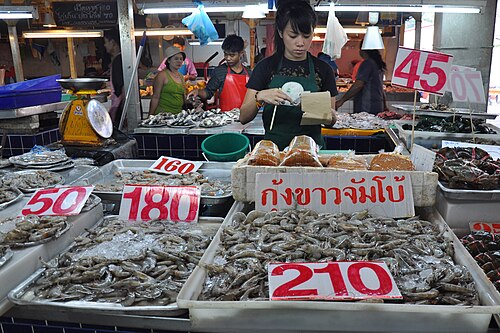
Banzaan Fresh Market is a covered market facility in Phuket, Thailand, situated in the Patong Beach area. The structure occupies multiple levels and serves as a trading venue for fresh produce, seafood, meats, and prepared foods.
Source: OpenStreetMap contributors, Wikidata ·
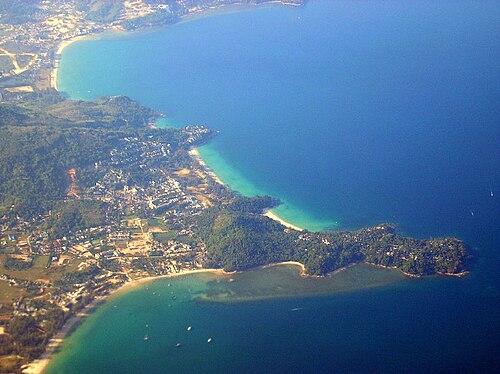
Phuket Old Town and its Sino-Portuguese streets lie inland on the eastern side. Patong, Karon and Kata form distinct west-coast beach areas, while Rawai and Promthep Cape anchor the south. The airport is in the north and boat departures use several eastern or southern piers. Distances that look short on an island map can involve slow roads, so keep each day geographically compact.
Checked 2026-08-26
Road transport is the main way to move between Phuket’s separate visitor zones. Official Thai travel guidance lists buses, minibuses, taxis and rental vehicles among provincial transport options. Walk within Old Town or one beach centre, but use an appropriate licensed service between coasts, viewpoints and piers. Check current local routes and allow extra transfer time when crossing the island.
Checked 2026-08-26
A fixed official stay length is not recorded. Choose the beaches, Old Town, viewpoints and boat departures you need, then group them by part of the island.
Individual beach centres and Phuket Old Town are walkable, but the island as a whole is not. Road transport is needed between most visitor districts.
Phuket Old Town lies inland on the island’s southeastern side, separate from the principal west-coast beach areas.
Group neighbouring beaches on the same coast. Patong, Karon and Kata can form a west-coast sequence, while southern viewpoints and Rawai suit another route.
Official Thai guidance lists buses, minibuses, taxis and rental vehicles for provincial travel. Confirm local routes and use licensed providers.