
2 min walk · Fatih
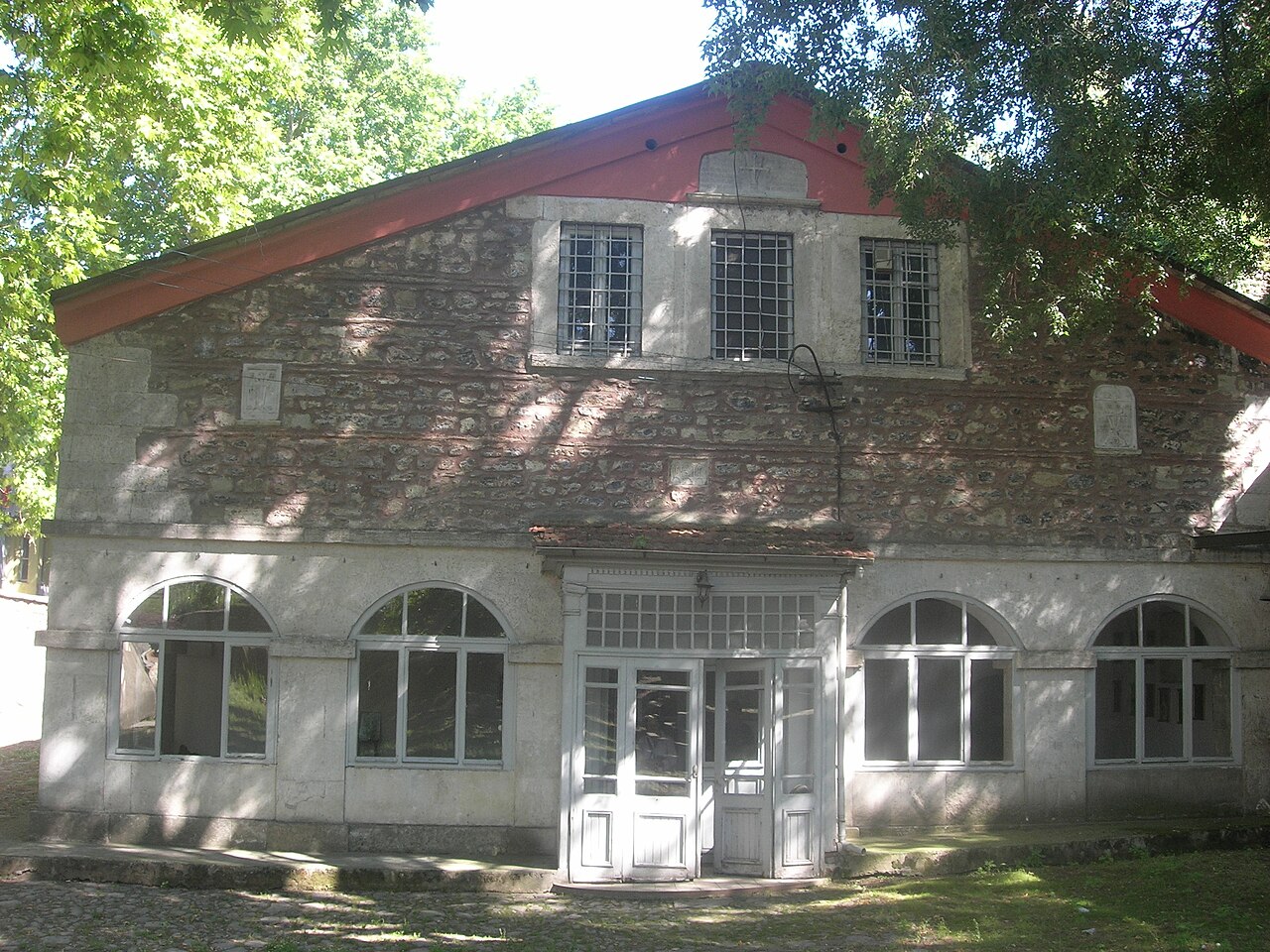
Church of Saint George by the Metochion
- High
- Place of worship
Place of worship · Fatih, Istanbul
Sveti Stefan Bulgar Kilisesi
Read from the OpenStreetMap access tags; anything not listed has no tag recorded.
Set the group type to family in the planner and the day window contracts to about three quarters of a solo day.
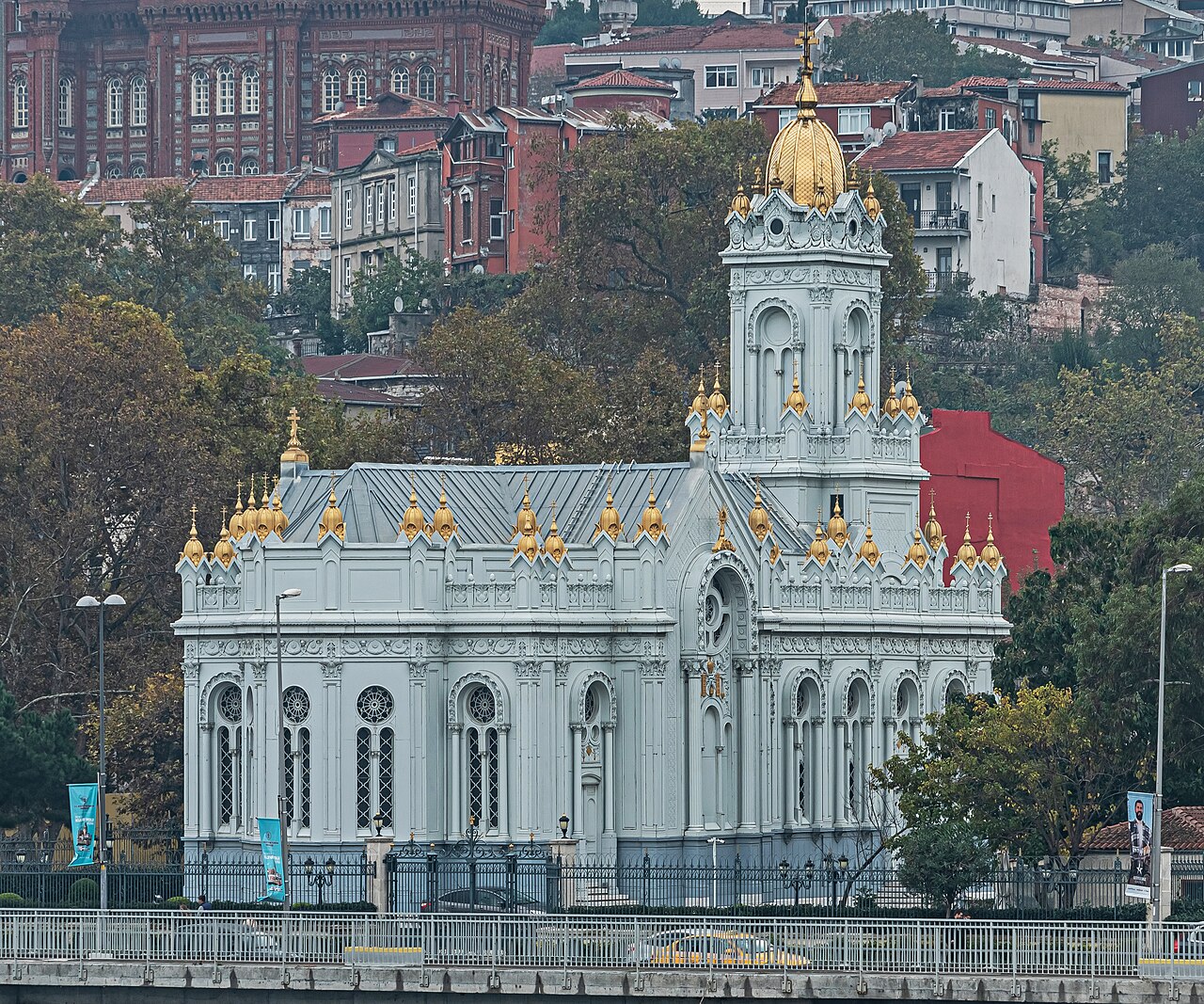
Bulgarian St. Stephen Church is the cast-iron Bulgarian Orthodox church on the Golden Horn shore in Balat. Istanbul’s official visitor portal dates the present building to 1898 and identifies Hovsep Aznavur as its architect. The exterior, walls, window frames, stairs, reliefs and bell tower were made as iron components rather than conventional masonry, which explains the familiar name Iron Church.
The building carries the history of Istanbul’s Bulgarian Orthodox community as well as an unusual construction method. The site first held a wooden church associated with Stefan Bogoridi. It later became a focal point in the history of the Bulgarian Exarchate. The present church replaced that predecessor with a structure assembled from parts manufactured in Vienna and transported to Istanbul. Its position beside the Golden Horn makes the metal exterior and waterfront setting visible together, while its continuing religious identity distinguishes it from a museum devoted only to architecture.
Checked 2026-09-06 · Source
The principal interior elements named by the Istanbul Governorship’s cultural-heritage record are the cross-shaped plan, three domes, the wooden iconostasis and donated icons and liturgical objects. The entrance supports a bell tower of approximately 40 metres. The same record says its six bells were cast in Yaroslavl and that two remain usable.
The iron fabric is part of the interior story as well as the facade. Components cast in Vienna were shipped to Istanbul and assembled on the site, with the official record giving a total of about 500 tonnes of cast iron. That construction system allows visitors to read the church as both an Orthodox place of worship and a prefabricated nineteenth-century building. The official description does not publish a fixed visitor route, room sequence or guaranteed display list. The iconostasis, domes, structural metal and liturgical objects are the documented features; access to any particular area must follow the arrangement in effect at the church.
Checked 2026-09-06 · Source
The official pages give no suggested duration for Bulgarian St. Stephen Church; plan the stop around what you want to examine. A focused architectural visit can look at the prefabricated iron walls, reliefs, window frames and bell tower outside, then the cross-shaped plan, domes and wooden iconostasis inside if public access is available.
A historical visit may take longer because the site connects an 1849 wooden predecessor, the 1870 decree associated with the Bulgarian Exarchate, the opening of the present church in 1898 and the restoration completed in 2018. The official pages provide no average stay, guided-tour length, queue allowance or last-entry margin. Keep the duration flexible and leave sufficient time before any onward connection. The amount of time required will depend on whether the focus is the iron construction, the liturgical interior, the Exarchate history or all three, as well as which areas are accessible on the date of the visit.
Checked 2026-09-06 · Source
The current official Istanbul visitor records do not give daily sightseeing hours, a worship timetable, a weekly closure day, seasonal hours or a last-admission time for Bulgarian St. Stephen Church. Do not infer a schedule from older material. The absence of a published timetable is not evidence that the church is open throughout any particular period.
The building reopened for worship on 7 January 2018 after a comprehensive restoration conducted from 2011 to 2018. That reopening date establishes the end of the recorded restoration, not today’s visiting schedule. The site remains a Bulgarian Orthodox church rather than a museum with a guaranteed public timetable. Check a current congregation notice or contact the responsible foundation before making a dedicated journey, particularly when access at a precise hour matters. A religious date, ceremony or past reopening event should not be converted into a recurring visitor schedule without a present first-party announcement.
Checked 2026-09-06 · Source
The current official Istanbul visitor pages publish no admission policy, ticket price, reservation process or concession terms for Bulgarian St. Stephen Church. Do not interpret the absence of a published price as free admission. Confirm the current arrangement with the church or its responsible foundation before allocating a definite amount.
The official pages describe the building’s history, architecture, ownership and restoration but name no box office, booking link, visitor category or payment method. They also do not distinguish sightseeing access from attendance at worship. A current notice at the church or a new statement from the responsible foundation should control the visit. The seven-year restoration and the ceremonial reopening in January 2018 are historical facts, not evidence for a present-day admission model. Until the responsible foundation publishes admission terms, treat the cost, ticket category and any reservation requirement as unconfirmed.
Checked 2026-09-06 · Source
Metro İstanbul’s current T5 Eminönü–Alibeyköy line page lists Fener and Balat among its stations. It does not associate Bulgarian St. Stephen Church with a particular station, identify the nearest stop, prescribe a station exit or publish a church-specific walking route. The supported transport fact is therefore limited: Fener is a named station on the operating T5 line.
Check live T5 service information before travel and use a current map for the final segment. Do not turn the line’s station sequence into a claim about walking time, distance, a particular entrance or a step-free route to the church. Metro İstanbul’s page describes the rail line rather than access to the religious site, so reaching Fener does not establish that the church is open or that a specific gate can be used. Follow current transport notices for the journey and the arrangement displayed at the church for entry to its grounds or interior.
Checked 2026-09-06 · Source
The current official visitor records do not publish a step-free route, lift provision, accessible toilet, seating arrangement, dress code, service restriction, security procedure or visitor conduct policy for Bulgarian St. Stephen Church. Visitors who need step-free access should confirm the complete route with the responsible foundation before travelling, including entry from the street and access to the interior areas they intend to visit.
The church is an active religious building owned by the Foundation of the Bulgarian Exarchate Orthodox Church. Follow current notices and instructions at the site. The official heritage page documents a bell tower, domes, iconostasis and liturgical objects, but those architectural details do not establish which spaces are routinely open or accessible to visitors. The same records do not state whether a ceremony changes access, whether visitors must follow a particular dress standard or whether any area is restricted. Obtain date-specific information from the foundation when one of those conditions matters to the visit.
Checked 2026-09-06 · Source
The official Istanbul descriptions identify photographic subjects at Bulgarian St. Stephen Church: the cast-iron facade, reliefs, window frames, three domes, bell tower and Golden Horn setting. The official pages do not state whether personal photographs, flash, tripods, video, commercial work or photography during worship are permitted.
Treat the documented architecture as a description of what may be seen, not permission to use particular equipment or photograph every interior area. Read current signs and follow instructions from the congregation or foundation before making images inside. Ask separately about any tripod, lighting, publication or commercial requirement instead of assuming that a rule for the waterfront also applies within the church. The 2011–2018 restoration is relevant to the building’s present appearance, but it does not supply a photography policy. The official pages give no preferred time of day, guaranteed lighting condition or unrestricted viewpoint. Conditions at the church and instructions from its responsible foundation should guide photography on the date of the visit.
Checked 2026-09-06 · Source
Its exterior, walls, window frames, stairs, reliefs and bell tower were made from prefabricated iron components. Istanbul’s official records say the parts were cast in Vienna, transported by ship and assembled at the Golden Horn site, with about 500 tonnes of cast iron used.
The present church dates to 1898. Istanbul’s official cultural-heritage record names Hovsep Aznavour as the architect; the city’s visitor portal uses the spelling Hovsep Aznavur. Both refer to the architect of the cast-iron church now standing in Balat.
A wooden church preceded the present building. The Istanbul Governorship’s record says a wooden house donated by Prince Stefan Bogoridi was converted into a church in 1849. The current iron church later replaced that structure and opened in 1898.
The official heritage record states that the Ottoman decree of 28 February 1870 establishing the Bulgarian Exarchate was first read at the earlier church on this site. The present building belongs to the Foundation of the Bulgarian Exarchate Orthodox Church.
The official record highlights a cross-shaped plan with three domes, a wooden iconostasis made in the Modern Renaissance style, and donated icons and liturgical objects. The iron construction remains visible as part of the building’s architectural character.
The current official Istanbul visitor pages publish neither a daily visitor timetable nor an admission policy for the church. Confirm the date-specific arrangement with the congregation or responsible foundation before travelling.
Loading the interactive map…
The interactive map could not be loaded.
Last updated:
Source: OpenStreetMap contributors, Wikidata ·