
148 min walk
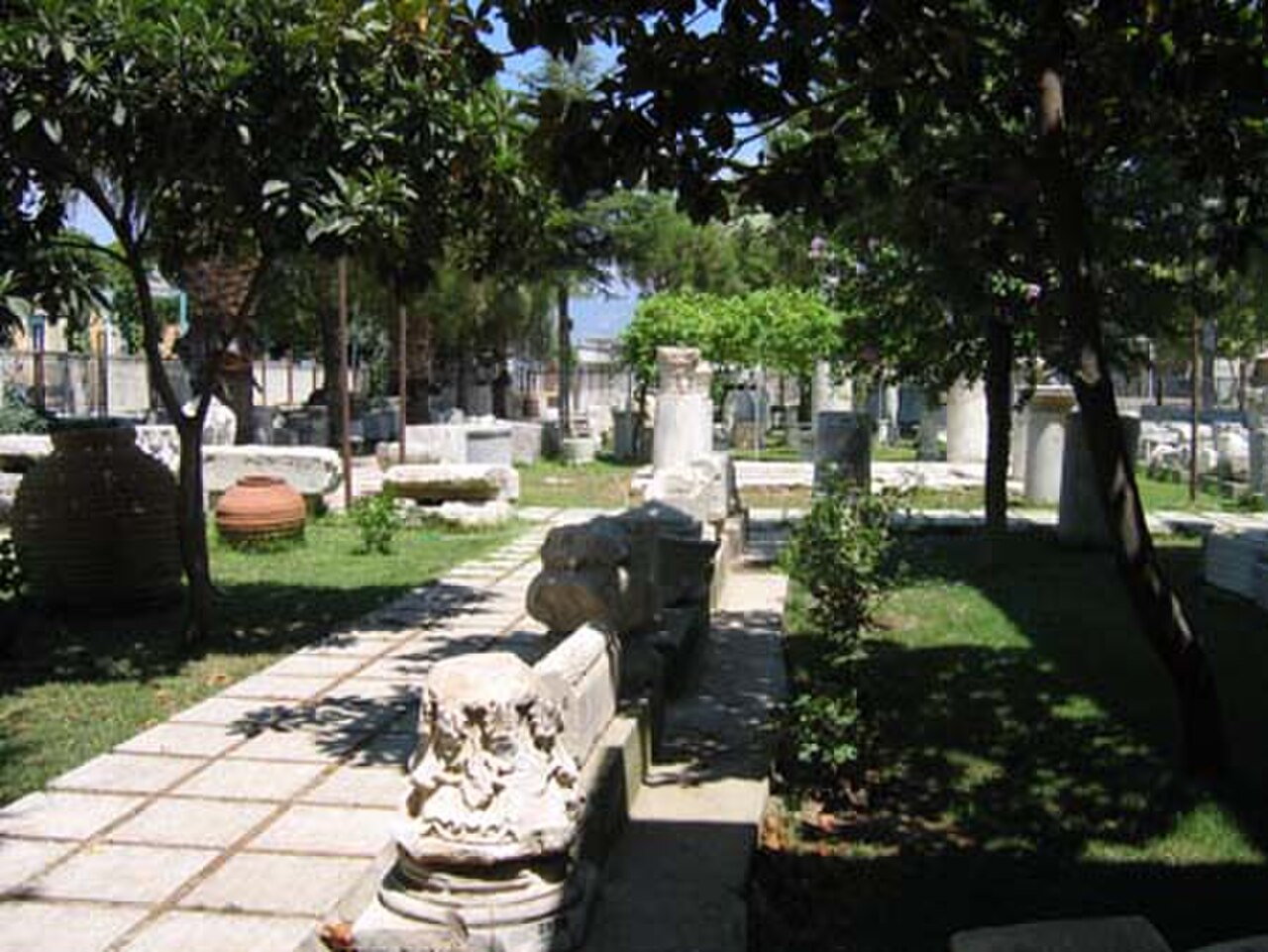
Milas Museum
- Must see
- Museum
Language · 11 published
Historic monument · Muğla
Euromos
Reviewed by Elena Voss · Roavina Travel Editor

| Monday | 08:30 – 19:00 |
|---|---|
| Tuesday | 08:30 – 19:00 |
| Wednesday | 08:30 – 19:00 |
| Thursday | 08:30 – 19:00 |
| Friday | 08:30 – 19:00 |
| Saturday | 08:30 – 19:00 |
| Sunday | 08:30 – 19:00 |
Checked 2026-09-02 · Source
Read from the OpenStreetMap access tags; anything not listed has no tag recorded.
Set the group type to family in the planner and the day window contracts to about three quarters of a solo day.
This place is a Attraction.
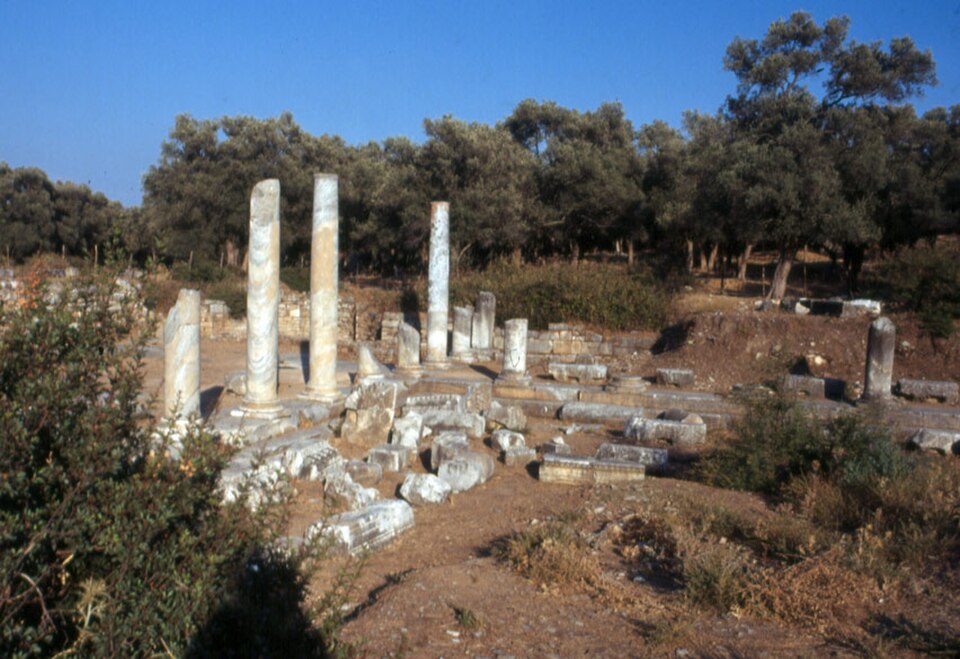
Euromus is a roadside open-air archaeological site in Selimiye Mahallesi, within Muğla’s Milas district. Its identity is shaped by the unusually prominent Temple of Zeus Lepsynos, whose surviving columns stand among the remains of an ancient city rather than inside a reconstructed museum setting. The site also preserves an agora, theatre, bathhouse and tomb structures in the southern and northern necropolises. That combination makes Euromus a compact way to encounter sanctuary, civic life and burial landscapes together. It is particularly distinctive for travellers following the Milas–Söke road who want a substantial ancient monument without the scale of a major urban ruin complex.
Checked 2026-09-02 · Source
Begin with the Temple of Zeus Lepsynos, Euromus’s defining monument. It is a Corinthian-order temple dated to the 2nd century AD, with substantial columns and architectural elements still visible. Continue to the agora, which marks the ancient civic centre, then look toward the theatre on the slope north of the settlement. A bathhouse adds another dimension to the city’s public life. The southern and northern necropolises contain tomb structures, so the visit extends from ceremonial and civic buildings into the areas associated with burial. Read the remains as a connected ancient settlement, not as a single temple stop. The variety of structures gives even a short visit a clear sense of how different parts of Euromus were organized.
Checked 2026-09-02 · Source
Allow about 60 to 90 minutes for a focused visit to the temple, agora and theatre. Use the longer end if you want to include the bathhouse and both cemetery areas, or if you prefer time to study architectural details and compose photographs. Euromus is spread through an outdoor archaeological landscape, so the visit includes walking between separated remains rather than moving through a single exhibition hall. Add a little margin for finding the roadside access, orienting yourself after arrival and crossing uneven ground. A shorter stop can appreciate the temple, but it will give less context about the ancient city around it.
Checked 2026-09-02 · Source
For the published summer period from 1 May through 1 October 2026, Euromus is open every day from 08:30 to 19:00. The ticket office closes at 18:30, so arriving before that cutoff is essential for entry. The published winter schedule runs from 1 October 2025 through 1 April 2026, with visits from 08:30 to 17:30 and ticket sales ending at 17:00. For a September visit, the summer hours apply. Morning and late afternoon are practical choices for an exposed outdoor site, especially when walking between the temple, theatre and necropolises. The daily schedule also makes Euromus workable as a planned stop between Milas and the western destinations on this road.
Checked 2026-09-02 · Source
General adult admission is €3 per person, and Euromus accepts Müzekart. The ticket office closes before the archaeological area: during the published summer period, sales end at 18:30 while the site remains open until 19:00. In the published winter period, ticket sales end at 17:00 before the 17:30 closing time. Treat the ticket-office deadline as your real arrival limit, because Euromus’s outdoor remains are distributed across several areas and a late entry leaves limited time for the temple, theatre and necropolises. The admission price is recorded per visitor, so groups should account for each paying person when planning the stop.
Checked 2026-09-02 · Source
Euromus lies in Selimiye Mahallesi on the Milas–Söke highway, approximately 12 kilometres from Milas. By car, follow the main road and allow for the final walk from the roadside access into the open-air archaeological area. A public Milas–Selimiye–Bafa route operates between Milas and Selimiye, but no dedicated stop or exact final walking connection is specified. If you travel by bus, confirm where to get off and prepare for the roadside approach. The location works naturally as a stop on a journey toward Söke or Bafa, but careful orientation near the highway is important. Build the access walk into the timing rather than assuming the road drops you directly beside the temple.
Checked 2026-09-02 · Source
Euromus is an open-air archaeological area rather than a fully level museum circuit. Its remains are reached along outdoor routes, and the theatre stands on a slope north of the ancient city, so expect uneven ground and walking between monuments. Step-free access is limited, meaning the whole site may not be accessible to every visitor. The exposed setting also makes footwear and pacing important for a visit that includes the theatre and necropolises. Stay on the visitor route and allow extra time where the ground or incline slows movement. The roadside setting adds another reason to keep attention on the marked approach and archaeological boundaries.
Checked 2026-09-02 · Source
The Temple of Zeus Lepsynos is the essential photographic subject: frame its surviving columns with the surrounding open landscape so the images show both the monument’s scale and its setting. Morning or late-afternoon light can bring out the stonework, while the theatre offers a contrasting hillside composition. Use wider views for the agora, bathhouse and necropolises, where the relationship between separate remains matters as much as individual details. The roadside position can provide useful context in a landscape photograph, but keep the focus on the archaeological setting. Remain on the visitor route, and do not climb or lean on ancient masonry.
Checked 2026-09-02 · Source
Euromus is in Muğla’s Milas district, within the boundaries of Selimiye Mahallesi.
Euromus is on the Milas–Söke highway, approximately 12 kilometres from Milas.
You can see the Temple of Zeus Lepsynos, the agora, theatre, bathhouse and tomb structures in the southern and northern necropolises.
General adult admission is €3 per person, and entry is also available with Müzekart.
The Corinthian-order Temple of Zeus Lepsynos is dated to the 2nd century AD.
The theatre is thought to have been built around 250–200 BC.
Loading the interactive map…
The interactive map could not be loaded.
Last updated:
Source: OpenStreetMap contributors, Wikidata ·