
156 min walk
Araxa
- Notable
- Historic monument
Language · 11 published
Historic monument · Muğla
Reviewed by Elena Voss · Roavina Travel Editor
This place is a Attraction.
Kadyanda is an elevated ancient settlement in the mountains north of Fethiye, approached through Üzümlü rather than from the coast. Its location is central to the experience: the ruins occupy a high landscape where archaeological remains sit among valley views and uneven ground. Visible remains are no earlier than the fifth century BC, the city remained inhabited until the seventh century AD, and most surviving structures are Roman. This is a hill city to understand through its setting, dispersed remains and long history, where the landscape explains as much about the settlement as its individual monuments.
Checked 2026-09-02 · Source
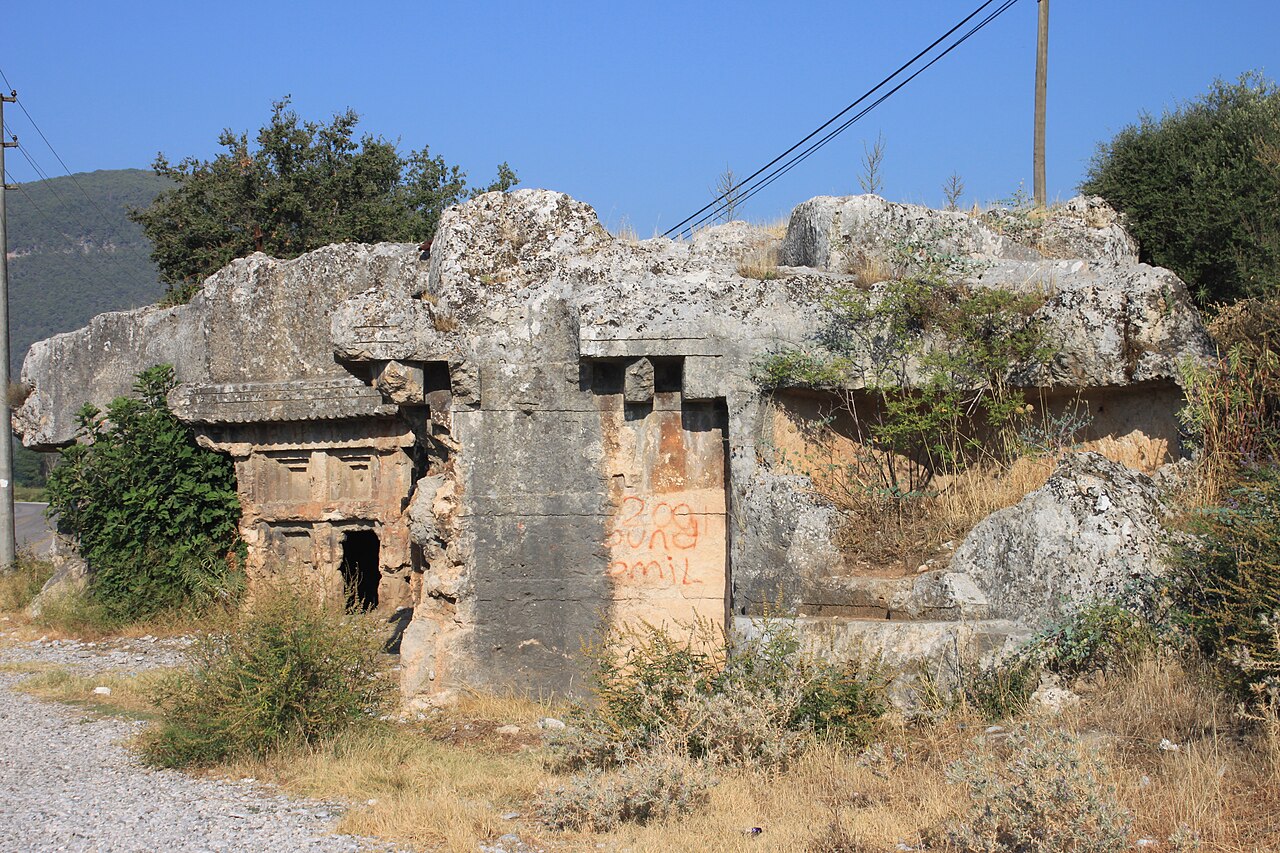
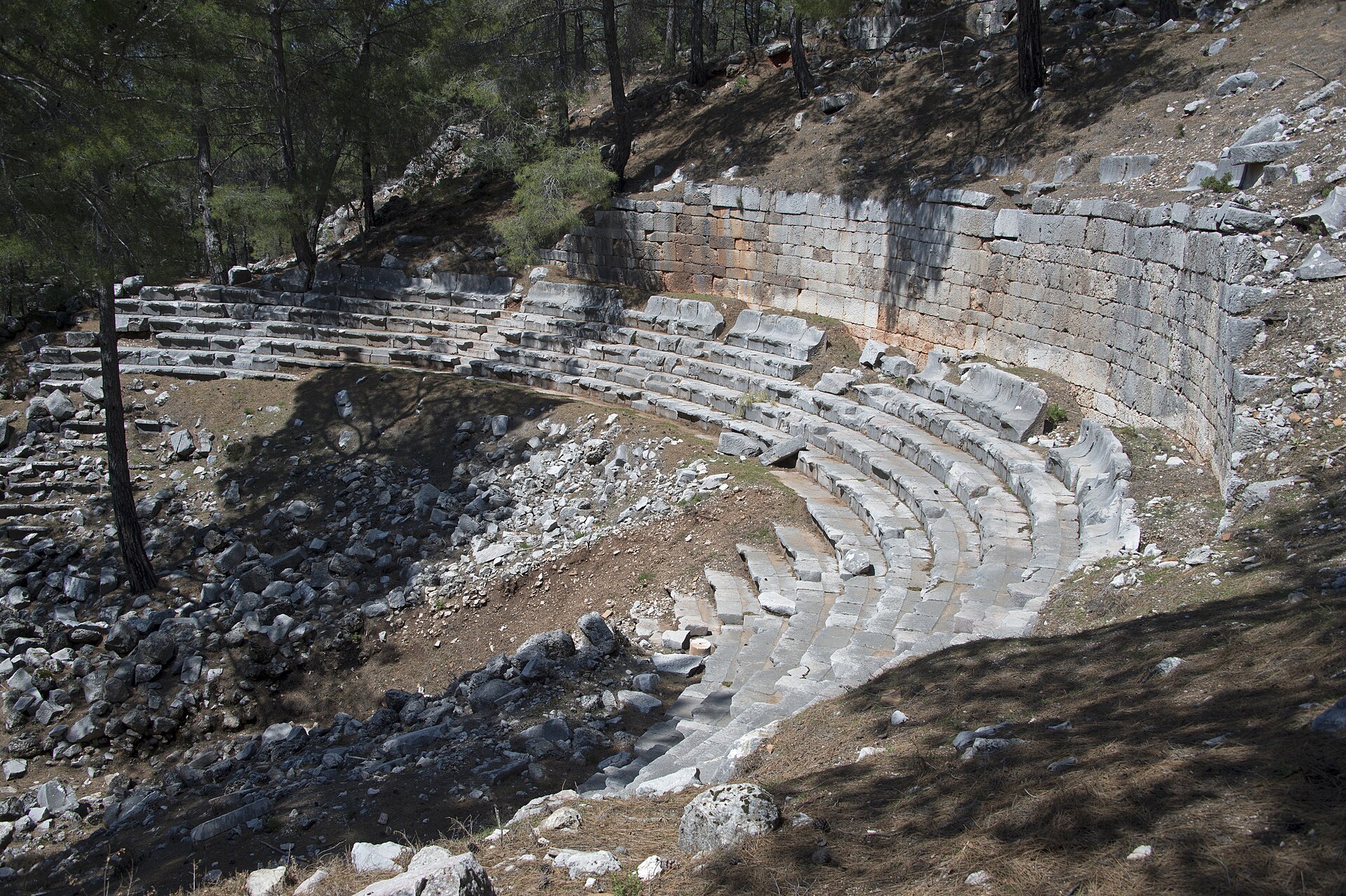
The archaeological area brings together civic, defensive and practical remains. Visitors can see a Hellenistic theatre, bath, running track and agora, alongside temple remains, city walls, rock-cut tombs and cisterns. The range matters because it shows more than one monumental building: public gatherings, exercise, protection, burial and water storage all appear within the mountain settlement. The ruins are spread through an open archaeological landscape, so the visit is a sequence of places connected by walking. Looking at these features together helps explain how Kadyanda functioned as a complete community rather than merely as a collection of ruins.
Checked 2026-09-02 · Source
Set aside around three hours to follow Kadyanda’s archaeological route at a comfortable pace. The arranged visitor route is approximately 2.5 kilometres, and the remains are distributed across the site rather than concentrated beside one entrance. Allow extra time for the theatre, walls, rock-cut tombs, cisterns and pauses to take in the mountain views. Uneven, stony ground and exposure can slow progress, so a measured circuit is more realistic than treating Kadyanda as a brief roadside stop. Visitors interested in architectural details or landscape photography may need longer because the route rewards pauses at several separate points.
Checked 2026-09-02 · Source
Kadyanda is best approached as an outdoor archaeological visit shaped by its mountain setting, dispersed ruins and walking route. Daylight and weather will affect how comfortably visitors can explore the site, particularly when the ground is stony and the circuit requires continuous movement between structures. Cooler conditions may suit a longer examination of the theatre, walls, tombs and water installations, while clear weather can make the relationship between the ruins and surrounding valleys easier to appreciate. The strongest time to visit is therefore the part of the day that allows an unhurried circuit in suitable conditions.
Checked 2026-09-02 · Source
General adult admission to Kadyanda is recorded as free in the researched Ministry of Culture and Tourism tariff. The source gives a free-admission status rather than a paid adult amount, so the practical record uses zero Turkish lira for a per-person adult charge. This removes the need to budget for a standard entrance ticket, but it does not establish guided services or other possible costs. The archaeological area should therefore be understood as free admission only. The tariff supports the adult entrance status; it does not provide a schedule or describe additional visitor services.
Checked 2026-09-02 · Source
Kadyanda is approximately 24 kilometres from Fethiye and is reached through the Üzümlü area. The Fethiye–Üzümlü public-transport route reaches Üzümlü, but it does not place you at the ancient settlement. Beyond Üzümlü, approximately eight kilometres of the approach road is stabilized, so the final section requires a suitable vehicle or a locally arranged transfer. Allow time for the mountain approach and plan transport for the last stretch rather than assuming a simple walk from central Fethiye. The route is therefore a two-part journey: public transport can cover the approach to Üzümlü, followed by a separate connection to Kadyanda.
Checked 2026-09-02 · Source
The confirmed route length and setting still indicate a substantial outdoor walk: approximately 2.5 kilometres across mountain terrain with stony and uneven surfaces. Choose secure footwear, carry water for the route, and keep the visit paced around the ground and weather. These are practical precautions for the landscape, not a claim about facilities or formal accessibility provision. The dispersed layout also means visitors should expect movement between separate remains rather than one level viewing platform.
Checked 2026-09-02 · Source
Kadyanda offers photographs that connect archaeology with its mountain setting. Use wider compositions to place the theatre, walls and rock-cut tombs against the surrounding valleys, then move closer for masonry, cisterns and surviving architectural details. The dispersed layout gives the visit several distinct viewpoints instead of one single façade. The theatre and elevated outlook can anchor wider images, while the tombs and cisterns provide smaller details that make the route visually varied.
Checked 2026-09-02 · Source
Kadyanda is approximately 24 kilometres from Fethiye, north of the town in a mountain setting.
The Fethiye–Üzümlü public-transport route reaches Üzümlü. Approximately eight kilometres of the road from Üzümlü to Kadyanda is stabilized, so the final section needs a suitable vehicle or local transfer.
The site includes a Hellenistic theatre, bath, running track, agora, temple remains, city walls, rock-cut tombs and cisterns.
The arranged visitor route is approximately 2.5 kilometres long.
The oldest visible remains do not date earlier than the fifth century BC.
Kadyanda remained inhabited until the seventh century AD, while most of the surviving remains are Roman.
Loading the interactive map…
The interactive map could not be loaded.

Last updated:
Source: OpenStreetMap contributors, Wikidata ·