2 min walk
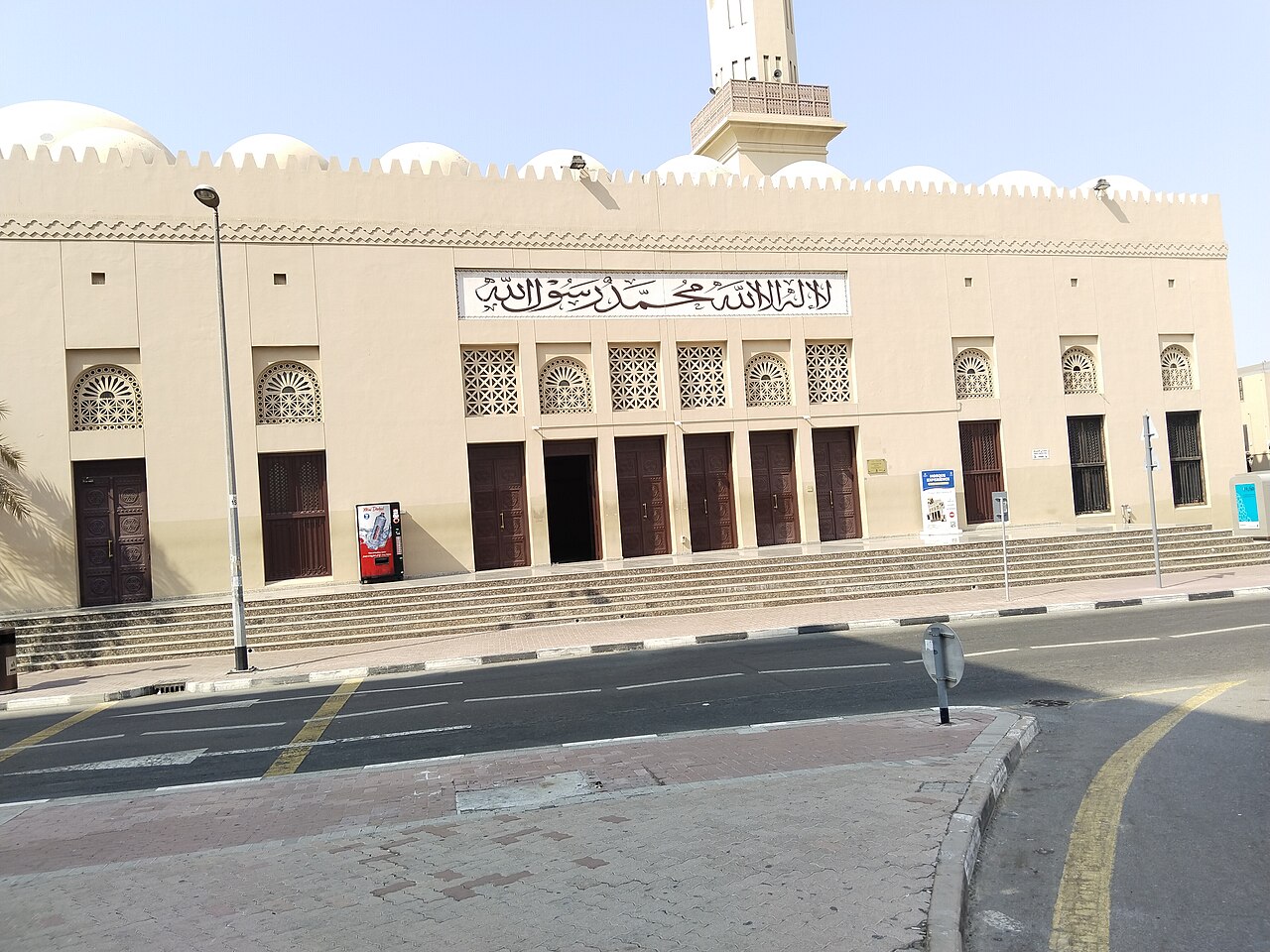
Grand Mosque
- Must see
- Place of worship
Historic monument · Dubai
حصن الفهيدي
Read from the OpenStreetMap access tags; anything not listed has no tag recorded.
Set the group type to family in the planner and the day window contracts to about three quarters of a solo day.
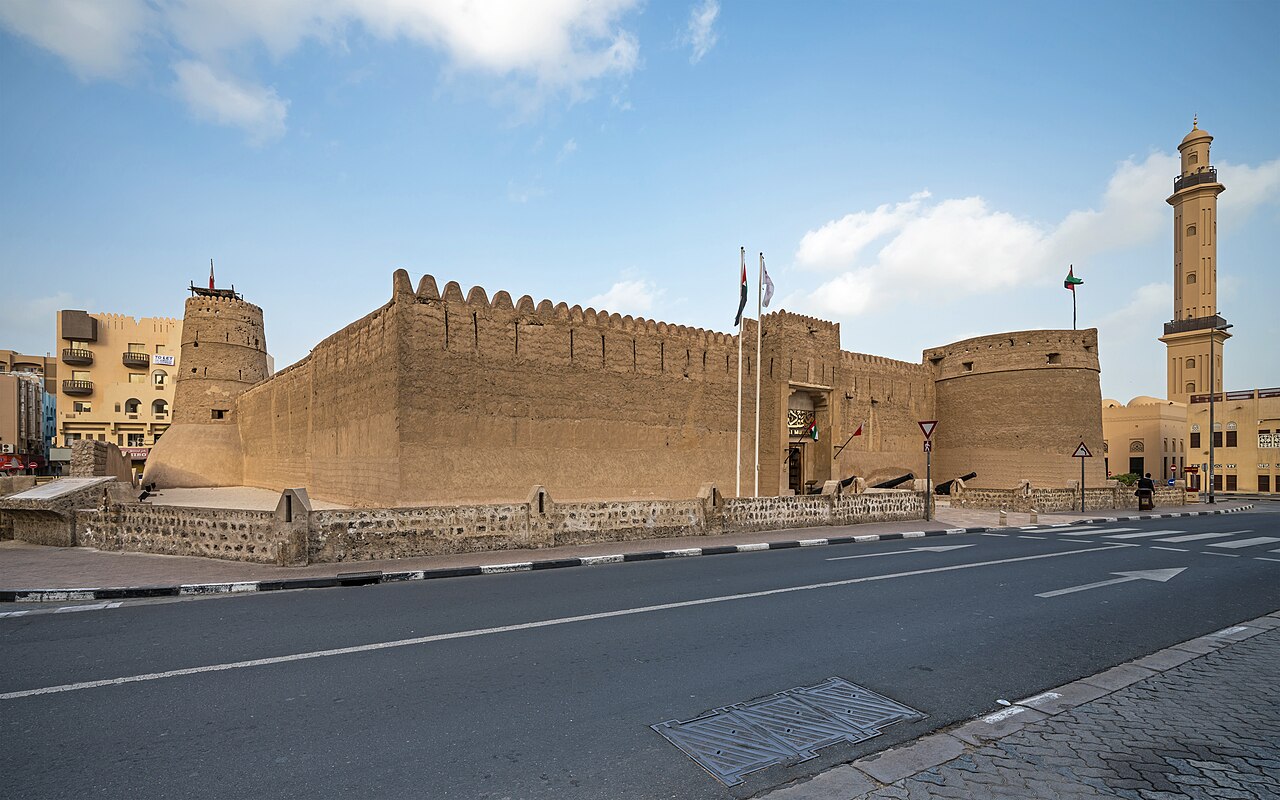
Al Fahidi Fort, known locally as حصن الفهيدي, stands as Dubai's oldest existing building. Constructed in 1787, this coral-stone and mortar fortification served defensive purposes before later uses as a palace, garrison, and prison. Since 1971, it has housed the Dubai Museum, offering visitors insight into the emirate's transformation from pearling settlement to global metropolis. The structure represents traditional Gulf architecture with its square towers and wind towers, preserved amid the modern skyline that now surrounds the historic Bur Dubai district. Closed daily.
Checked 2026-08-31 · Source
The Dubai Museum occupies the fort's interior and underground galleries. Exhibits include archaeological finds from Al Qusais dating to 3000 BCE, recreated souk scenes, traditional Bedouin life displays, and maritime heritage sections documenting pearl diving and fishing. A video presentation covers Dubai's rapid development. The underground gallery features dioramas of daily life before oil discovery. Weaponry, musical instruments, and domestic objects illustrate regional craftsmanship. The fort's original architecture—thick coral walls, teak doors, and lime plaster—remains visible throughout. No visitor admission is available while the fort is closed for rehabilitation; there is currently no adult or general-admission ticket.
Checked 2026-08-31 · Source
Visitors typically allocate one to two hours for a complete exploration of Al Fahidi Fort and the Dubai Museum. The compact above-ground quarters require minimal time, while the extensive underground exhibition space demands more attention for those examining dioramas and reading display text thoroughly. Self-guided pacing allows flexibility. The site's central location enables combination with adjacent heritage attractions in the Al Fahidi Historical Neighbourhood, potentially extending a district visit to half a day without requiring additional travel between locations. No visitor admission is available while the fort is closed for rehabilitation; there is currently no adult or general-admission ticket.
Checked 2026-08-31 · Source
Visitors should verify current opening times through official channels before planning. Dubai's climate strongly influences comfort: outdoor walking to and from the fort becomes strenuous during summer months when temperatures exceed 40°C. The cooler period from November through March offers more pleasant conditions for exploring the surrounding pedestrian district. Morning visits may provide quieter conditions. Closed daily. The closed site currently provides no visitor route through the fort. The UAE Ministry of Culture's 2026 museum guide says the reopened museum will have fully accessible facilities for People of Determination.
Checked 2026-08-31 · Source
The Dubai Museum historically charged modest entry fees accessible to most visitors, though specific current rates require direct verification. Some categories—children, students, seniors, or UAE residents—may qualify for reduced or complimentary admission depending on current policy. Payment methods and online booking availability should be confirmed beforehand. Combination tickets with other Dubai Culture-affiliated sites are not confirmed. No visitor admission is available while the fort is closed for rehabilitation; there is currently no adult or general-admission ticket. The closed site currently provides no visitor route through the fort.
Checked 2026-08-31 · Source
Al Fahidi Fort sits in Bur Dubai near the Creek, accessible via multiple transport modes. The Al Fahidi Metro Station on the Green Line places visitors within walking distance. Abra water taxis cross the Creek from Deira to nearby docks, offering atmospheric approach routes. For the Bur Dubai area, RTA's Green Line serves Al Ghubaiba (G24) and Sharaf DG (G25). RTA marine routes CR4 (Al Sabkha–Al Fahidi), CR5 (Al Fahidi–Deira Old Souq) and CR7 (Al Seef–Al Fahidi–Dubai Old Souq) call at Al Fahidi Marine Station. These services reach the surrounding area; the museum entrance remains closed.
Checked 2026-08-31 · Source
The fort's historic construction presents uneven surfaces, low doorways, and dimly lit underground passages requiring careful footing. Summer heat demands hydration and sun protection during outdoor approach walks. The site attracts substantial visitor volume, particularly during peak tourist seasons and weekends; personal space becomes limited in narrow corridors. Photography restrictions may apply in specific exhibition areas. The closed site currently provides no visitor route through the fort. The planned visitor facilities include a café, gift shop and conservation laboratories; the official guide does not itemize individual ramps, lifts or accessible toilets.
Checked 2026-08-31 · Source
The fort's distinctive coral-stone exterior against Dubai's modern skyline creates compelling photographic juxtaposition. Morning and late afternoon light enhances the warm tones of traditional building materials. The central courtyard offers more favourable natural light conditions. Wind tower details and carved wooden doors reward close attention. Surrounding Al Fahidi Historical Neighbourhood provides additional heritage architecture subjects. Drone operation would require explicit authorization given proximity to government and culturally sensitive sites. No. The responsible public-body listing says the fort is undergoing rehabilitation and will reopen during 2026, but it provides no reopening date.
Checked 2026-08-31 · Source
No. The responsible public-body listing says the fort is undergoing rehabilitation and will reopen during 2026, but it provides no reopening date.
It was constructed in 1787 and is identified by the UAE National Cultural Map as Dubai's oldest standing building.
The fort was built from coral and shell stones bonded with lime.
It served as a defensive fort, the ruler's residence, a prison, an arsenal and a governing centre.
It became Dubai Museum in 1971, making it the first museum opened in the city.
Official plans describe six principal galleries and exhibition spaces, more than 200 artefacts, archival photographs, historical documents, audiovisual media, interactive 3D displays and an underground museum beneath a reflective water feature.
Loading the interactive map…
The interactive map could not be loaded.
Last updated:
Source: OpenStreetMap contributors, Wikidata ·