Burj Khalifa
برج خليفة
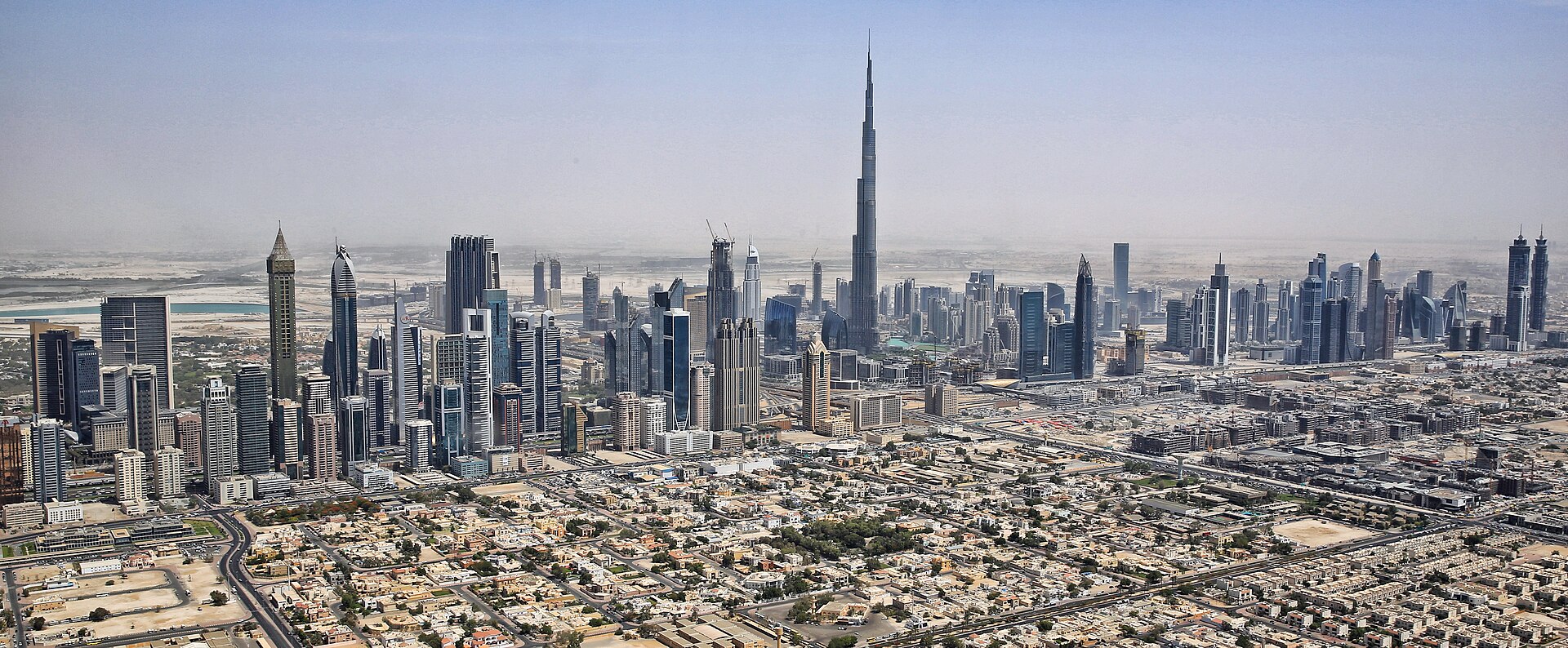
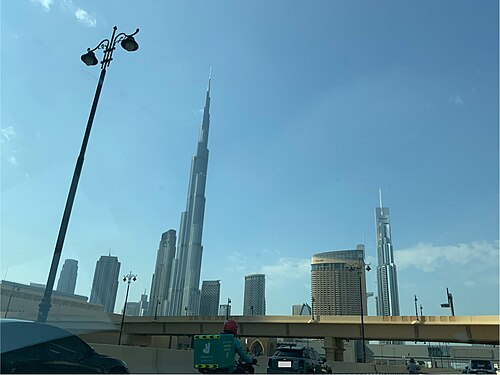
Burj Khalifa is the 828-metre tower that Emaar opened in Downtown Dubai on 4 January 2010, and what a visitor actually buys a ticket to is a small part of it.
- Must see
- Historic site
City guide · United Arab Emirates
Dubai is a long coastal city rather than a compact centre. Historic districts cluster around Dubai Creek, the modern business and visitor core follows Sheikh Za...
Photograph · Tim Reckmann from Hamm, Deutschland · CC BY-SA 3.0
Set your days, your pace and the hours you actually want to be out. The planner works around closing days and travel time, and leaves room to eat.
Editorial responsibility: Elena Voss · Roavina Travel Editor
Dubai is a long coastal city rather than a compact centre. Historic districts cluster around Dubai Creek, the modern business and visitor core follows Sheikh Zayed Road, and resort districts continue southwest through Dubai Marina and Palm Jumeirah. A practical visit groups sights by corridor because crossing between old Dubai, Downtown and the marina repeatedly wastes time. The metro handles the main north-south spine, while taxis and buses cover the final connection to places away from it.
Checked 2026-08-26
November · November balances a 30.5°C mean high and 18.3°C mean low in Dubai with 1.8 mm of normal rain across 0.3 rain days.
Ranked by importance — sitelinks, pageviews and heritage status, not editor preference.
103 places match
Category
Typical visit duration
Good for
برج خليفة
Burj Khalifa is the 828-metre tower that Emaar opened in Downtown Dubai on 4 January 2010, and what a visitor actually buys a ticket to is a small part of it.
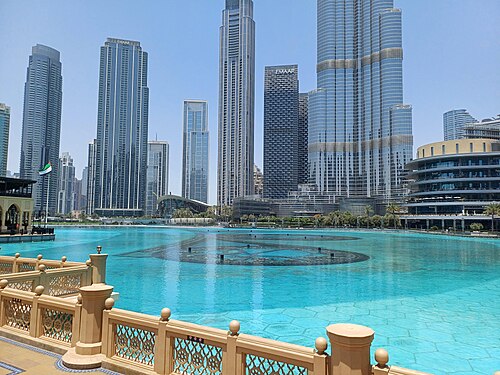
The Dubai Fountain is a choreographed fountain system located on the Burj Khalifa Lake in Downtown Dubai. It is one of the city's most prominent entertainment attractions, drawing visitors who gather to observe its water, music, and light performances.
دبي مول
Dubai Mall stands on Financial Centre Road in Downtown Dubai, at the foot of Burj Khalifa, and its operator Emaar describes it as the most visited retail and lifestyle destination in the world, welcoming over 100 million visitors a year.
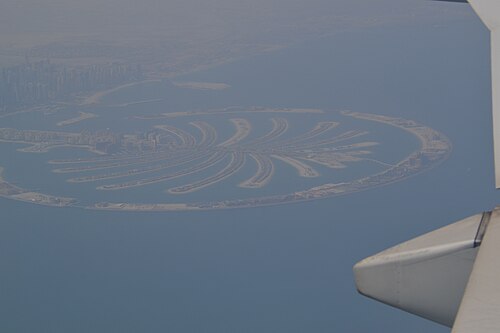
Palm Jumeirah is Nakheel's palm-shaped, man-made island extending five kilometres into the Arabian Gulf. The master developer records 560 hectares of land and describes a mixed residential, tourism and leisure destination rather than one attraction behind a single entrance.
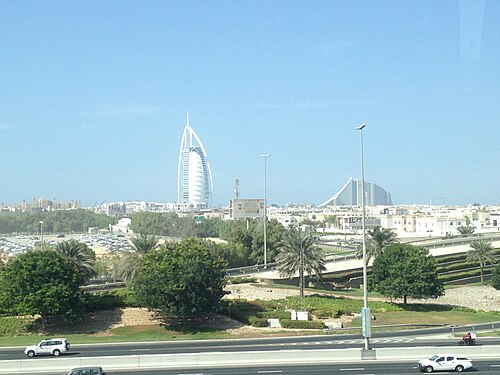
Burj Al Arab is Jumeirah's sail-shaped luxury hotel on Dubai's coast.
متحف المستقبل
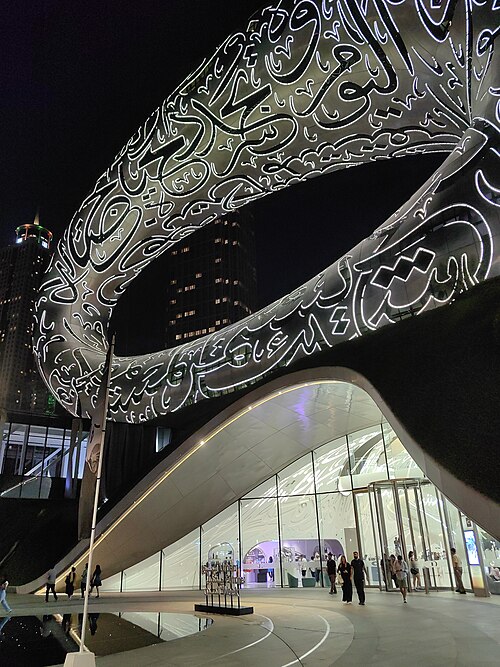
The Museum of the Future is a steel torus standing on a planted green mound beside Jumeirah Emirates Towers on Sheikh Zayed Road, with an oval void cut through its centre.
برواز دبي
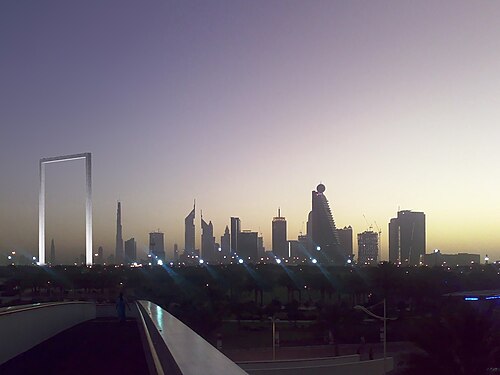
Dubai Frame is a picture frame built at architectural scale in Zabeel Park, and it is run by Dubai Municipality rather than by a commercial operator.
حي الفهيدي التاريخي
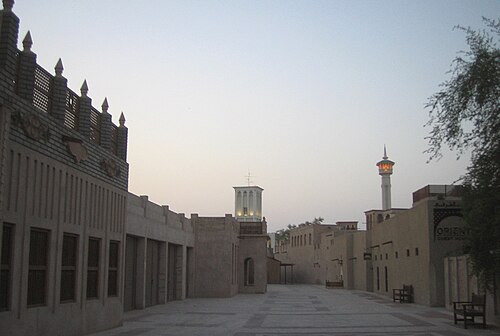
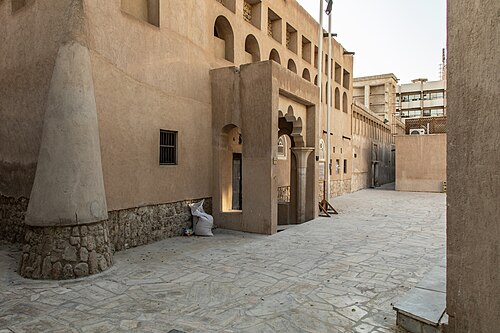
Al Fahidi Historical Neighbourhood stands on the Bur Dubai bank of Dubai Creek, a few streets of low coral-stone houses left standing while the rest of the city went vertical.
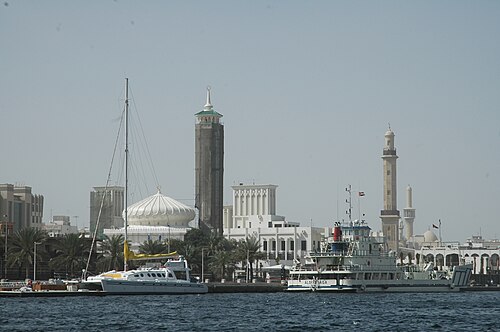
Dubai Creek is a natural saltwater inlet that historically divided the city into Deira and Bur Dubai.
Deira Gold Souk
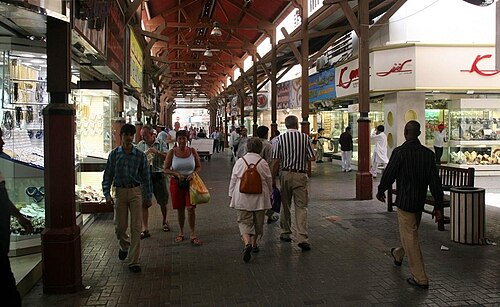
Deira Gold Souk is an open-air jewellery market in Al Ras, at the northern end of Deira, a few hundred metres back from the Dubai Creek waterfront.
حصن الفهيدي
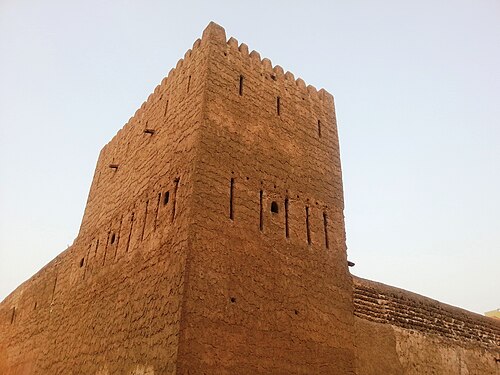
Al Fahidi Fort, known locally as حصن الفهيدي, stands as Dubai's oldest existing building. Constructed in 1787, this coral-stone and mortar fortification served defensive purposes before later uses as a palace, garrison, and prison.
دبي أكواريوم وحديقة الحيوانات المائية
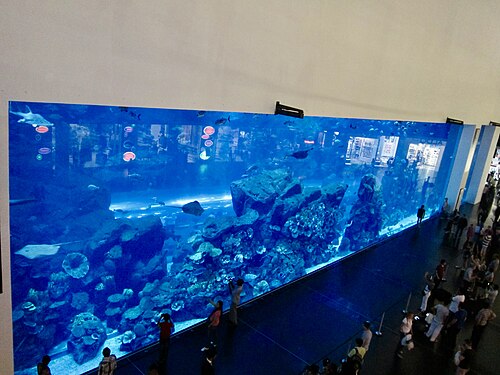
Dubai Aquarium & Underwater Zoo is a two-level attraction built into The Dubai Mall and run by Emaar Entertainment, the mall's own leisure arm.
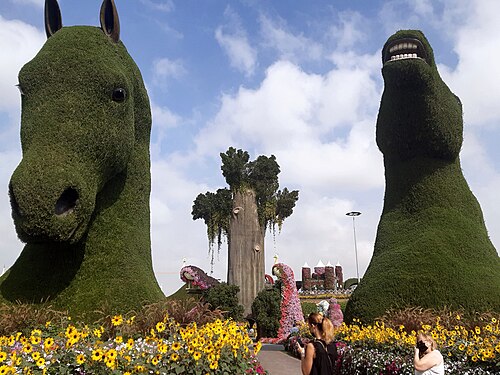
Dubai Miracle Garden is a seasonal outdoor floral attraction in Dubailand, Dubai. It claims status as one of the region's larger flower gardens, displaying elaborate arrangements and structures covered in blooms.
Dubai Marina is a district of Dubai built around an artificial canal along a 3 km stretch of the Persian Gulf shoreline. The marina is entirely human-made; it was developed by Emaar Properties and designed by HOK Canada.
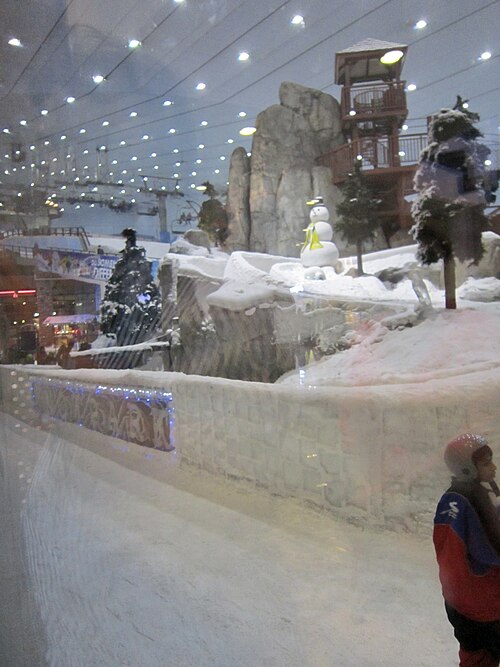
Ski Dubai is an indoor ski resort located within the Mall of the Emirates in Dubai, United Arab Emirates. It represents one of the world's largest indoor snow parks, offering winter sports experiences in a desert climate.
القرية العالمية
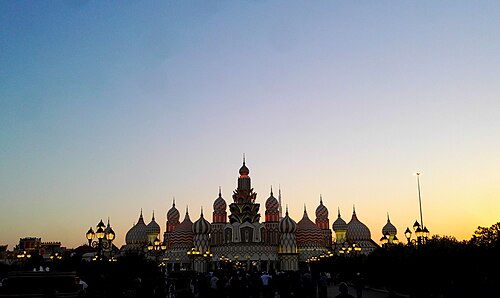
Global Village is a seasonal cultural and entertainment destination in Dubai. It brings together pavilions representing numerous countries, each showcasing traditional crafts, merchandise, and culinary specialties from their respective regions.
ذا فيو ات ذا بالم
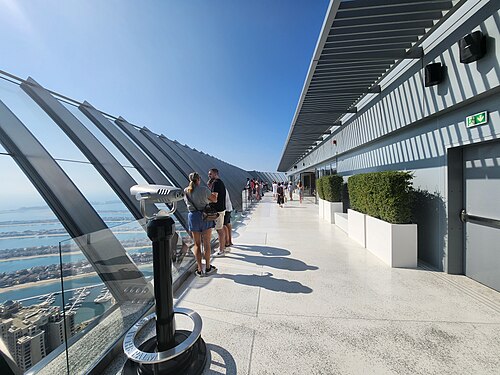
The View at The Palm is an observation deck situated on the Palm Jumeirah, Dubai's iconic artificial archipelago. Positioned atop The Palm Tower, this vantage point offers panoramic outlooks over the frond-shaped island, the Arabian Gulf, and the Dubai skyline.
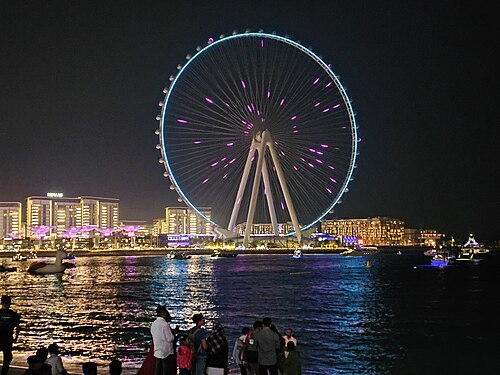
Ain Dubai is a giant observation wheel located on Bluewaters Island, an artificial island off the coast of the Jumeirah Beach Residence area. It stands as one of the most prominent landmarks on the Dubai skyline.
سوق مدينة جميرا
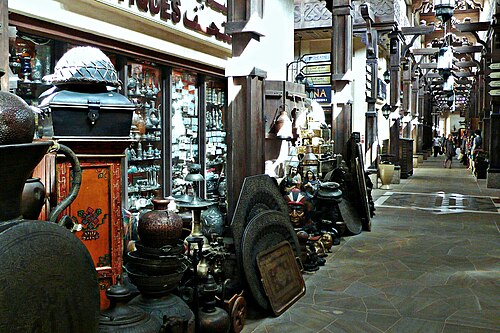
Souk Madinat Jumeirah is a purpose-built covered marketplace inside the Madinat Jumeirah resort, in the Jumeirah district a short way south of the Burj Al Arab.
الحديقة المائية وايلد وادي
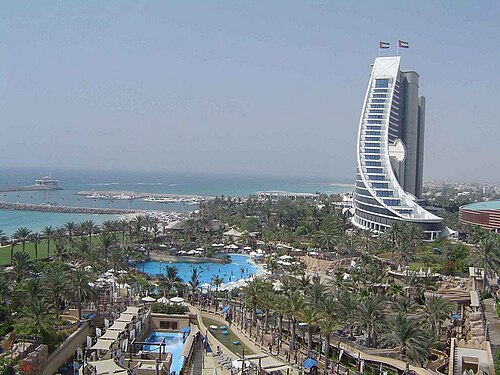
Wild Wadi Water Park is a family water park in Dubai’s Jumeirah district, beside the Burj Al Arab.
Madame Tussauds Dubai is an indoor wax museum on Bluewaters Island. It belongs to the international Madame Tussauds attraction network and presents lifelike figures of celebrities, public figures and cultural personalities.
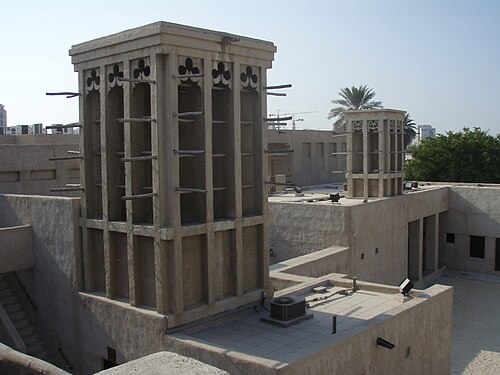
Saeed Al Maktoum House is a historic Dubai residence associated with the Al Maktoum ruling family. The house offers a direct connection with the emirate’s pre-oil past and with the traditional architecture of the Gulf.
Al Ahmadiya School is a historic educational institution in Dubai, representing the emirate's early commitment to formal schooling. Established in the early twentieth century, it served as a pioneering centre of learning during a transformative period in the region's development.
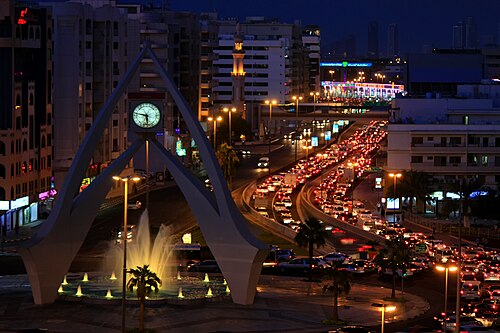
Deira Clocktower is a prominent roundabout monument located in the Deira district of Dubai, United Arab Emirates.
Dubai Creek divides the older quarters of Deira and Bur Dubai, where souks, abra crossings and the Al Fahidi district sit close together. Downtown Dubai and Business Bay form a separate cluster around Burj Khalifa and Dubai Mall. Farther southwest, the coast becomes the main organising line: Jumeirah, Madinat Jumeirah, Palm Jumeirah and Dubai Marina are successive districts, not one walkable resort zone. Desert attractions and Hatta require separate trips and should not be combined with a dense central sightseeing day.
Checked 2026-08-26
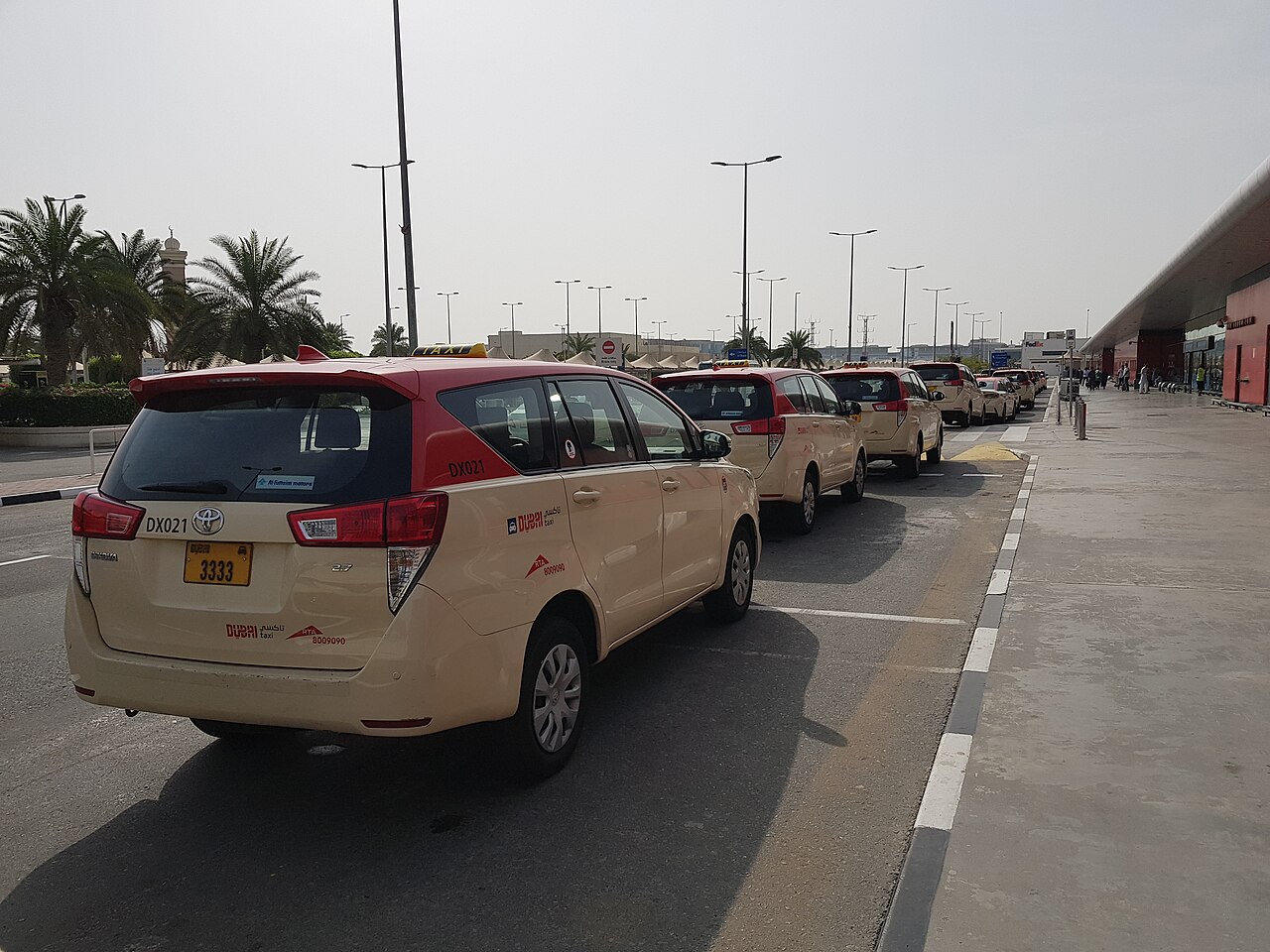
Use the Dubai Metro for the airport, old-city connections and the Sheikh Zayed Road corridor, then switch to tram, bus or taxi for districts beyond easy walking distance. The Red and Green lines connect the main urban spine and the creek-side districts, while the Dubai Tram serves Marina and links with the Palm monorail area. Stations can still be a long outdoor walk from a destination, especially in hot weather, so route planning should include the final kilometre rather than treating every metro label as doorstep access.
Checked 2026-08-26
Suggested stay for a first visit: 3–4 days. Give old Dubai and the creek, Downtown and the Jumeirah–Marina coast separate time. A fourth day can be a chosen desert outing or a slower city day; Hatta is a farther regional trip that needs additional time.
November through March is the practical outdoor season. Summer heat makes long walks and exposed transfers difficult, so a warm-season itinerary needs shorter outdoor blocks and more time for air-conditioned transport and indoor attractions.
The metro is the best backbone for the airport, creek-side interchange points, Downtown and Sheikh Zayed Road. It does not place every attraction within a short walk, so tram, bus or taxi connections remain part of most days.
Keep Deira, Bur Dubai and Al Fahidi together; combine Burj Khalifa and Dubai Mall in a Downtown day; and treat Palm Jumeirah, Madinat Jumeirah and Dubai Marina as the coastal corridor. This avoids long backtracking.
The creek-side sights are the most walkable cluster, especially Al Fahidi, the souks and the abra crossings. The wider city is not compact, and distances between named districts are often too large for sightseeing on foot.