

2 min walk
The Georgian House
- Must see · Heritage site
- Historic monument
Language · 11 published
Nature site · Edinburgh
Charlotte Square Gardens
Reviewed by Elena Voss · Roavina Travel Editor
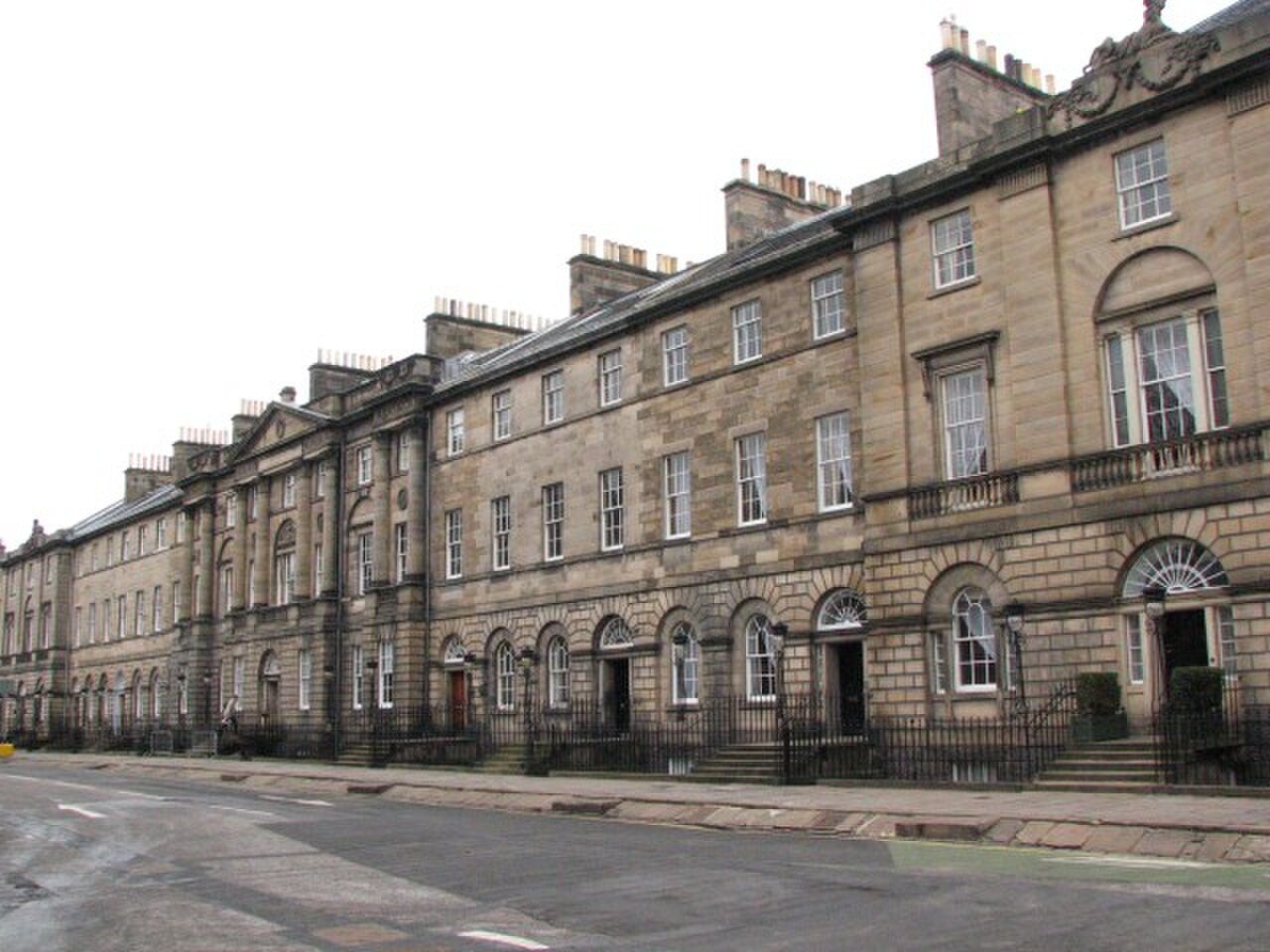
This place is a Garden.
Charlotte Square is a Georgian square at the western end of George Street in Edinburgh's New Town. Robert Adam designed the square, which was completed in 1820, and its unified classical architecture makes it one of the defining spaces of the New Town. The surrounding townhouses share a carefully planned visual language, allowing visitors to read the square as a complete urban composition rather than as a collection of unrelated buildings. Charlotte Square Gardens occupies the centre, but the garden is private and belongs to residents. Public visitors experience the square from its surrounding pavements, where the facades, symmetry and classical details remain the main attraction. The square shows how Edinburgh's eighteenth- and nineteenth-century expansion used architecture to express order, status and civic ambition. A slow circuit reveals changes in stonework, windows, ironwork and official frontage across the perimeter.
Checked 2026-08-26 · Source
Charlotte Square is an open urban space surrounded by private residential properties, not an indoor attraction with galleries or public rooms. The central Charlotte Square Gardens is private and accessible to residents with keys, so visitors should concentrate on the public perimeter. From the pavements, the square offers mature trees, railings, landscaped greenery and a sequence of Georgian facades. Bute House at number 6 is a notable building and serves as the official residence of the First Minister of Scotland. Robert Adam's design is easiest to understand by looking across several buildings at once: symmetry, classical detailing, consoled window heads, ironwork and refined stonework work together across the square. The experience is architectural rather than collection-based. Visitors can study how the private garden and public streets create different layers within the same Georgian plan.
Checked 2026-08-26 · Source
Allow fifteen to thirty minutes to walk around Charlotte Square's public perimeter and study the Georgian facades. A short visit is enough for a general impression, while architecture enthusiasts may spend longer comparing windows, stonework, ironwork and the formal arrangement of the buildings. Charlotte Square works especially well as part of a New Town walk that continues along George Street towards St Andrew Square. The square is primarily residential, so the visitor experience depends on observation rather than on entering rooms or spending time in a visitor centre. Pause at several sides of the square instead of viewing only one frontage; the unified design becomes clearer from different angles. Photography can extend the stop, particularly when the changing light brings out classical details. Keep the visit flexible because the square is an urban walking landmark rather than a timed attraction.
Checked 2026-08-26 · Source
The public pavements around Charlotte Square are ordinary city streets and can be walked as part of an Edinburgh day. Daylight is best for reading the Georgian architecture, seeing the mature trees through the railings and photographing the square's classical details. Morning light can suit the north side, while afternoon light can illuminate the south side. Weather changes quickly in Edinburgh, and the open perimeter offers little shelter, so a waterproof layer is useful even for a short circuit. Seasonal changes in the central garden can be observed from outside, although the garden itself remains private. Choose a time when the square fits naturally into a New Town route, then move on towards George Street or nearby central attractions. Early or quieter periods can make it easier to pause without disturbing residents or blocking the pavement.
Checked 2026-08-26 · Source
Walking the public streets and pavements around Charlotte Square is free. Charlotte Square Gardens has no public admission arrangement because it is a private residents' garden, and visitors should not enter through its railings or gates without authorisation. The architectural experience therefore comes from the public perimeter rather than from access to the central garden. A commercial walking tour may include Charlotte Square, but any tour charge belongs to the tour provider and is separate from the square itself. Treat the stop as a free part of an Edinburgh New Town walk. The lack of a ticketed entrance makes it easy to include between other attractions, while the private garden status gives the visit a clear boundary: observe the landscaping, trees and buildings from the public side.
Checked 2026-08-26 · Source
Charlotte Square stands at the western end of George Street in Edinburgh's New Town, at EH2 4HQ. Princes Street is approximately five minutes south on foot, and Edinburgh Waverley station is roughly fifteen minutes away to the southeast. Lothian Buses serve nearby George Street and Queensferry Street, making the square easy to add to a central walking route. The compact New Town layout rewards approaching on foot because the surrounding streets reveal the planned relationship between Charlotte Square, George Street and St Andrew Square. Taxis and rideshare vehicles can reach the surrounding streets directly. There is no dedicated visitor parking at the square itself, so drivers should account for central traffic and parking restrictions. Once there, walk the full public perimeter and keep the central garden on the other side of its railings.
Checked 2026-08-26 · Source
Charlotte Square Gardens is private, and visitors must respect the railings, gates and residents' access. The surrounding buildings are homes, including Bute House, so keep voices low and avoid lingering directly outside entrances. Pavements can be narrow, and vehicles use the streets around the square; look up at the architecture without losing awareness of kerbs, traffic and other pedestrians. The open setting offers little protection from rain or wind, so clothing matters even during a short visit. Avoid leaning on railings or touching the buildings while examining details. The square is most enjoyable when treated as a residential neighbourhood with exceptional architecture, not as a conventional visitor facility. Give residents and other walkers room, keep photography discreet and follow any signs around official buildings or private entrances.
Checked 2026-08-26 · Source
Charlotte Square offers strong architectural photography from its public pavements. Robert Adam's unified Georgian frontage creates symmetrical compositions, while individual windows, consoled window heads, ironwork and stone details reward closer views. Photograph the square as a whole before concentrating on one building, since the relationship between the facades is central to its design. The private gardens can be photographed only from outside the railings, with trees and greenery forming a framed centre. Morning light can work well on the north side and afternoon light on the south side. Tripods and large equipment may obstruct pedestrians on the pavements, so keep setups compact and temporary. Bute House, official flags and signage can change the character of a composition; maintain discretion around the residence and surrounding homes. Avoid photographing residents through windows or lingering at private entrances.
Checked 2026-08-26 · Source
No. Charlotte Square Gardens is a private residents' garden. Visitors can walk the surrounding public pavements and view the garden through its railings.
No fee applies to walking the public streets around Charlotte Square. The central gardens are private and do not offer public admission.
Robert Adam designed Charlotte Square. The square was completed in 1820 and is known for its unified Georgian classical architecture.
Charlotte Square is at the western end of George Street. Princes Street is about five minutes away on foot, while Edinburgh Waverley station is roughly fifteen minutes southeast.
Bute House at number 6 Charlotte Square is the official residence of the First Minister of Scotland.
Allow fifteen to thirty minutes to walk the public perimeter and study the Georgian facades, with extra time if you are photographing architectural details.
Loading the interactive map…
The interactive map could not be loaded.
Last updated:
Source: OpenStreetMap contributors, Wikidata ·