
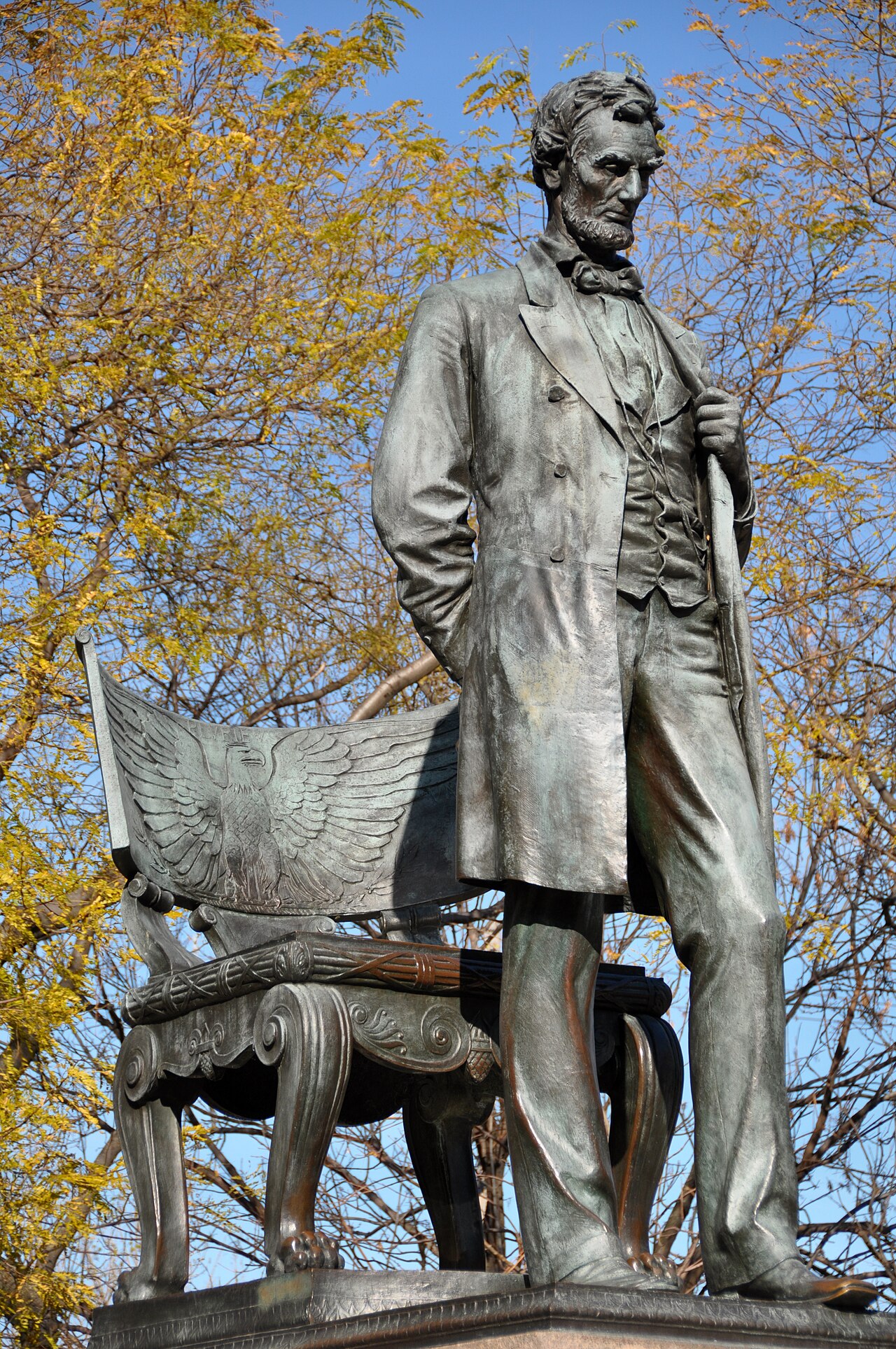
2 min walk
Abraham Lincoln: The Man
- High · Heritage site
- Historic monument
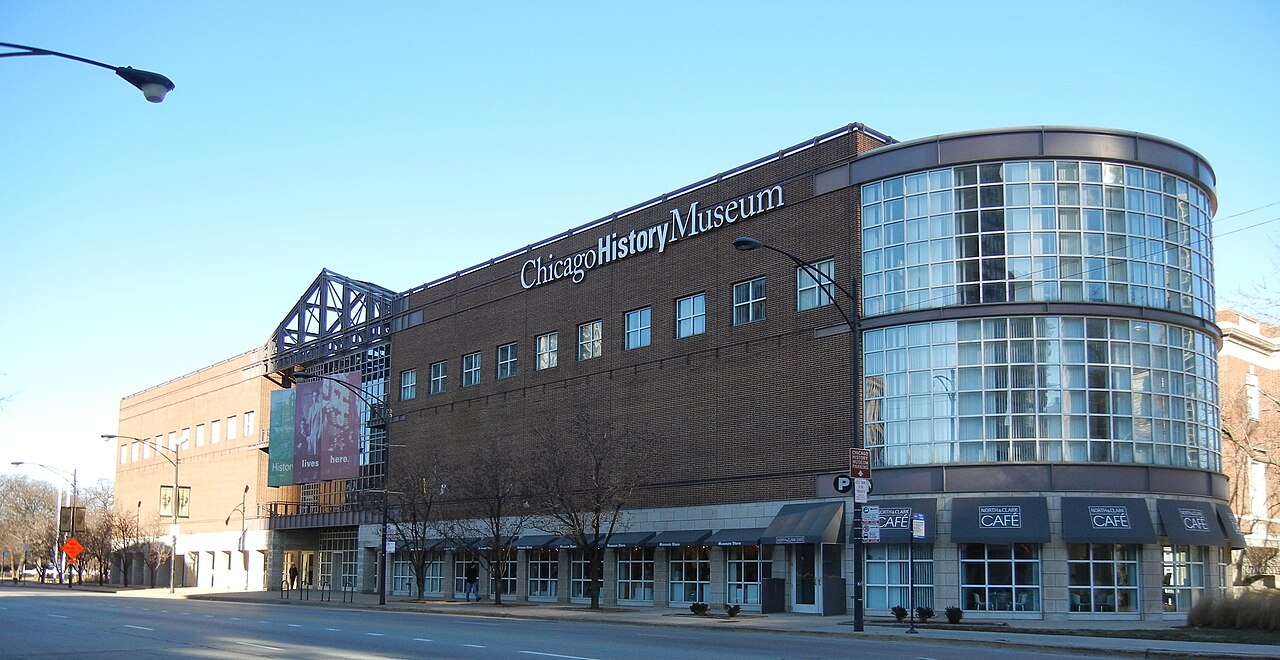
Museum · Chicago
| Monday | Closed |
|---|---|
| Tuesday | 09:30 – 16:30 |
| Wednesday | 09:30 – 16:30 |
| Thursday | 09:30 – 16:30 |
| Friday | 09:30 – 16:30 |
| Saturday | 09:30 – 16:30 |
| Sunday | 12:00 – 17:00 |
Checked 2026-08-31 · Source
| Per person | $24.00 |
|---|
Checked 2026-08-31 · Source
Read from the OpenStreetMap access tags; anything not listed has no tag recorded.
Set the group type to family in the planner and the day window contracts to about three quarters of a solo day.
The Chicago History Museum is the principal museum dedicated to the social and civic history of Chicago. Located in the Lincoln Park neighborhood, it serves as the city's primary institution for preserving and interpreting its past. The museum operates under the Chicago Historical Society, one of the oldest historical societies in the United States. Its collections and exhibitions document the city's development from a small frontier settlement to a major metropolitan center, covering political, economic, and cultural transformations across centuries. The museum interprets Chicago through objects, documents, photographs and exhibitions on the city's people, neighbourhoods, politics, labour, design and built environment. Its collection includes material from the Chicago Fire, transportation history and civic movements. The Lincoln Park building also serves as a research and education institution, so temporary exhibitions and public programmes add changing perspectives to the permanent city-history route.
Checked 2026-08-31 · Source
The museum houses extensive collections of artifacts, documents, photographs, and artworks related to Chicago history. Notable holdings include materials on the Great Chicago Fire of 1871, the city's World's Fair legacy, and its political history. Exhibitions explore neighborhood development, immigration patterns, and social movements. The institution maintains archives available for research purposes. Costume and textile collections, decorative arts, and paintings supplement the historical narrative. Temporary exhibitions rotate through gallery spaces, addressing specific themes or periods in the city's evolution. Chicago History Museum also earns time in a chicago itinerary because Principal museum for the city's social and civic history. Its value becomes clearer when the stop is compared with the surrounding streets and the other ranked places nearby.
Checked 2026-08-31 · Source
Visitors typically allocate between two and three hours for a comprehensive visit to the Chicago History Museum. This duration allows adequate time to explore the permanent exhibitions and any temporary displays currently mounted. Researchers or those with specialized interests in particular aspects of Chicago history may wish to extend their stay. The museum's compact, navigable layout facilitates efficient movement between galleries. Visitors should consider their personal pace and depth of interest when planning their schedule, as engagement with archival materials or detailed reading of exhibit labels varies considerably among individuals.
Checked 2026-08-31 · Source
Monday closed; Tuesday-Saturday 09:30-16:30; Sunday 12:00-17:00. Selected Mondays and commemorative dates open specially. Closed New Year's Day, Thanksgiving and Christmas; several holiday eves close 14:30. Arrive early enough for security, timed entry and the main route before the final admission period. Weekends, school holidays, games, festivals and special events increase crowds or close individual areas. Chicago weather affects parks, riverfronts and outdoor approaches, while indoor museums remain climate controlled. The dated operator calendar always takes priority over a normal weekly pattern.
Checked 2026-08-31 · Source
Adult admission is USD 24 non-Chicago and USD 19 Chicago resident. Illinois residents 18 and under enter free; non-Illinois ages 13-18 pay USD 20 and ages 12 and under enter free. Use the official operator and retain the dated confirmation. General entry does not include separately priced tours, performances, temporary exhibitions, parking, rentals, food or events unless the product says so. Free or suggested admission can still require a timed reservation and proof of eligibility. Accessible seating and necessary companion arrangements follow the venue-specific booking process.
Checked 2026-08-31 · Source
The museum is at 1601 N Clark Street. CTA buses 22, 36, 72, 73, 151 and 156 stop nearby; Sedgwick Brown/Purple and Clark/Division Red stations are about half a mile away. Validated parking is USD 10 at 1730 N Stockton. Allow time for the final walk, entrance choice, security or tour meeting point. Use the complete venue name and address because lakefront campuses, university sites and stadiums can have multiple gates. Public transport avoids event traffic and expensive parking, and an admission or tour reservation never guarantees a parking place.
Checked 2026-08-31 · Source
Button doors, elevators to every public floor, accessible restrooms and theater seating, free wheelchairs, sensory headphones and service-animal access provide a complete accessible route. Follow the designated accessible route and staff instructions. Crowds, historic interiors, tours, performance spaces, festivals and temporary installations can apply narrower access or transfer requirements than the main route. Keep bags compact, retain tickets and identification, and leave lifts, ramps, aisles, companion seating and emergency routes clear for other visitors.
Checked 2026-08-31 · Source
Photography policies at the Chicago History Museum are governed by exhibition-specific regulations rather than uniform institutional rules. Some collections permit non-flash photography for personal use, while loaned exhibitions or sensitive materials may carry complete restrictions. Visitors must observe posted signage in individual galleries and comply with staff instructions. Tripod, monopod, or selfie stick usage typically requires explicit authorization. Commercial or publication-oriented photography necessitates advance arrangement with museum administration. Flash photography is generally prohibited to protect light-sensitive artifacts. Visitors uncertain about permissions should seek clarification from available staff before capturing images.
Checked 2026-08-31 · Source
Usually no, although selected commemorative Mondays open specially.
The museum reports an average first visit of about two hours.
Yes. General admission is valid for same-day re-entry.
Amateur photography is allowed without tripods, monopods or selfie sticks unless an exhibition restricts it.
Yes. Wheelchairs are free at the ticket desk and can be reserved ahead.
Yes. The Abakanowicz Research Center is free during its separate Tuesday-Friday hours.
Loading the interactive map…
The interactive map could not be loaded.
Last updated:
Source: OpenStreetMap contributors, Wikidata ·