.jpg)
2 min walk
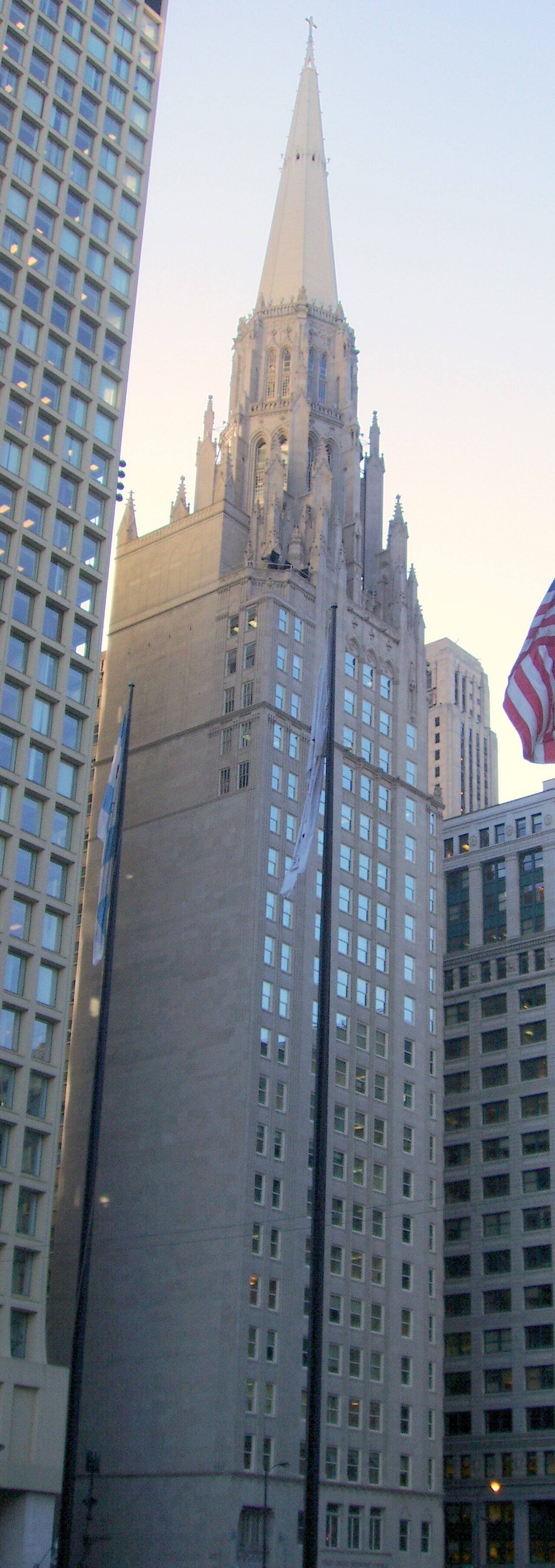
First United Methodist Church of Chicago
- Notable
- Place of worship
Language · 11 published
Art and culture venue · Chicago
Reviewed by Elena Voss · Roavina Travel Editor
This place is a Artwork. It was established in 1967.
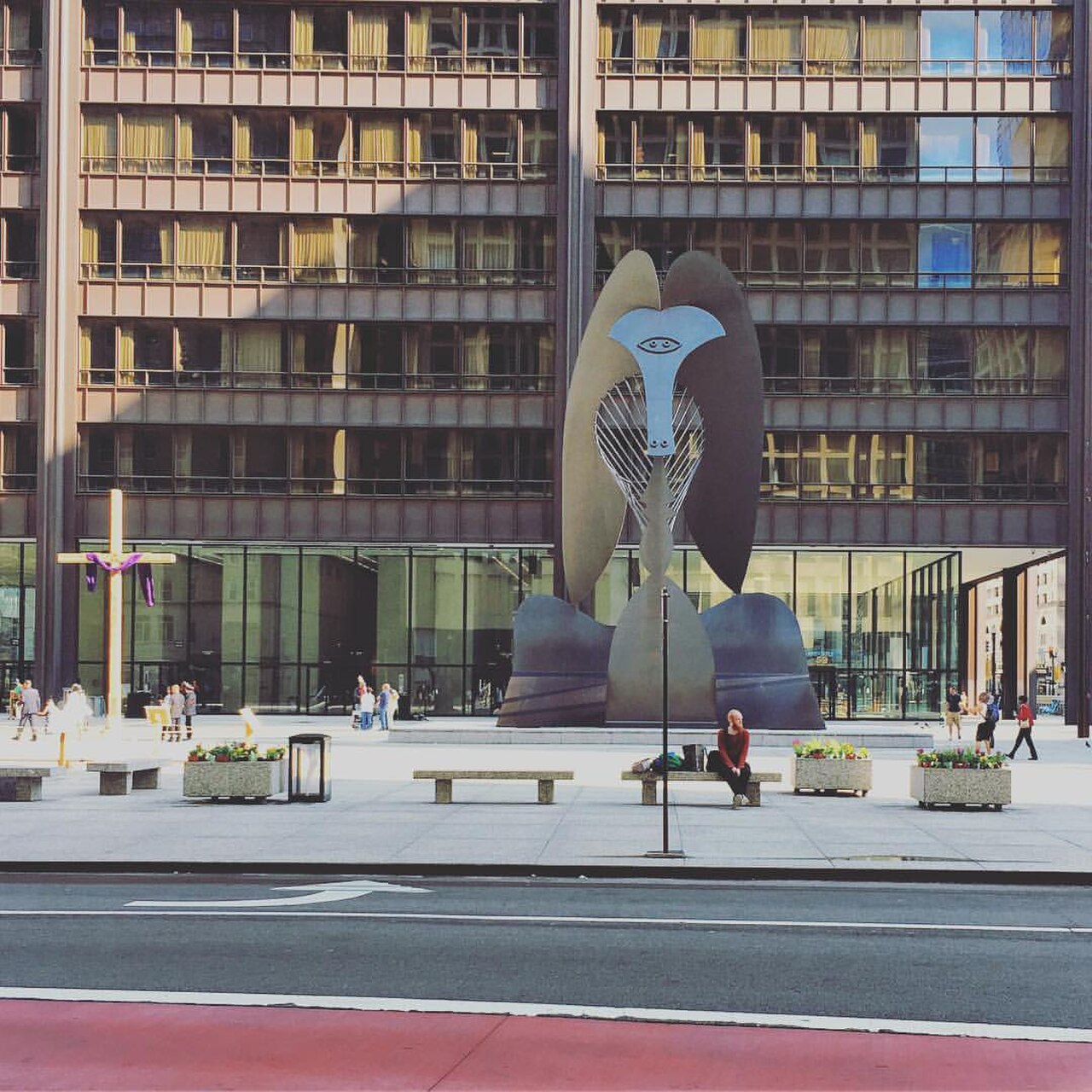
The Chicago Picasso is an untitled monumental sculpture by Pablo Picasso, installed in 1967 in Daley Plaza. Standing fifty feet tall, the Cor-Ten steel artwork was the first large-scale public sculpture in downtown Chicago and helped establish the city's reputation for ambitious public art. The piece was commissioned by the architects of the Chicago Civic Center, now the Richard J. Daley Center. Picasso refused payment, donating his design to the city. The abstract form has been subject to varied interpretation, with some viewers perceiving a woman's face, a bird, or an Afghan hound.
Checked 2026-08-26
The sculpture occupies the open plaza of the Daley Center, surrounded by a public square with seating and open space. There is no enclosed structure or interior to enter. Visitors can walk around the base and beneath the sculpture's arches. The plaza hosts public gatherings, protests, and seasonal events including a Christmas tree and farmer's market. A notable companion piece exists nearby: a tactile braille model of the sculpture installed for visually impaired visitors, allowing hands-on exploration of the artwork's form.
Checked 2026-08-26
A visit to the Chicago Picasso requires minimal dedicated time, typically fifteen to thirty minutes for observation and photography. Many visitors incorporate it into broader exploration of the Loop district. The sculpture's prominence in Daley Plaza means it can be appreciated in passing or studied at length. Those interested in architectural context may spend additional time examining the surrounding Civic Center complex. The plaza's function as public space permits extended lingering, though weather conditions significantly affect comfort for prolonged outdoor stays.
Checked 2026-08-26
The sculpture is an outdoor public installation accessible at all hours. Daylight hours offer optimal visibility for appreciating the steel's weathered surface and the interplay of light through the sculpture's openings. Winter visits present the sculpture against potential snow cover, while summer brings fuller plaza activity. The sculpture's presence during weekday business hours coincides with surrounding government and commercial activity. Evening viewing offers illuminated perspectives against the Daley Center and city lights. Check the operator's own site for the travel date before relying on a schedule or fare.
Checked 2026-08-26
No admission fee applies to viewing the Chicago Picasso. The sculpture stands in unrestricted public space. No ticketing infrastructure exists. Visitors should exercise standard urban awareness regarding personal belongings. The surrounding plaza and adjacent Daley Center facilities operate under municipal management. Any special events occurring in the plaza may involve separate arrangements, but the sculpture itself remains freely accessible. Commercial photography permits for professional purposes may require separate municipal authorization. Chicago Picasso also earns time in a chicago itinerary because Pivotal Daley Plaza public sculpture, distinct from its nearby braille model. Its value becomes clearer when the stop is compared with the surrounding streets and the other ranked places nearby. Check the operator's own site for the travel date before relying on a schedule or fare.
Checked 2026-08-26
The sculpture stands in Daley Plaza at 50 West Washington Street in Chicago's Loop. Multiple Chicago Transit Authority train lines serve nearby stations: Clark/Lake serves multiple elevated lines, and Washington stations on the Red and Blue subway lines are within walking distance. Numerous bus routes traverse surrounding streets. Limited parking exists in adjacent garages and metered street spaces. The location sits within Chicago's central business district, walkable from many downtown accommodations. Bicycle infrastructure includes nearby Divvy bike-share stations.
Checked 2026-08-26
The sculpture's base features sloped surfaces that become slippery in precipitation. Climbing is discouraged and potentially hazardous. The open plaza offers minimal shelter from severe weather. Summer crowds during lunch hours and special events may affect movement and photography. The area experiences standard urban foot traffic including demonstrations and events that may alter normal access. Winter conditions produce ice and snow accumulation. Visitors should remain aware of surrounding traffic at plaza edges. The steel surface retains temperature extremes, becoming notably hot in summer sun and cold in winter.
Checked 2026-08-26
The sculpture permits unrestricted photography from public vantage points. Morning and late afternoon light create dramatic shadows through the open structure. Wide-angle lenses accommodate the full height from close proximity. The surrounding plaza and Daley Center facade provide contextual framing. Night photography benefits from building illumination, though dedicated lighting on the sculpture itself is limited. The reflective steel surface presents exposure challenges in bright conditions. Tripod use in the plaza appears generally tolerated but should not obstruct pedestrian flow. The braille model nearby offers alternative compositional possibilities.
Checked 2026-08-26
Pablo Picasso designed the sculpture. It was fabricated by the American Bridge Company of United States Steel in Gary, Indiana.
The sculpture is constructed from Cor-Ten steel, a weathering steel that develops a stable rust-like appearance.
The main sculpture is accessible at its base, though climbing is hazardous. A separate tactile braille model nearby is specifically intended for hands-on exploration.
The work is officially untitled. 'Chicago Picasso' is the commonly used descriptive name.
No facilities exist at the sculpture itself. Restrooms may be available in the adjacent Daley Center during its operating hours.
The sculpture was unveiled in 1967 and has remained at this Daley Plaza site since installation.
Loading the interactive map…
The interactive map could not be loaded.
Last updated:
Source: OpenStreetMap contributors, Wikidata ·