.jpg)

7 min walk
U-505
- Must see · Heritage site
- Historic monument
Language · 11 published
Historic monument · Chicago
Reviewed by Elena Voss · Roavina Travel Editor
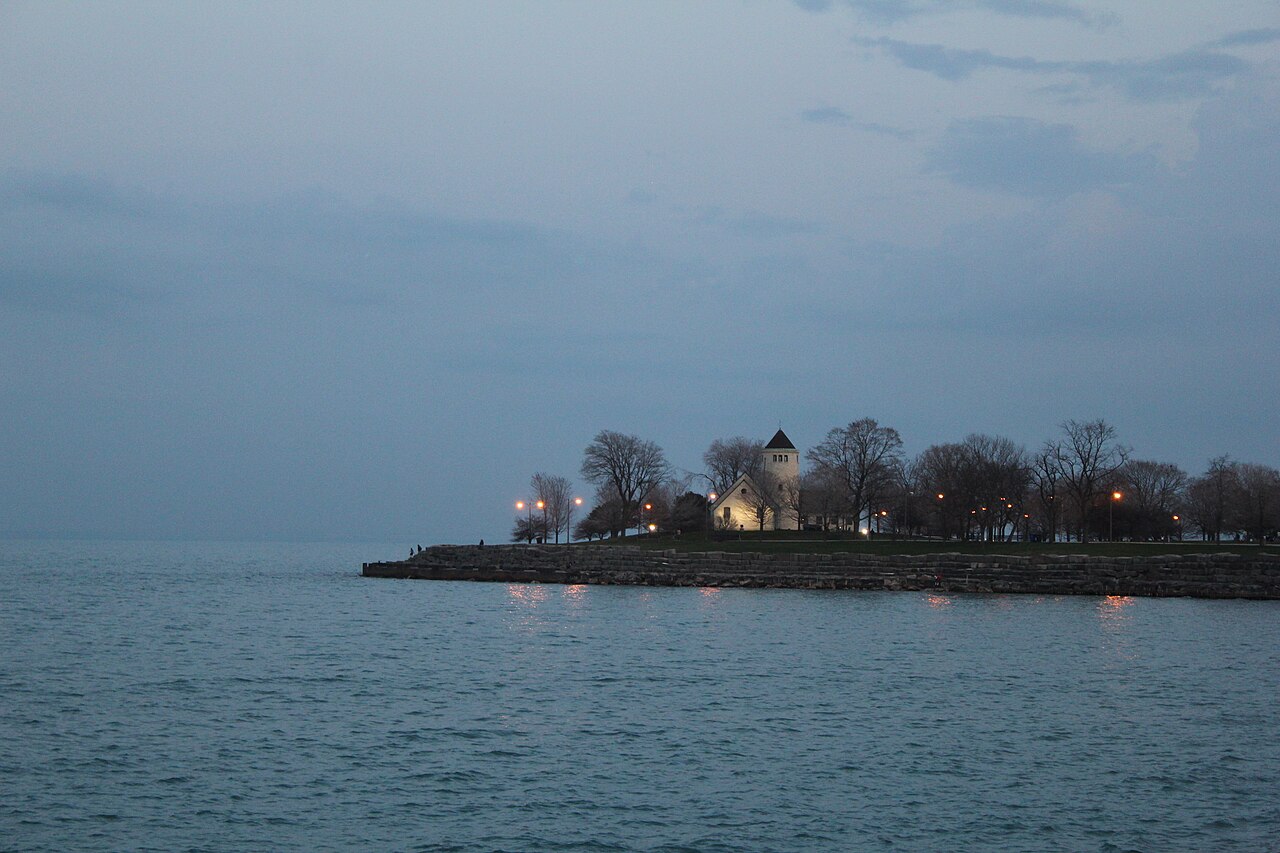
Promontory Point is a man-made peninsula extending into Lake Michigan within Burnham Park on Chicago's South Side. Designed by Alfred Caldwell and completed in 1937, it was constructed with limestone blocks as part of the Works Progress Administration. The point forms a protected harbor area and offers panoramic views of the downtown Chicago skyline across the lake. It sits near the Hyde Park and Kenwood neighborhoods and has historically served as a significant public gathering space for swimming, sunbathing, and community events along the lakefront.
Checked 2026-08-26
The point features a distinctive limestone revetment designed by landscape architect Alfred Caldwell, creating stepped levels down to the water. A stone fieldhouse stands at the center, providing shelter and facilities. The surrounding area includes green space for picnicking and relaxation. The harbor area formed by the peninsula offers calmer waters compared to open lake conditions. The stepped limestone construction allows visitors to access the water at multiple levels, with the design integrating natural materials into the lakefront environment in a manner characteristic of Caldwell's Prairie School influenced approach.
Checked 2026-08-26
Visitors typically spend between one and three hours at Promontory Point depending on their activities. Those coming for a brief skyline viewing or photographic stop may require only thirty minutes to walk the perimeter and appreciate the vistas. Swimmers and sunbathers often extend their stay through much of a day. Picnickers similarly linger for extended periods. The compact nature of the peninsula means that walking its full extent takes minimal time, while the quality of the views and water access encourages longer, unhurried visits for those with flexible schedules.
Checked 2026-08-26
Promontory Point is generally accessible during daylight hours as a public park space. The optimal visiting period runs from late spring through early autumn when Chicago's lakefront weather permits comfortable outdoor activity and swimming. Winter visits are possible but harsh winds and freezing temperatures limit enjoyment. Lake swimming conditions depend on daily weather and water temperature. Visitors should consult official Chicago Park District sources before planning around specific facility access times or seasonal service changes that may affect availability. Check the operator's own site for the travel date before relying on a schedule or fare.
Checked 2026-08-26
Promontory Point operates as a free public park facility within Chicago's lakefront park system. No admission fee is required to access the peninsula, fieldhouse, or surrounding grounds. Swimming from the point carries no separate charge. Any fees for organized programs, facility rentals, or special services would be established by the Chicago Park District. Visitors seeking to rent the fieldhouse for private events or participate in structured activities should contact the Chicago Park District directly for current fee schedules and reservation requirements. Check the operator's own site for the travel date before relying on a schedule or fare.
Checked 2026-08-26
Promontory Point is located at 5491 South Shore Drive in Chicago. The CTA bus route 6 Jackson Park Express and route 28 Stony Island serve the general area, though visitors should verify current routing and stops. The Metra Electric District line stops at 51st-53rd Street Hyde Park station, requiring eastward walking through the neighborhood to reach the lakefront. Driving visitors will find limited street parking in the surrounding area, with demand increasing on summer weekends. Bicyclists can access the point via the Lakefront Trail, though the trail routing in this segment requires attention to current conditions.
Checked 2026-08-26
Lake Michigan conditions demand respect; sudden weather changes, strong currents, and cold water temperatures create hazards for swimmers even when surface conditions appear calm. The limestone surfaces become slippery when wet, requiring careful footing. The point lacks lifeguard services at all times, so swimmers assume personal risk. Winter ice formation on the revetment and harbor creates additional dangers. Visitors should monitor weather forecasts and avoid the water during advisories. The isolated portions of the peninsula may have limited immediate assistance available, making companion travel prudent particularly during off-peak hours or seasons with sparse attendance.
Checked 2026-08-26
The point offers exceptional skyline photography opportunities with downtown Chicago visible across Lake Michigan, particularly striking during sunrise when light illuminates the buildings. The limestone architecture provides textural foreground interest against water and sky compositions. Sunset positions the viewer facing away from downtown but yields dramatic sky color over the lake. The stepped revetment creates multiple elevation options for varied perspectives. Wide-angle lenses accommodate both the broad lake vista and the architectural details of the fieldhouse. Morning visits typically provide calmer water for reflection shots. The harbor area offers protected water surfaces that may assist in achieving desired reflective effects under suitable conditions.
Checked 2026-08-26
Swimming occurs at visitors' own risk as lifeguard coverage is not consistently provided. The harbor area offers somewhat protected conditions, but lake hazards including cold water, currents, and changing weather require caution.
Landscape architect Alfred Caldwell designed the limestone revetment and overall landscape, completed in 1937 as a Works Progress Administration project within Burnham Park.
Check the operator's own site for the travel date before relying on a schedule or fare.
The Chicago Park District manages the fieldhouse and may permit rentals; visitors must contact the district directly to inquire about current policies, availability, and any associated fees.
The Lakefront Trail runs through the general area, though trail routing and current conditions near the point require verification as segments may shift due to lakefront construction or erosion management.
Alfred Caldwell's stepped limestone revetment represents a distinctive integration of natural materials and Prairie School design principles, creating functional water access while harmonizing with the lakefront environment in a manner uncommon among Chicago's more engineered shoreline structures.
Loading the interactive map…
The interactive map could not be loaded.
Last updated:
Source: OpenStreetMap contributors, Wikidata ·