.jpg)
8 min walk
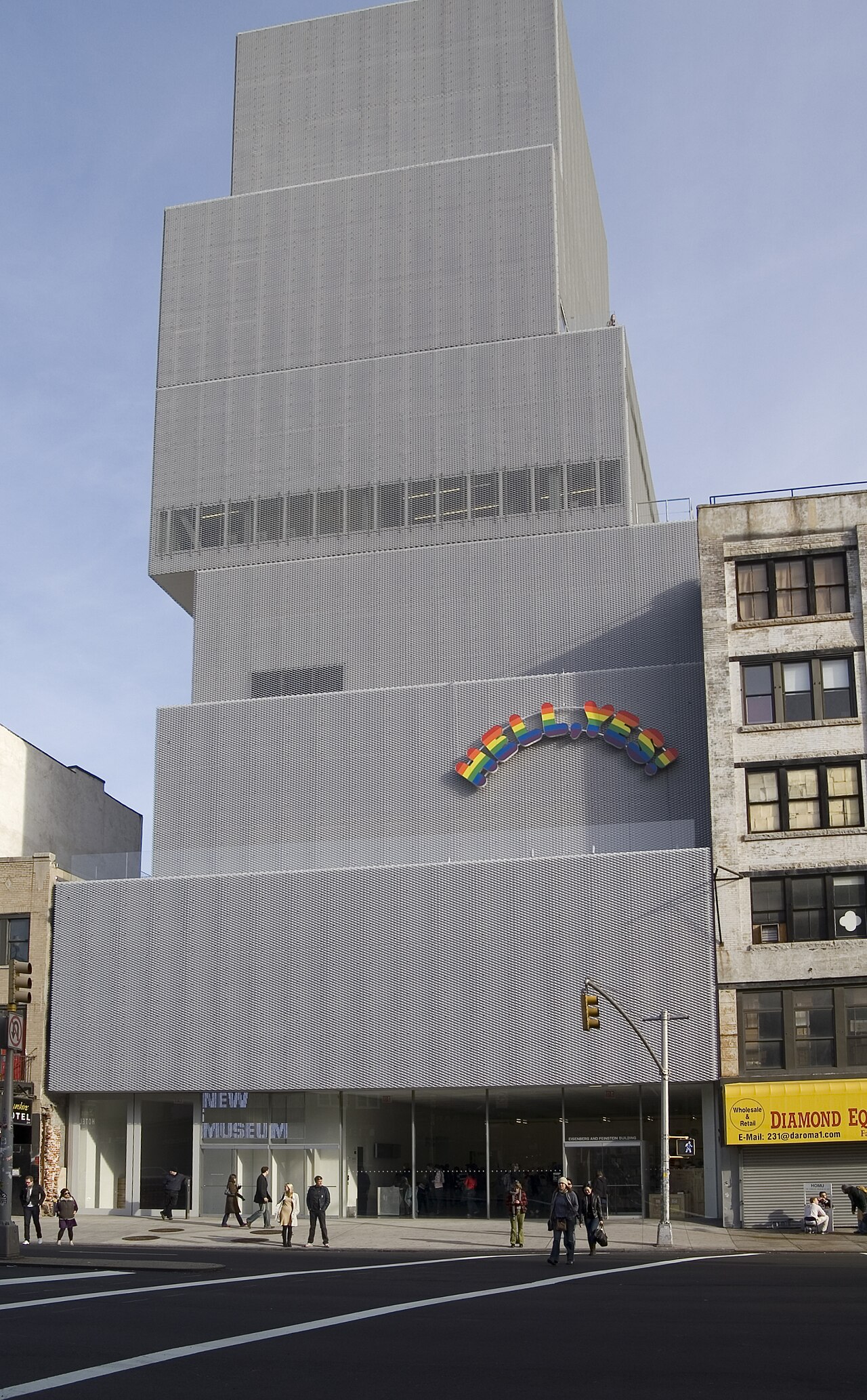
New Museum
- High
- Museum
Museum · New York
Closed today, Monday. Next open Thursday at 13:00 — the planner will not place a stop here on a Monday.
Plan around it| Monday |
Closed
Valid 2027-06-01 – 2027-08-31 |
|---|---|
| Monday |
Closed
Valid 2026-09-01 – 2027-05-31 |
| Tuesday |
Closed
Valid 2027-06-01 – 2027-08-31 |
| Tuesday |
Closed
Valid 2026-09-01 – 2027-05-31 |
| Wednesday |
13:00 – 17:00
Valid 2027-06-01 – 2027-08-31 |
| Wednesday |
Closed
Valid 2026-09-01 – 2027-05-31 |
| Thursday |
13:00 – 17:00
Valid 2027-06-01 – 2027-08-31 |
| Thursday |
13:00 – 17:00
Valid 2026-09-01 – 2027-05-31 |
| Friday |
13:00 – 17:00
Valid 2027-06-01 – 2027-08-31 |
| Friday |
13:00 – 17:00
Valid 2026-09-01 – 2027-05-31 |
| Saturday |
13:00 – 17:00
Valid 2027-06-01 – 2027-08-31 |
| Saturday |
13:00 – 17:00
Valid 2026-09-01 – 2027-05-31 |
| Sunday |
13:00 – 17:00
Valid 2027-06-01 – 2027-08-31 |
| Sunday |
13:00 – 17:00
Valid 2026-09-01 – 2027-05-31 |
Parsed from OpenStreetMap opening hours on 2026-09-09.
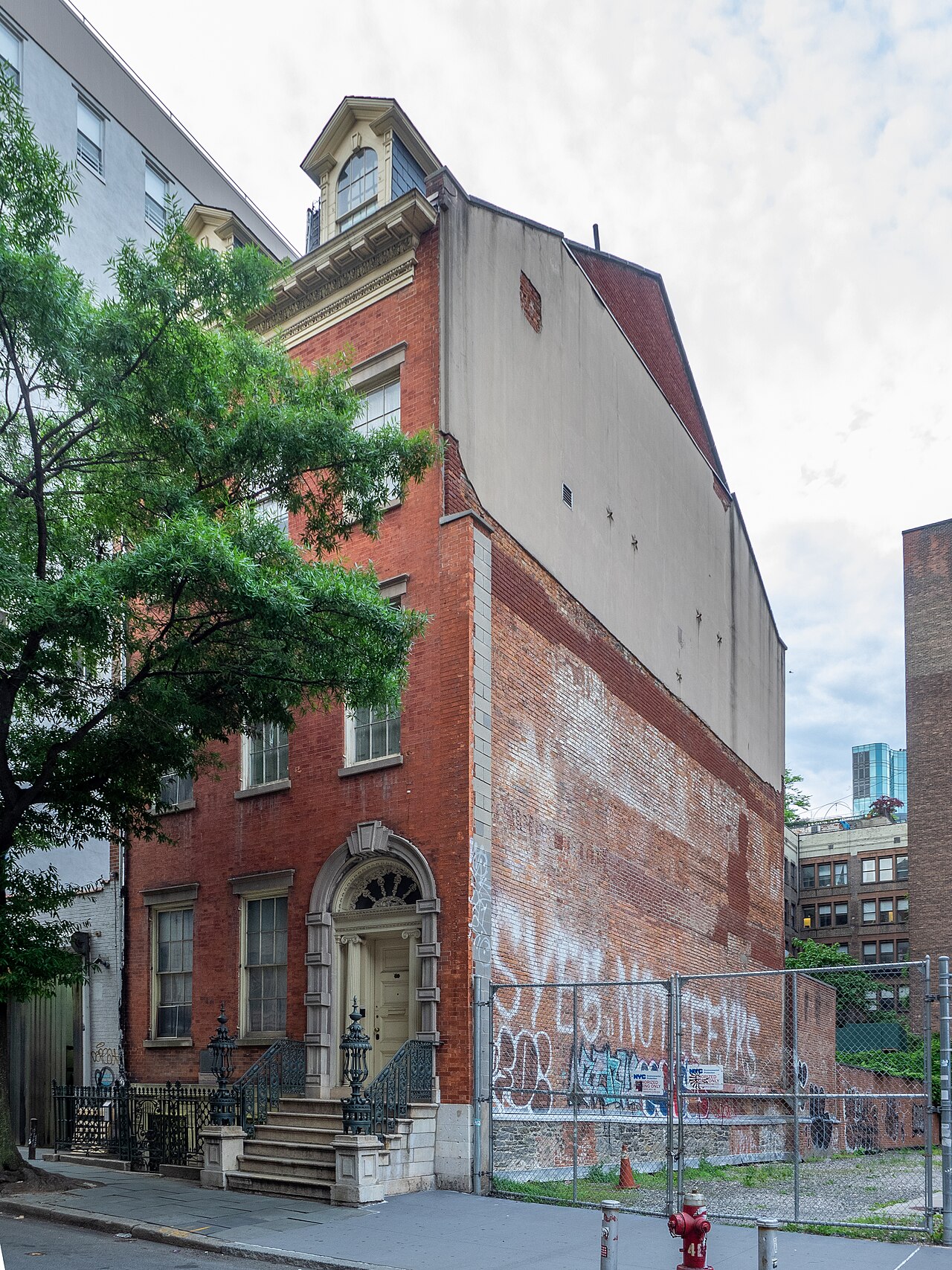
Merchant's House Museum preserves a four-storey New York City home built in 1832. The house is an unusually complete example of nineteenth-century domestic life, with original architecture, furnishings and family possessions still presented in their historic setting. The visit introduces the world of a prosperous merchant household and the Irish servants who worked there. For travelers interested in architecture, social history and preservation, it offers an intimate counterpoint to Manhattan’s larger museums and grand civic landmarks. The Merchant's House Museum is a historic house museum in New York City. It preserves a 19th-century family home with original furnishings and architectural features intact. Built in 1832, the building represents a rare surviving example of late-Federal and Greek Revival domestic architecture in Manhattan. The museum offers visitors insight into the lives of a prosperous merchant family and their Irish servants during the period. The property is recognized as a significant cultural landmark for its exceptional state of preservation and its value in understanding urban domestic life in antebellum New York.
Checked 2026-08-26 · Source
The interior contains period rooms arranged through four levels of the original home. Furniture, decorative arts, clothing, textiles, household objects and personal possessions show how the family lived across decades. The servants’ quarters add another perspective, revealing the domestic spaces assigned to household workers. Look for ornamental plasterwork, marble mantels, the stairway and the relationship between formal rooms and working areas. Because objects remain in a domestic arrangement, the museum communicates daily routines as clearly as it presents individual collection pieces.
Checked 2026-08-26 · Source
Plan on about one hour for a self-guided visit through the four floors. Ninety minutes gives more time for reading interpretation, studying decorative details and comparing family rooms with the servants’ quarters. The compact rooms make the experience concentrated rather than sprawling, but the original staircases slow circulation between levels. Travelers with limited stamina may prefer a measured pace and short pauses. Add time if a guided programme or special exhibition forms part of your visit.
Checked 2026-08-26 · Source
Because the main experience takes place indoors, the museum fits comfortably into a Manhattan day in any season. It is particularly useful during rain or cold weather, when a close look at historic interiors offers a welcome change from walking outside. Plan the visit around the museum’s published schedule and leave time for the surrounding streets, whose architecture helps explain the house’s urban setting. Quieter periods make it easier to appreciate the rooms and read the historical interpretation without crowding.
Checked 2026-08-26 · Source
Merchant's House Museum is a specialist historic-house attraction, so include it in your Manhattan plans as a focused cultural stop. The guide information does not establish a fixed admission amount, making the visit best planned around its historic interiors rather than a specific budget expectation. Set aside enough time for the four floors and the interpretive material. If you are combining the museum with nearby attractions, its compact scale makes it easier to place between longer museum or neighborhood visits.
Checked 2026-08-26 · Source
The museum occupies a Manhattan location served by New York’s extensive subway and bus network. Choose a nearby subway stop or bus route, then walk through the surrounding neighborhood to reach the house. The street setting is part of the experience: nearby buildings provide useful architectural context before you enter the preserved interior. Driving is less convenient because Manhattan parking is limited and regulated. Allow extra walking time and use the mapped location for the final approach to the entrance.
Checked 2026-08-26 · Source
This is an original historic house, not a modern gallery. Expect steep, narrow staircases, uneven floor surfaces, low doorways and subdued lighting. The building lacks the spacious circulation and climate-controlled feel of a contemporary museum. Young visitors need close supervision around fragile furnishings, while travelers with mobility limitations or vertigo should consider the vertical layout carefully. The intimate rooms can feel crowded at busy times, so move slowly and give other visitors space around furniture and interpretation.
Checked 2026-08-26 · Source
The house offers strong photographic subjects in its preserved rooms: marble mantels, plaster details, textiles, furniture groupings and the original stairway. Keep equipment compact because the rooms and passages are narrow. Flash can damage sensitive historic materials, and tripods or selfie sticks can obstruct circulation. Follow signs and staff directions in each room, and avoid touching furnishings while positioning for a photograph. Photographing quietly helps preserve the domestic atmosphere that makes the museum different from a conventional exhibition hall.
Checked 2026-08-26 · Source
The house was built in 1832 and preserves a nineteenth-century domestic interior in Manhattan.
You can see four floors of period rooms, original family possessions, furniture, clothing, decorative arts, household objects and servants’ quarters.
A self-guided visit takes about one hour. Allow up to ninety minutes if you want to read the interpretation and study the architectural details carefully.
Expect steep, narrow original staircases, uneven floors, low doorways and subdued lighting across the four-storey house.
The servants’ quarters show the living conditions and working spaces of domestic workers, adding a second perspective to the merchant family’s household story.
Marble mantels, ornamental plasterwork, textiles, furniture arrangements and the original stairway are among the strongest visual details in the preserved interior.
Loading the interactive map…
The interactive map could not be loaded.
Last updated:
Source: OpenStreetMap contributors, Wikidata ·