
7 min walk
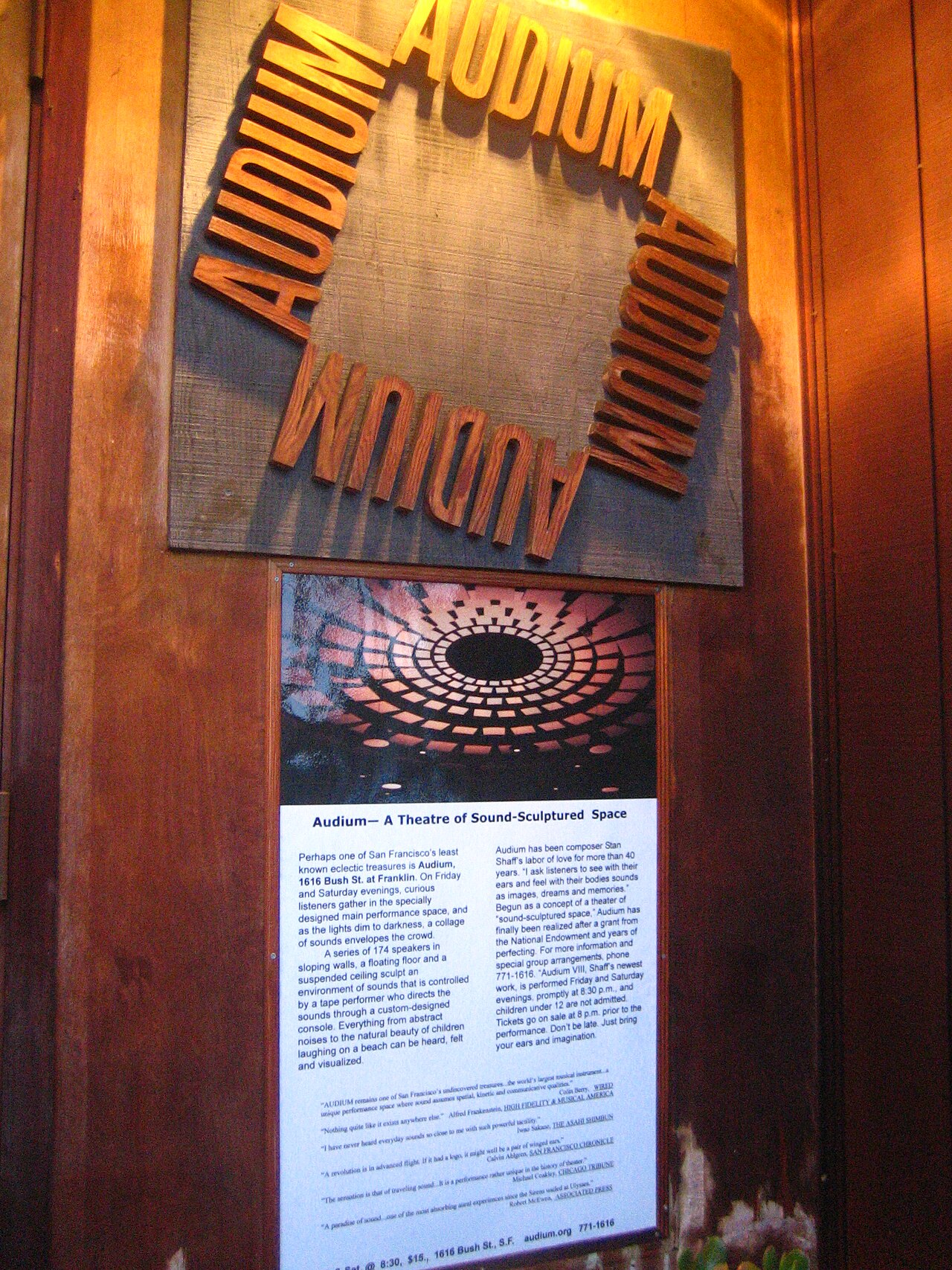
Audium
- High
- Art and culture venue
Place of worship · San Francisco
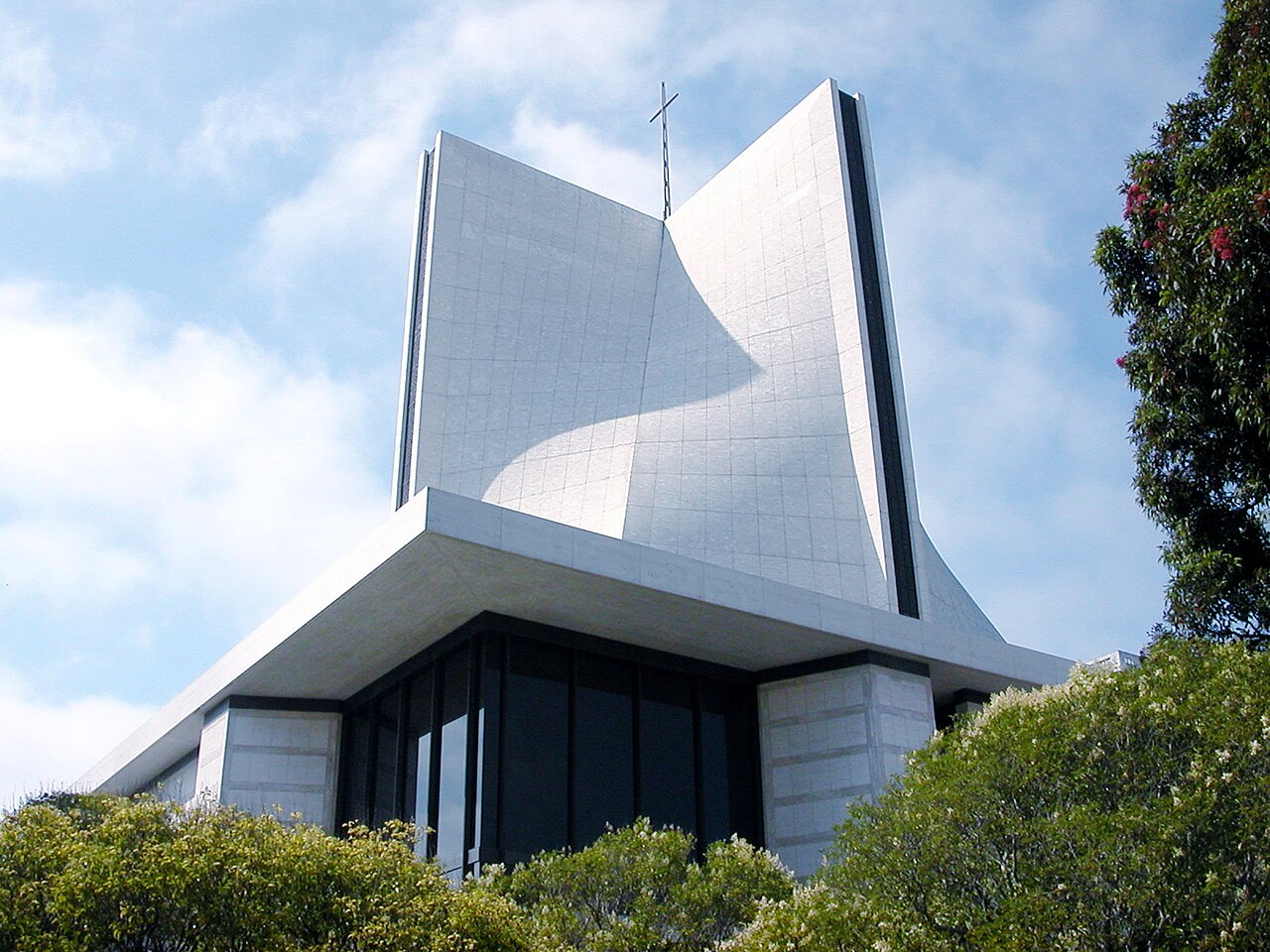
The Cathedral of Saint Mary of the Assumption is a Roman Catholic cathedral in San Francisco's Civic Center area. Completed in 1971, it serves as the mother church of the Archdiocese of San Francisco. The building replaced an earlier cathedral destroyed by fire in 1962. Its distinctive modernist design features a hyperbolic paraboloid roof structure that rises to a height of 190 feet, creating a prominent silhouette against the city skyline. The cathedral stands as a significant religious and architectural landmark in the urban core.
Checked 2026-08-26
The interior centers on a vast open space beneath the soaring concrete roof, with natural light filtering through stained glass installations. The sanctuary accommodates approximately 2,500 worshippers. Notable features include the kinetic sculpture by Richard Lippold suspended above the altar, abstract stained glass panels by artist Gabriel Loire, and a prominent pipe organ. The design emphasizes communal participation with a relatively close relationship between congregation and sanctuary. The baptismal font and ambulatory areas reflect liturgical reforms following the Second Vatican Council.
Checked 2026-08-26
A typical visitor allowing time for contemplation of the architecture and interior artwork should plan approximately thirty to sixty minutes. Those attending a scheduled Mass or liturgical service would need additional time. The scale of the interior space rewards slow observation, particularly of the interplay between structural concrete elements and colored light. Visitors interested in architectural photography or detailed examination of the Lippold sculpture and stained glass may wish to allocate toward the longer end of this range. A flexible visit lets travellers connect Cathedral of Saint Mary of the Assumption with the rest of the day without treating one room, viewpoint or photograph as the whole experience. The useful pace depends on personal interest and conditions on arrival.
Checked 2026-08-26
Visitors should consult the official website at stmarycathedralsf.org or contact cathedral staff directly before planning a visit. The cathedral functions as an active parish with regular worship services, which may affect visitor access to certain areas. Special liturgical seasons including Christmas and Easter typically draw larger congregations. Weekday mornings outside scheduled services may offer quieter conditions for architectural observation, though this depends on the specific schedule maintained by the cathedral administration. Check the operator's own site for the travel date before relying on a schedule or fare.
Checked 2026-08-26
As a functioning Roman Catholic cathedral, admission for worship and prayer is customarily without charge. Donations are typically welcomed to support maintenance of the building and parish programs. Special events, concerts, or guided tours if offered may involve separate arrangements. Visitors should verify current policies through the official website or direct inquiry. Any fees for specific programming would be determined by the cathedral administration rather than standardized visitor admission. Cathedral of Saint Mary of the Assumption also earns time in a san francisco itinerary because Striking modernist cathedral and an important Civic Center religious landmark. Its value becomes clearer when the stop is compared with the surrounding streets and the other ranked places nearby. Check the operator's own site for the travel date before relying on a schedule or fare.
Checked 2026-08-26
The cathedral occupies a prominent position in the Civic Center area of San Francisco, near the intersection of Geary Boulevard and Gough Street. Multiple public transit options serve this district, including Muni bus lines and the Van Ness Avenue corridor. The Civic Center BART and Muni Metro station lies within reasonable walking distance. Street parking in the immediate vicinity can be challenging; visitors may wish to research nearby parking structures. The location is generally accessible within the urban street grid for pedestrians and cyclists.
Checked 2026-08-26
Visitors should observe that this is an active place of worship requiring respectful conduct and appropriate attire. Photography policies may vary depending on whether services are in progress. The concrete interior surfaces can create acoustic conditions that amplify sound. The neighborhood surrounding the Civic Center includes diverse urban conditions; standard city awareness applies. Accessibility features include ramps and elevator access to accommodate mobility needs. Visitors with specific requirements should contact staff in advance. The hyperbolic roof structure has no interior columns, creating an open but potentially disorienting spatial experience.
Checked 2026-08-26
Photography for personal use is generally permitted in many cathedral spaces, though restrictions apply during liturgical services and may vary by specific area. Tripods and professional equipment typically require advance permission from cathedral administration. The dramatic interior geometry and colored light from stained glass offer distinctive photographic subjects. Visitors should avoid disrupting worshippers and refrain from flash photography that might disturb prayer or meditation. Commercial or publication use requires explicit authorization. When in doubt, consult staff upon arrival regarding current protocols.
Checked 2026-08-26
Visitors should consult the official website or contact cathedral staff directly.
Active Catholic cathedrals typically do not charge for worship or prayer access. Check the operator's own site for the travel date before relying on a schedule or fare.
The cathedral functions as an active parish with regular worship services. Visitors may participate in public liturgies according to normal Catholic parish practice.
Accessibility features including ramps and elevator access are present. Visitors with specific requirements should contact staff in advance.
The modernist structure was completed in 1971, replacing an earlier cathedral destroyed by fire in 1962.
The hyperbolic paraboloid concrete roof rises to 190 feet, creating a dramatic interior space without supporting columns.
Loading the interactive map…
The interactive map could not be loaded.
Last updated:
Source: OpenStreetMap contributors, Wikidata ·