
7 min walk
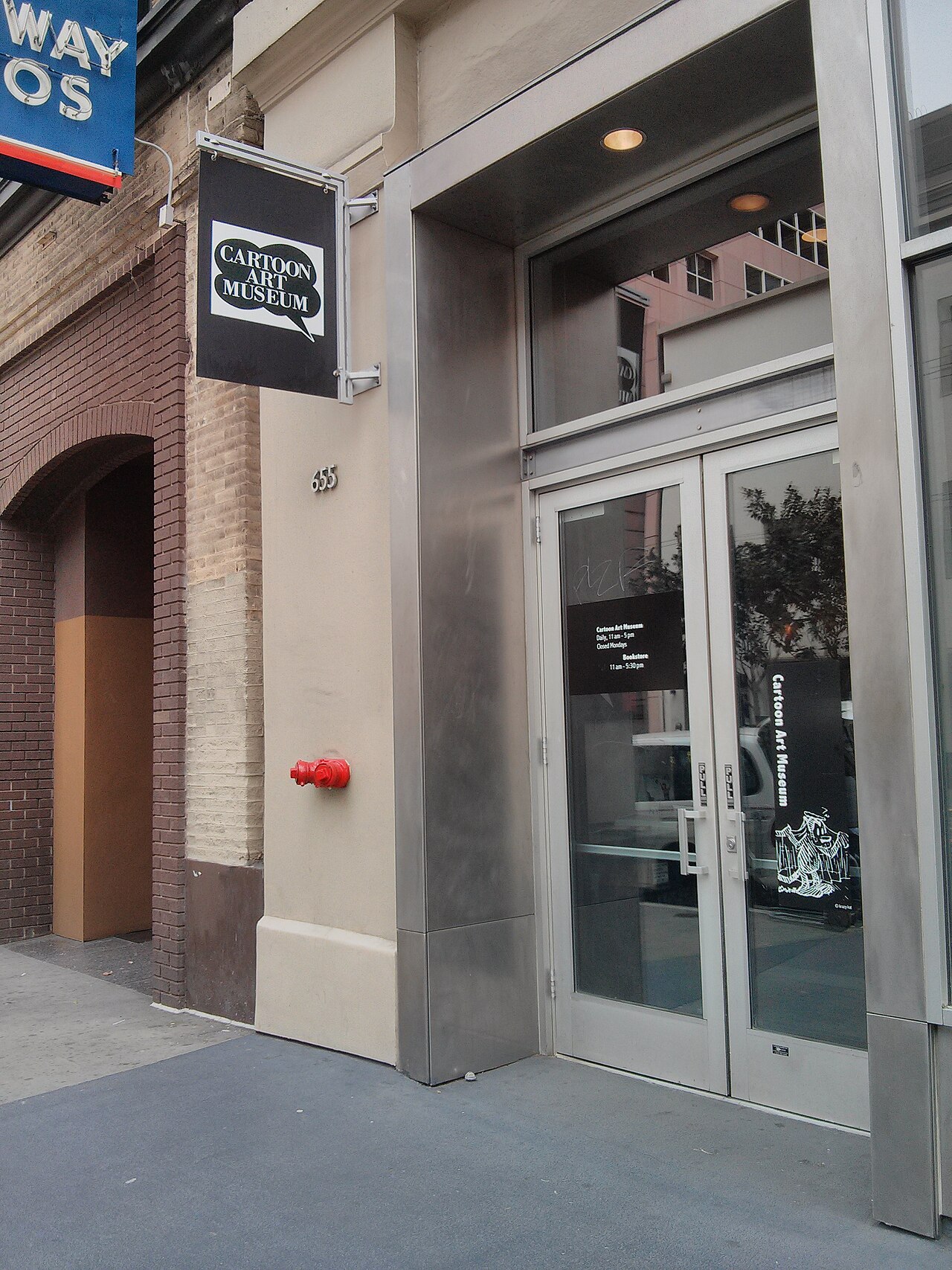
Cartoon Art Museum
- Must see
- Museum
Historic monument · San Francisco
| Per person | Free entry |
|---|
Checked 2026-08-31 · Source
Read from the OpenStreetMap access tags; anything not listed has no tag recorded.
Set the group type to family in the planner and the day window contracts to about three quarters of a solo day.
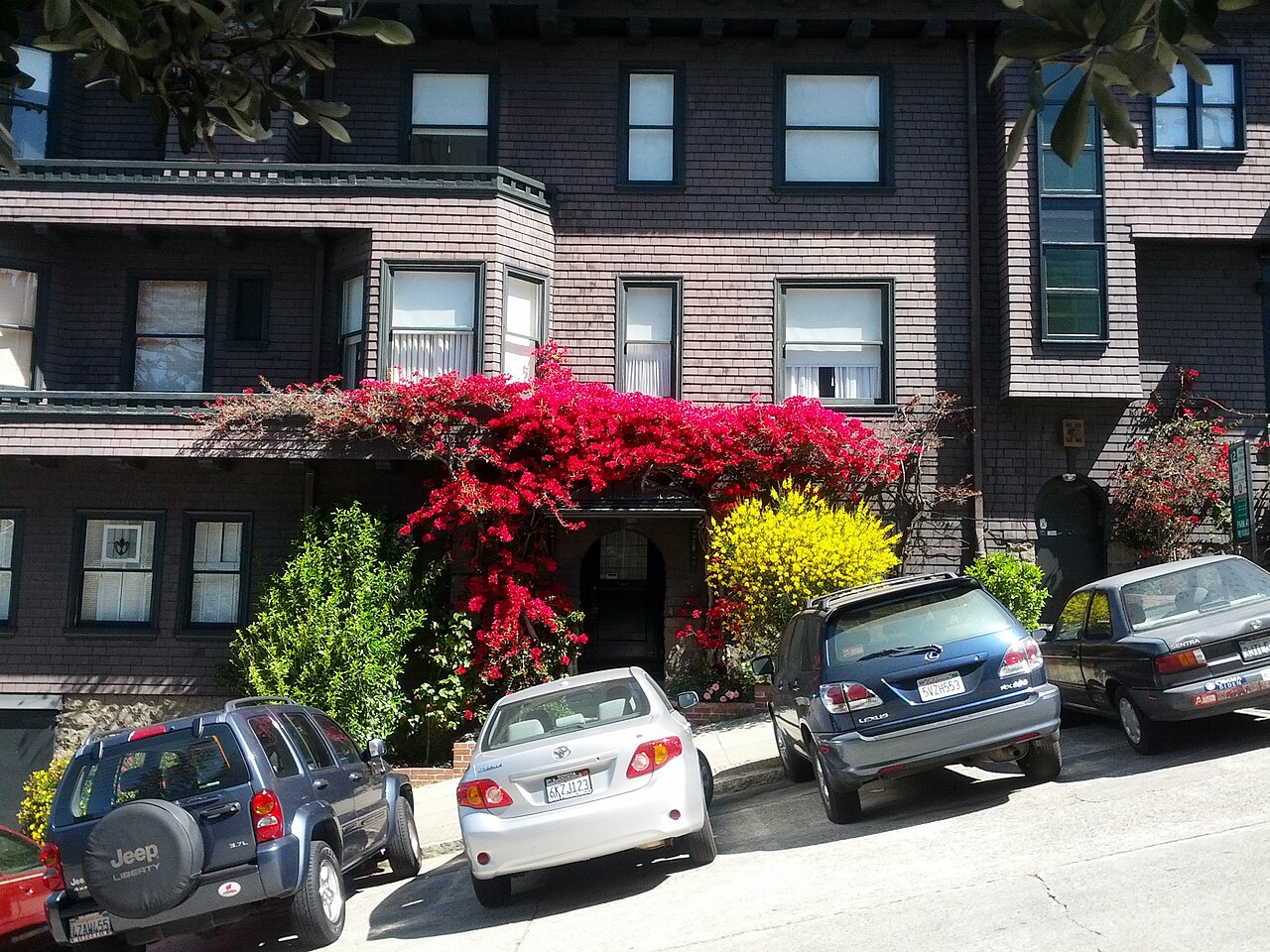
Lombard Street's famous block is the steep, landscaped section between Hyde and Leavenworth Streets on Russian Hill. Eight tight turns carry one-way downhill vehicle traffic through red-brick paving and planted beds, creating the image commonly called the crookedest street. It is a residential public street, not a ride, park or enclosed attraction. The interest lies in how a practical response to slope became a city icon. Visitors should experience it from the footpath and end viewpoints without treating residents' doors, steps or gardens as part of the attraction.
Checked 2026-08-26 · Source
There is no interior and no formal route beyond the block itself. From Hyde Street at the top, visitors see the brick curves descend toward Telegraph Hill; from Leavenworth at the bottom, the retaining walls, cars and planting create the classic frontal view. Side stairways allow pedestrians to move between both ends while remaining outside the roadway. Seasonal flowers change the appearance, but the street's geometry remains the main feature. Continue onto Russian Hill streets for architecture and bay glimpses rather than repeatedly crossing the same crowded viewpoint.
Checked 2026-08-26 · Source
Twenty to thirty minutes is enough to see the block from both ends and walk one side staircase at an unhurried pace. Add time only if continuing through Russian Hill or waiting for a cable car. Driving down usually consumes more time than it adds value because vehicles queue and the view from behind a windscreen is brief. Visitors with limited mobility may prefer one viewpoint rather than the steep pedestrian connection. Lombard Street fits naturally between North Beach, the waterfront and a cable-car journey; it should not occupy a half-day by itself.
Checked 2026-08-26
Early morning is the least disruptive and gives pedestrians more room at both viewpoints. Late afternoon can produce attractive side light, but crowds and vehicle queues are usually heavier. The block is a public street rather than an attraction with ticketed opening hours, so exact visitor hours are Not recorded. Traffic management or local works may alter access; follow posted signs and current city information. Flowers vary by season, and summer fog can soften the background. Avoid late-night visits that disturb residents without improving the visual experience.
Checked 2026-08-26 · Source
No pedestrian admission or mandatory ticket is recorded for viewing the public street. Driving the block is not presented here as a paid attraction, but normal transport, parking or tour costs may apply elsewhere. Any proposal for visitor reservations or traffic controls should be checked against current official city information rather than assumed from old news reports. Commercial tours sell transport and commentary, not ownership of the street. Visitors can see the essential block independently on foot and should not pay anyone claiming to control access from the public pavement.
Checked 2026-08-26 · Source
The crooked block runs between Hyde Street above and Leavenworth Street below. The Powell-Hyde cable car reaches the upper intersection, making a useful arrival when service and queues cooperate. Buses serve surrounding Russian Hill streets, while walking from Fisherman's Wharf involves a substantial climb. Drivers approach from Hyde and descend one way, but congestion and limited parking make this the least efficient option. Save the exact cross streets because Lombard Street continues far beyond the famous block. The side stairways are steep and not an accessible route between viewpoints.
Checked 2026-08-26 · Source
This is an occupied residential block. Stay on public pavements, keep voices down, do not sit on private steps and never enter gardens for a photograph. Cars have the right of way in the roadway, and drivers are concentrating on tight turns, so do not step out for a centred shot. The stairways are steep and can be slippery in rain. Pickpocketing is possible wherever crowds stop with phones raised, so keep belongings controlled. Large tour groups should avoid blocking either intersection or the cable-car boarding area at Hyde Street.
Checked 2026-08-26
The classic symmetrical view is from Leavenworth Street looking uphill, where the curves stack beneath the houses. Use a short telephoto lens to compress the turns and keep the camera on the pavement; standing in the road is unsafe and unnecessary. From Hyde Street, include the descending brick line and distant city rather than trying to reproduce the same frontal image. Early light and fewer cars simplify composition. Respect residents by avoiding windows and doorways, and do not fly a drone over the dense residential block without lawful authorisation.
Checked 2026-08-26
Twenty to thirty minutes covers both viewpoints and one side staircase. Add time only for a Russian Hill walk or a cable-car journey.
No pedestrian ticket or mandatory admission is recorded. It is a public residential street; tours charge for transport or commentary, not ownership of access.
The landscaped crooked block runs between Hyde Street at the top and Leavenworth Street below. Lombard Street continues well beyond this short section.
Walking usually gives better views and avoids the vehicle queue. Drivers descend one way from Hyde, but the brief windscreen view adds little to the visit.
Stand on the public pavement at Leavenworth Street and look uphill. A short telephoto lens compresses the eight turns without requiring anyone to step into traffic.
Remain on public paths, keep voices down, avoid private steps and gardens, and never block traffic for a photograph. The landmark is also an occupied residential block.
Loading the interactive map…
The interactive map could not be loaded.

Last updated:
Source: OpenStreetMap contributors, Wikidata ·