_St._Michael_%26_St._Gudula_Cathedral_Tower,_Brussels.jpg)
5 min walk
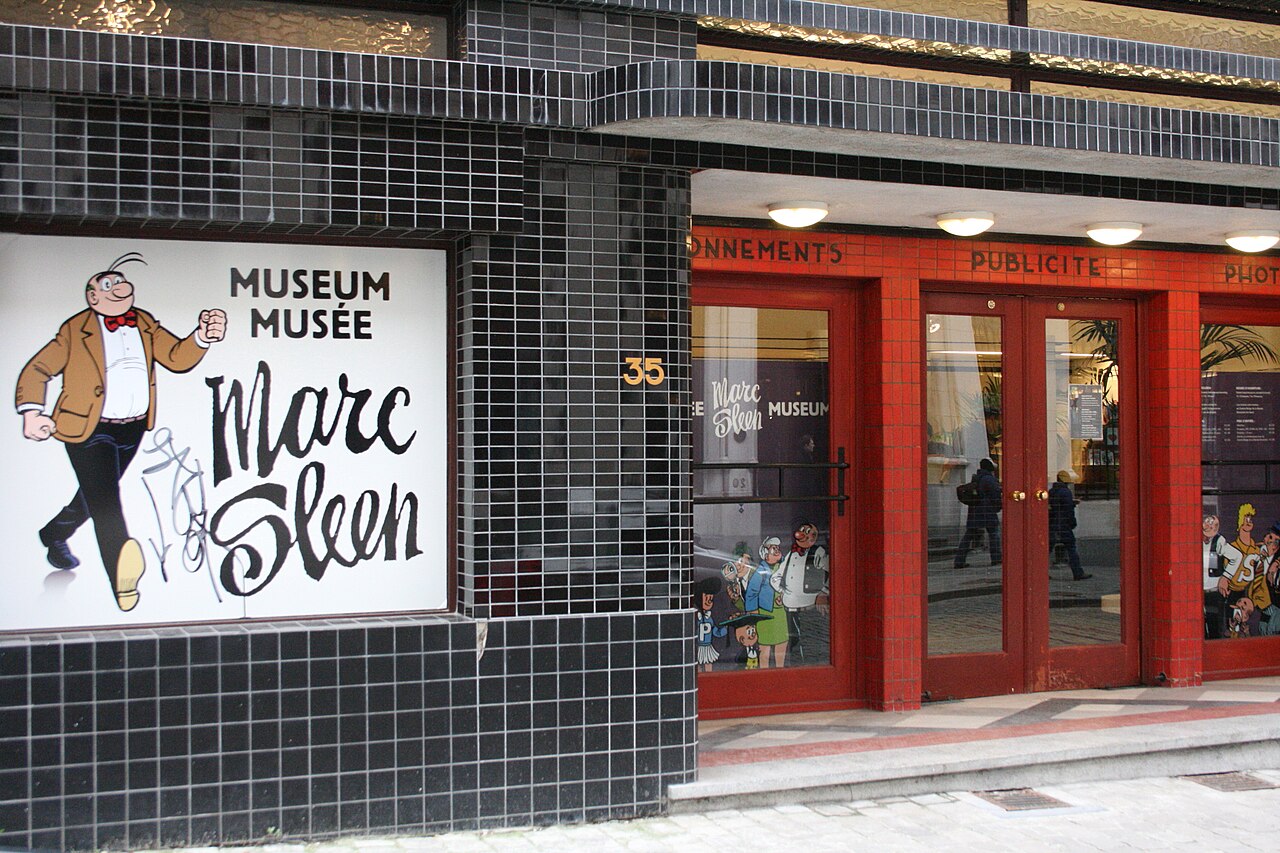
Marc Sleen Museum
- High
- Museum
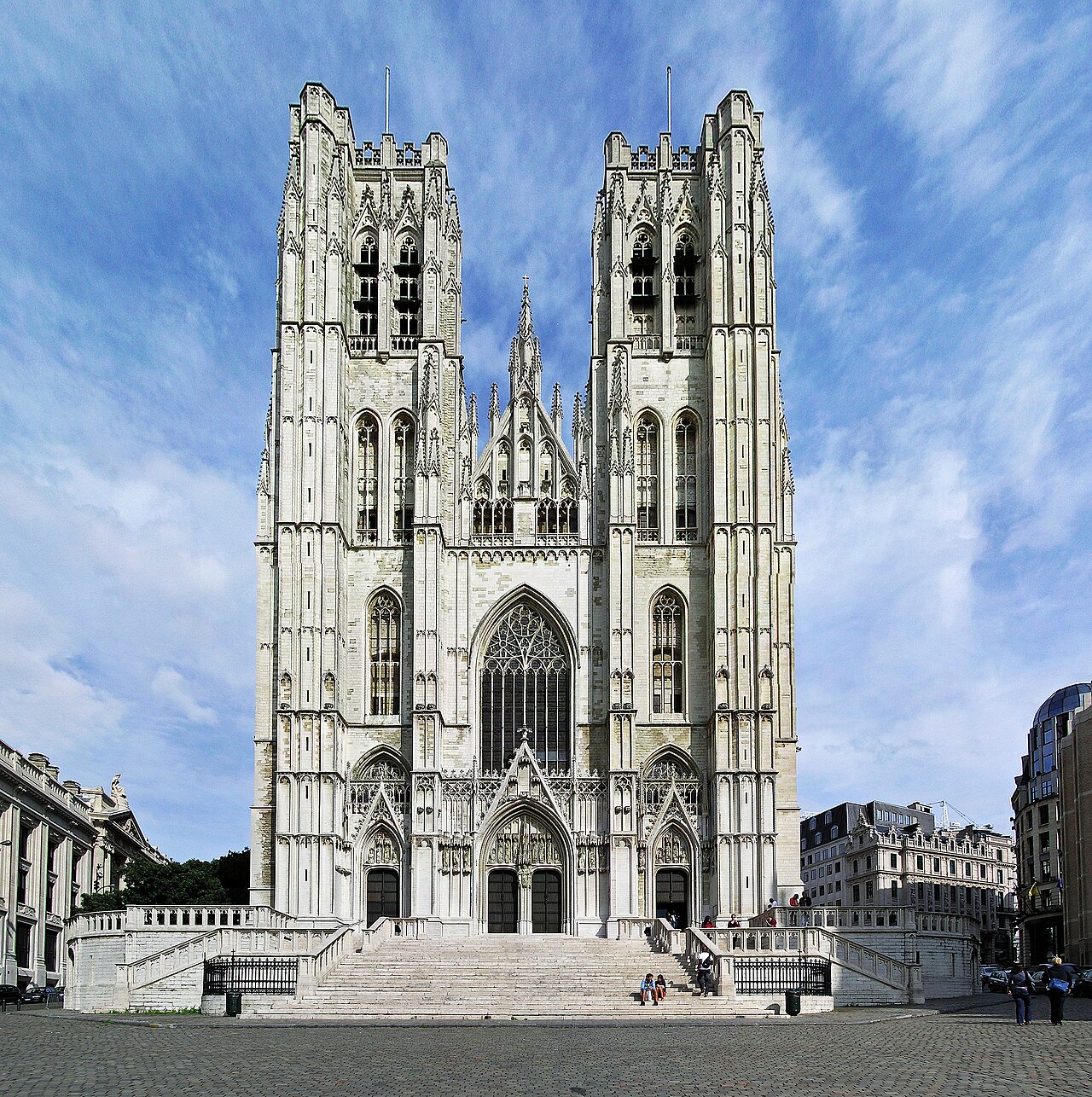
Place of worship · Brussels
Cathédrale Saints-Michel-et-Gudule - Sint-Michiels-en-Goedelekathedraal
| Monday | 08:00 – 18:00 |
|---|---|
| Tuesday | 08:00 – 18:00 |
| Wednesday | 08:00 – 18:00 |
| Thursday | 08:00 – 18:00 |
| Friday | 08:00 – 18:00 |
| Saturday | 08:00 – 17:00 |
| Sunday | 13:00 – 18:00 |
Checked 2026-08-31 · Source
| Per person | Free entry |
|---|
Checked 2026-08-31 · Source
Read from the OpenStreetMap access tags; anything not listed has no tag recorded.
Set the group type to family in the planner and the day window contracts to about three quarters of a solo day.
The Cathedral of St. Michael and St. Gudula stands on the Treurenberg slope in central Brussels, dedicated to the two patron saints of the city and built in Brabantine Gothic. A chapel to Saint Michael probably occupied the site as early as the ninth century, at the crossroads of two trade routes, one running between Flanders and Cologne and the other between Antwerp and Mons. Henry II, Duke of Brabant, ordered a Gothic collegiate church in 1226. Rumbold's in Mechelen. Monday–Friday 08:00–18:00; Saturday 08:00–17:00; Sunday 13:00–18:00. No regular weekly closure day is listed. Tourist visits are suspended during religious services.
Checked 2026-08-31 · Source
Three parts of the building are treated as separate visits by the cathedral itself. The Treasury occupies the Gothic Chapel of the Holy Sacrament and holds reliquaries, including the Dhramal reliquary cross, along with monstrances, chalices, ciboria and liturgical vestments, Michel Coxcie's Legend of Saint Gudula and a Virgin and Child by Conrad Meit. The Romanesque remains are the preserved front section of the older church, reached separately. The bells belong to two towers. No regular weekly closure day is listed. Tourist visits are suspended during religious services.
Checked 2026-08-31 · Source
Allow an hour. The cathedral publishes no suggested length for a free visit, so the hour is this guide's judgement, but it is built from durations the cathedral does publish for its own tours. Its self-guided route with QR codes comes in two formats, thirty minutes and forty-five minutes. The tower visit is a separate commitment of about two and a half hours. Thirty minutes is enough for the nave and the west window and nothing else. The cathedral declares access for people with reduced mobility. The step-free entrance is through the shop door on Place Sainte-Gudule, on the right-hand side when facing the cathedral.
Checked 2026-08-31 · Source
The cathedral is open to visitors Monday to Friday from 08.00 to 18.00, Saturday from 08.00 to 17.00 and Sunday from 13.00 to 18.00. Visits are not permitted during services at any time. Through July and August the eleven o'clock Sunday Mass carries a visiting choir. Mid-morning on a weekday is the widest clear window. Monday–Friday 08:00–18:00; Saturday 08:00–17:00; Sunday 13:00–18:00. The cathedral declares access for people with reduced mobility. The step-free entrance is through the shop door on Place Sainte-Gudule, on the right-hand side when facing the cathedral. Ring the bell at the shop door for staff to open the accessible entrance.
Checked 2026-08-31 · Source
Entering the cathedral costs nothing. Four things inside it are charged for, all in cash on the spot. The Romanesque remains are 2 euros per person and are open during cathedral hours. Guided tours by the volunteer team are free. The shop sells guide booklets at 4 and 7 euros, and a children's activity booklet free. General admission to the cathedral is free. Optional areas charge adults €3 for the Treasury, €2 for the Romanesque remains, and €4 for the crypt; the crypt requires an appointment. On-site payments for these areas are cash only.
Checked 2026-08-31 · Source
The cathedral stands on the Parvis Sainte-Gudule, the wide forecourt on the Treurenberg slope above the lower town, east of the Boulevard de l'Imperatrice. What the cathedral publishes about arriving is limited to one line and it concerns access rather than transport. Gare Centrale/Centraal Station is served by metro lines 1 and 5 and buses 29, 38, 52, 63, 65, 66 and 89. Use the lift-equipped Exit 0 at Putterie/Putterij for step-free street access, then continue toward Place Sainte-Gudule/Sinter-Goedeleplein. Parc/Park, also on metro lines 1 and 5, is another nearby option and is fully step-free with four lifts.
Checked 2026-08-31 · Source
This is a working church before it is a monument, and its published rules of conduct are specific. Silence and a respectful attitude are expected, dress is to be correct and decent, food and drink must be consumed outside, and animals are not admitted apart from dogs accompanying visitors with impaired sight. The practical traps are four. The cathedral declares access for people with reduced mobility. Ring the bell at the shop door for staff to open the accessible entrance. Guide dogs accompanying visually impaired visitors are permitted; other animals are not.
Checked 2026-08-31 · Source
The rules of conduct the cathedral publishes cover silence, dress, food and animals, and say nothing at all about cameras, so there is no published photography policy to quote and none is invented here. What follows is geometry. The Last Judgement window sits above the main west door, which means it is lit from behind and is a picture taken from inside the nave looking back west, best in the afternoon when the sun has come round to that face. Guide dogs accompanying visually impaired visitors are permitted; other animals are not.
Checked 2026-08-31 · Source
Yes. General entry is free, although the Treasury, Romanesque remains, crypt and QR-code tours have separate charges.
The 11th-century Romanesque crypt is available by appointment only and costs €4 per person, payable in cash at the Treasury counter.
Free French- and English-language tours normally start at the cathedral entrance every Saturday at 14:00 and last about one hour; they are cancelled when a wedding or funeral is taking place.
Sixteen QR codes provide a 30- or 45-minute visit in French, Dutch, English or Spanish. The respective prices are €5 and €6, and visitors should bring a smartphone and headphones.
The Treasury occupies the Gothic Chapel of the Holy Sacrament and includes reliquaries, chalices, liturgical vestments, Michel Coxcie’s “Legend of Saint Gudula” paintings and Conrad Meit’s “Virgin and Child.”
Work on the Gothic church began in 1226 and was substantially completed in 1480. The church received cathedral status in 1962.
Loading the interactive map…
The interactive map could not be loaded.
Last updated:
Source: OpenStreetMap contributors, Wikidata ·