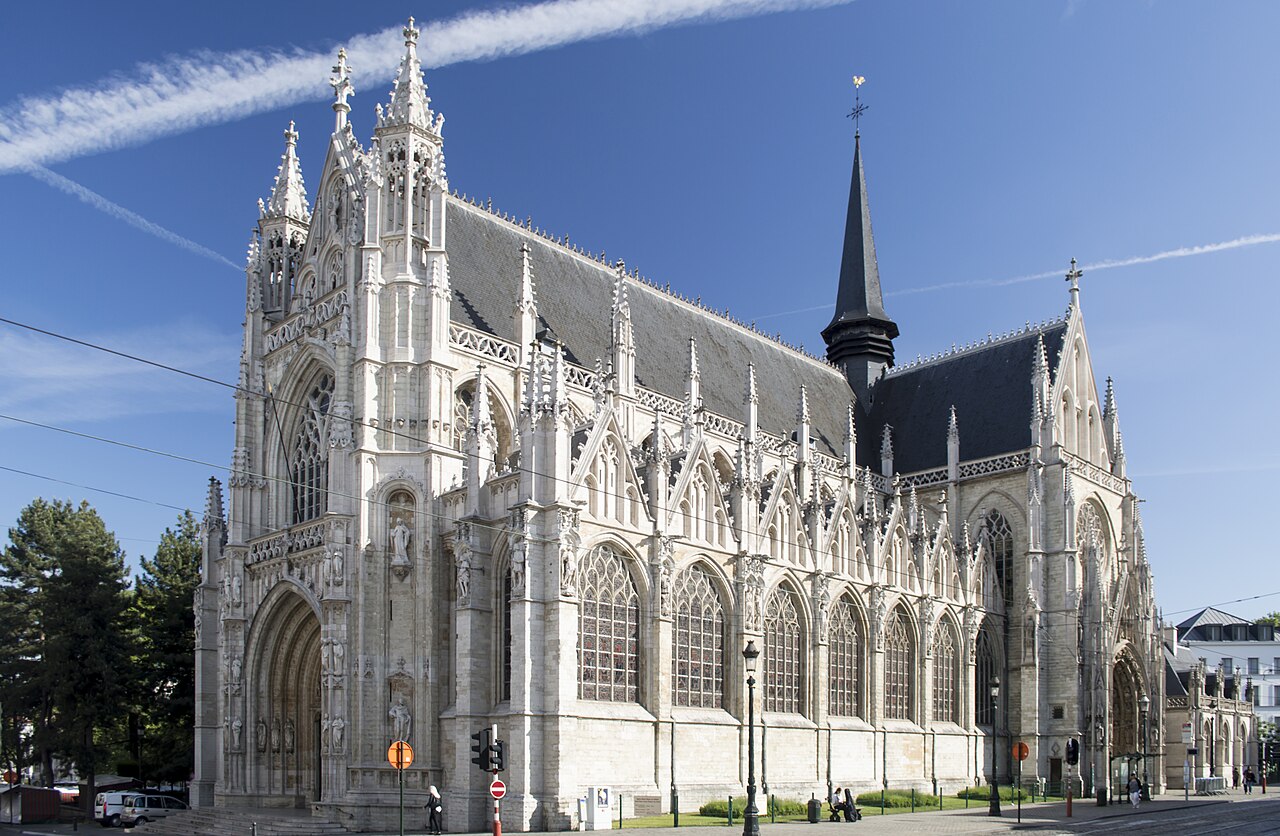
The Church of Our Lady of Victories at the Sablon is a Roman Catholic church in Brussels, Belgium. Its local names are Église Notre-Dame des Victoires au Sablon in French and Onze-Lieve-Vrouw-ter-Zavelkerk in Dutch. The church stands in the historic Sablon district, an area known for its antique shops and cultural significance. The building serves as a place of worship and a landmark within the urban fabric of central Brussels. Its architectural presence contributes to the character of this well-established neighbourhood. Monday–Friday 10:00–18:00; Saturday–Sunday 09:00–18:00. Open 365 days a year, with no regular closure day. The church remains an active place of worship.
The interior contains religious furnishings and decorative elements typical of a functioning Catholic church. Visitors may observe altars, religious imagery, and architectural details that reflect its historical development. The church maintains its role as an active religious site, which means interior access may vary depending on services and events. Visitors should respect the sacred nature of the space and any restrictions on movement or observation that may apply during visits. Open 365 days a year, with no regular closure day. The church remains an active place of worship. General church admission is free.
A typical visitor might spend between fifteen and forty minutes inside, depending on personal interest and whether any religious services are in progress. Those with a strong interest in ecclesiastical architecture or religious art may wish to allow additional time for observation. The duration of a visit can be shortened considerably if the interior is closed for private ceremonies or if access is restricted. General church admission is free. Visit Brussels identifies the church venue as accessible to people with reduced mobility. The public source does not specify the accessible entrance, gradients, accessible toilets, or access conditions for individual chapels.
The church functions as an active place of worship, which means it may be open for services while remaining closed to casual visitors at other times. Religious holidays and feast days may affect opening patterns significantly. Monday–Friday 10:00–18:00; Saturday–Sunday 09:00–18:00. The church is on Rue des Sablons. For the Grand Sablon side, use Grand Sablon bus stop, served by buses 33, 48 and 95. For the Petit Sablon side, use Petit Sablon stop, served by trams 92 and 93 and buses 33 and 95. Visit Brussels identifies the church venue as accessible to people with reduced mobility.
Many churches in Brussels do not charge admission fees for individual visitors, though donations are often welcomed to support maintenance and conservation. Carry small denominations for voluntary contributions. General church admission is free. Visit Brussels identifies the church venue as accessible to people with reduced mobility. The public source does not specify the accessible entrance, gradients, accessible toilets, or access conditions for individual chapels. Yes. The church’s Friends Fund states that visitors are admitted free of charge.
The church occupies a position in the Sablon district of central Brussels. The area is served by public transport including bus and tram routes, with multiple stops within reasonable walking distance. The Sablon is accessible on foot from numerous central locations including the Grand Place. The church is on Rue des Sablons. For the Grand Sablon side, use Grand Sablon bus stop, served by buses 33, 48 and 95. For the Petit Sablon side, use Petit Sablon stop, served by trams 92 and 93 and buses 33 and 95.
Visitors should observe standard etiquette for active religious sites, including appropriate dress and quiet behaviour. The church may close without notice for funerals, weddings, or other ceremonies. Pickpockets operate in busy tourist areas of Brussels including the Sablon; secure valuables and remain aware of surroundings. Cobblestone surfaces in the historic district may present difficulties for mobility-impaired visitors. Visit Brussels identifies the church venue as accessible to people with reduced mobility. Yes. The church’s Friends Fund states that visitors are admitted free of charge. No. The church’s Friends Fund states that it is open 365 days a year.
Flash photography is commonly prohibited in churches to protect sensitive materials and preserve atmosphere. Tripods and professional equipment may attract additional restrictions or require advance authorisation. Respect for worshippers and ongoing services must take priority over photographic activity. The exterior and surrounding Sablon square offer alternative photographic opportunities with fewer restrictions, though general respect for private property and local regulations should still govern behaviour. No. The church’s Friends Fund states that it is open 365 days a year. Mass is celebrated Monday–Friday at 18:00, Saturday at 18:00 as the anticipated Sunday Mass, and Sunday at 12:00 and 18:00.
Yes. The church’s Friends Fund states that visitors are admitted free of charge.
Does the church have a weekly closure day?
No. The church’s Friends Fund states that it is open 365 days a year.
When are Masses celebrated?
Mass is celebrated Monday–Friday at 18:00, Saturday at 18:00 as the anticipated Sunday Mass, and Sunday at 12:00 and 18:00.
Why is the church called Our Lady of Victories?
The parish records written use of the name from 8 May 1716. It says the traditional attribution to the 1288 Battle of Worringen is incorrect, while a connection with the 1571 Battle of Lepanto is established.
What is the church’s connection to the Ommegang?
A Marian statue was brought to the crossbowmen’s chapel in 1348, prompting pilgrimage and construction of the present church. The associated procession became the Ommegang, which still leaves the Sablon church for the Grand-Place twice a year.
What are the principal Baroque features inside?
The Thurn und Taxis family built two Baroque chapels. The Saint Ursula Chapel is faced in black marble and decorated with Carrara-marble sculpture.