
2 min walk
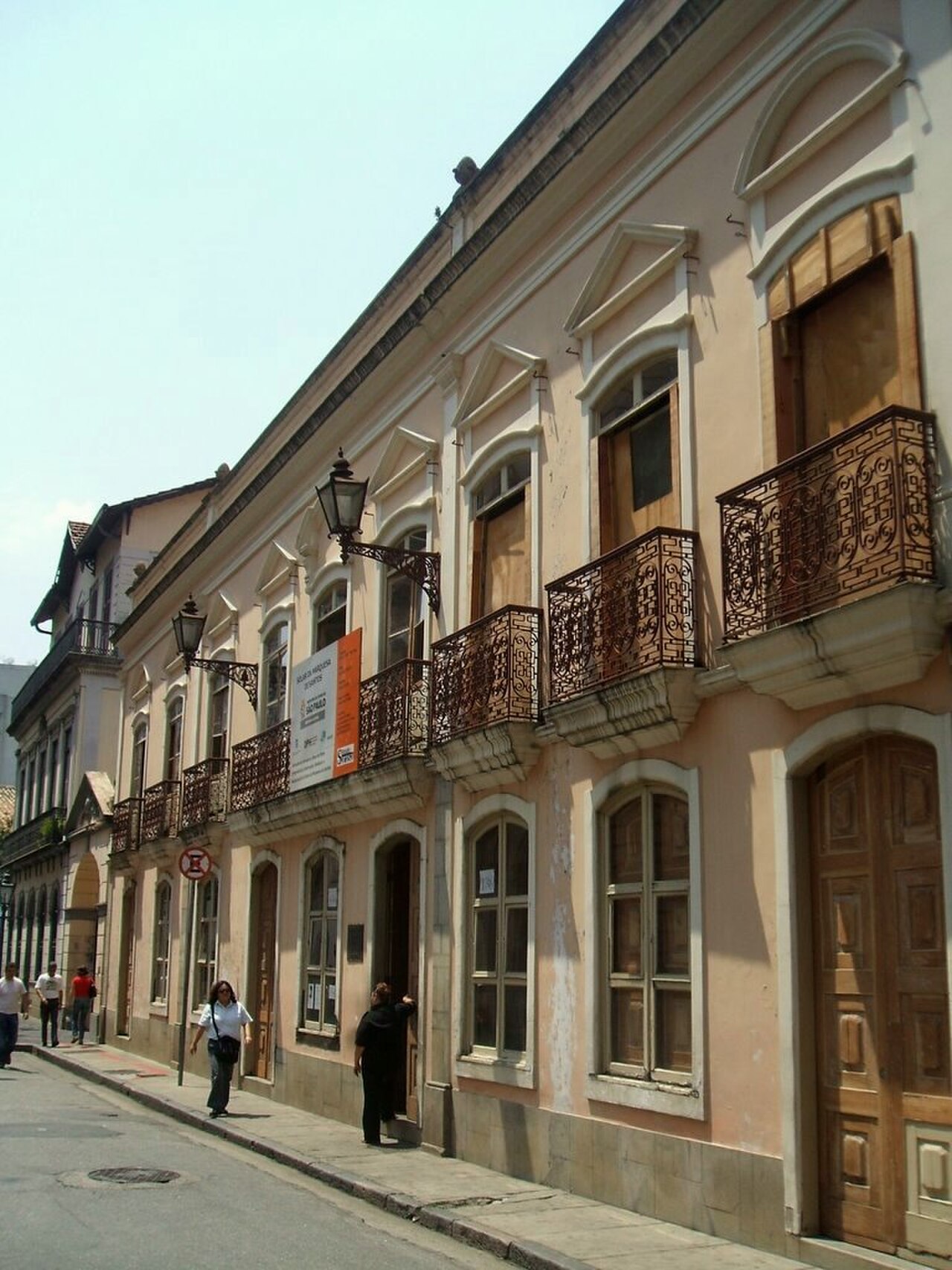
Manor of the Marquesa de Santos
- Must see · Heritage site
- Museum
Language · 11 published
Historic monument · São Paulo
Pateo do Collegio
Closed today, Sunday. Next open Tuesday at 09:00 — the planner will not place a stop here on a Sunday.
Plan around itReviewed by Elena Voss · Roavina Travel Editor
| Monday | Closed |
|---|---|
| Tuesday | 09:00 – 16:45 |
| Wednesday | 09:00 – 16:45 |
| Thursday | 09:00 – 16:45 |
| Friday | 09:00 – 16:45 |
| Saturday | 09:00 – 16:45 |
| Sunday | Closed |
Checked 2026-08-31 · Source
Read from the OpenStreetMap access tags; anything not listed has no tag recorded.
Set the group type to family in the planner and the day window contracts to about three quarters of a solo day.
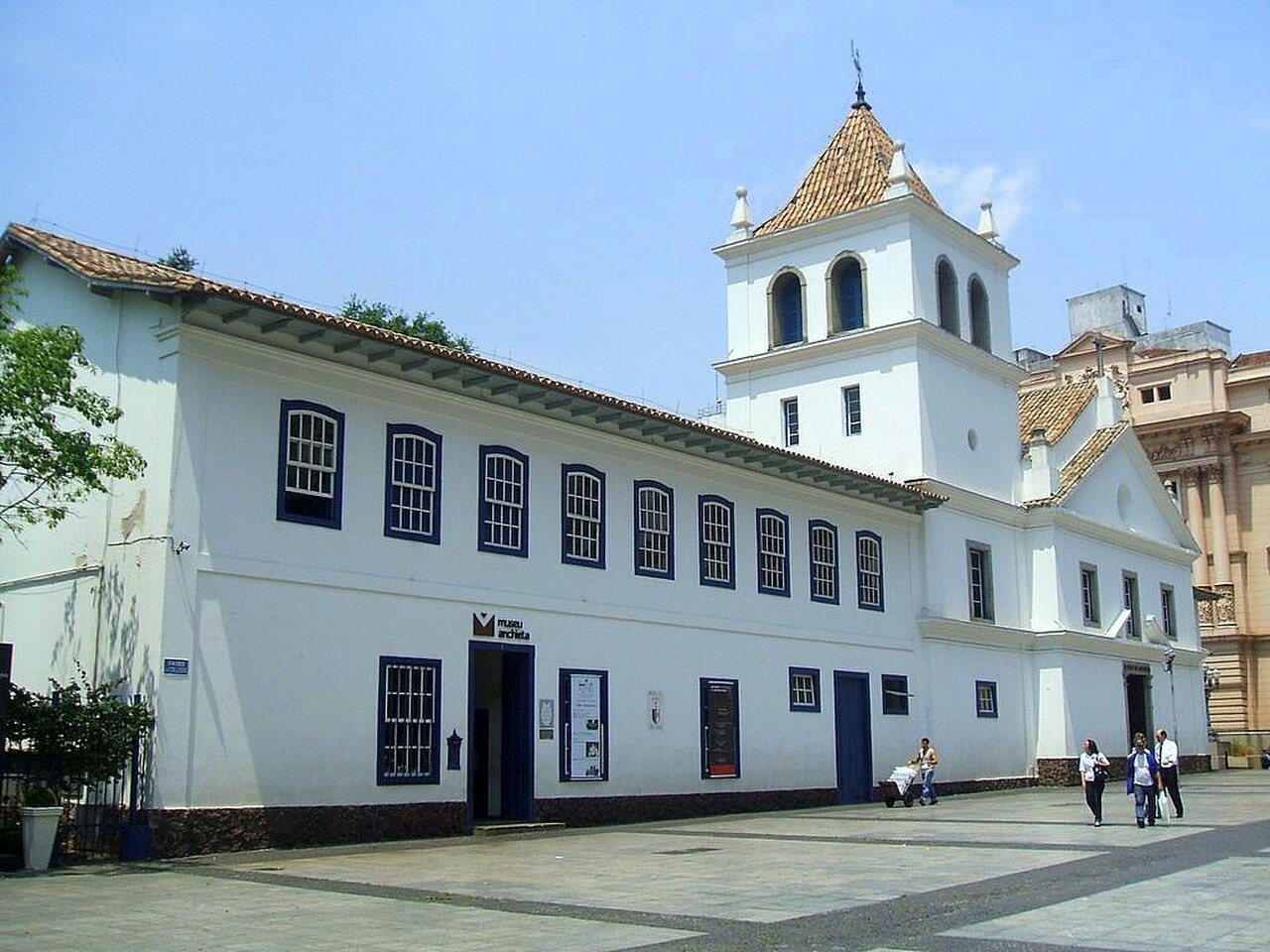
This place is a Attraction. It was built in the Portuguese colonial architecture style. It carries the Conpresp Good Class heritage designation.
Pátio do Colégio marks the foundational site of São Paulo, established by Jesuit priests Manuel da Nóbrega and José de Anchieta in 1554. The name references the original Jesuit college courtyard where the city began. The current complex encompasses a reconstructed colonial compound with church, museum, and educational facilities. It anchors the historic triangle of central São Paulo alongside the Sé Cathedral and the Municipal Market. As the birthplace of one of the world's largest cities, the site carries profound historical significance for understanding urban development in the Americas and Jesuit colonial expansion.
Checked 2026-08-31 · Source
The complex contains the Anchieta Museum, dedicated to Jesuit history and the city's origins, alongside the Church of São Paulo, a reconstructed colonial temple. A café occupies part of the courtyard space. The museum houses artifacts and exhibits related to indigenous encounters, early colonial life, and Jesuit educational methods. The church features period-appropriate religious imagery and architecture. The courtyard itself serves as an open gathering space with historical markers.
Checked 2026-08-31 · Source
Most visitors allocate between forty-five minutes and ninety minutes for the Pátio do Colégio complex. Brief visits focusing on the church and courtyard exterior may conclude in thirty minutes. Those engaging deeply with museum exhibits, reading historical panels, and attending to architectural details typically require the longer duration. The compact nature of the historic center allows efficient combination with nearby Sé Cathedral and other downtown attractions. Visitors planning a thorough historic triangle walking circuit should budget half a day for all three principal sites including transit and meals.
Checked 2026-08-31 · Source
Tuesday–Saturday 09:00–16:45; closed Sunday and Monday. Museu Anchieta and the Pátio do Colégio visitor complex are operating. The operator lists no midday closure. São Paulo's subtropical highland climate brings mild temperatures year-round, though summer months December through March feature heavier rainfall that may affect outdoor courtyard enjoyment. Weekday mornings typically offer quieter conditions for contemplative visits to this foundational site. The historic center experiences significant commuter density during business hours and reduced evening activity. Visitors should consult the official website at www. pateodocollegio. com. br or contact the institution directly before planning their visit, as religious sites often maintain variable schedules for worship services and museum operations.
Checked 2026-08-31 · Source
Museu Anchieta full adult admission is R$26. Children aged seven or younger and people with disabilities enter free. Visits to the Pátio do Colégio premises without museum admission are free for other groups, subject to reception capacity; school groups accompanied by tour agencies pay R$3 per person. This site operates as a religious and cultural institution with multiple components. Church access typically follows conventions for houses of worship, while museum sections may maintain separate policies. Some Jesuit heritage sites operate on donation basis; others charge modest museum admission. The official website should provide current guidance. Visitors carrying student identification, senior documentation, or other standard concession credentials should inquire at entry. Budget-conscious travelers should note that many São Paulo historic churches remain freely accessible, though voluntary contributions support maintenance of colonial-era structures in Brazil's challenging tropical climate.
Checked 2026-08-31 · Source
The address is Praça Pátio do Colégio, 02, Centro Histórico de São Paulo. The operator places it about 200 metres from Sé station on Line 3–Red and 450 metres from São Bento station on Line 1–Blue; vehicle access is via Rua Roberto Simonsen. Sé is an interchange for Lines 1–Blue and 3–Red and has a lift for people with disabilities or reduced mobility. This is the named approach for an independent visit. The Pátio do Colégio occupies central São Paulo near the Praça da Sé metro interchange, accessible via Lines 1-Blue and 3-Red of the metropolitan rail system. Multiple bus corridors serve the surrounding historic center. The site sits within the expanded pedestrian zone where vehicle access faces restrictions.
Checked 2026-08-31 · Source
The federal MuseusBr record, updated on 29 April 2026, states that the museum has no infrastructure for visitors with limited mobility. MuseusBr lists a drinking fountain, cloakroom, shop, restaurant or snack bar, toilets, and a theatre or auditorium. The operator grants free museum admission to people with disabilities. The access description applies to the documented visitor route. The surrounding historic center presents variable urban conditions characteristic of São Paulo's socioeconomic complexity. Visitors should maintain standard metropolitan awareness regarding personal belongings and avoid displaying valuables conspicuously. Some adjacent streets experience reduced activity evenings and weekends. The courtyard's open design offers limited weather protection during rain. Religious services may restrict access to church portions unexpectedly. Language barriers may arise; Portuguese comprehension assists with interpretive materials.
Checked 2026-08-31 · Source
The reconstructed colonial architecture and courtyard composition offer strong photographic subjects, particularly in diffuse daylight when harsh tropical sun softens. The church interior typically permits photography under conditions respectful of active worship; flash restrictions commonly apply. Museum exhibits may maintain separate photography policies. The courtyard's geometric layout rewards wide-angle capture, while details in carved stonework and religious statuary suit telephoto study. Morning light illuminates the principal facade favorably. Visitors should observe posted restrictions and obtain clarification from staff when policies appear ambiguous, as Brazilian cultural institutions increasingly regulate commercial and social media photography usage.
Checked 2026-08-31 · Source
No. Museu Anchieta occupies a twentieth-century memorial inaugurated in 1979, but the building preserves two surviving wall sections dating from the sixteenth and seventeenth centuries.
The museum uses panels, maps, explanatory texts and a scale model to explain São Paulo’s foundation and the site’s changes since 1554; its collection includes sacred and religious art dating from the sixteenth to the mid-twentieth century.
Yes. Groups can arrange a visit by calling +55 11 3105-6899 from Tuesday to Friday, 09:00–16:30. The educator-led service costs R$40.
The R$3-per-person visit includes the sixteenth-century rammed-earth wall, the viewpoint, Praça Ilhas Canárias and use of the toilets.
Children aged seven or younger and people with disabilities receive free admission.
Yes. Its MuseusBr record lists a cloakroom, drinking fountain, shop, restaurant or snack bar, toilets, a theatre or auditorium, and a library and historical archive open to external visitors.
Loading the interactive map…
The interactive map could not be loaded.
Last updated:
Source: OpenStreetMap contributors, Wikidata ·