
2 min walk
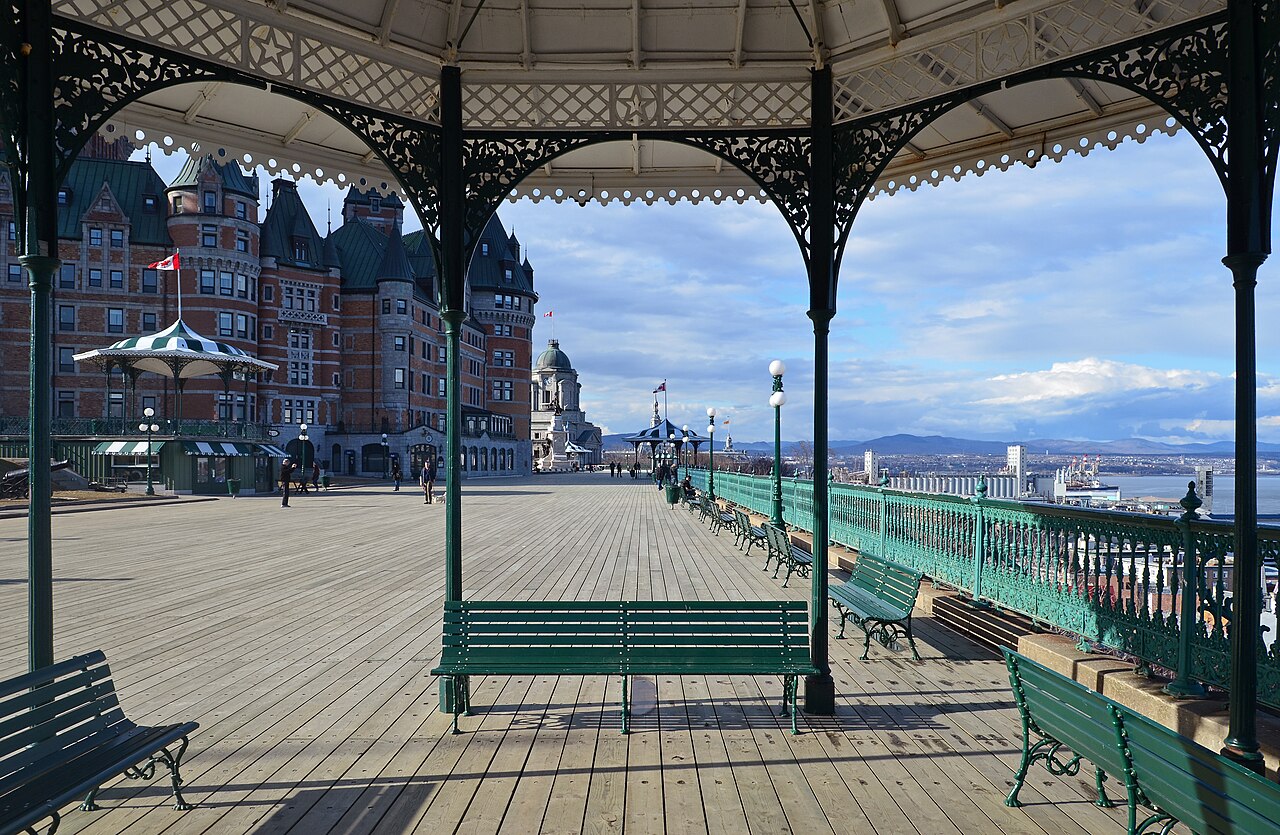
Dufferin Terrace
- Must see
- Activity
Language · 11 published
Historic monument · Quebec City
château Frontenac
Reviewed by Elena Voss · Roavina Travel Editor
| Monday | 00:00 – 23:59 |
|---|---|
| Tuesday | 00:00 – 23:59 |
| Wednesday | 00:00 – 23:59 |
| Thursday | 00:00 – 23:59 |
| Friday | 00:00 – 23:59 |
| Saturday | 00:00 – 23:59 |
| Sunday | 00:00 – 23:59 |
Checked 2026-08-31 · Source
Read from the OpenStreetMap access tags; anything not listed has no tag recorded.
Set the group type to family in the planner and the day window contracts to about three quarters of a solo day.
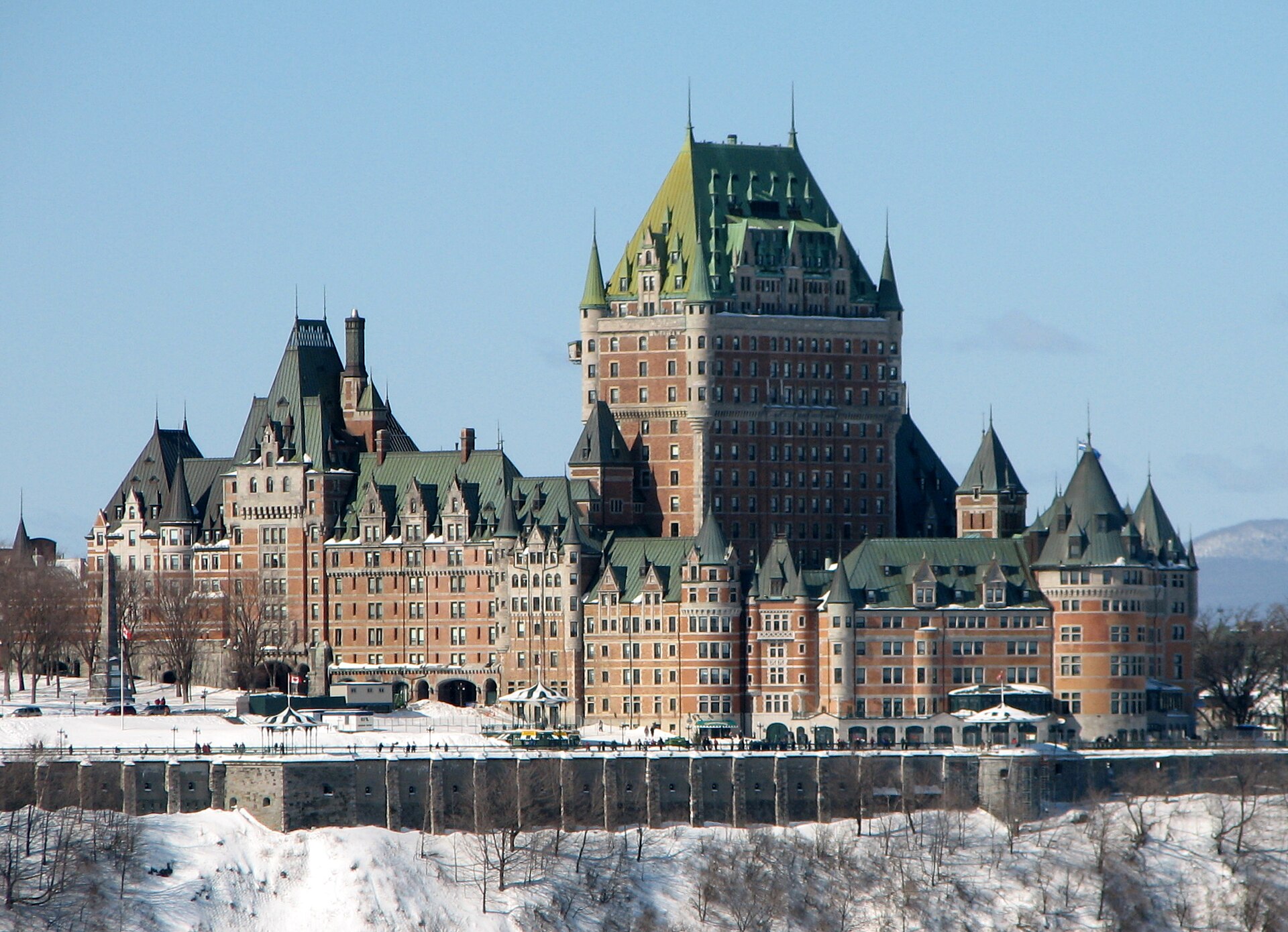
It opened in 1893. It was built in the châteauesque style. It was designed by Bruce Price. It carries the national historic site of Canada heritage designation. It is run by Fairmont Hotels & Resorts.
Château Frontenac is a landmark hotel in Quebec City’s Upper Town, beside Dufferin Terrace and above the St. Lawrence River. Its steep roofs, turrets, and ornate gables give the building a château-like silhouette that dominates the Old Quebec skyline. Built for the Canadian Pacific Railway, it has operated as a hotel since 1893. For travelers, it is both an active place to stay and one of the city’s defining architectural symbols. Château Frontenac is a landmark historic hotel in Quebec City's Upper Town, positioned prominently above the St. Lawrence River and adjacent to Dufferin Terrace. The building exhibits distinctive château-style architecture with steep roofs, turrets, and ornate gables that dominate the skyline. Constructed for the Canadian Pacific Railway, it has operated continuously as a hotel since 1893. The structure serves as both accommodation and a widely recognized symbol of Quebec City, frequently cited in tourism materials as one of the most photographed hotels globally. Its elevated position provides extensive views over the river and Lower Town below. Non-guests may access public areas including main lobbies and restaurants, though full interior access requires hotel business or accommodation. Policies may change.
Checked 2026-08-26 · Source
The hotel contains guest rooms, dining venues, ballrooms, conference spaces, lobbies, and public areas decorated in a period-influenced style. Common spaces include historical furnishings, paintings, and objects connected with the property’s long operation. Non-guests can enter certain public areas, including lobbies and restaurants, while guest rooms and private hotel areas remain for hotel business or accommodation. The experience is strongest when you combine architectural observation with the atmosphere of a working grand hotel. The interior contains guest rooms, multiple dining venues, ballrooms, and public spaces decorated in period-influenced style. Common areas display historical furnishings, paintings, and artifacts referencing the property's lengthy operation.
Checked 2026-08-26 · Source
A short exterior visit from Dufferin Terrace can take fifteen to thirty minutes, especially if you want photographs of the facade and river setting. Entering for lobby viewing or dining calls for roughly one to two hours, depending on your plans. Overnight guests experience the property through their accommodation. The building rewards repeated viewpoints, so leave extra time if you want to see it from Upper Town, Lower Town, and the river-facing approaches.
Checked 2026-08-26 · Source
Château Frontenac operates year-round and changes character with Quebec City’s seasons. Summer offers warm weather, long daylight, and easy access to Dufferin Terrace, but it also brings peak tourism. Winter places the illuminated building against snow and dark evening skies, while spring and autumn can provide a calmer visit between major seasonal peaks. Choose timing according to whether you want terrace walks, winter atmosphere, or quieter architectural photography around Old Quebec.
Checked 2026-08-26 · Source
Château Frontenac is primarily a hotel, not a conventional ticketed museum. Public areas such as main lobbies do not require a general sightseeing admission fee, while dining, accommodation, and events are paid services. Access to guest rooms and private floors belongs to hotel business or a reservation. This makes the building easy to include in a walking itinerary: see the exterior from the terrace, then enter only where your chosen hotel or dining activity permits.
Checked 2026-08-26 · Source
The hotel stands beside Dufferin Terrace in Upper Town, within the compact streets of Old Quebec. From Lower Town, the funicular provides an ascent to the terrace, placing the building immediately nearby. Walking is straightforward from surrounding historic-district attractions and accommodations, although the terrain includes elevation changes and old-city surfaces. Driving is less convenient in the historic center; visitors arriving by car should treat parking as a separate logistical issue from reaching the hotel entrance.
Checked 2026-08-26 · Source
Upper Town’s historic terrain includes steps and uneven surfaces, while winter snow and ice can make the terrace and approaches slippery. Château Frontenac remains an active hotel, so respect guest privacy and stay within public areas unless you have hotel business. The terrace and nearby streets can become crowded, especially in the main tourism season. Keep belongings secure, leave space for other visitors, and avoid photographing staff or guests without permission.
Checked 2026-08-26 · Source
Dufferin Terrace gives the closest broad view of Château Frontenac, while Lower Town and river-level positions create upward perspectives that emphasize the roofline and height. Evening illumination changes the mood and makes the building stand out against the darker sky. Public-lobby photographs should respect hotel privacy and staff direction. Keep tripods and equipment clear of entrances and busy paths, and use the surrounding terrace and streets to vary foreground, distance, and elevation.
Checked 2026-08-26 · Source
Yes. Non-guests can access certain public areas, including main lobbies and restaurants, while guest rooms and private hotel areas require accommodation or hotel business.
The building’s public areas do not require a general sightseeing admission fee. Dining, accommodation, and events are paid services.
Dufferin Terrace offers the closest view, while Lower Town and river-level positions provide upward perspectives. Evening illumination creates a different composition from daylight.
It is a landmark hotel, built for the Canadian Pacific Railway and operating continuously as a hotel since 1893.
Restaurants are among the public-facing hotel services available to non-guests, while particular venues and service arrangements belong to the property’s current operations.
Use the funicular to ascend toward Dufferin Terrace, where Château Frontenac stands immediately beside the terrace in Upper Town.
Loading the interactive map…
The interactive map could not be loaded.
Last updated:
Source: OpenStreetMap contributors, Wikidata ·