.jpg)
01
2 hours
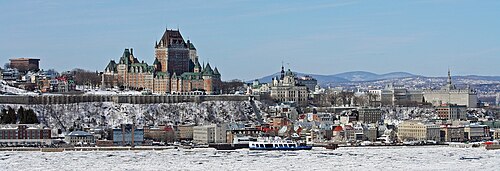
Old Quebec
Vieux-Québec
Old Quebec, known locally as Vieux-Québec, is the fortified historic core of Quebec City.
- Must see
- Historic monument
Language · 11 published
City guide · Canada

Québec City is organised around a compact historic core above and below the St. Lawrence River cliffs. Old Québec divides into Upper Town and Lower Town, with the Old Port beside the river. Parliament Hill, Montcalm and Saint-Jean-Baptiste extend west from the walls, while Saint-Roch and Limoilou form lower, more local districts. Central neighbourhoods are close together; outer attractions require bus or another planned connection.
Reviewed by Elena Voss · Roavina Travel Editor
Set your days, your pace and the hours you actually want to be out. The planner works around closing days and travel time, and leaves room to eat.
Ranked by importance — sitelinks, pageviews and heritage status, not editor preference.
54 places match
Category
Typical visit duration
Interests
Vieux-Québec
Old Quebec, known locally as Vieux-Québec, is the fortified historic core of Quebec City.
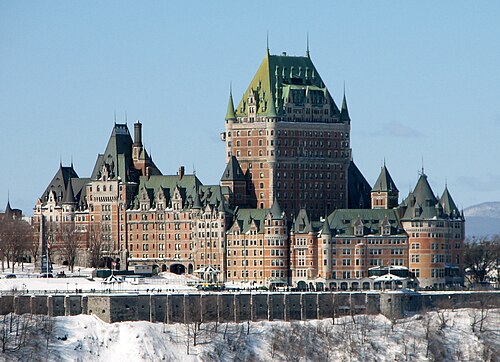
château Frontenac
Château Frontenac is a landmark hotel in Quebec City’s Upper Town, beside Dufferin Terrace and above the St. Lawrence River. Its steep roofs, turrets, and ornate gables give the building a château-like silhouette that dominates the Old Quebec skyline.
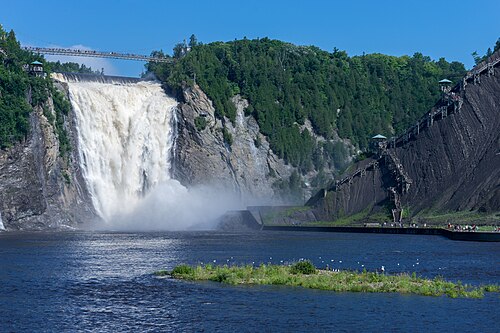
Chute Montmorency
Montmorency Falls, or chute Montmorency, is a major waterfall east of Québec City. The Montmorency River drops over a cliff into a basin below, creating a dramatic natural landmark close to the provincial capital.
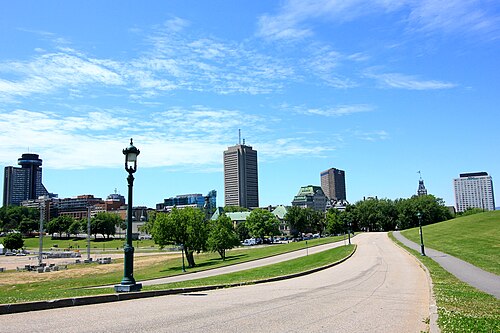
Plaines d'Abraham
Plains of Abraham is a historic battlefield landscape and major urban park beside central Québec City.
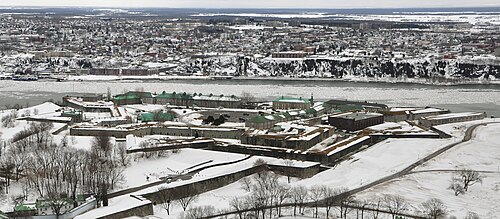
La Citadelle de Québec
La Citadelle de Québec is an active military fortress on Québec City’s Cap Diamant, not a conventional museum built solely for display. Its star-shaped defensive form, stone ramparts and elevated position above the St.
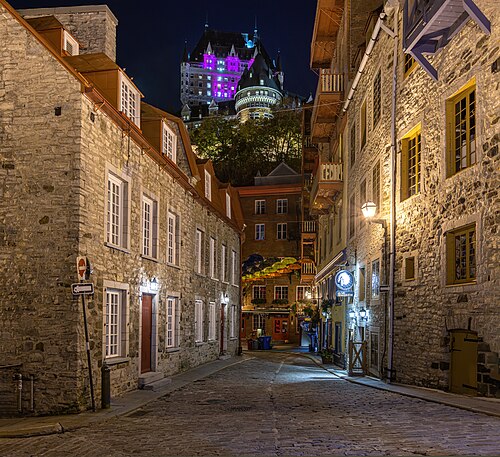
Petit Champlain is a historic quarter in Québec City's Lower Town, situated at the foot of Cap Diamant beneath the Château Frontenac escarpment. The area comprises narrow cobblestone streets and heritage buildings dating to the seventeenth and eighteenth centuries.
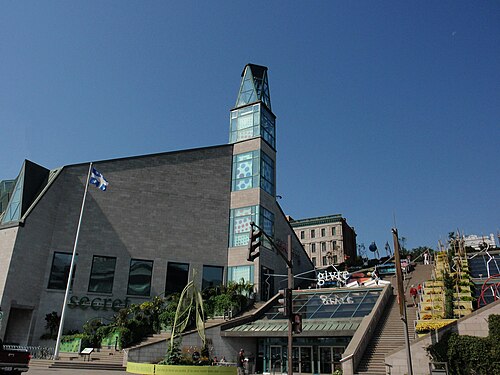
Musée de la Civilisation de Québec
Musée de la civilisation is one of Québec City’s most engaging indoor introductions to the province’s stories, identities, and cultural life.
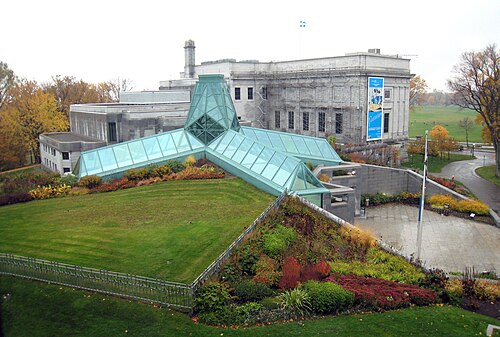
Musée national des beaux-arts du Québec is Québec City’s national art museum beside the Plains of Abraham.
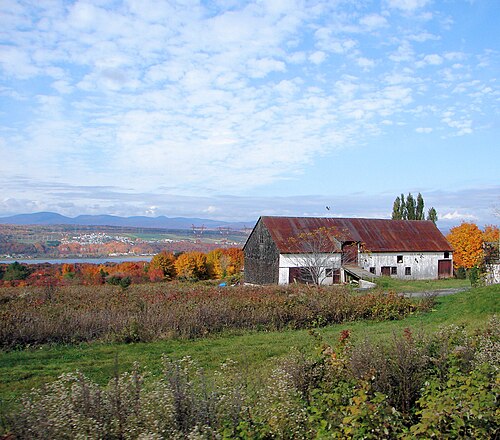
île d'Orléans
Île d’Orléans is a large agricultural island in the Saint Lawrence River downstream from Québec City. It is about 34 kilometres long and up to 8 kilometres wide, connected to the mainland by the Pont de l’Île bridge.
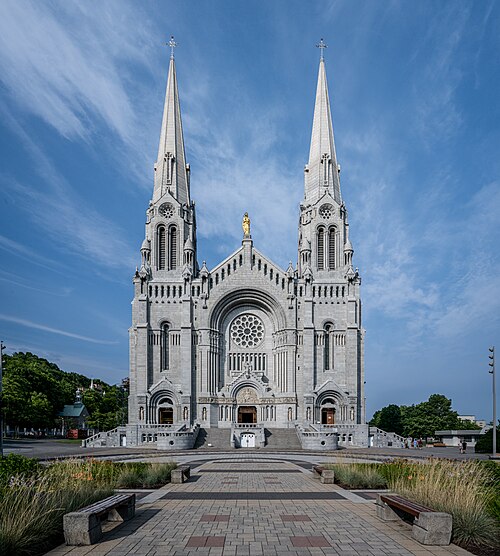
basilique Sainte-Anne-de-Beaupré
The Basilica of Sainte-Anne-de-Beaupré is a major Catholic pilgrimage basilica on the north shore of the Saint Lawrence River, northeast of Québec City. Dedicated to Saint Anne, it has attracted pilgrims for centuries.
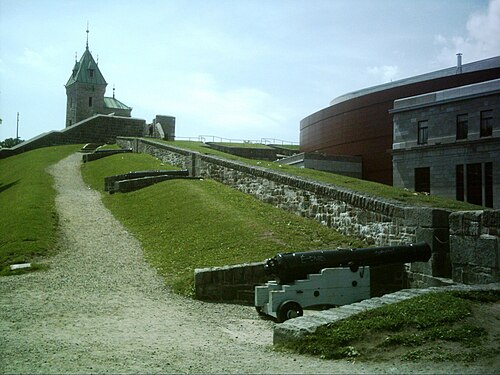
fortifications de Québec
The Fortifications of Quebec are the defensive walls, gates, and ramparts that encircle Old Quebec, forming the only remaining fortified city walls in North America north of Mexico.
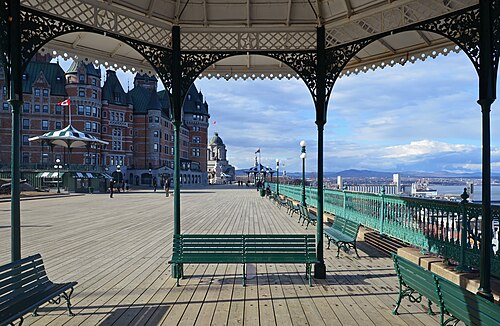
terrasse Dufferin
Dufferin Terrace is a historic boardwalk in Québec City's Upper Town, running alongside the Château Frontenac. This elevated promenade overlooks the St.
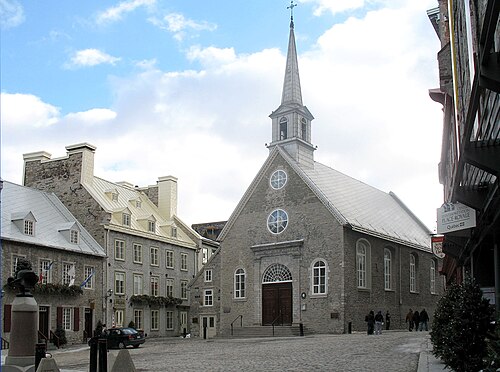
Place Royale is a historic public square in Quebec City's Lower Town, widely recognized as the restored birthplace precinct of French North America.

Église Notre-Dame-des-Victoires
Notre-Dame-des-Victoires Church is a historic Roman Catholic church located on Place Royale in Quebec City's Lower Town.
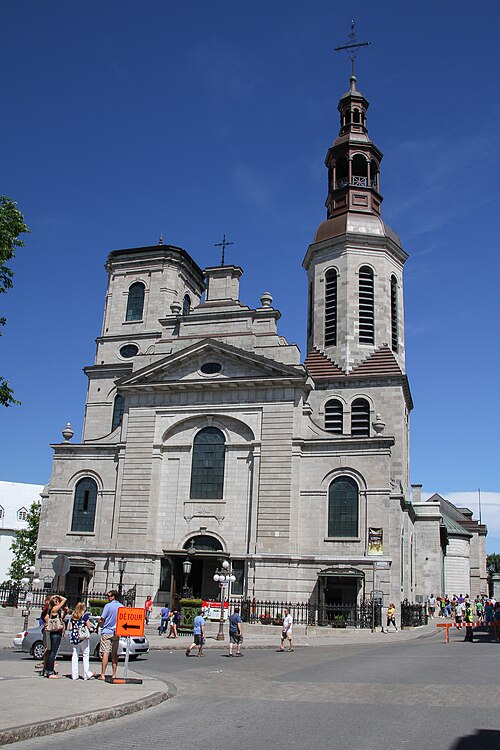
Basilique cathédrale Notre-Dame-de-Québec
Notre-Dame de Québec Basilica-Cathedral is a Roman Catholic basilica-cathedral located in Old Québec within the fortified city walls.
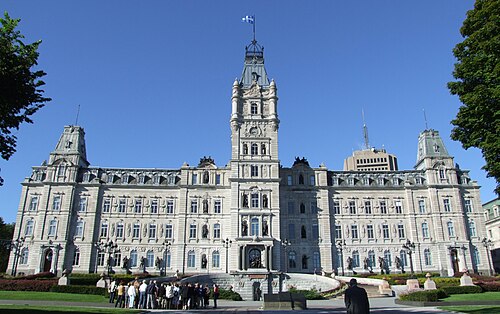
Hôtel du Parlement
The Parliament Building of Quebec, known locally as Hôtel du Parlement du Québec, serves as the seat of the National Assembly of Quebec. Constructed in the Second Empire architectural style, this prominent structure anchors the capital district of Quebec City.
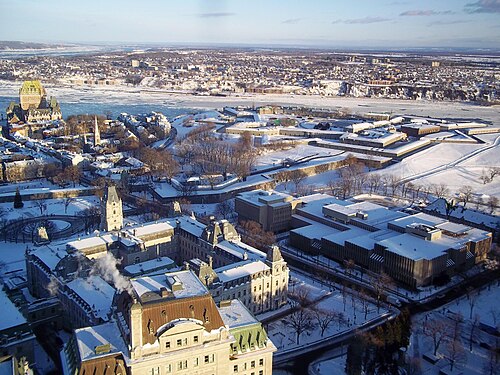
Observatoire de la Capitale
Observatoire de la Capitale is an indoor panoramic viewpoint in the Marie-Guyart Building. Its appeal is the elevated view over Québec City and the chance to understand the city’s geography from above.
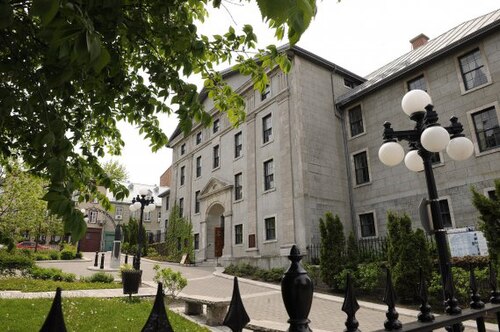
The Morrin Centre is a cultural institution occupying a landmark building in Quebec City's Old Town. The structure served as a prison from 1812 to 1868 before conversion to an educational facility.
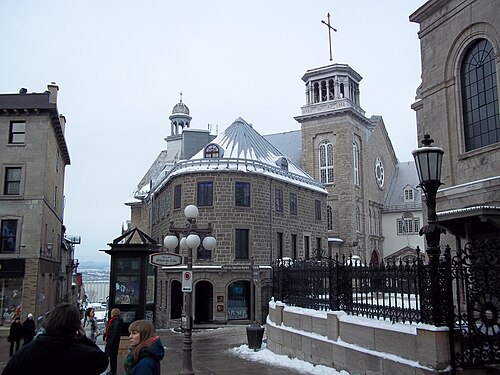
The Musée de l’Amérique francophone is a history museum in the Séminaire de Québec complex in Québec City. It explores French-speaking communities across North America, linking regional history with wider stories of settlement, migration, religion, education, and cultural continuity.
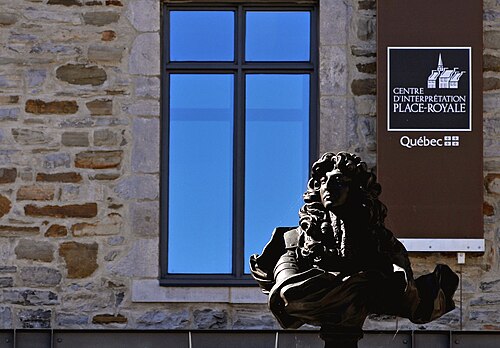
Musée de la Place-Royale is a place-based museum in Québec City’s Lower Town, centred on the history and urban character of Place Royale.
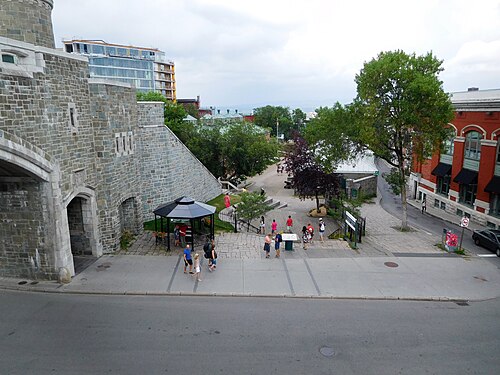
Artillery Park is a staffed national historic site within the Fortifications of Quebec National Historic Site. It preserves military heritage buildings and grounds that served defensive functions from the 18th to 19th centuries.
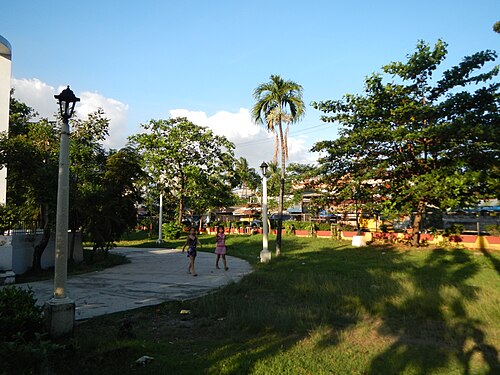
Governors’ Promenade is a cliffside pedestrian boardwalk in Québec City, linking Dufferin Terrace with the Plains of Abraham.
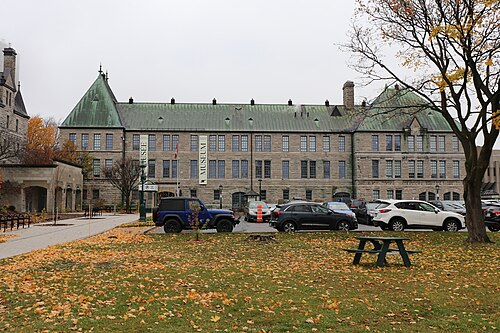
Musée des plaines d'Abraham
The Plains of Abraham Museum provides an indoor historical introduction to Québec City’s famous battlefield landscape. It explains the events and context that give the surrounding park its significance.
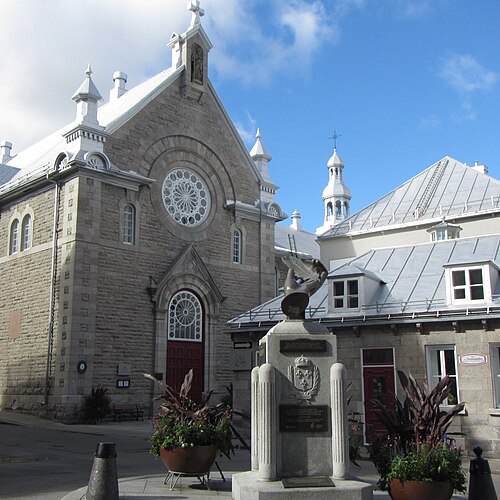
Musée des Ursulines de Québec is a historic convent museum in Québec City’s Upper Town, near the basilica. The Ursuline order founded the institution in 1639 and established an early school for girls in New France.
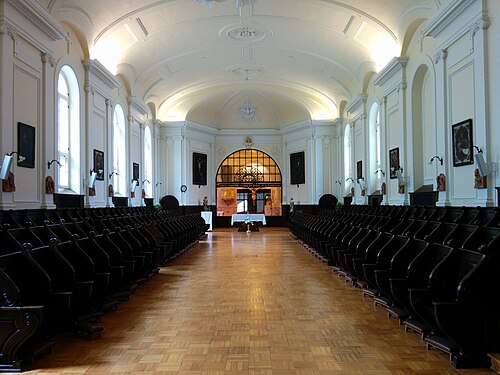
Monastère des Augustines is a Québec City heritage complex rooted in the Augustinian Sisters’ medical and spiritual work. The sisters established the first hospital north of Mexico in 1645.
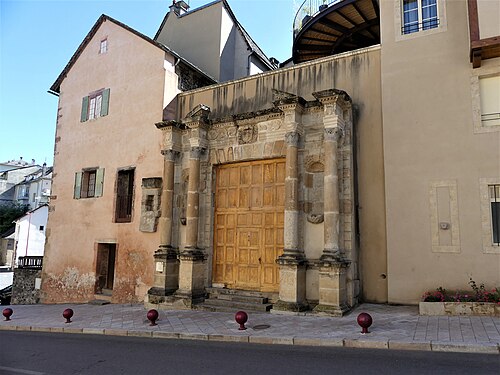
Chapelle des Ursulines is a historic chapel in Old Québec shaped by the Ursuline presence, religious use, sacred art, music, architecture, and decoration.
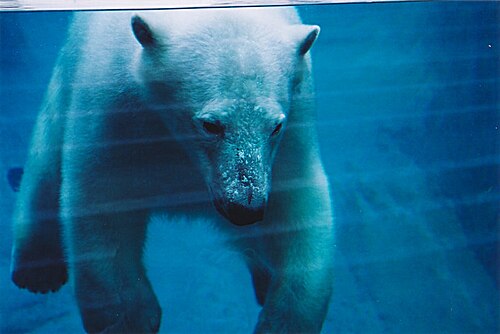
Aquarium du Québec is a dedicated marine-life attraction in Québec City’s Sainte-Foy area, where the visit centres on observing living creatures in a purpose-built aquarium complex.
Onhwa' Lumina is a night-time Indigenous storytelling experience in Wendake near Québec City. Its core is an outdoor night walk combining light, sound and a defined route to present contemporary Indigenous storytelling.
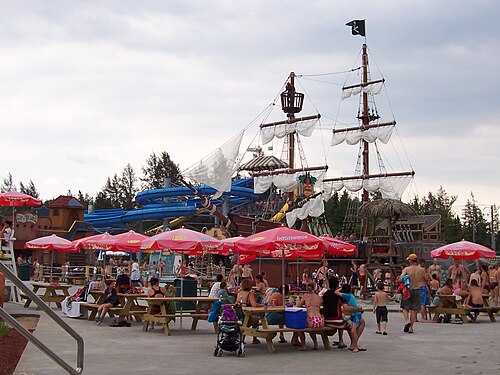
Village Vacances Valcartier
Village Vacances Valcartier is a large recreational complex northwest of Québec City. The destination combines a waterpark and winter playground, making it a major seasonal attraction for families seeking outdoor entertainment.
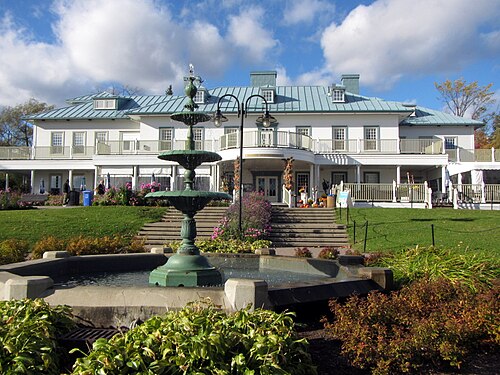
Manoir Montmorency is a historic manor above Montmorency Falls in the Québec City region. Its position on the heights gives the building a clear relationship with the waterfall and the surrounding landscape.
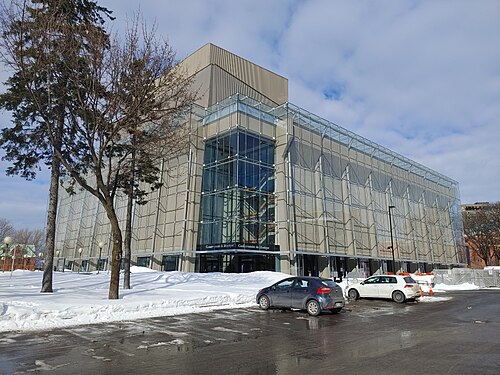
Grand Théâtre de Québec is a major performing-arts complex in Québec City, presenting orchestral music, opera, dance, and theatre. It is associated with the Orchestre symphonique de Québec and functions as one of the city’s principal destinations for professional performances.
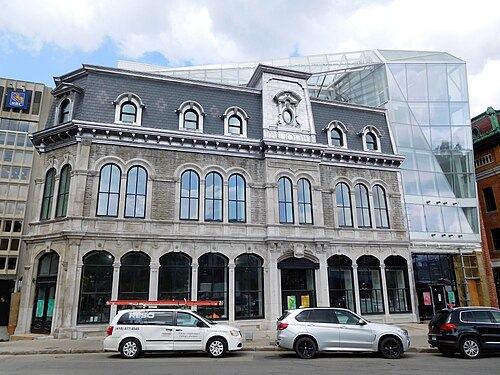
Le Diamant is a contemporary theatre in Old Québec, created through the reinvention of a heritage building.
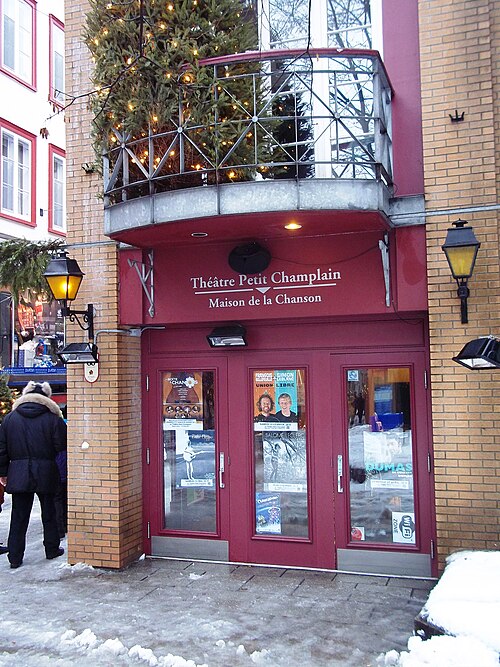
Théâtre du Petit Champlain
Théâtre Petit Champlain is a compact performing arts venue in Quebec City's historic Lower Town. It functions as a French-language music and theatre room, serving as a cultural landmark within the Petit Champlain district.
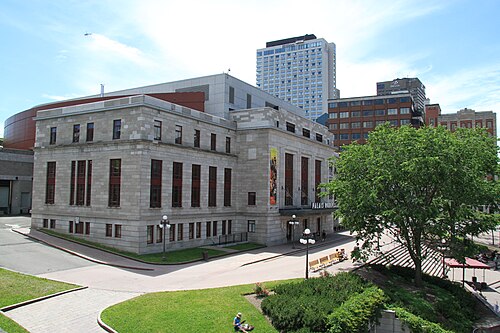
Palais Montcalm is a restored art-deco performance hall in Québec City, focused on classical and jazz music.
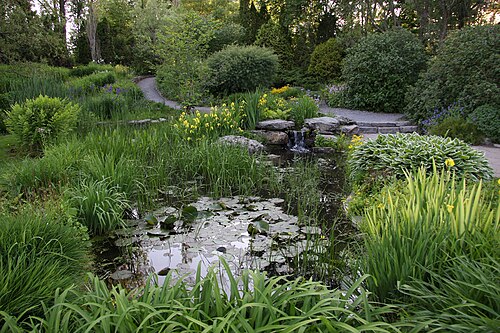
Jardin botanique Roger-Van den Hende
Jardin botanique Roger-Van den Hende is a botanical garden operated by Université Laval in the Sainte-Foy district of Quebec City. It serves as both a public horticultural destination and an academic resource for the university.
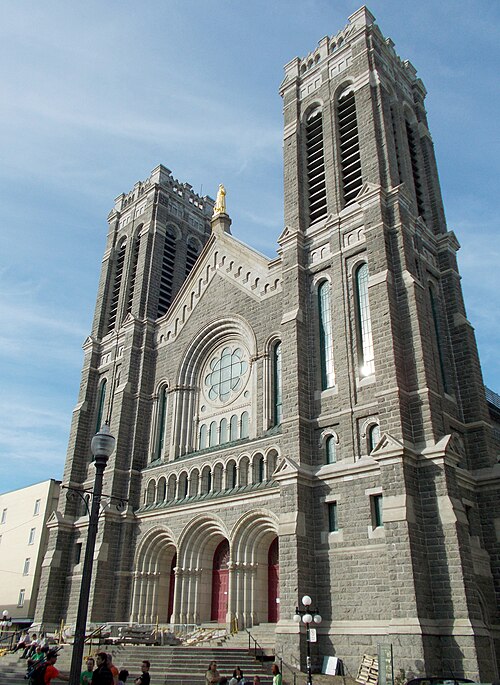
Église Saint-Roch
Saint-Roch Church, or église Saint-Roch, is a major historic church in Quebec City's lower-city Saint-Roch district. Its monumental scale makes it one of the neighbourhood's most recognisable landmarks.
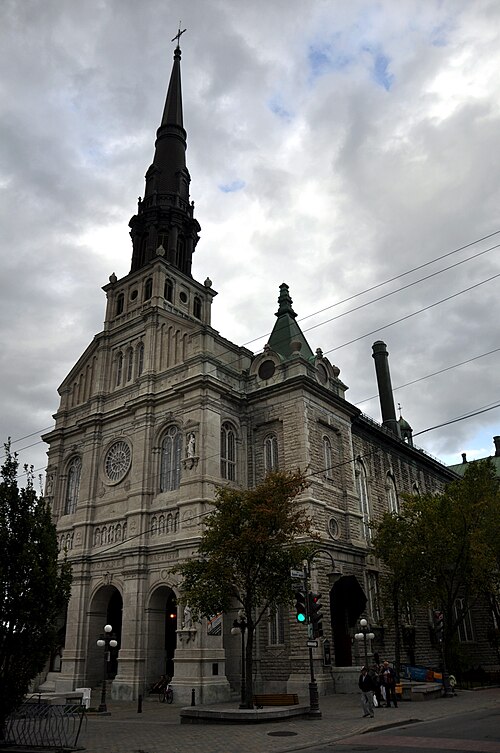
Église Saint-Jean-Baptiste
Saint-Jean-Baptiste Church is a Roman Catholic church located in the Saint-Jean-Baptiste neighbourhood of Quebec City. The local name is église Saint-Jean-Baptiste. This sacred building serves as a significant religious and architectural landmark within its district.
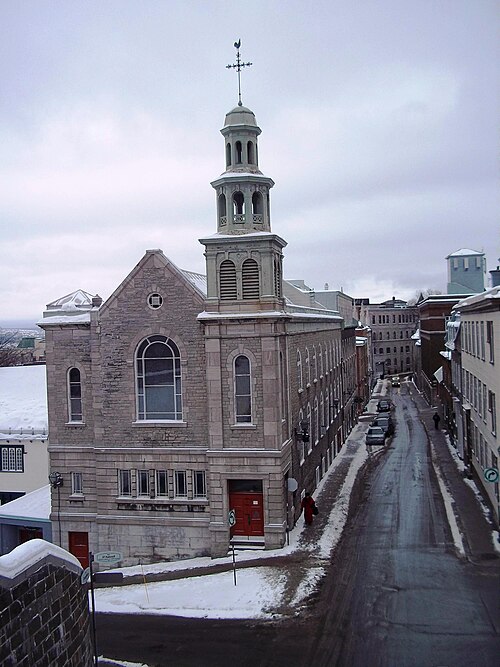
Chapelle des Jésuites
Chapelle des Jésuites is a nineteenth-century chapel in Quebec City's Montcalm district. The heritage building has been adapted for concerts and cultural events, giving travellers a chance to encounter historic religious architecture in a contemporary setting.
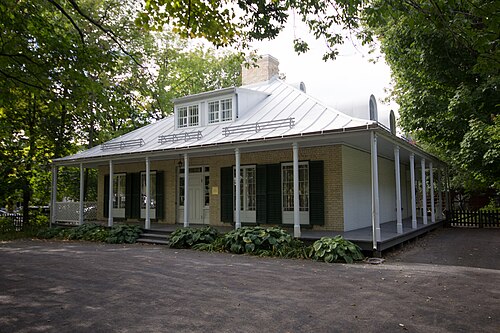
Maison Henry-Stuart
Maison Henry-Stuart is a preserved 1849 house and garden near the Plains of Abraham in Quebec City. It offers a close look at domestic life in a nineteenth-century residence, with the building itself providing the main historical experience.
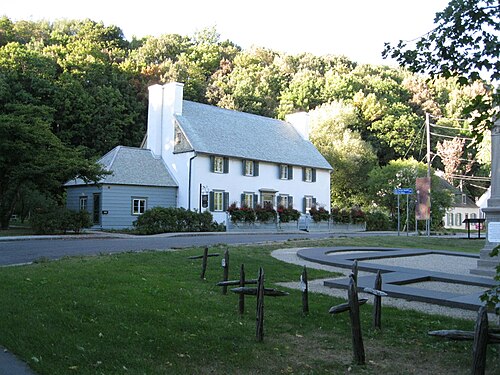
Maison des Jésuites de Sillery
Maison des Jésuites de Sillery is a historic house in Quebec City's Sillery district and a surviving part of a former Jesuit estate established in the seventeenth century.
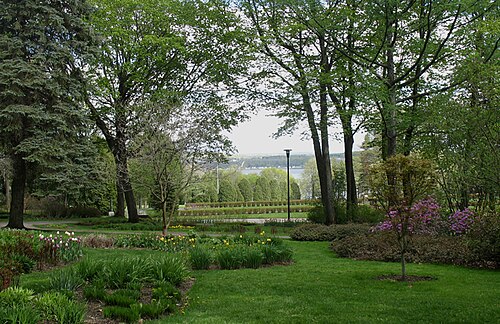
Parc du Bois-de-Coulonge
Bois-de-Coulonge Park, known locally as parc du Bois-de-Coulonge, comprises landscaped former vice-regal grounds situated along a riverside in Québec City. The property served as the residence of Quebec lieutenant-governors, reflecting its historical significance in provincial governance.
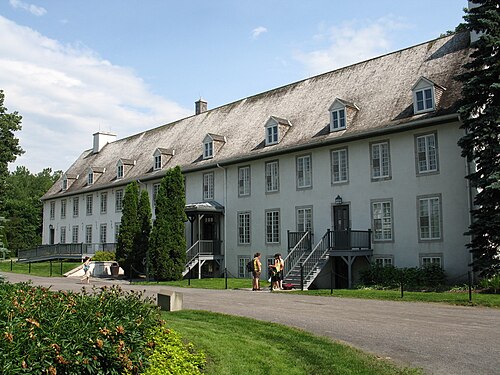
Domaine de Maizerets is a historic estate on Quebec City's east side, encompassing extensive gardens and parkland. The property functions as a public green space where visitors can experience landscaped grounds with heritage character.
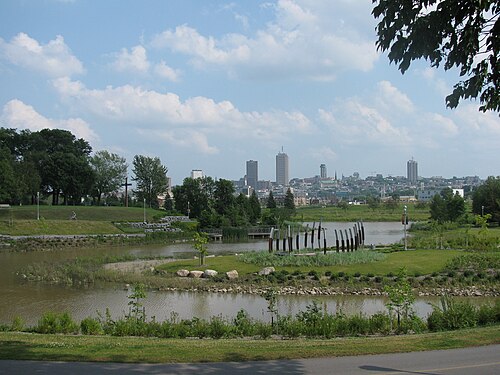
Lieu historique national Cartier-Brébeuf
Cartier-Brébeuf National Historic Site is a riverside historic place beside the Saint-Charles River in Québec City. It commemorates Jacques Cartier’s wintering at Stadacona in 1535–1536 and the later mission associated with Jean de Brébeuf and other missionaries.
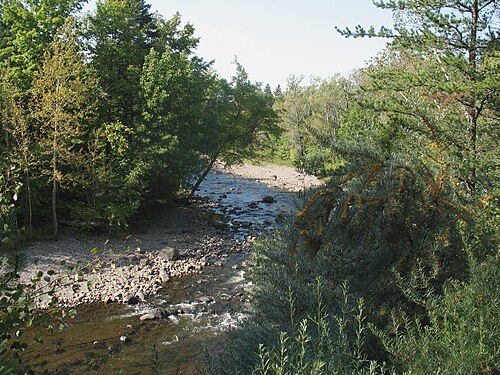
Parc Chauveau is Quebec City's largest park, situated along the Saint-Charles River. This extensive green space serves as a genuine riverfront outdoor destination for residents and visitors seeking natural surroundings within the urban environment.
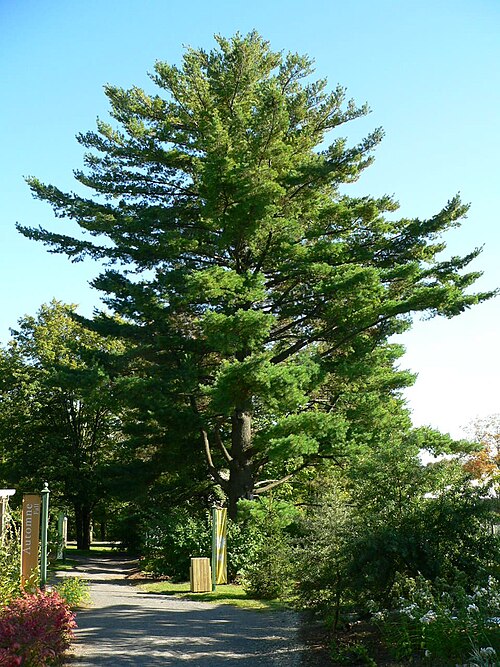
Parc des Moulins is a public park in Quebec City situated on the former grounds of the city's zoo. The site has been transformed into a broad garden space and family recreation area.
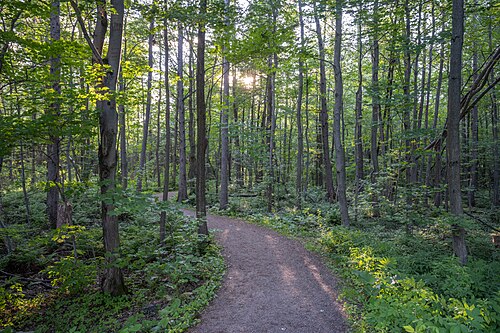
Base de plein air de Sainte-Foy is an outdoor recreation centre in Quebec City’s Sainte-Foy district. Its setting brings nature-based activity into the city, with a lake, surrounding grounds, trails, and equipment rental forming the core of the visit.
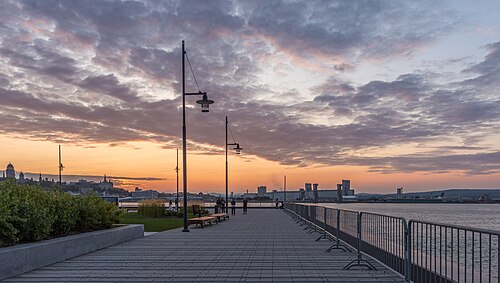
Quai Paquet is a redeveloped public plaza and ferry terminal located in Lévis, directly across the Saint Lawrence River from Québec City.
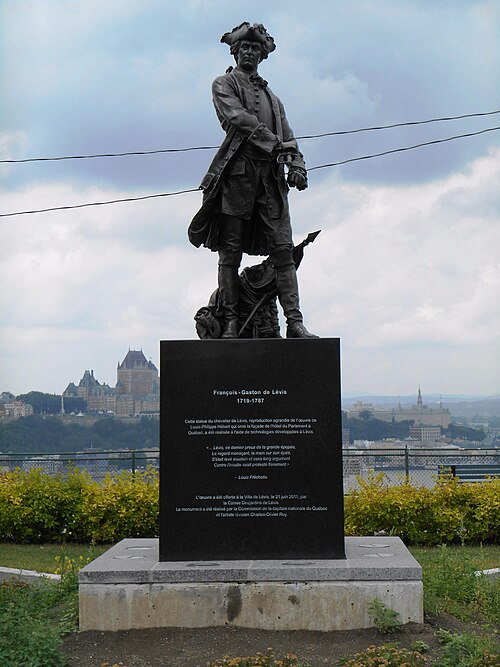
Terrasse du Chevalier-de-Lévis is an outdoor public terrace on the Lévis bluff, on the south shore of the St. Lawrence River opposite Québec City.
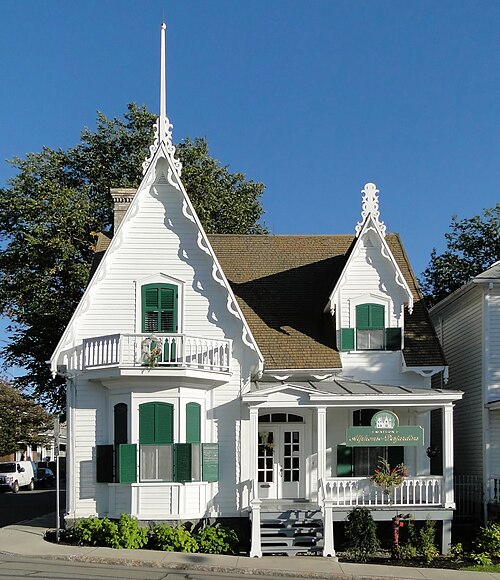
Maison Alphonse-Desjardins is a heritage house in Lévis, Quebec, preserved as a monument to Alphonse Desjardins, founder of the caisse populaire cooperative credit union movement.
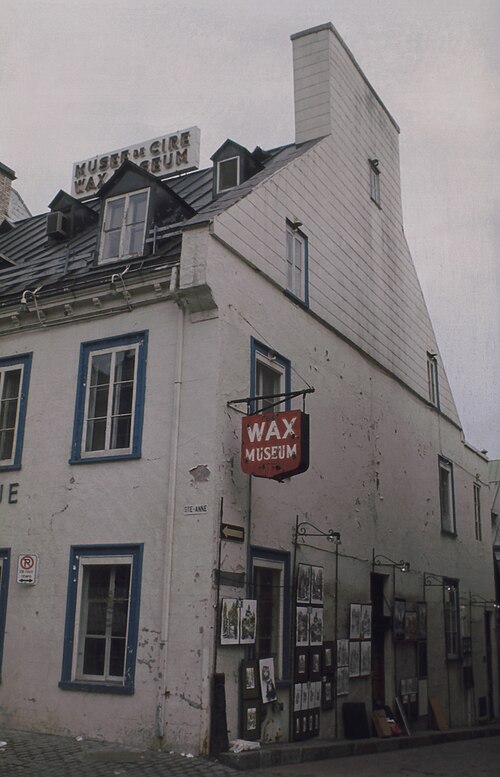
Rue du Trésor is a narrow pedestrian lane in Old Québec, close to the Château Frontenac. It functions as an open-air gallery where artists display and sell their work directly to passers-by.
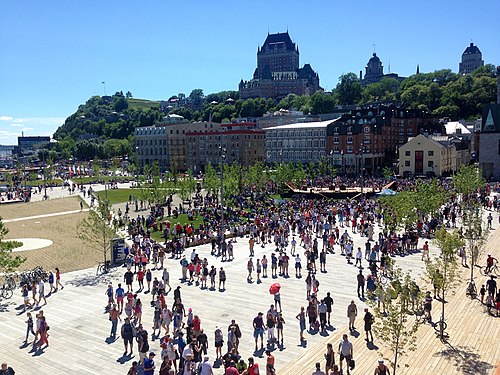
Place des Canotiers is a public plaza situated in Quebec City's Old Port area, positioned at river level beneath the elevated historic district of Old Quebec.
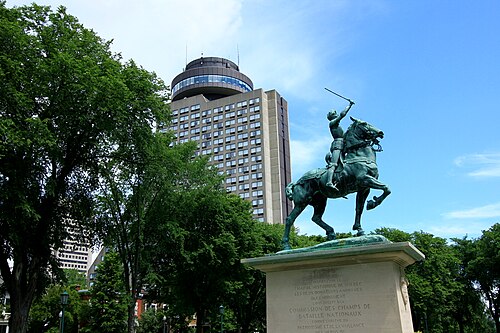
Jardin Jeanne-d'Arc
Jardin Jeanne-d’Arc is a formal garden within the Plains of Abraham in Quebec City. Named for Joan of Arc, it combines seasonal flower displays with a statue of its namesake.
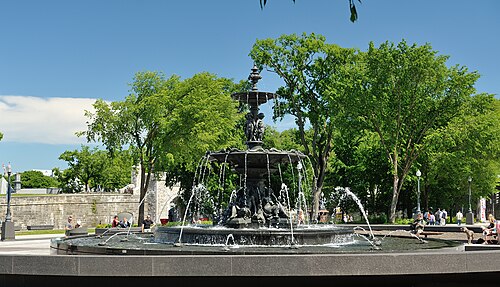
Fontaine de Tourny
The Fontaine de Tourny is an ornate public fountain situated on the grounds of the Parliament Building in Québec City's capital district. It serves as a significant public-art landmark within the parliamentary precinct.
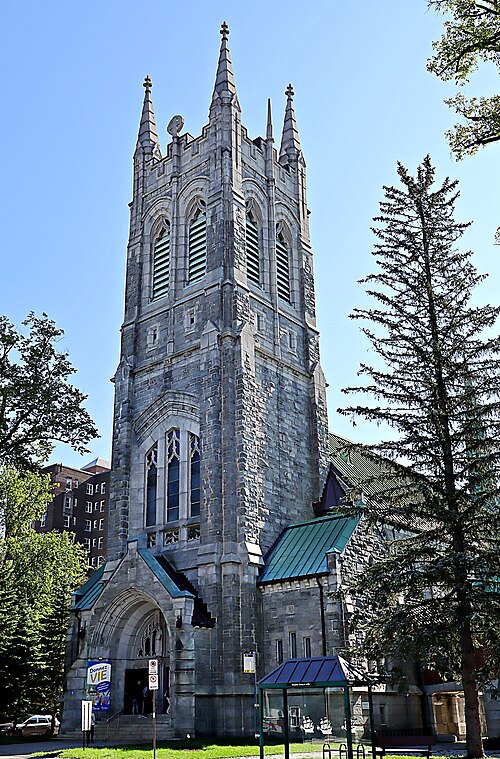
Église Saint-Dominique
Église Saint-Dominique is a Dominican parish church on Grande Allée in Québec City.
Source: OpenStreetMap contributors, Wikidata ·
Upper Town occupies the fortified plateau around Château Frontenac and the main gates. Lower Town sits beneath the cliff around Place Royale and the Old Port, linked by steep streets, stairs and the funicular. Parliament Hill and the Plains of Abraham are west of the walls; Saint-Jean-Baptiste and Montcalm continue beyond them. Saint-Roch lies below the escarpment, with Limoilou farther north across the Saint-Charles River.
Checked 2026-08-26
Walk between the central neighbourhoods, allowing for steep grades between Upper and Lower Town. The RTC bus network serves the city centre, central districts, suburbs, the airport and both train stations. Frequent Métrobus routes carry numbers in the 800s and are useful beyond the historic core. Use the official RTC trip planner and current notices because construction, weather and traffic can alter stops and schedules.
Checked 2026-08-26
A fixed stay length is not recorded. Plan Upper and Lower Town first, then add Parliament Hill, Montcalm, Saint-Roch or an outer excursion according to your priorities.
Yes. Its principal areas are compact, but Upper and Lower Town are separated by a steep escarpment, stairs and sloping streets.
Upper Town occupies the fortified plateau; Lower Town lies beneath it around Place Royale and the Old Port. Routes between them include steep streets, stairs and the funicular.
Use RTC buses. The network serves central neighbourhoods, suburbs, the airport and both train stations, with frequent Métrobus routes on major corridors.
No. The official visitor guide describes them as concentrated in a relatively small area, though elevation changes can make short map distances more demanding on foot.