.jpg)
01
2 hours
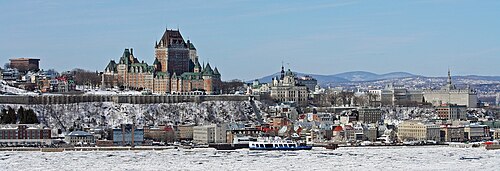
Old Quebec
Vieux-Québec
Old Quebec, known locally as Vieux-Québec, is the fortified historic core of Quebec City.
- Must see
- Historic monument
Language · 11 published
City guide · Canada

Québec City is organised around a compact historic core above and below the St. Lawrence River cliffs. Old Québec divides into Upper Town and Lower Town, with the Old Port beside the river. Parliament Hill, Montcalm and Saint-Jean-Baptiste extend west from the walls, while Saint-Roch and Limoilou form lower, more local districts. Central neighbourhoods are close together; outer attractions require bus or another planned connection.
Reviewed by Elena Voss · Roavina Travel Editor
Set your days, your pace and the hours you actually want to be out. The planner works around closing days and travel time, and leaves room to eat.
Ranked by importance — sitelinks, pageviews and heritage status, not editor preference.
14 places match
Category
Typical visit duration
Interests
Vieux-Québec
Old Quebec, known locally as Vieux-Québec, is the fortified historic core of Quebec City.
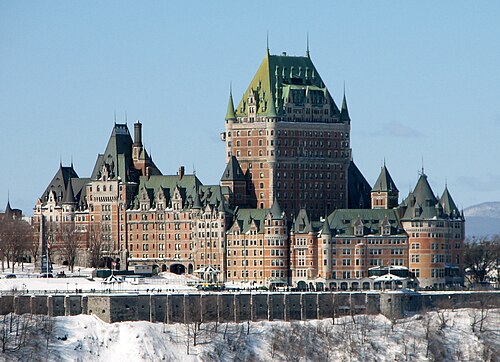
château Frontenac
Château Frontenac is a landmark hotel in Quebec City’s Upper Town, beside Dufferin Terrace and above the St. Lawrence River. Its steep roofs, turrets, and ornate gables give the building a château-like silhouette that dominates the Old Quebec skyline.
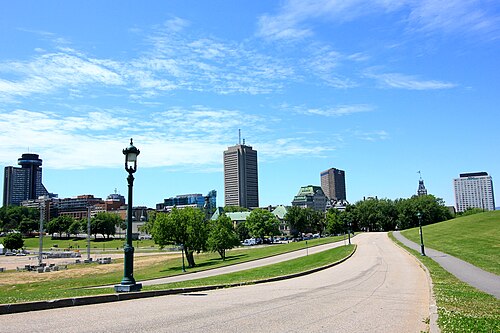
Plaines d'Abraham
Plains of Abraham is a historic battlefield landscape and major urban park beside central Québec City.
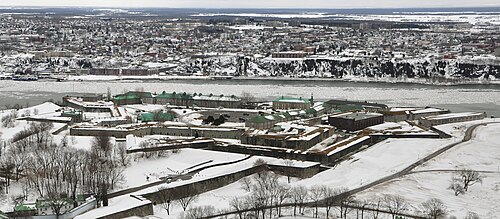
La Citadelle de Québec
La Citadelle de Québec is an active military fortress on Québec City’s Cap Diamant, not a conventional museum built solely for display. Its star-shaped defensive form, stone ramparts and elevated position above the St.
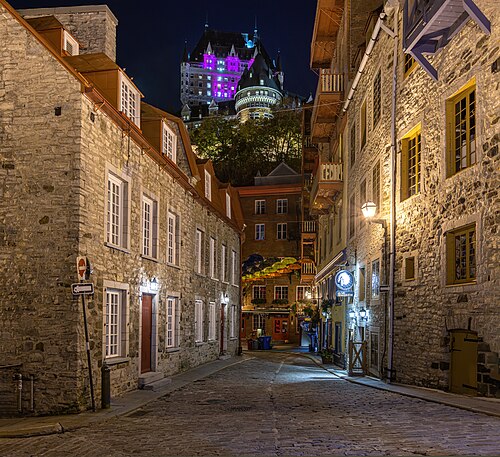
Petit Champlain is a historic quarter in Québec City's Lower Town, situated at the foot of Cap Diamant beneath the Château Frontenac escarpment. The area comprises narrow cobblestone streets and heritage buildings dating to the seventeenth and eighteenth centuries.
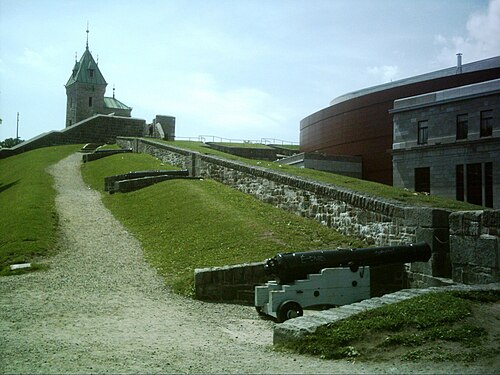
fortifications de Québec
The Fortifications of Quebec are the defensive walls, gates, and ramparts that encircle Old Quebec, forming the only remaining fortified city walls in North America north of Mexico.
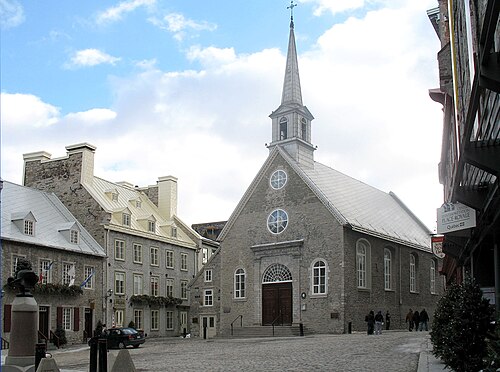
Place Royale is a historic public square in Quebec City's Lower Town, widely recognized as the restored birthplace precinct of French North America.
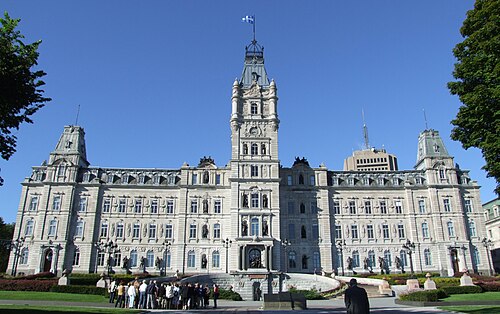
Hôtel du Parlement
The Parliament Building of Quebec, known locally as Hôtel du Parlement du Québec, serves as the seat of the National Assembly of Quebec. Constructed in the Second Empire architectural style, this prominent structure anchors the capital district of Quebec City.
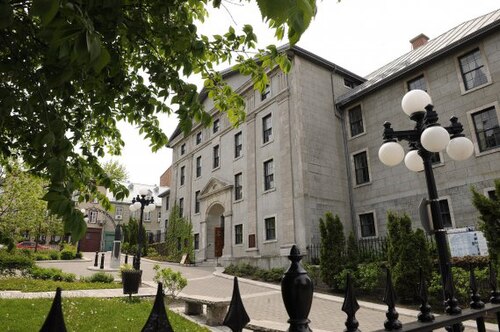
The Morrin Centre is a cultural institution occupying a landmark building in Quebec City's Old Town. The structure served as a prison from 1812 to 1868 before conversion to an educational facility.
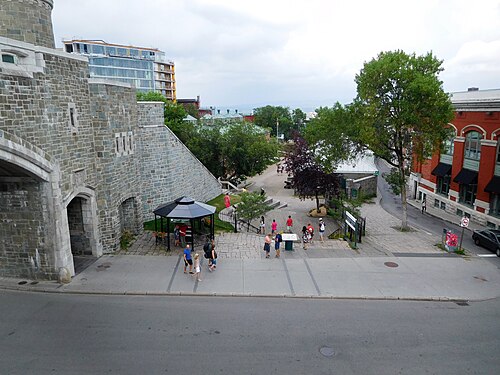
Artillery Park is a staffed national historic site within the Fortifications of Quebec National Historic Site. It preserves military heritage buildings and grounds that served defensive functions from the 18th to 19th centuries.
Onhwa' Lumina is a night-time Indigenous storytelling experience in Wendake near Québec City. Its core is an outdoor night walk combining light, sound and a defined route to present contemporary Indigenous storytelling.
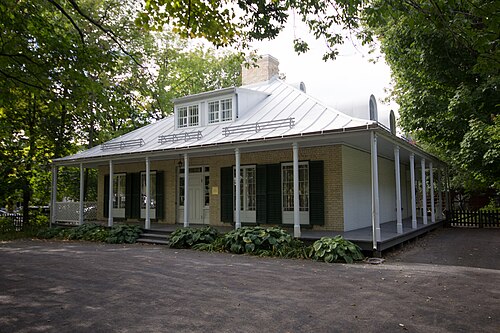
Maison Henry-Stuart
Maison Henry-Stuart is a preserved 1849 house and garden near the Plains of Abraham in Quebec City. It offers a close look at domestic life in a nineteenth-century residence, with the building itself providing the main historical experience.
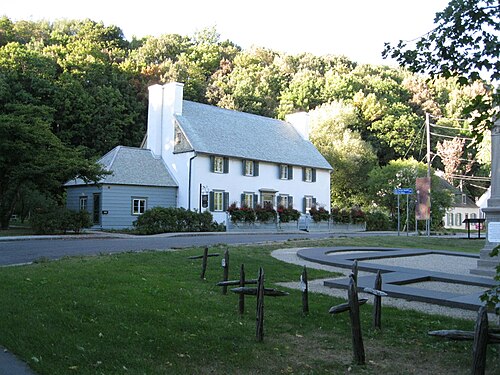
Maison des Jésuites de Sillery
Maison des Jésuites de Sillery is a historic house in Quebec City's Sillery district and a surviving part of a former Jesuit estate established in the seventeenth century.
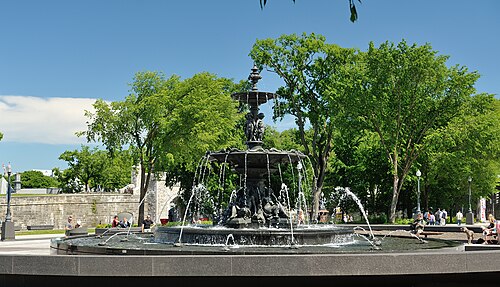
Fontaine de Tourny
The Fontaine de Tourny is an ornate public fountain situated on the grounds of the Parliament Building in Québec City's capital district. It serves as a significant public-art landmark within the parliamentary precinct.
Source: OpenStreetMap contributors, Wikidata ·
Upper Town occupies the fortified plateau around Château Frontenac and the main gates. Lower Town sits beneath the cliff around Place Royale and the Old Port, linked by steep streets, stairs and the funicular. Parliament Hill and the Plains of Abraham are west of the walls; Saint-Jean-Baptiste and Montcalm continue beyond them. Saint-Roch lies below the escarpment, with Limoilou farther north across the Saint-Charles River.
Checked 2026-08-26
Walk between the central neighbourhoods, allowing for steep grades between Upper and Lower Town. The RTC bus network serves the city centre, central districts, suburbs, the airport and both train stations. Frequent Métrobus routes carry numbers in the 800s and are useful beyond the historic core. Use the official RTC trip planner and current notices because construction, weather and traffic can alter stops and schedules.
Checked 2026-08-26
A fixed stay length is not recorded. Plan Upper and Lower Town first, then add Parliament Hill, Montcalm, Saint-Roch or an outer excursion according to your priorities.
Yes. Its principal areas are compact, but Upper and Lower Town are separated by a steep escarpment, stairs and sloping streets.
Upper Town occupies the fortified plateau; Lower Town lies beneath it around Place Royale and the Old Port. Routes between them include steep streets, stairs and the funicular.
Use RTC buses. The network serves central neighbourhoods, suburbs, the airport and both train stations, with frequent Métrobus routes on major corridors.
No. The official visitor guide describes them as concentrated in a relatively small area, though elevation changes can make short map distances more demanding on foot.