
1 min walk
Senado Square
- Must see
- Historic monument
Language · 11 published
Historic monument · Macau
仁慈堂大樓 Santa Casa da Misericórdia
Reviewed by Elena Voss · Roavina Travel Editor
| Monday | Closed |
|---|---|
| Tuesday | 10:00 – 17:30 |
| Wednesday | 10:00 – 17:30 |
| Thursday | 10:00 – 17:30 |
| Friday | 10:00 – 17:30 |
| Saturday | 10:00 – 17:30 |
| Sunday | 10:00 – 17:30 |
Checked 2026-08-31 · Source
Read from the OpenStreetMap access tags; anything not listed has no tag recorded.
Set the group type to family in the planner and the day window contracts to about three quarters of a solo day.
It carries the Heritage of Portuguese Influence heritage designation.
The Holy House of Mercy, or 仁慈堂大樓, is a historic charitable institution beside Senado Square in Macau. Founded in 1569 by Macau's first bishop, it became associated with care for orphans, widows and people in poverty. Its Portuguese colonial architecture and Catholic heritage place it within the Historic Centre of Macao UNESCO World Heritage ensemble. For travellers, the building is a compact landmark that connects Macau's religious history, civic life and distinctive European-influenced streetscape. The Holy House of Mercy, known locally as 仁慈堂大樓, is a historic welfare institution in Macau's Senado Square. Founded in 1569 by the first Bishop of Macau, it is one of the oldest charitable organisations in Asia. The building exemplifies Portuguese colonial architecture and served as a refuge for orphans, widows and the destitute. It stands as testament to Macau's Catholic heritage and humanitarian traditions, forming part of the Historic Centre of Macau UNESCO World Heritage ensemble that defines the territory's cultural landscape. It originated as an active charitable welfare institution in 1569 and retains historical significance within the UNESCO World Heritage ensemble.
Checked 2026-08-26 · Source
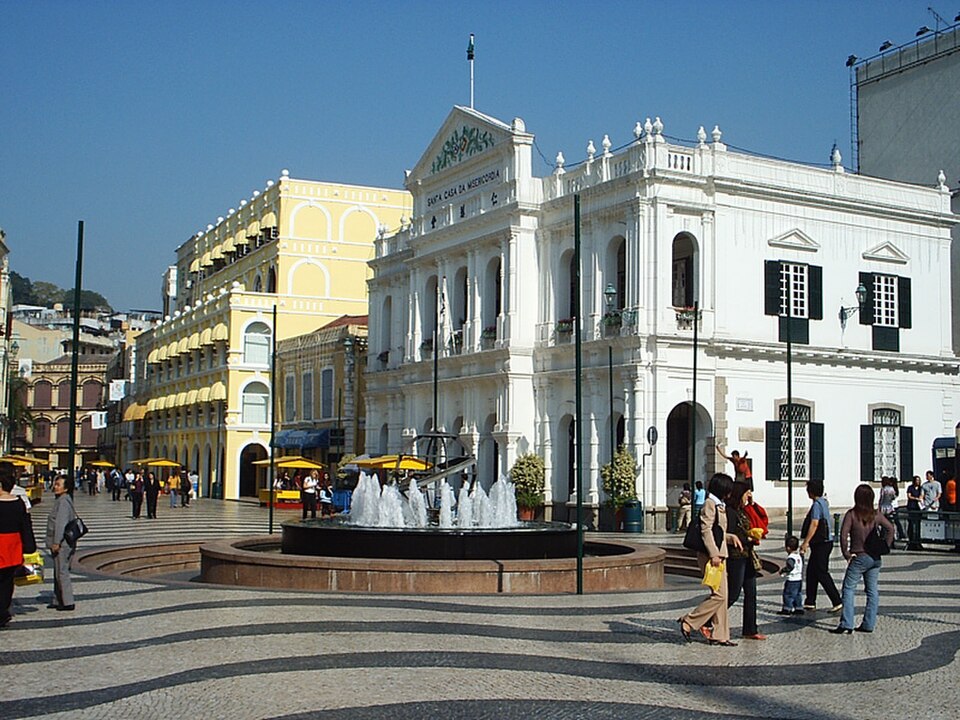
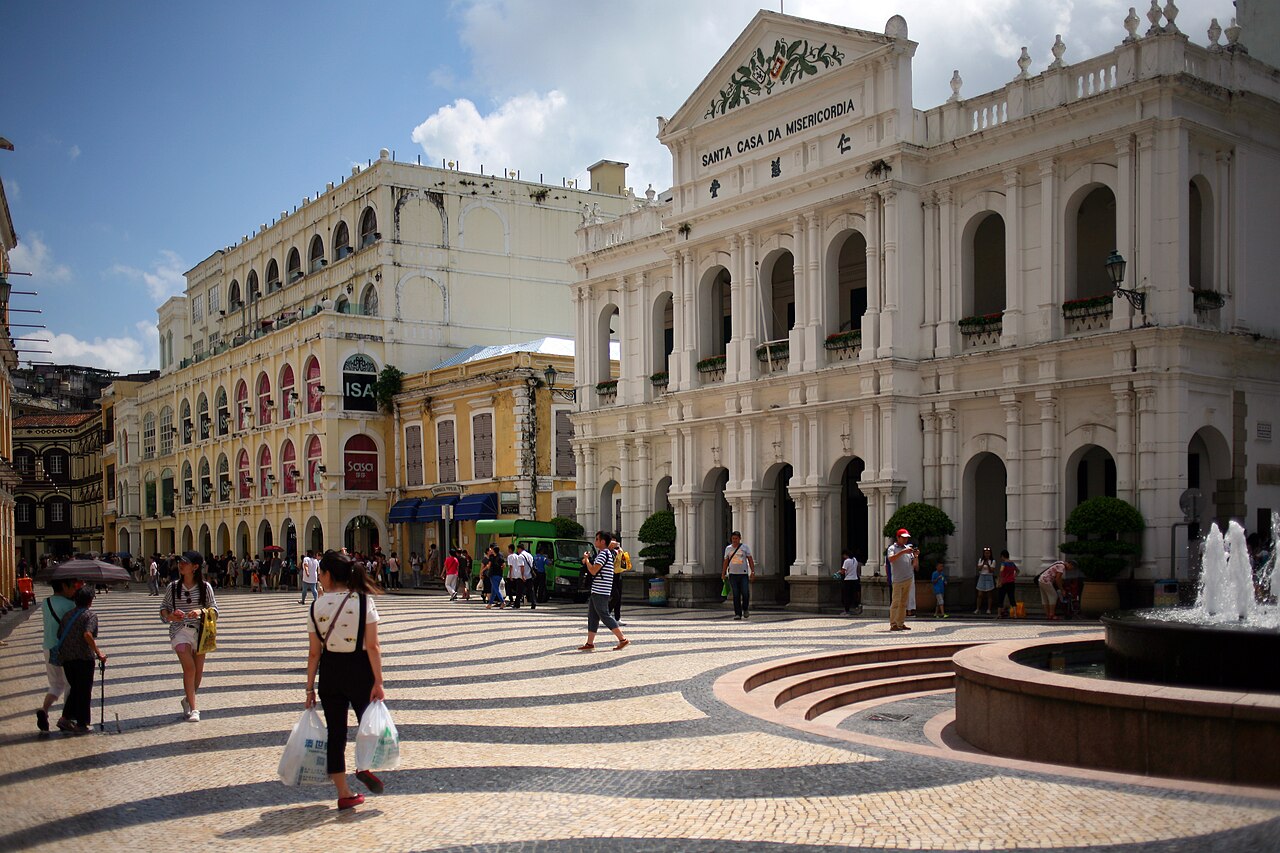
The building's historic character is expressed through ceremonial and religious spaces, archival material and architectural details linked to centuries of welfare work. Visitors may notice the chapel, traditional Portuguese decoration, wooden staircases, ornamental balconies and period stonework where public access allows. Its setting beside Senado Square is as important as the structure itself: the facade, square and surrounding heritage buildings form a connected cultural scene. Combine the exterior with nearby monuments to understand the institution within Macau's historic centre.
Checked 2026-08-26 · Source
Set aside around thirty to sixty minutes for the facade, square and any interior areas open during your visit. The site is compact, so it fits naturally between nearby heritage stops. Visitors interested in Catholic history, colonial architecture or photography may linger longer, especially when studying the ornamental details and surrounding streets. Pairing it with Senado Square, St Dominic's Church and the Ruins of St Paul's turns a brief stop into a fuller walking circuit through Macau's historic core.
Checked 2026-08-26 · Source
Morning is a good time to see the facade with fewer tour groups and softer conditions for walking through Senado Square. Weekends and public holidays bring heavier foot traffic to the historic centre. Macau's summers are hot and humid, while winter is milder; covered passages and nearby indoor spaces provide useful pauses during warm weather. Evening visits can add atmosphere when surrounding heritage buildings are illuminated. The square remains an active public setting, so expect movement rather than museum-like quiet.
Checked 2026-08-26 · Source
The facade can be appreciated from public areas of Senado Square without an admission payment. Interior access is a separate consideration and may depend on the spaces open to visitors at the time. The building's charitable origins and heritage setting make it valuable even as an exterior stop, especially for travellers following the UNESCO walking route. Spend your time on the facade, square and neighbouring monuments as one connected experience rather than treating the building as an isolated indoor attraction.
Checked 2026-08-26 · Source
Holy House of Mercy stands directly on Senado Square in Macau's historic core. Public buses serve the surrounding district, while taxis and hotel shuttles can bring you close to the heritage precinct before the final walk. From the Ruins of St Paul's, the route through the historic centre takes roughly ten to fifteen minutes on foot. The area is best explored as a pedestrian circuit linking the square, St Dominic's Church, the Ruins of St Paul's and other UNESCO-listed landmarks.
Checked 2026-08-26 · Source
Senado Square can be crowded, particularly when tour groups and weekend visitors arrive together. The wave-pattern paving and other stone surfaces may become slippery when wet, so wear shoes with a secure grip. Historic interiors can include stairs and uneven floors, which may affect the ease of moving through older rooms. Keep belongings close in busy streets and respect the building's religious and charitable setting. Leave space for pedestrians when stopping to study or photograph the facade.
Checked 2026-08-26 · Source
The yellow-and-white facade, green shutters and Senado Square's wave-pattern pavement create a recognisable Macau composition. Stand back in the square for a full elevation, or move toward the corner for an angled view that includes neighbouring heritage buildings. Morning light can clarify the facade, while evening conditions give the surrounding historic centre a more atmospheric character. Inside, follow any photography guidance and avoid using equipment that blocks the narrow circulation spaces or disturbs worship, staff or other visitors.
Checked 2026-08-26 · Source
It was founded in 1569 by Macau's first bishop and is associated with charitable care for orphans, widows and people in poverty.
It stands beside Senado Square in Macau's historic core, close to St Dominic's Church, the Ruins of St Paul's and other heritage landmarks.
Allow about thirty to sixty minutes for the facade, square and any interior areas open during the visit, or longer as part of a heritage walking circuit.
Yes. The exterior facade can be appreciated freely from public areas of Senado Square; interior access is a separate part of the visit.
Portuguese colonial architecture defines the building, with details such as ornamental balconies, green shutters, wooden staircases and period stonework.
Combine it with Senado Square, St Dominic's Church, the Ruins of St Paul's and the surrounding UNESCO-listed heritage route through Macau's historic centre.
Loading the interactive map…
The interactive map could not be loaded.
Last updated:
Source: OpenStreetMap contributors, Wikidata ·