

18 min walk
Propaganda Poster Art Centre
- Must see
- Museum
Language · 11 published
Place of worship · Shanghai
静安寺
Reviewed by Elena Voss · Roavina Travel Editor
| Monday | 07:30 – 17:00 |
|---|---|
| Tuesday | 07:30 – 17:00 |
| Wednesday | 07:30 – 17:00 |
| Thursday | 07:30 – 17:00 |
| Friday | 07:30 – 17:00 |
| Saturday | 07:30 – 17:00 |
| Sunday | 07:30 – 17:00 |
Checked 2026-08-31 · Source
Read from the OpenStreetMap access tags; anything not listed has no tag recorded.
Set the group type to family in the planner and the day window contracts to about three quarters of a solo day.
This place is a Attraction. It carries the National Key Buddhist Temples in Han Chinese Area heritage designation.
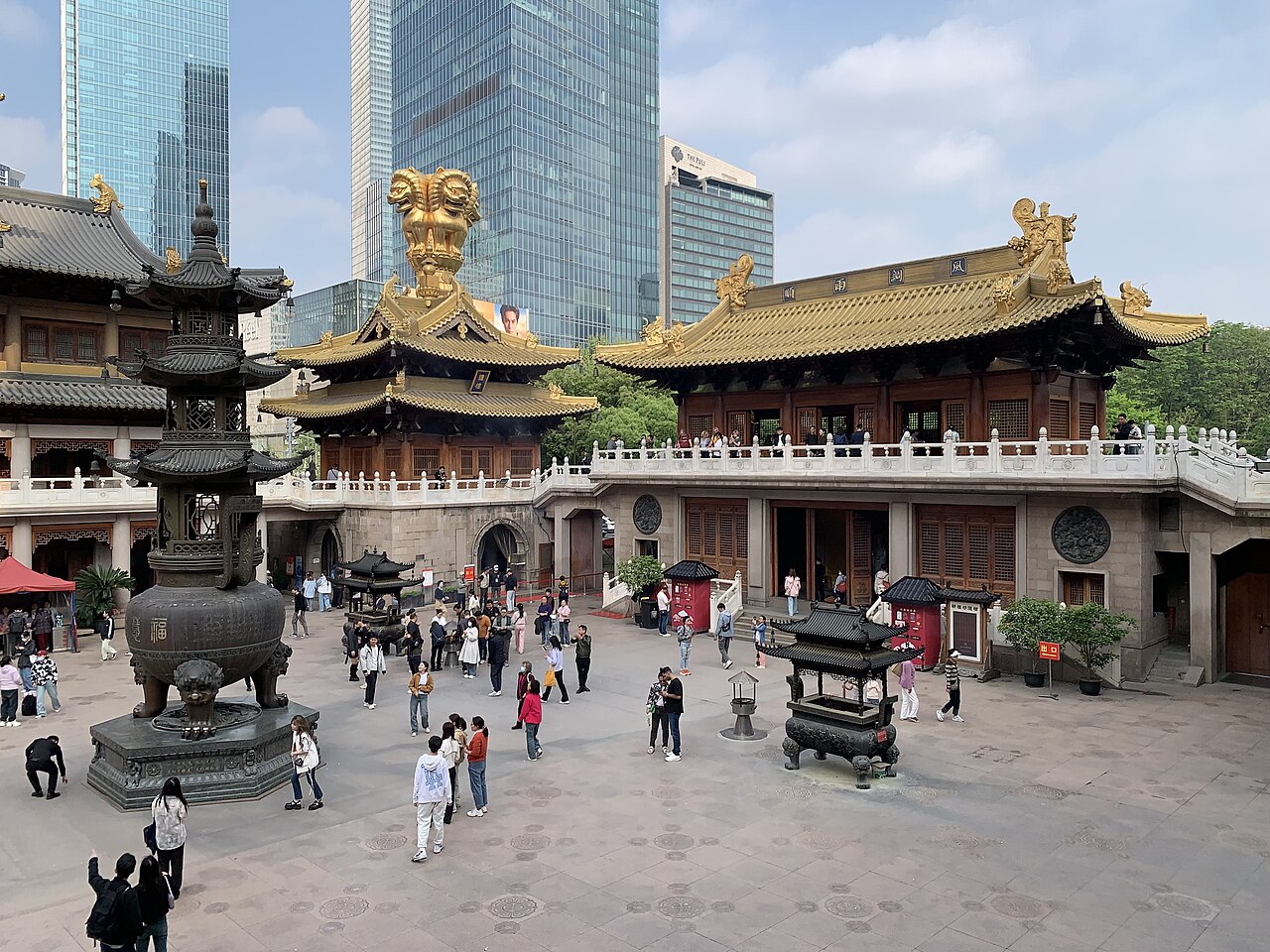
Jing'an Temple, known locally as 静安寺, is a historic Buddhist temple located in Shanghai's Jing'an District. The temple stands as one of Shanghai's most recognizable religious landmarks, situated in a prominent urban position amid modern commercial development. Its distinctive golden roof and traditional architectural forms create a striking contrast with the surrounding skyscrapers. The temple has undergone multiple reconstructions throughout its history, reflecting changing fortunes and urban development pressures. Today it functions as an active religious site while also serving as a significant visitor destination.
Checked 2026-08-31 · Source
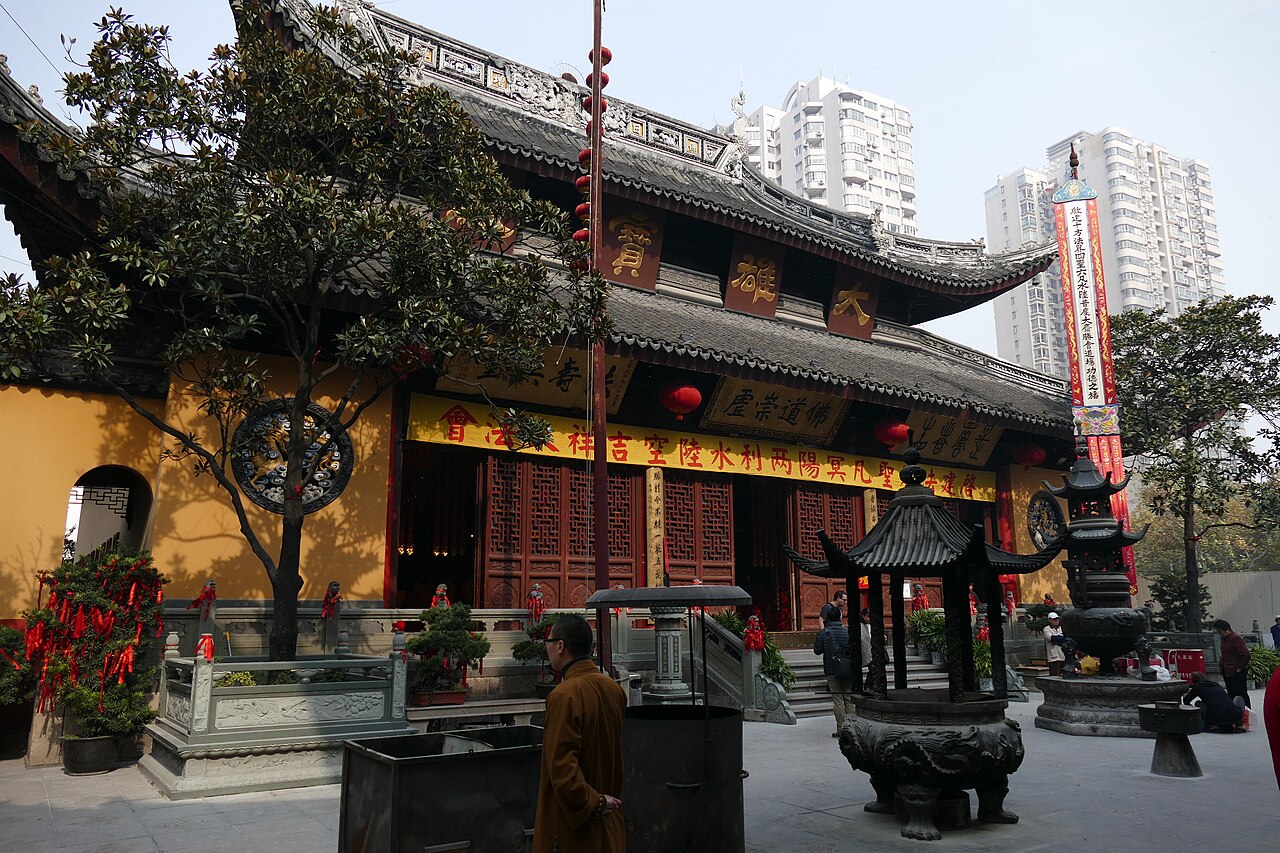
The temple complex contains several traditional halls and structures arranged in classical Buddhist temple layout. Notable features include the main Mahavira Hall and various subsidiary buildings housing Buddhist statuary and ceremonial objects. The prominent golden roof, visible from considerable distances, has become an architectural signature. Interior spaces contain religious imagery, decorative elements, and spaces for worship and meditation. The juxtaposition of ancient religious architecture against the ultra-modern urban environment of central Shanghai creates a distinctive atmospheric quality that many visitors find noteworthy.
Checked 2026-08-31 · Source
Visitor duration at Jing'an Temple varies considerably depending on individual interests and purposes. Those engaging in religious observance or detailed architectural examination may spend extended periods, while casual visitors typically require less time. The compact urban site does not demand extensive walking or exploration compared to sprawling temple complexes in rural settings. Most visitors find that a moderate visit allows sufficient opportunity to appreciate the main features, observe religious activities where occurring, and experience the distinctive atmosphere of this urban sanctuary. Personal pacing should respect active worship spaces.
Checked 2026-08-31 · Source
Daily 07:30–17:00. No regular weekly closure day is listed; the published schedule applies every day. The temple's central urban location means it is accessible year-round regardless of season. Weather considerations follow standard Shanghai patterns, with hot humid summers and cool winters. Buddhist festival dates may bring increased visitor numbers and enhanced ceremonial activity, though specific dates require verification from authoritative sources rather than assumption.
Checked 2026-08-31 · Source
Base general admission is CNY 50 per person. Entry arrangements for Jing'an Temple may include admission fees, donation expectations, or free access depending on current management policies. Religious sites in China sometimes modify fee structures for maintenance, special exhibitions, or policy changes. Any payment should be made through official channels within the temple precincts. Visitors should be prepared for possible charges while recognizing that circumstances may have changed from previously reported figures.
Checked 2026-08-31 · Source
Take Shanghai Metro Line 2, 7 or 14 to Jing'an Temple station. Exit 1 is approximately 74 metres, or a one-minute walk, from the temple and has a ground-to-concourse elevator at Huashan Road. The visitor address is 1686 West Nanjing Road, Jing'an District. This is the named approach for an independent visit. Jing'an Temple occupies a highly accessible position in central Shanghai, served by the Jing'an Temple metro station where multiple subway lines intersect. This public transportation connectivity makes the site straightforward to reach from numerous city locations. The surrounding district contains extensive commercial development with associated infrastructure. Taxi and ride-hailing services can access the immediate vicinity readily. Pedestrian approaches are feasible from nearby accommodations and attractions given the dense urban fabric. The prominent golden roof assists visual orientation when approaching on foot from various directions in the immediate neighborhood.
Checked 2026-08-31 · Source
The exterior marble plaza and central courtyard are level and step-free. The Hall of Heavenly Kings is reached by three steep stone steps without a handrail. The Grand Hall has a high wooden threshold, and the upper gallery is accessible only by stairs; there is no visitor elevator within the temple complex. The access description applies to the documented visitor route. Visitors should observe appropriate decorum at this active religious site, maintaining respectful behavior in worship spaces and toward practitioners. Photography restrictions may apply in certain interior areas; visitors should watch for signage or guidance rather than assuming permission. The busy urban location presents standard metropolitan concerns including traffic, crowds, and personal belongings security. Religious ceremonies may be occurring unpredictably; observers should position themselves unobtrusively. Incense burning and associated smoke are common features requiring consideration for respiratory sensitivities. The contrast between sacred space and commercial surroundings requires mindful navigation of appropriate conduct boundaries.
Checked 2026-08-31 · Source
The exterior golden roof and traditional architecture against modern skyscrapers offer distinctive photographic opportunities that many visitors seek to capture. The dramatic visual contrast between historic temple and contemporary urban development provides compelling composition possibilities. However, photography permissions inside religious halls may be restricted; visitors should observe posted regulations and implicit boundaries rather than assuming access. Respect for worshippers and ceremonies must override photographic interests. Lighting conditions vary throughout the day, with exterior illumination potentially most favorable during morning and evening hours. Drone usage would require appropriate authorization given the central urban location and airspace considerations.
Checked 2026-08-31 · Source
The temple is open daily from 07:30 to 17:00.
Base general admission is CNY 50 per person.
No. The responsible public body's published schedule lists the temple as open every day.
Jing'an Temple station is served by Shanghai Metro Lines 2, 7 and 14; Exit 1 is approximately 74 metres from the temple.
The temple was founded in 247, renamed Jing'an Temple in 1008 and relocated to its present site in 1216.
The Daxiong Baodian main hall uses mortise-and-tenon construction without nails, and the collection includes a large bell cast in 1369.
Loading the interactive map…
The interactive map could not be loaded.
Last updated:
Source: OpenStreetMap contributors, Wikidata ·