2 min walk
Bar Split
- Notable
- Nightlife venue
Language · 11 published
Art and culture venue · Split
Reviewed by Elena Voss · Roavina Travel Editor
Read from the OpenStreetMap access tags; anything not listed has no tag recorded.
Set the group type to family in the planner and the day window contracts to about three quarters of a solo day.
This place is a Artwork.
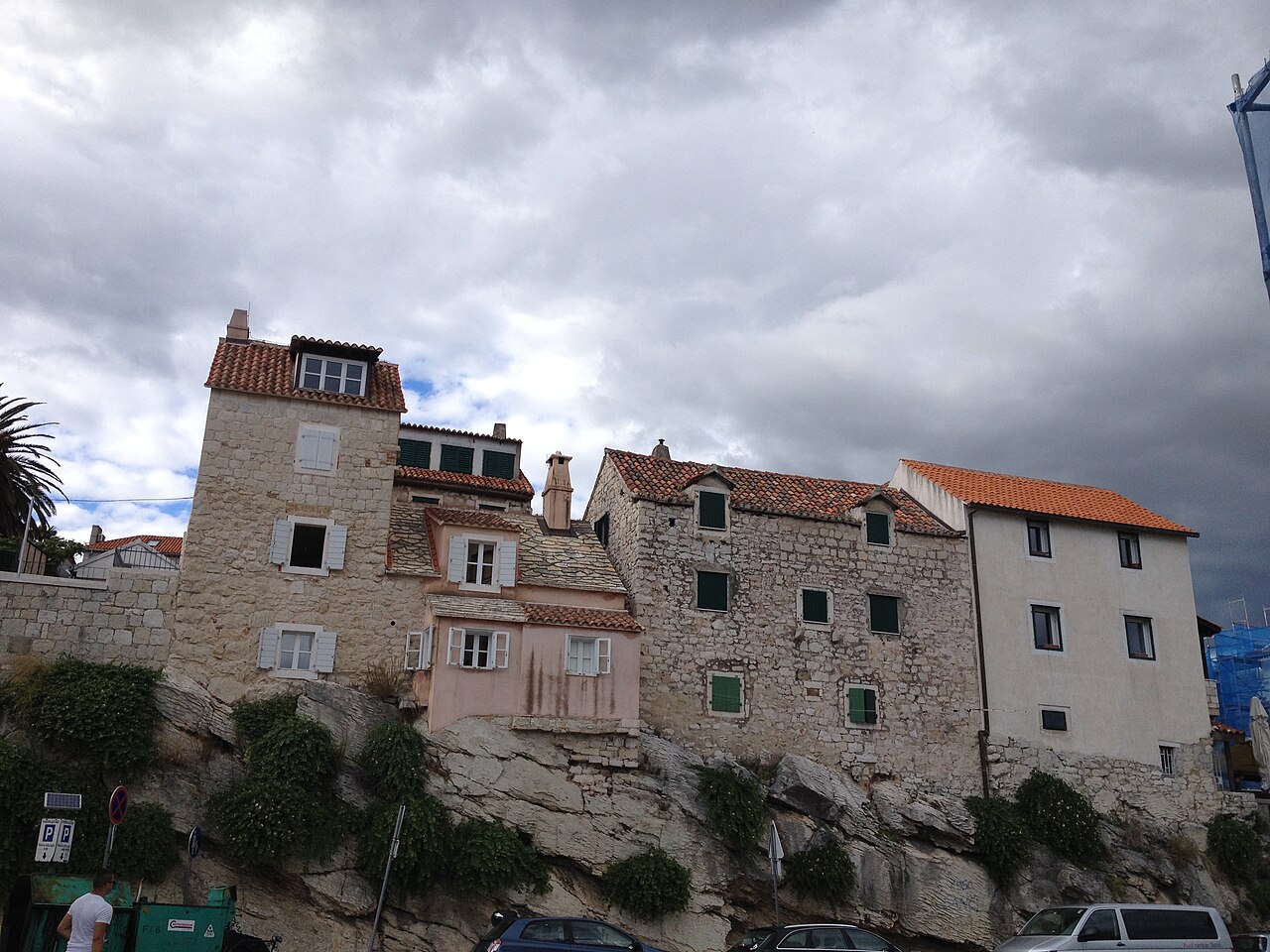
Let Me Pass Street, locally called Pusti me proć, is a remarkably narrow pedestrian passage in Split’s historic centre. Its name describes the experience of meeting another person in the lane, when one visitor may need to pause and allow the other to pass. The passage is part of the intimate medieval street pattern around Diocletian’s Palace, where stone walls, compact lanes and centuries of continuous urban life create a distinctly close-up experience of old Split. Let Me Pass Street, locally named Pusti me proć, is a narrow passageway in Split's historic core. The street's distinctive name reflects its extremely slim width, requiring pedestrians to squeeze through single-file. It represents one of the atmospheric medieval lanes that characterize the ancient fabric of Diocletian's Palace and its surrounding old town. The passage exemplifies how Split's urban plan has preserved its historical character through centuries of continuous habitation, offering visitors an authentic encounter with the city's layered architectural heritage.
Checked 2026-08-26 · Source
There is no interior exhibition or formal attraction inside the passage. The point is the lane itself: its restricted width, worn stone surfaces and relationship to the surrounding historic fabric. As you walk through, look at the adjoining façades, doorways and changes in masonry around the old town. The nearby network of alleys and small squares makes the passage most rewarding as one detail within a longer walk through Split’s palace quarter. The street itself contains no interior attractions or commercial establishments within its confined passage. Its significance lies entirely in the experiential quality of traversing this constricted urban space. Visitors will find the surrounding area rich with adjacent historical structures typical of Split's old town, including stone residences, small courtyards, and architectural details from multiple periods. The immediate vicinity contains the dense network of lanes, squares, and historic buildings that constitute the UNESCO-listed historic complex of Split, rewarding exploration on foot.
Checked 2026-08-26 · Source
Walking through Let Me Pass Street takes less than a minute. Most visitors will spend several additional minutes pausing at the entrance, waiting for space, taking in the unusual proportions and continuing into the surrounding lanes. Allow more time if you are exploring the wider historic centre, including Diocletian’s Palace, nearby squares and the waterfront. It works best as a short waypoint rather than a stand-alone extended visit.
Checked 2026-08-26 · Source
The passage is a public part of Split’s historic street network and can be visited during a walk through the old town. Summer brings more visitors into the palace quarter, making the narrow lane harder to cross without pausing. Earlier or later in the day can feel calmer and gives you more room to appreciate the space. After rain, take care on the stone paving and adjust your pace.
Checked 2026-08-26 · Source
Let Me Pass Street is a public pedestrian passage, so there is no entrance procedure for the lane itself. You can include it in a free walk through Split’s historic centre. Nearby museums, monuments, towers and other attractions may have their own admission arrangements, but those belong to separate visits. Treat the passage as an atmospheric urban detail between larger stops rather than as a ticketed attraction.
Checked 2026-08-26 · Source
Reach the historic centre on foot from Split’s ferry terminal, bus station or railway station, then continue into the lanes around Diocletian’s Palace. The palace quarter is pedestrian-oriented, and the final approach is through a dense network of stone streets rather than by car. A map is useful because the passage is easy to miss among nearby lanes. Once in the old town, combine it with other short walks through the palace area.
Checked 2026-08-26 · Source
The defining feature is also the main practical consideration: the passage is extremely narrow. Let people coming from the opposite direction pass, and avoid stopping in the centre of the lane. The stone surface may be slippery after rain. Its confined dimensions can be uncomfortable for wheelchair users, pushchairs or anyone uneasy in tight spaces. Keep noise low because the surrounding buildings form part of a lived-in historic neighbourhood.
Checked 2026-08-26 · Source
Photograph the passage from one end to show how tightly the walls frame the view. A person walking through can provide scale, while close details of stone, doorways and the lane’s name add context. The space is too restricted for equipment that blocks movement, so use a quick handheld composition and let pedestrians continue. Avoid occupying the narrowest point, especially when other visitors or residents need to pass.
Checked 2026-08-26 · Source
Pusti me proć means “let me pass” in Croatian and describes the practical experience of moving through this exceptionally narrow lane when another pedestrian is approaching.
The passage itself takes less than a minute to cross, although you may pause to let another pedestrian pass or to look at the surrounding stonework.
Yes. It lies within the dense historic street network around Diocletian’s Palace in central Split.
No. It is a public pedestrian passage that can be included in a free walk through Split’s old town.
Pause at the side or at the wider end of the lane and allow the other person to pass. Avoid standing in the middle of the passage.
Yes. It fits naturally into a walking route through Diocletian’s Palace, the surrounding old-town lanes and the nearby waterfront.
Loading the interactive map…
The interactive map could not be loaded.

Last updated:
Source: OpenStreetMap contributors ·