Élysée Palace
Palais de l'Élysée
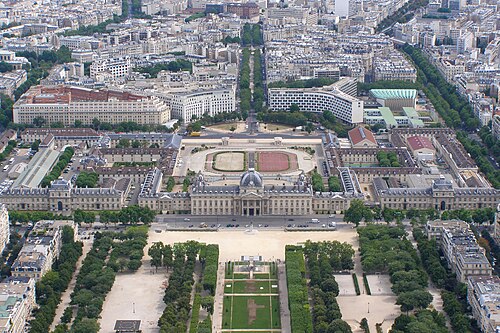
The Élysée Palace is where the President of France lives and works, and it is closed to visitors for all but one weekend a year.
- Must see
- Historic site
- Paris 8e Arrondissement
City guide · France
Paris is 105.4 km² holding 2,047,602 people, wrapped in twenty arrondissements that spiral outward from the Louvre. Almost everything a visitor comes for is ins...
Photograph · Yann Caradec from Paris, France · CC BY-SA 2.0
Set your days, your pace and the hours you actually want to be out. The planner works around closing days and travel time, and leaves room to eat.
Editorial responsibility: Elena Voss · Roavina Travel Editor
Paris is 105.4 km² holding 2,047,602 people, wrapped in twenty arrondissements that spiral outward from the Louvre. Almost everything a visitor comes for is inside that spiral, and most of it is walkable.
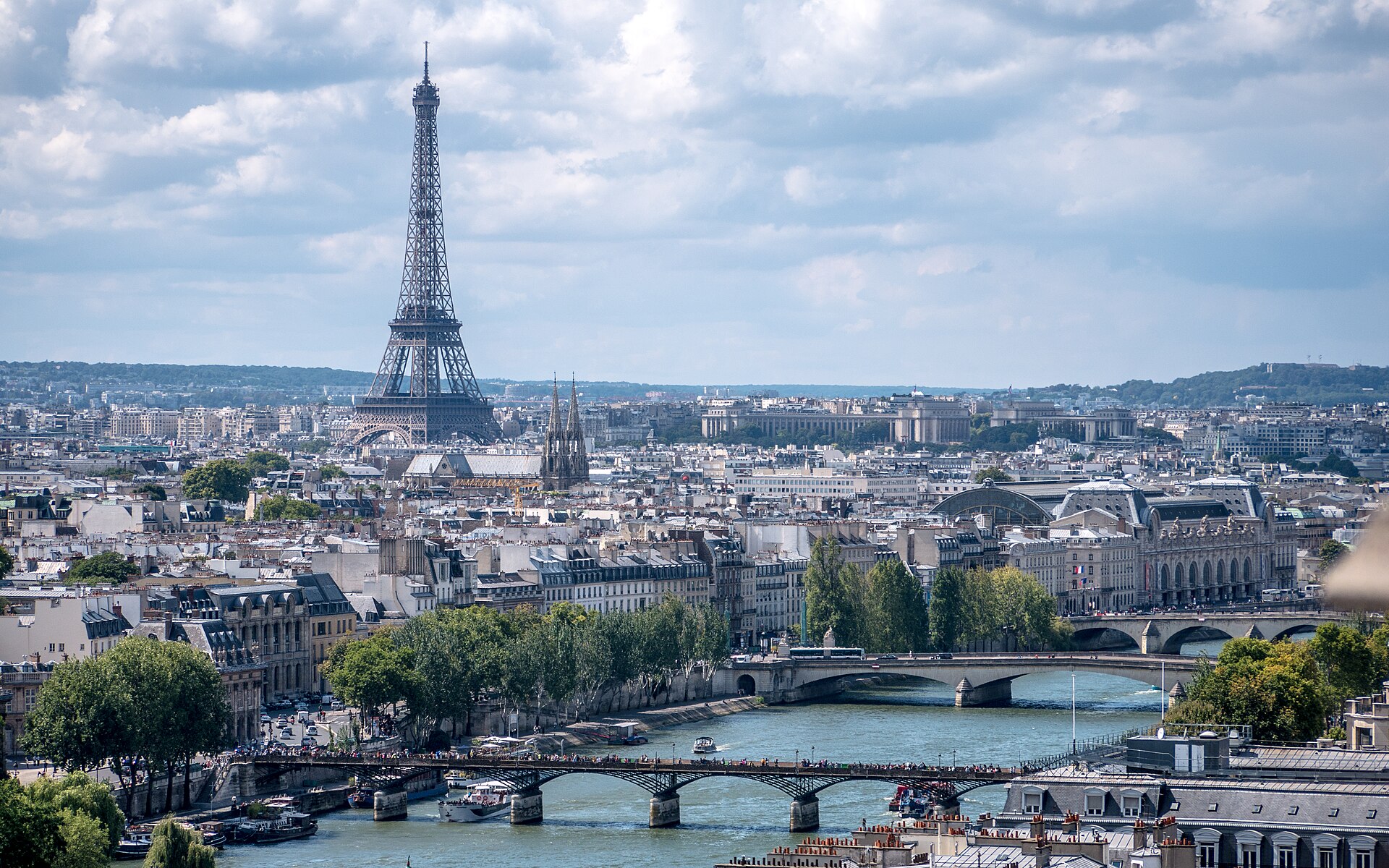
The Seine cuts the city in two and everything is described in relation to it. The Right Bank to the north holds the commerce and the great institutions; the Left Bank to the south holds the universities and the bookshops. Between them the Île de la Cité and the Île Saint-Louis are where the city started.
Checked 2026-08-23
November · November averages only 10.4°C by day in Paris, with 51.9 mm precipitation across about ten days.
Ranked by importance — sitelinks, pageviews and heritage status, not editor preference.
65 places match
Category
Typical visit duration
Good for
Interests
Palais de l'Élysée
The Élysée Palace is where the President of France lives and works, and it is closed to visitors for all but one weekend a year.
Palais du Luxembourg
The Luxembourg Palace is the French Senate, and it was built because a widowed queen was homesick for Florence.
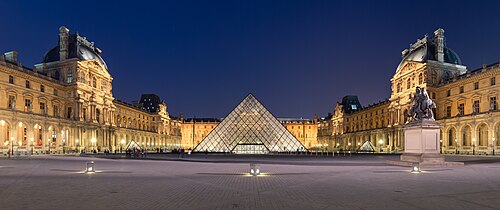
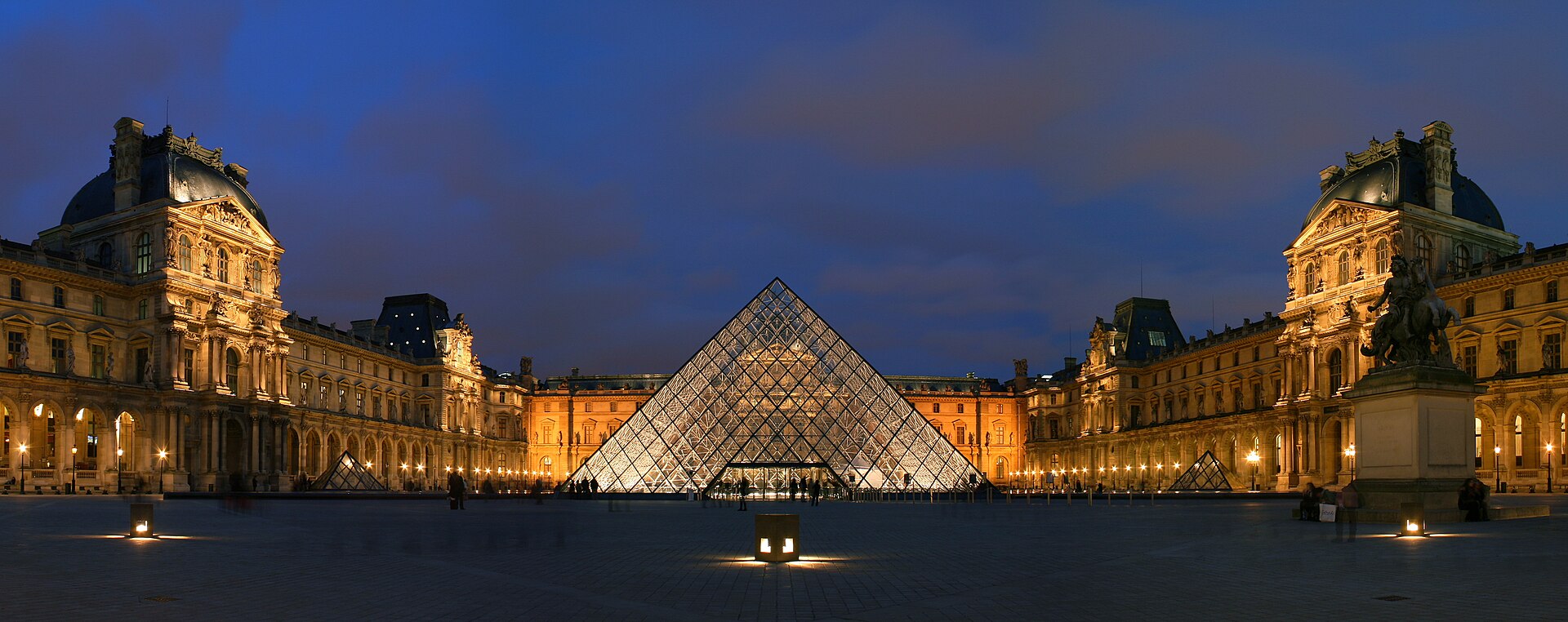
Pyramide du Louvre
The Louvre Pyramid is the glass entrance structure built in the museum's main courtyard in the 1980s, and it is a part of the Louvre — its main entrance and one of the more argued-over additions to central Paris …
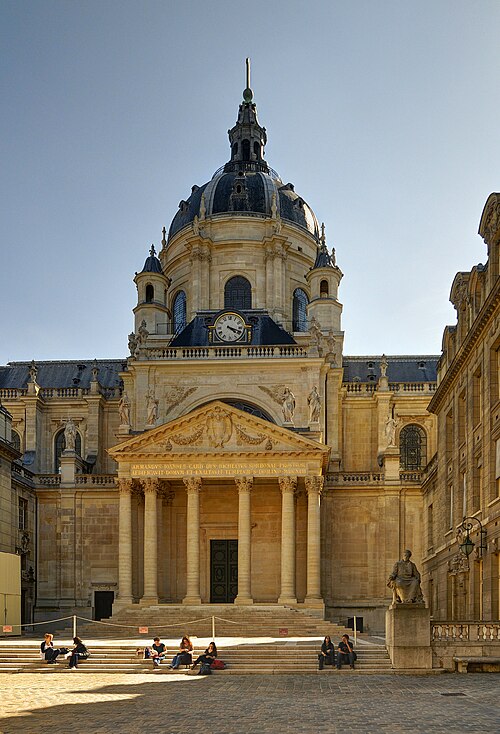
Université Paris 1 Panthéon-Sorbonne - Centre Sorbonne
Behind the gate at Place de la Sorbonne sits a university with a name older than most nations: Robert de Sorbon founded a theology college here in 1257 under the patronage of Louis IX, and the word "Sorbonne" has meant…
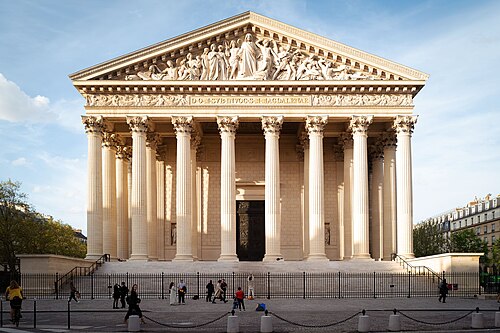
Église de la Madeleine
La Madeleine is a Greek temple in the middle of Paris, and it took seventy-nine years and several changes of mind to finish.
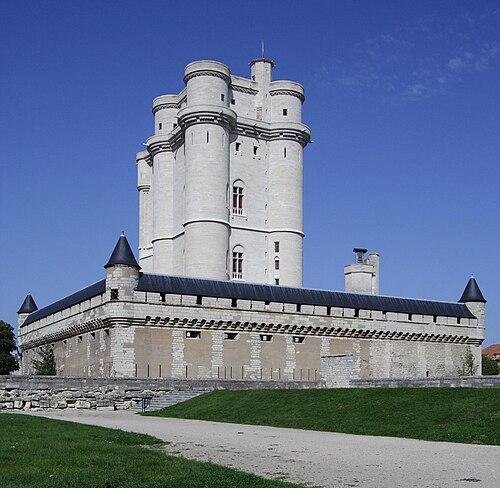
Château de Vincennes is a medieval fortress on the eastern edge of Paris, beside the Bois de Vincennes.
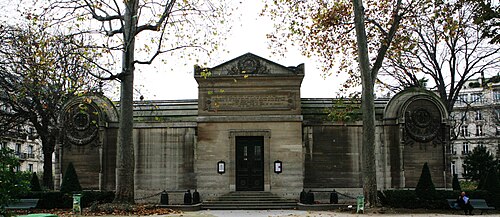
The Chapelle expiatoire is a neoclassical funerary chapel built between 1815 and 1826 on the site of the former Madeleine cemetery, where the guillotined bodies of Louis XVI and Marie Antoinette were buried in unmarked graves covered with quicklime in…
Arc de Triomphe du Carrousel
The Arc de triomphe du Carrousel stands in the Cour Napoleon, between the Louvre's wings and I. M.
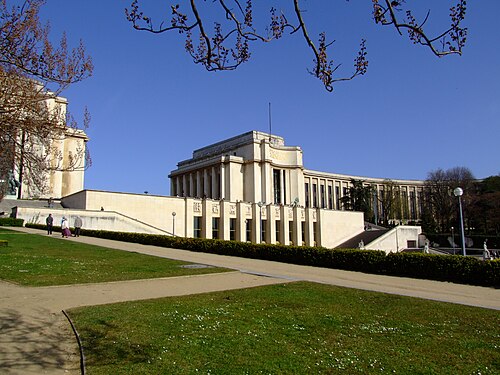
Palais de Chaillot
The Palais de Chaillot is the curved, colonnaded building on the hill of Trocadero facing the Eiffel Tower across the Seine, built for the 1937 Exposition Internationale des Arts et Techniques on the site of the demolished 1878 Palais du…
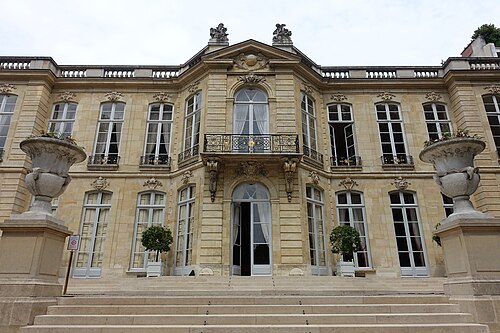
Hôtel de Matignon
The Hotel Matignon is the official residence and working office of the French Prime Minister, on the Rue de Varenne in the 7th arrondissement, and it is not open to the public in any ordinary sense — this is a…
Tombe du Soldat inconnu
The Tomb of the Unknown Soldier is a flat paving stone beneath the Arc de Triomphe, at the centre of Place Charles de Gaulle, marking the grave of an unidentified French soldier from the First World War.
Place de la République
Place de la Republique is a large public square straddling the 3rd, 10th and 11th arrondissements, at a junction where several of Paris's grand boulevards meet, and it functions today primarily as a civic gathering space rather than a sightseeing…
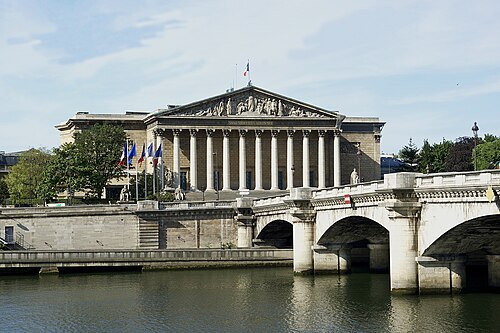
The Palais Bourbon, on the Left Bank facing Place de la Concorde across the Seine, is the seat of the French National Assembly, the lower house of Parliament — a working legislature, not a former palace turned museum.
The Ecole Militaire is an operating French military academy, not a museum, and it is not open to the public.
Obélisque de Louxor
The Luxor Obelisk stands at the centre of Place de la Concorde, a 3,300-year-old pink granite obelisk that once stood at the entrance to Luxor Temple in Egypt, one of a matching pair carved in the reign of Ramesses II.
Galerie Vivienne
Galerie Vivienne is a covered shopping passage, one of the best-preserved of the passages couverts that dotted central Paris in the early 19th century before department stores and Haussmann's boulevards displaced most of them.
Jardin des serres d’Auteuil
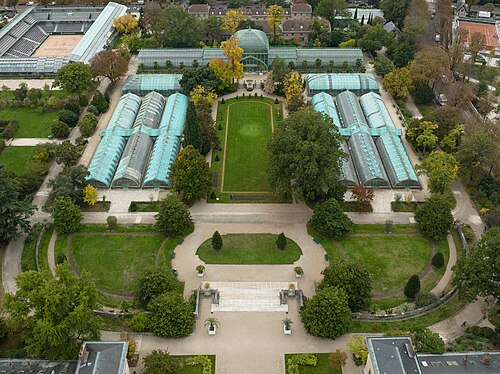
The Jardin des serres d'Auteuil is a municipal botanical garden built around a set of glasshouses, on the western edge of Paris beside the Bois de Boulogne.
Tour Saint-Jacques
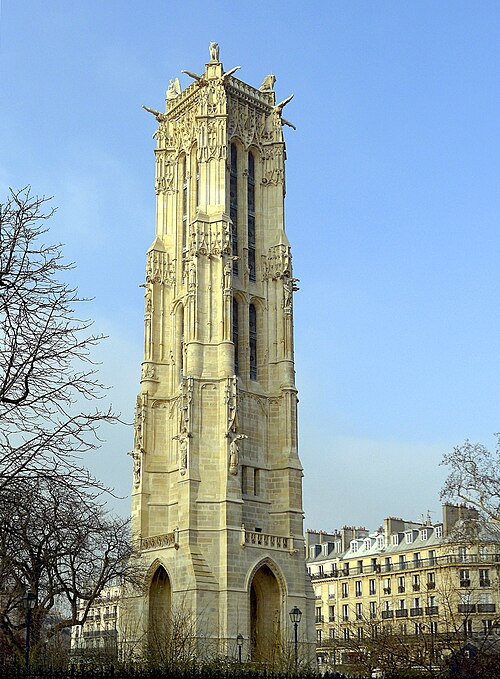
The Tour Saint-Jacques is the last surviving fragment of the church of Saint-Jacques-de-la-Boucherie, a late-Gothic parish church built between 1509 and 1523 for the guild of Paris butchers, whose market gave the church its name.
Colonne de Juillet
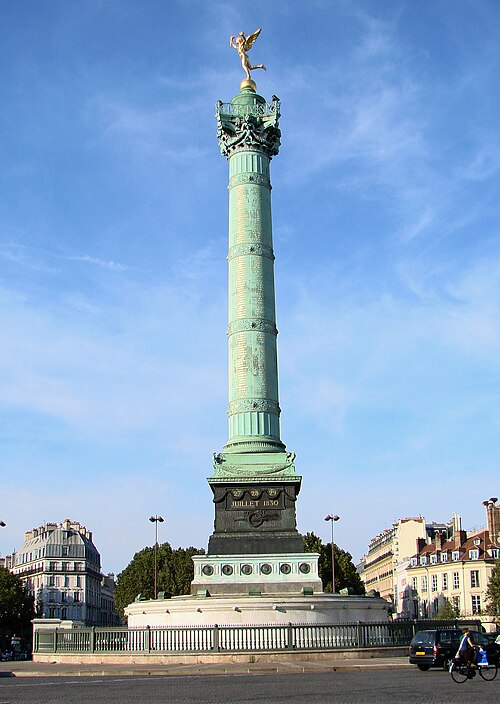
The Colonne de Juillet stands at the centre of Place de la Bastille and commemorates the July Revolution of 1830 — the Trois Glorieuses, three days of fighting on 27-29 July that drove King Charles X from the throne.
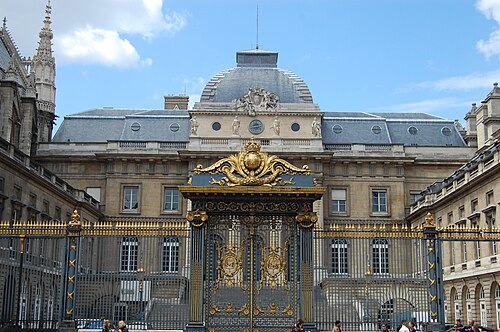
Palais de Justice de Paris
The Palais de Justice is the historic seat of the French judiciary on the Ile de la Cite, built on the site of the medieval Palais de la Cite, the residence of the Capetian kings from the 10th century until…
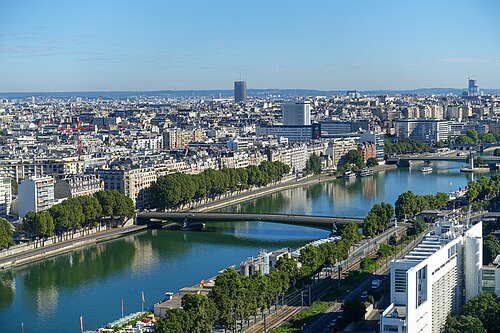
Pont Mirabeau carries a road and pedestrian walkways across the Seine between the 15th and 16th arrondissements, built between 1893 and 1897 under the chief engineer Paul Rabel using a steel arch design that was, at the time, one of…
Porte Saint-Denis is a triumphal arch built in 1672 on the orders of the city of Paris to honour Louis XIV's military victories on the Rhine, in particular the crossing of the Rhine earlier that year during the Franco-Dutch War.
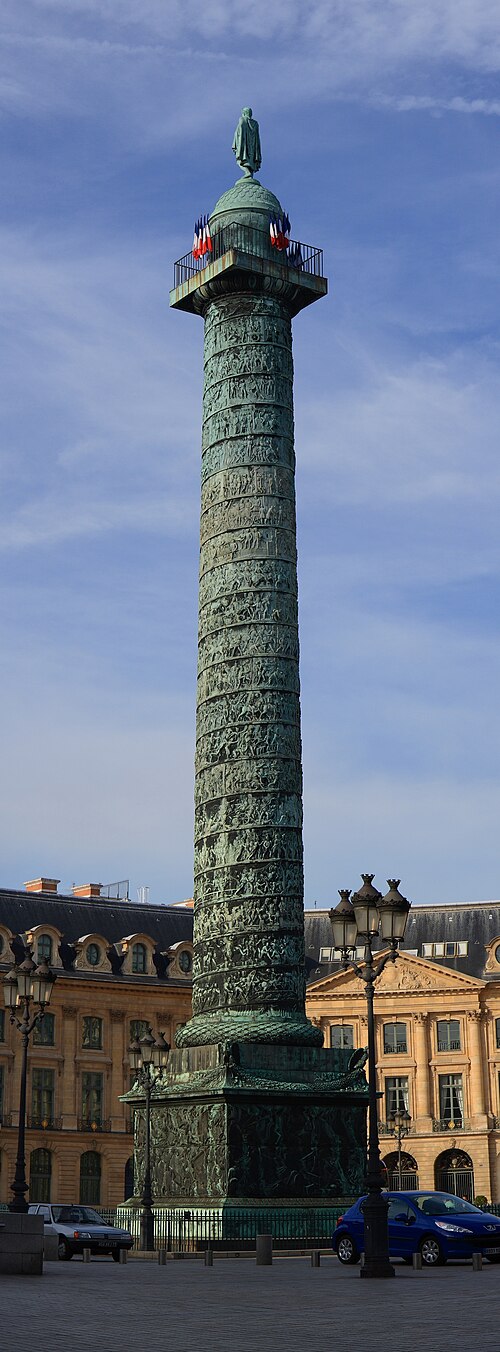
The Colonne Vendome stands at the centre of Place Vendome in the 1st arrondissement, raised between 1806 and 1810 on Napoleon's order to commemorate the victory at Austerlitz.
Parc Montsouris
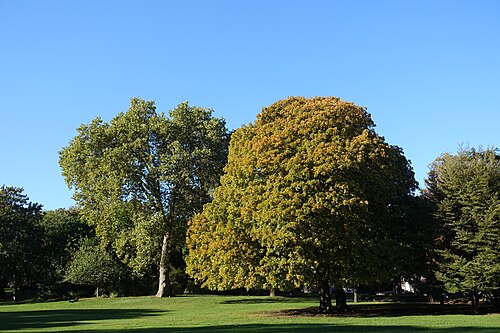
Parc Montsouris is a 15.5-hectare public park in the 14th arrondissement, opened in 1878 as part of Napoleon III and Baron Haussmann's programme of large landscaped parks for Paris.
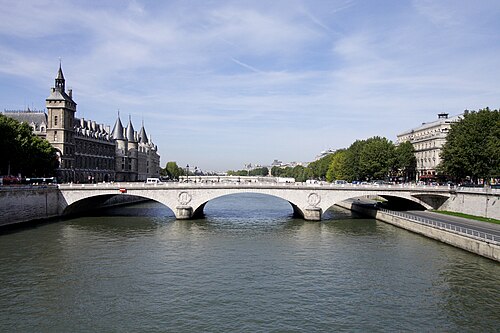
Pont au Change
Pont au Change carries rue de Rivoli's continuation across the northern arm of the Seine, linking the Ile de la Cite -- at the Conciergerie and the Palais de Justice -- to the Right Bank at Place du Chatelet.
District boundaries come from OSM administrative relations, so a district page holds exactly the places inside it — plus, for the islands and the coast, the nearest district by proximity.
The arrondissements spiral clockwise from the centre: the 1st sits at the Louvre and the Île de la Cité, and the numbers wind outward to the 20th. Learning that shape is the single most useful thing a first-time visitor can do, because every address in the city carries its arrondissement and the number tells you roughly where you are.
The Right Bank — north of the Seine — is the 1st through 4th at the centre, then the grand avenues of the 8th and 16th to the west and Montmartre in the 18th to the north. The Louvre, the Champs-Élysées, the Opéra and Sacré-Cœur are all Right Bank.
The Left Bank — south — is the 5th, 6th and 7th: the Latin Quarter, Saint-Germain, the Panthéon, the Musée d'Orsay and the Eiffel Tower. It is the older-feeling half and the one with the bookshops.
The Périphérique, completed in 1973, rings the whole of it. Inside is Paris; outside is the metropolitan area of 13,320,752 people across 18,940.7 km², which is a different thing.
Checked 2026-08-23
The Métro, and then walking. Paris is small enough that the two together cover everything.
The Métro opened on 19 July 1900 during the World's Fair and now runs 16 lines — numbered 1 to 14 plus 3bis and 7bis — across 321 stations, 61 of which are interchanges. Stations sit 548 m apart on average, which is why a Métro journey of two stops is usually a walk. It carries 1.523 billion passengers a year, 4.17 million a day.
The RER extends further out into the suburbs and is what takes you to the airports and to Versailles. Châtelet–Les Halles, where five Métro lines meet three RER lines, is the largest interchange and the one to avoid at rush hour.
Single tickets and multi-use passes are both sold, and the Navigo Easy card is the contactless option.
Checked 2026-08-23
Suggested stay for a first visit: 4–5 days. Group the central landmarks across the first days, then leave separate time for a major museum and Montmartre or another Paris district. Versailles lies outside the city and needs an additional excursion day if chosen.
They spiral clockwise from the centre. The 1st is at the Louvre and the Île de la Cité and the numbers wind outward to the 20th. Every Paris address carries its arrondissement, so the number tells you roughly where something is.
The Seine. The Right Bank to the north holds the commerce and the great institutions — the Louvre, the Champs-Élysées, the Opéra, Montmartre. The Left Bank to the south holds the universities, the Latin Quarter, the Panthéon, the Musée d'Orsay and the Eiffel Tower.
For anything over a kilometre, yes. It opened on 19 July 1900 and runs 16 lines across 321 stations, with stations 548 m apart on average — which means a two-stop journey is usually faster on foot.
April to June and September to October. August is when Parisians leave and tourists arrive, which is the worst of both — shuttered restaurants and full museums.
The city proper is 105.4 km² with 2,047,602 people, ringed by the Périphérique completed in 1973. The metropolitan area outside it holds 13,320,752 people across 18,940.7 km².