

5 min walk · Paris 12e Arrondissement
square Carnot
- High
- Nature site
Language · 11 published
Historic monument · Paris 12e Arrondissement, Paris
Reviewed by Elena Voss · Roavina Travel Editor
| Monday | 10:00 – 18:00 |
|---|---|
| Tuesday | 10:00 – 18:00 |
| Wednesday | 10:00 – 18:00 |
| Thursday | 10:00 – 18:00 |
| Friday | 10:00 – 18:00 |
| Saturday | 10:00 – 18:00 |
| Sunday | 10:00 – 18:00 |
Checked 2026-08-24 · Source
Read from the OpenStreetMap access tags; anything not listed has no tag recorded.
Set the group type to family in the planner and the day window contracts to about three quarters of a solo day.
This place is a Attraction. It was established in 1340. It carries the classified historical monument heritage designation.
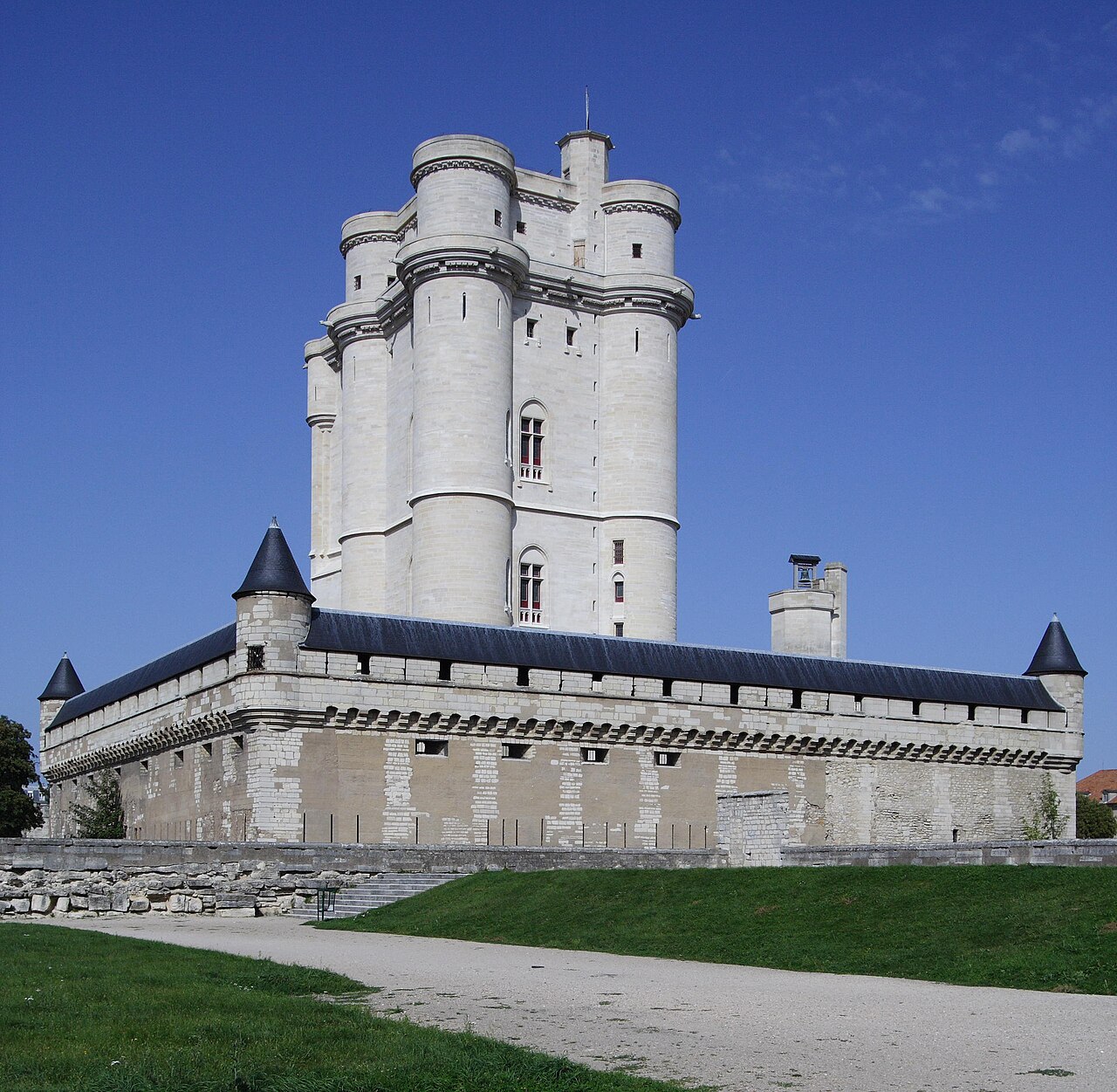
Château de Vincennes is a medieval fortress on the eastern edge of Paris, beside the Bois de Vincennes. Charles V developed its great donjon in the mid-14th century as a secure royal residence, surrounded by a fortified enclosure, towers and a moat. The site later served as a state prison and then as a military arsenal. Today it is a major historic monument where royal power, imprisonment, military use and conservation can be read through one unusually complete fortified complex. Château de Vincennes is a medieval fortress with the tallest surviving keep of any in Europe, built to keep a king safe rather than to look like a palace. Charles V raised the donjon in the mid-14th century as a secure royal residence a short ride east of Paris, inside a walled enclosure with nine towers and a moat. It stayed a working royal seat through the Renaissance, then became a state prison through the 17th and 18th centuries — Diderot, Mirabeau and the Marquis de Sade were all held here — before turning into a military arsenal that stayed in use into the 20th century.
Checked 2026-08-24 · Source
The visit brings together the tall donjon, the fortified enclosure, its curtain wall and towers, and the Sainte-Chapelle de Vincennes. The chapel is a Flamboyant Gothic building modelled on the Sainte-Chapelle in central Paris. Construction began in 1379 under Charles V and finished in the mid-16th century under Henri II, giving the building a visible change of style across its long construction history. Inside the donjon, the route connects royal apartments with the prison history of the fortress.
Checked 2026-08-24 · Source
Allow about an hour and a half for the donjon, Sainte-Chapelle and a walk around the fortified enclosure at an unhurried pace. The fortress can look compact from the courtyard, but the donjon’s stairs add real time and effort, while the chapel rewards a slower look at its Gothic proportions and stained glass. If you plan to explore the Bois de Vincennes as well, treat the castle visit as one part of a longer eastern Paris outing.
Checked 2026-08-24 · Source
A weekday morning is a comfortable time to explore Château de Vincennes before larger school or coach groups make the courtyard busier. The stone keep can feel cool inside, while the open fortress ground offers limited shade in warm weather. Pairing the monument with the Bois de Vincennes works especially well: spend the cooler part of the day among the walls and keep, then continue into the park. Leave flexibility for restoration work or temporarily altered routes.
Checked 2026-08-24 · Source
The keep and chapel are visited as a ticketed historic monument, while the outer courtyard provides the first sense of the fortress without requiring the same interior route. Ticket prices and eligibility categories can change, so plan the paid visit around the current arrangements presented by the monument. The admission is worthwhile for travellers who want the donjon’s vertical interiors, royal rooms, prison history and chapel together rather than only a view of the exterior walls.
Checked 2026-08-24 · Source
Château de Vincennes is exceptionally easy to reach from Paris without a car. Take Métro line 1 to Château de Vincennes, the line’s eastern terminus, and arrive directly beside the fortress walls. The monument stands in the commune of Vincennes at the northern edge of the Bois de Vincennes, just outside the 12th arrondissement boundary. From the station, the castle is immediately legible as a destination, making this a straightforward half-day or full-day eastern Paris excursion.
Checked 2026-08-24 · Source
The donjon contains steep, narrow stone stairs, so upper levels require confident climbing and are unsuitable for visitors unable to manage that kind of route. The courtyard and enclosure are exposed, with less shade than the neighbouring wood. Wear shoes suitable for stairs and uneven historic surfaces. Some areas may be affected by conservation work. In the chapel, use care with photography around stained glass and stonework, and give other visitors space on the route through the fortress.
Checked 2026-08-24 · Source
The classic exterior view looks across the moat towards the donjon, whose height and corner turrets explain the fortress’s commanding character. Walk the enclosure to photograph the curtain wall and towers together; the wider view conveys a scale that the keep alone cannot. Inside Sainte-Chapelle, bright daylight brings colour from the Apocalypse scenes in the stained glass onto the stone. Keep equipment compact, avoid obstructing the route and follow any restrictions on flash or interior photography.
Checked 2026-08-24 · Source
It is a medieval fortress east of Paris with a royal donjon, fortified enclosure, moat and Sainte-Chapelle.
About an hour and a half covers the donjon, chapel and a walk around the enclosure at an unhurried pace.
Charles V built it in the mid-14th century as a secure royal residence, and it is the tallest surviving medieval fortified keep in Europe.
The fortress later served as a state prison; recorded prisoners include Diderot, Mirabeau and the Marquis de Sade.
No. It is a separate chapel modelled on the central Paris building; construction began in 1379 and finished under Henri II in the mid-16th century.
Take Métro line 1 to Château de Vincennes, its eastern terminus, directly beside the fortress walls.
Loading the interactive map…
The interactive map could not be loaded.
Last updated:
Source: OpenStreetMap contributors, Wikidata ·